Stereo History

Starting way back in the dark ages of the early 1970s, a few of the high points as well as the low points of my stereo history are chronicled here.

To get where you are today — assuming your stereo is any good at all — no doubt required that you go through a great many changes, and probably in much the same way I have.

A list of any audiophile’s current equipment tells the lifelong enthusiast very little about the sound of his system.

What changes were made as a result of tweaking and tuning, what records were used in the process, and what effects these changes had on the sound — these are far more important than any tweak, or amp change, or new cartridge, although those can be dramatic too.

Robert Brook has a lot to say about these issues, and you can find his story by searching the site for “Robert Brook.”

Not that Long Ago Blue Was a Nut We Just Could Not Crack

Hot Stamper Pressing of the Music of Joni Mitchell Available Now

This commentary was written in 2006 or thereabouts.

Allow me to tell you about a Blue shootout I tried to do at a friend’s house. The system he owns has some nice equipment in it (the EAR 864, a $4200 tube preamp, for one) and can sound very good — if not wonderful — on certain program material.

But it’s the kind of audiophile system that is easily overwhelmed by difficult to reproduce material. On my copy of Blue his stereo was a complete disaster: grainy, shrill, thin, flat, harsh, compressed, unmusical, no real extension at either end; in short, no magic, tubey or otherwise.

My copy of Blue, which had earlier in the day sounded so good at my house, now sounded so bad at his that I could hardly recognize it as the same LP.

Pieces of the Puzzle

Of course it was the same LP, and by the time I got home the pieces of the puzzle had all fallen into place. It takes a very special stereo to overcome the shortcomings of even the best domestic pressings of Blue in order to reveal the beauty of this music.

The new one isn’t better. It’s just easier to play on the average audiophile system.

Do you have one of those? Most audiophiles do; that’s what being average means. If you’ve been in this hobby for less than five years it’s almost certain you do. I would say a decade of serious dedication to home audio would be the minimum needed to acquire the knowledge and skill to build a truly hi-fidelity system.

(more…)

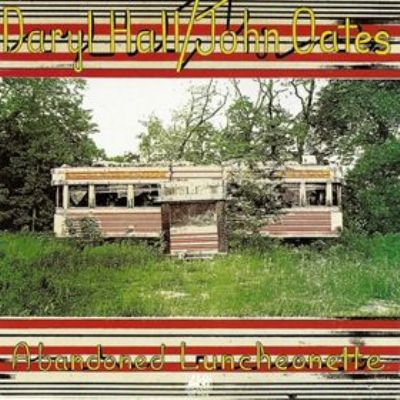
Abandoned Luncheonette – Remembering the Glorious Sound of Tubes

Hot Stamper Pressings of the Music of Hall and Oates Available Now

This record has the sound of TUBES. I’m sure it was recorded with transistors, judging by the fact that it was made after most recording studios had abandoned that “antiquated” technology, but there may be a reason why they were able to achieve such success with the new transistor equipment when, in the decades to come, they would produce nothing but one failure after another.

In other words, I have a theory.

They remember what things sounded like when they had tubes. Modern engineers appear to have forgotten that sound. They seem to have no reference for Tubey Magic. If they use tubes in their mastering chains, they sure don’t sound the way vintage tube-mastered records tend to sound.

Transistor Audio Equipment with Plenty of Tubey Magic

A similar syndrome was then operating with the home audio equipment manufacturers as well. Early transistor gear by the likes of Marantz, McIntosh and Sherwood, just to name three I happen to be familiar with, still retained much of the smooth, rich, natural, sweet, grain-free sound of the better tube equipment of the day.

I once owned a wonderful Sherwood receiver that you would swear had tubes in it. In fact it was simply an unusually well-designed transistor unit. Anyone listening to it would never know that it was solid state. It has none of the “sound” we associate with solid state, thank goodness.

Very low power, 15 watts a channel. No wonder it sounded so good.

Stick with the 4 Digit Originals (SD 7269)

If you’re looking for a big production pop record that jumps out of your speakers, is full of TUBEY MAGIC, and has consistently good music, look no further. Until I picked up one of these nice originals, I had no idea how good this record could sound. For an early ’70s multi-track pop recording, this is about as good as it gets (AGAIG as we like to say). It’s rich, sweet, open, natural, smooth most of the time — in short, it’s got all the stuff we audiophiles LOVE.   

(more…)

The Difficulties of Being a Self-Taught Audiophile

What Kind of Audio Fool Was I?

When I was starting out in this hobby back in the 70s, some of the audiophiles I came in contact with preferred Half-Speed mastered LPs, others liked Japanese pressings, and almost everyone thought direct-to-disc recordings were the ne plus ultra of sound quality.

Now audiophiles appear to prefer SACDs, Heavy Vinyl and pressings mastered at 45 RPM on multi-disc sets. Same mediocre (at best!) wine, different bottle.

It is our opinion that none of these are the answer to finding and acquiring higher quality pressings.

They are relatively cheap and convenient temporary fixes, but as a solution to the actual problem facing the serious audiophile they are little more than stopgaps, and, worse than that, many will retard the progress you are hoping to make in this hobby.

For those of us who never wavered in our commitment to radical and revolutionary progress, they can be recognized in hindsight as the dead end they always were.

The path forward is exactly the path we have taken and charted for everyone.

With our approach to finding the best sounding records, cleaning them the way we do, playing them against each other the way we do, using the sound improving devices and equipment we recommend, we know you can succeed.

If we can do it, you can do it.

(more…)

The Second Best Day of My Life in Audio

Advice on Making Audio Progress

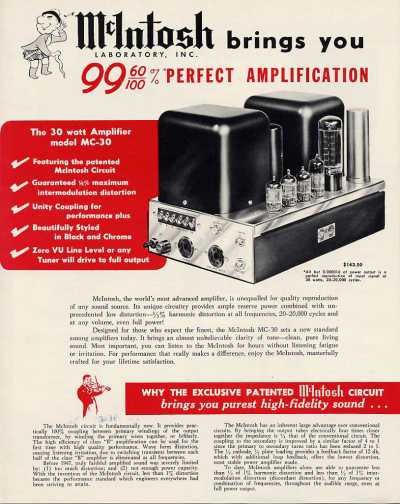
In the late-90s I had tried to power various speakers I owned with Mac 30s. I could never actually get  them to reproduce music faithfully, but they did wonderful things for some recordings.

In 2005, long after I had moved on from the Macs, I found a low-power integrated transistor amp from the 70s that was vastly superior to the custom tube preamp and amp we were using for shootouts at the time. 

It was, simply put, much more musically truthful. It sounded more like live music and less like recorded music.

It is this quality that is hardest to find in all of audio.

It is also the one quality of our system that, more than any other, makes it possible to do the kind of work we do.

Our equipment (along with our room treatments, setup, electricity and such) lets us hear the naked sound of the record being played, uncolored and unadorned.

Back to Mac

They started building them in 1954. Steve Hoffman was a big fan. We spent a fair amount of our time together tube-rolling back in the late-90s. Based on some of the recent interviews I’ve read, he appears to still be enamored with their sound.

Like the fellow who bought his first boat, buying a pair of Mac 30s was the second best day of my life, exceeded only by the day I got rid of them.

Regardless of what they might have said in their ads, they were not 99.60% perfect by any stretch of the imagination. To this day I consider them to be the most colored and inaccurate — albeit perhaps the most Tubey Magical — amp I have ever heard in my life. Having been actively involved in this hobby for more than fifty years, I regret to say that I’ve heard plenty of amps that didn’t do their jobs right.

If this is your idea of good sound, you should consider the very real possibility that you might be wasting your time on this blog.

Euphonic colorations are anathema to us here at The Skeptical Audiophile, regardless of whether their source is records or the equipment used to play them.

The fellow who owns this company makes a very good living producing and selling records with an abundance of that quality. We think he is a crackpot. The success of his company is the surest sign that audiophile record collectors have systems that are fundamentally failing every test of fidelity one could conceive of and clearly in need of a great deal of reform.

Our advice for making the changes needed to overcome the current state of audio despondency comprises five basic steps:

  1. Improve your equipment, room, electricity and setup using the equipment and methods we recommend.
  2. Play better sounding records on your improved system now that you can hear them right.
  3. Learn to listen to records more critically by constantly testing yourself through the shootout process.
  4. Continue to make improvements to your playback using your newly-enhanced listening skills.
  5. Find even better sounding records now that you can easily recognize them on your more accurate and revealing system.

Repeat steps three through five for the rest of your life. Over time you will surely be amazed at the progress you are able to make.

Undoubtedly you will be even more amazed at how much better music sounds in your home than you ever dreamed possible.

Once you have heard for yourself how this blog was able to help you with all of the above, please come back as often as you can. We’re convinced that, using our approach, you will learn even more about bettering your system, as well as obtaining the finest sounding records ever pressed to play on it.

(more…)

Sinatra At The Sands through Dahlquist DQ-10’s – My Neophyte Audiophile Mind Is Blown

Hot Stamper Pressings of the Music of Frank Sinatra Available Now

Back in the early 70s this was actually the album that first introduced me to honest-to-goodness “audiophile” sound.  

I was at my local stereo store listening to speakers one day, and the salesman made a comment that the speakers we were listening to (the old Infinity Monitors with the Walsh tweeter) sounded “boxy.”

I confessed to him that I didn’t actually know what that meant or what it would sound like if it weren’t boxy. 

So he hooked up a pair of Dahlquist DQ-10s and put Sinatra at the Sands on. I was amazed at how the sound just floated in the room, free from the speakers, presenting an image that was as wide and deep as the showroom we were in. That speaker may have many flaws, but boxiness is definitely not one of them.

This description is pretty close to what I thought I heard all those years ago:

The presence and immediacy here are staggering. Turn it up and Frank is right between your speakers, putting on the performance of a lifetime. Very few records out there offer the kind of realistic, lifelike sound you get from this pressing.

This vintage stereo LP also has the MIDRANGE MAGIC that’s missing from the later reissues. As good as some of them can be, this one is dramatically more real sounding. It gives you the sense that Frank Sinatra is right in front of you.

He’s no longer a recording — he’s a living, breathing person. We call that “the breath of life,” and this record has it in spades. His voice is so rich, sweet, and free of any artificiality, you immediately find yourself lost in the music, because there’s no “sound” to distract you.

Or so I thought at the time.

(more…)

Letter of the Week – “Way too many egos that don’t want to be bruised or admit to something that’s not theirs.”

More Hot Stamper Testimonial Letters

Hey Tom,

Several weeks ago I read your blog article about a person named Ray that sent you an interesting letter a while back. I had to laugh and shake my head after reading the content. To accuse anyone of being jealous of another is quite childish!

If anything here, Ray seems to be the one who is jealous and probably has never heard a genuine Hot Stamper on a quality sound system. It’s my understanding you have 40 years of research and experience doing what you do.

The record companies are giants and we, the consumer, have been, unfortunately, at their mercy. Myself included. Until now.

Ray and all others like him need to know that those of us out there in the world that listen to music (vinyl) passionately need to know the truth about the deception, propaganda, lies and crappy sounding records that the record companies are selling to an uninformed public.

There is a local business in this area that caters to the wealthier side of town in audio. I had a conversation with the owner a while back and these people are 100% convinced and brainwashed that all the remastered Heavy Vinyl pressings are the best thing ever…

Obviously they haven’t heard a hot stamper on one of those pricey systems. They are so convinced that they will not keep an open mind for a different view.

One thing I have noticed in the audiophile community, way too many egos that don’t want to be bruised or admit to something that’s not theirs. May the force be with all of us who listen to hot stampers.
Thx
Mike P.

Mike,

Thanks so much for your letter.

How anybody is fooled by the awful sound of the currently available Heavy Vinyl releases is hard to fathom, but I bought into that crap in the 90s, so who am I to talk? I was as lost as anyone. It took a lot of time and effort to figure out how wrong I was.

Yes, I had to work to figure all this stuff out, but it’s just not in the cards for most audiophiles and never will be.

None of that stops us from enjoying great vintage vinyl, so I don’t let it bother me.

Here is hoping the new year brings health and happiness to you and yours and lots of great music.

TP

Mike replied:

Thanks for your feedback. I do truly appreciate it, especially because you have done the homework and the result is hot stampers. Yeah baby!

I have a friend who has been into vinyl since high school as I have. Back in the mid-70s. We reunited our friendship about 5 years ago and he has been an inspiration for the sound system I have today. We enjoy listening sessions at each other’s place, especially now that my system has reached a high level of sound quality.

However, there is a big difference in philosophy and quality of sound in our systems. He insists on listening to vintage domestic copies (not hot stampers) and remastered heavy vinyl. Also, he is using EQ (compressed and lifeless) and a DAC in his tape loop for the turntable circuit.

It is truly painful for me to listen to his system. I used to think it was awesome!

Because he is so set in his ways and not open to suggestion, his sound will never change. I have talked to him about hot stampers and even brought a couple copies over to play. He has closed his mind to a better thing and will not consider spending $ on them.

Back to my comment about how many audiophiles out there have this ego thing that will keep them from ever experiencing what I have on my system with hot stampers!
Mike

Mike, anyone in audio who is set in his ways and refuses to open his ears is doomed to a life of mediocre quality playback.

I heard it everywhere I went until I finally just gave up going to places just to hear more mediocre sound.

I’m glad I went where I did and found what I found — the EAR 324P, the Legacy speakers — but, to be honest, most of what I ended up with I found as a matter of good friends and good fortune.

I just happened to have very good luck. And two open ears. Not everybody does.

I consider myself very fortunate. Thanks again for writing,

TP

(more…)

Cartridges Part Two: “Why don’t you talk about other cartridges more often on your blog?”

Advice to Help You Make More Audio Progress

Part one of this discussion can be found here.

Ab_ba continues:

Tom, this got me thinking.

I think of a mountain range. From one peak, you see others, and wonder, “gee maybe the view is even more magnificent from that peak!” But, for most of the peaks, it’s about the same, certainly no better, and could be a lot worse. Maybe just behind that other hill that looks so enticing from here there’s a parking lot! And also, climbing each peak takes time and energy, and for most of the journey between the peaks, you are down in a valley. And, is the view really actually better over there? Just because it is higher, doesn’t mean it will be more rewarding. Just because it is dazzling at first, maybe you grow sick of it after a while.

You have created a system that sounds demonstrably fantastic. And, it is a system that is not too finicky – other people can copy it and get amazing sound, even without any tweaking and fine-tuning. Are there other great-sounding systems? For sure. But, who, or what, on earth could be my guide to finding those other peaks? Certainly not the magazines. Certainly not other audiophiles. Certainly not the guys at my local hi-fi store. Certainly not the price tag.

As I’ve spent more time with the [redacted] cartridge my friend loaned me, its sonic character is becoming more evident. It is quite lovely on jazz. I threw on a $5 copy of Art Pepper’s Straight Life (Galaxy label, fwiw) and it sounded just fantastic. Sparkly highs, and the lack of bass that cartridge has was not noticably absent. I wondered, “has it settled in a little? Are my ears getting used to it?” I put on a few different records and said, “nope. It’s just got a sound signature that’s favorable to Art Pepper.”

So there’s a perfect example of a mountain peak I would not want to build my house on. Does the Dyna have no character? Probably not, but different records sound different, and different genres all reproduce well on it, and no part of the spectrum calls attention to itself. If there is a signature to it, it’s one I can live with.

Last question – why is it that audiophiles are so uncomfortable with the idea that they might be wrong? I mean, you can’t improve if you think you are already right. I think most of them are loners with disposable income, and most people who make some money in life get it by being supremely confident, perhaps overconfident. You look at guys like [redacted] and me, scientists where humility and knowledge of our own ignorance is in the very fiber of practicing our professions well, and even if we don’t have the disposable income of some audiophiles and some of your customers, we value quality, we value expertise, and we are happy to spend our available funds on things of enduring value.

Ab_ba

Dear Ab_ba,

I was no different back when I started. For about my first ten years in high-end audio, roughly 1975-85, I bought the most expensive equipment that I could afford, as long as it was well-liked by those whose ears I trusted and sounded good to me.

Is the audiophile of today doing anything different?

What would you be doing if you hadn’t stumbled on a guy with some credibility — he sold you some records that sounded amazing, so he must know something — who turned you on to some audio stuff that sounds great and, better yet, didn’t cost that much?

And how did this guy — me — come to find out about all this stuff in the first place? Well, I’ll tell you.

He had a good audio friend who turned him on to Dynavector cartridges twenty years ago (but oddly enough not the really good one they sell. I had to make that leap for myself).

And this audio friend had learned through extensive trial and error that there were certain receivers one could pick up for cheap at thrift stores that offered excellent, audiophile-quality sound. (Trial and error were his forte. This is the same guy that clued me into the concept of Hot Stampers, a life-changing concept if ever there was one.)

As it turned out, even my friend did not know how good the sound of the receiver he sold me could be when fed by a top quality outboard phono stage, something he did not have access to. (The receiver’s phono stage is decent but hopelessly outclassed by the EAR 324p we use.)

I ended up buying four or five different models with mediocre-at-best sound before I realized the one I owned must be a fluke. Then I bought three more of the model I liked and they all sounded different too, although they ranged in sound at most from excellent to crazy good. So I put the best sounding one in my system and kept the other three for backup. Like I said, they were cheap.

When I met my friend George Louis in San Diego back in the 80s, he had a much better system than I did. He was using non-audiophile-approved equipment that drove custom speakers. He showed me that my audiophile electronics and my Fulton so-called state-of-the-art speakers were not nearly as good as I thought they were. What did I know back then? Not as much as I thought I did, that’s for damn sure.

When I moved to Los Angeles in 1987, I met a fellow audiophile named Robert Pincus and we quickly became friends. Along with lots of other records, I was selling vintage classical records to audiophiles and he was supplying me with whatever he could dig up that sounded good.

He showed me that no two records sound the same, and even that no two sides of the same record sound the same. Once I had a chance to listen to some of the Hot Stamper pressings he brought me, I was sold.

Operating as the equivalent of a one-man band* in the 90s, I was only able to offer a small number of Hot Stamper pressings on an ad-hoc basis to customers who trusted me enough to believe in the concept. In 2004,  a mere 17 years later, we had worked out the bugs in the process and began selling them officially on our site, starting with Teaser and the Firecat. During those 17 years I was doing audio and records for 60-80 hours a week. Needless to say, I learned a lot in that time.

Anybody else want to put in 60-80 hours a week for 17 years to find out just how much they don’t know?

Isn’t it easier to go to a forum or site and have somebody tell you what you want to hear? It would save you a lot of work, but what would you learn? It’s our hope that every person buying a record from us has a Heavy Vinyl or audiophile-approved pressing to play against the one we sell them. Comparing the two, on their own time, on their own system, allows them to hear the kind of sound they’ve been missing and were told could not possibly exist.

But it does! And we have the records to prove it does.

Easy-to-carry-out comparisons of this kind have taught a select group of audiophiles and music lovers — customers like ab_ba, along with hundreds of others — not to put their trust in those who claim to know what they are talking about when they opine on what are the best sounding pressings. We have opinions, sure, but we also have the records that back up our opinions.

We’ve spent a lifetime discovering these very special vinyl pressings, and we make them available to discriminating audiophiles who prize superior sound as well as “enduring value.” All it takes is one click.

Best, TP


*More on the subject of being a one man band.

(more…)

Trying to Get at the Truth with Transistors

More Entries from Tom’s Audiophile Notebook

In 2007 we did a shootout for The Four Seasons on RCA and noted the following:

For those of you with better tube gear, the string tone on this record is sublime, with that rosin-on-the-bow quality that tubes seem to bring out in a way virtually nothing else can, at least in my experience.

Our experience since 2007 has changed our view concerning the magical power of tubes to bring out the rosiny texture of bowed stringed instruments.

We have in fact changed our minds completely with respect to that rarely-questioned belief.

It’s a classic case of live and learn, and represents one of the bigger milestones in audio that we marked in 2007, a year that in hindsight turns out to have been the most important in the history of the company.

Everything changed dramatically for the better for us sometime in 2005. That’s when we discovered the transistor equipment we still use to this day.

We found a low-power integrated amp made in the 70s that was vastly superior to our custom-built tube preamp and amp. We had an EAR tube phono stage at that time, which we quite liked.


UPDATE 2025

We recently hooked up our old 834p phono stage in the system and did not like the sound at all.

Things change. Boy do they ever!


In 2007 we auditioned the EAR 324P transistor phono stage and immediately recognized it would take our analog playback to an entirely new level, one we had simply never experienced before and really had never thought could possbily exist.

We make no claims whatsoever for any other transistor equipment of any kind, almost all of which in my experience is not at all good. The sound of these two units in combination is dramatically faster, more transparent, more free from smear, more dynamic and more resolving than any tube equipment we know of.

It is, simply put, much more musically truthful.

In the simplest terms, it sounds more like live music and less like recorded music.

(more…)

Bose Salutes the Sound Of Mercury Records (and Some Audio Lessons Learned Long Ago)

Hot Stamper Pressings of Mercury Recordings Available Now

This Bose / Mercury Demonstration LP is autographed by none other than Amar G. Bose. The autograph reads “To EMI, with regards and best wishes, Amar G. Bose.”

Bose may not have ever made very good speakers, but they sure knew good recordings when they heard them. This LP has excerpts from some of the top Mercury titles, including music by Copland (El Salon Mexico), Kodaly (Hary Janos Suite), Mussorgsky/ Ravel (Pictures At An Exhibition), and Rimsky-Korsakov (Russian Easter Overture).

I played one of these Bose records years ago and was surprised at how good it sounded. The transfers of the Mercury tapes were excellent. I guess that makes sense — if you want to show off your speakers you had better use a well-mastered record for the demonstration.

I was duped into buying my first real audiophile speaker, Infinity Monitors, when the clever salesman played Sheffield’s S9 through them. I bought them on the spot. It was only later when I got home that none of my other records sounded as good, or even good for that matter. That was my first exposure to a Direct to Disc recording.

To this day I can still picture the room the Infinity’s were playing in. It was a watershed moment in my audiophile life.

And of course I couldn’t wait to get rid of them once I’d heard them in my own system with my own records. I quickly traded them in for a pair of RTR 280-DRs. Now that was a great speaker! A 15 panel RTR Electrostatic unit for the highs; lots of woofers and mids and even a piezo tweeter for the rest. More than 5 feet tall and well over 100 pounds each, that speaker ROCKED.

(more…)

Letter of the Week – “The Triplanar is bringing out more of the life and energy in the music than any other change I’ve made.”

Check Out Our New Audio Advice Section

When our customers ask for audio advice, we never hesitate to give it to them. (We also give out plenty of advice that nobody asked for.)

We want to help our customers pursue the kind of equipment that we know through decades of experience is probably superior to most of what is available in audiophile salons, regardless of price.

(In 1976, at the tender age of 22, I heard something at an audio salon that rocked my world: tube equipment. Everything changed that year.)

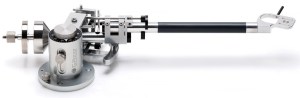
Robert Brook has taken our advice and ended up with much of the same equipment we currently use. He seems very happy with the analog sound he is getting these days, especially from his Triplanar tonearm.

And now Aaron B. has made a great leap forward into better sound. He wrote to tell me all about the differences he is hearing now that he has a system that is designed to reveal what’s actually on his records. His previous system was better at hiding the imperfections and shortcomings of many of the albums he was playing, but he’s decided he doesn’t want to go down that road anymore, and we couldn’t be happier for him. His letter:

I’m feeling another huge dose of gratitude for you, Tom.

I installed the Tri-Planar arm on Friday, and I could tell right away that things are sounding just wonderfully better.

My whole setup is getting really close to your full recommendation. Dynavector 17dx mounted in a Tri-Planar tonearm, mounted on a VPI Aries 1 table, going into an EAR 324, out to a [redacted] amp, driving Legacy speakers.

I managed to buy everything except the cartridge used and in good shape. The total cost for my current system is a hair above $10K, and it is sounding nearly as good as I’ve ever heard vinyl sound, or any recorded music for that matter.

The Triplanar tonearm is a game-changer. This is the most dramatic improvement since I first replaced my B&W bookshelf speakers with the Legacys. I’m frankly stunned by what a difference it makes.

The difference the tonearm makes is evident in nearly every aspect of the sound.

First, the problems I was having previously have cleared up. This includes vocal sibilance, occasional graininess to the sound, and what I mistook for groove wear, even on some hot stampers that otherwise sounded great.

Some that I returned to you, I now wish I could have back.

Beyond fixing the last of my playback problems, the Triplanar is bringing out more of the life and energy in the music than any other change I’ve made since you started advising me.

The attack on instruments is arresting. I’ve come to believe that the aspect of live music that’s hardest for any recording to capture is the attack. That’s where the energy of live music is to be found.

I am hearing more details and overtones to the music that I ordinarily needed to turn up the volume to hear. Also, there’s greater depth to the soundstage, even in my small room.

I’ve said this to you before, but it bears repeating. I love the records you sell. I’ve got 15 hot stampers now, and they are the crown jewels of my collection. But, it’s the education you’ve given me that’s truly transformed my music listening experience.

Today, for that, you have my deep gratitude.

Aaron

Aaron,

Thanks for taking the time to write and say all those nice things about our records and the equipment we have recommended you play them with. As you can clearly see now, it takes the right stereo to really bring our records to life. Glad to hear yours is working so well.

I have long held that the best way to do audio is to find a system in someone’s home that sounds amazing and just buy all the same stuff that person has and set it up the same way he did. If a stereo is sounding good, much of it has to be working right. Start there, then make your own improvements based on a proven model of success.

I did this to the extent it was possible back in the 80s, copying my friend George Louis’s system, comprising four 140 watt per channel transistor amps (four times the power I have now), an electronic crossover, two sets of adjustable electrostatic tweeter arrays (RTR for one and Janzen for the other), a large number of woofers in the main cabinet and a couple of dual 10″ subs thrown in for good measure.

(more…)