Stamper Info

Some audiophiles complain that our reluctance to give out stamper information is selfish. We think that’s not fair.

We admit that we rarely give out the stamper numbers for the pressings that win shootouts — we paid a high price in time and effort to discover them — but we do give out a great deal of information for records that did not sound especially good to us, a free – and valuable! — service from your friends at Better Records.

These Are the Shaded Dog Stampers to Avoid on LSC 2581

Hot Stamper Pressings of Living Stereo Titles Available Now

Even though they had the Shaded Dog label, some of the later stampers for this record were not very good sounding compared to the ones that won our shootouts.

15s on side one earned a grade that would prevent it from being sold as a Hot Stamper pressing. There was no reason to play side two (13s) since side one eliminated this copy from the competition.

The 1+ grade found on this side one means it’s simply not very good, Shaded Dog label or no Shaded Dog label.

Pressings with these stampers might be passable, even to some degree enjoyable, especially when played on an old school system, but they would not be worth bothering with on the high quality modern equipment we use.
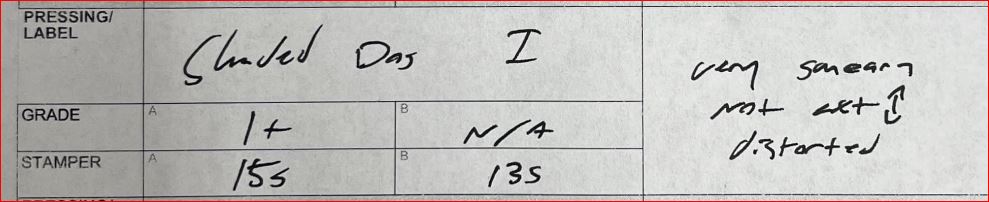
In this case, the conventional wisdom that the original pressings will most likely have superior sound to the later-numbered copies turns out to be right.

(more…)

Three Copies of Harold in Italy and Still No Luck

Hot Stamper Pressings of Living Stereo Titles Available Now

For a Living Stereo record from the Golden Age of All Tube recording, especially one from the late-50s, you might expect that the better Shaded Dog pressings would have exceptionally rich, natural sound.

After all, 1958 is clearly one of the great years for analog recordings, as evidenced by this amazing group of albums, all recorded or released in that year.

Unfortunately, the pressings we played of the Berlioz album you see pictured were quite a letdown. We dropped the needle on three different early copies of LSC 2228 with three different sets of stampers and found that none of them were all that impressive, as can be seen from our notes:

  • First: tubey but pretty hot, just okay. (6s/3s)
  • Second: smeary and congested, not great. (4s/4s)
  • Third: tubey but smeary (3s/1s)

We guessed that their final grades after a shootout would probably fall into the range of 1+ or so, just below the cutoff for a minimal Hot Stamper grade (1.5+).

If we’d half a dozen or more to play, some copies would probably be a bit better, some would be a bit worse, but the bulk of them would end up having sound that was merely passable, even after a good cleaning. (Without a good cleaning some might not even earn that single plus.)

For now we’re throwing in the towel and moving on to Golden Age records with better prospects.

(more…)

Our History with Led Zeppelin’s Rock Classic from 1990 – 2010

Hot Stamper Pressings of the Music of Led Zeppelin Available Now

UPDATE 2026

In 2010 we wrote the overview below about what we thought we knew about Zep II. We have since amended the text in a few places and added some links. Please to enjoy.


This is undoubtedly one of the best, maybe THE best hard rock recording of all time, but you need a good pressing if you’re going to unleash anything approaching its full potential. We just conducted a shootout and heard MUCH more bad sound than good. You name it — imports, reissues, originals — we’ve played ’em, and most of them were TERRIBLE.

Especially the non-RL originals. That’s some of the worst sound we’ve ever heard.

If you see a “J” stamper, run for your life.

The best copies of Zep II have the kind of rock and roll firepower that’s guaranteed to bring any system to its knees. I can tell you with no sense of shame whatsoever that I do not have a system powerful enough to play this record at the levels I was listening to it at in one of our shootouts a while back. When the big bass comes in, hell yeah it distorts. It would have distorted worse at any concert the band ever played. Did people walk out, or ask the band to turn down the volume? No way. The volume IS the sound.

(more…)

Biggles Let Us Down on this Pressing of Who Are You

Hot Stamper Pressings of the Music of The Who Available Now

We described a recent shootout winning pressing this way:

This copy has the Glyn Johns big, bold sound we demand from this famous producer/engineer.

Forget the domestic pressings, forget the DD Labs Half-Speed, forget whatever lame reissues have come or will come down the pike – if you want to hear this album right, a Hot Stamper British pressing is the only way to go.

The title song sounds amazing on this killer Triple Plus side two – the dynamic power of the recording comes through loud and clear.

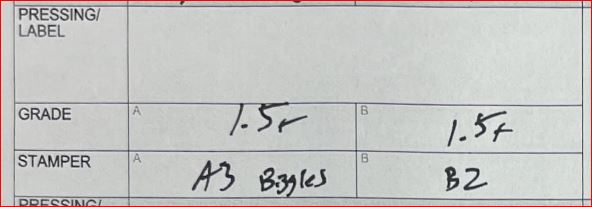
Of course, not all stampers are hot enough to win a shootout. This British A3/B2 cut by none other than Biggles was judged to have middling sound quality.

1.5+ is four grades down from the top copy. That’s a steep dropoff as far as we’re concerned. 1.5+ only hints at how good sounding a recording Who Are You can be on the best pressings.

(more…)

This Tony Hawkins-Mastered Pressing Sure Was a Letdown

Hot Stamper Pressings of Orchestral Spectaculars Available Now

This London original pressing with 1K/1K stampers (the work of Tony Hawkins) was so bright, dry, and shrill I could hardly stand it for more than the minute it took me to realize it was not going to get any better. The sound is bad enough to send it right into our hall of shame.

There are a number of other Deccas and Londons that we’ve played over the years that were disappointing, and they can be found here.

The copy we had back in 2010 was a very good sounding record, or so we thought.

Maybe we were wrong! It’s not as though we don’t admit to the possibility. You can read all about it below.

Falla’s Three-Cornered Hat is positively WONDERFUL on this copy (A++), and the Sinfonia Sevillana by Turina on side two is every bit as good! The second suite on side one is particularly lovely — check out how rich and full the sound is. Side two has a HUGE soundstage, as wide as they come. The sound is very rich and full of audiophile colors — this is the kind of record that you’re going to love playing for your audio pals!

(more…)

Shootout Winning Stampers for La Boutique Fantasque Revealed

Hot Stamper Pressings of the Music of Rossini Available Now

UPDATE 2026

Our current favorite recording of La Boutique Fantasque is the one Solti recorded for Decca in 1957.

It belongs to that very special group of roughly 150 orchestral recordings which have the potential to offer the discriminating (and well-heeled) audiophile the best performances of major works with by far the highest quality sound.

It has been our experience that modern remastered pressings simply cannot compete with the best pressings of these landmark recordings.

The Fiedler (LSC 2084) is still a very good record, but we no longer see much reason to carry it when the Solti is better in almost every way (and quieter as a rule to boot).

Below we have reproduced our full stamper sheet, including the Shootout Winning stampers, which happen to be 3S/4S for this album.

(more…)

What Exactly Does Van Gelder Stamped in the Deadwax Tell You?

Hot Stamper Pressings of CTI Titles Available Now
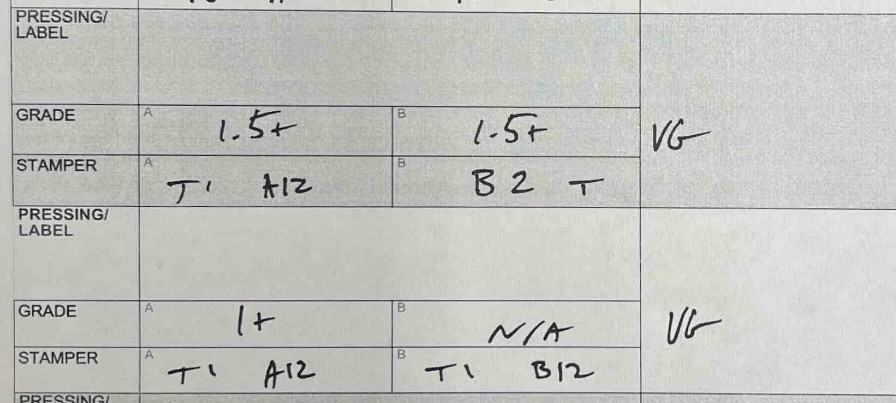
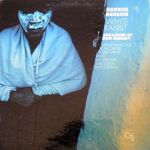
The section of the stamper sheet we wrote up after our most recent shootout belongs to George Benson’s White Rabbit album, the one released by CTI in 1972.

We think these stampers illustrate an important reality regarding the variability of record pressings, and it’s one that we run into on regularly during shootouts.

Keep in mind that the notes you see were made without the listener knowing what the stamper numbers were for the copy being evaluated. Some relevant facts:

  • Rudy Van Gelder cut all the original domestic pressings for the album that we played in our shootout since those are the only ones we know of to have the potential for Hot Stamper sound. (Hint: forget the reissues, imports, etc.)
  • The stampers for the two copies you see below were the two worst performers out of the six we had to work with. (We started out with more than six copies to audition. Unfortunately, some of the copies we clean and play get tossed out during the shootout for having noise issues — scratches that play, bad vinyl, inner groove distortion, etc. Noisy copies of  fairly common jazz records are not saleable no matter how good they sound.)
  • The top pressing shown below earned good, not great Hot Stamper grades of 1.5+ on both sides. This is the minimal rating any Hot Stamper pressing must earn to be offered to our customers. As you can see, A12/B2 are the stampers for this pressing.
  • There was another A12 side one in our shootout that did slightly better, earning a 2+ grade. The pressing you see at the bottom also had an A12 side one, but it did not make the grade. (The N/A means we didn’t play side two of that copy because the 1+ side one makes the record not worth the bother.)

We know that White Rabbit is an outstanding George Benson album, recorded by the immensely talented Rudy Van Gelder himself. All the original pressings were mastered by him as well. We’ve been doing shootouts for the album for more than a decade and in that time have heard some amazing sounding copies. I don’t recall one ever being returned, for any reason.

(more…)

An Overview of Beatles Oldies But Goldies

Hot Stamper Pressings of the Music of The Beatles Available Now

This is a Beatles album we think we know well.

We’ve done a number of shootouts for A Collection of Beatles Oldies over the last ten years or so, and our experimental approach using many dozens of copies provides us with strong evidence to support the following conclusions regarding the sound of the originals vis-a-vis the reissues:

  1. The best of the early pressings always win our shootouts. No reissue has ever earned our top grade of A+++ and it is unlikely any reissue ever will.
  2. The reissues can be quite good however. The best of them have earned grades of Double Plus (A++).
  3. The worst of the early pressings also earned grades of Double Plus (A++).
  4. Conclusion: if you have a bad original and a good reissue, you might be fooled into thinking the sound quality was comparable.

(more…)

We Don’t Offer Domestic Pressings of Pour Down Like Silver for One Very Simple Reason

Hot Stamper Pressings of the Music of Richard Thompson Available Now

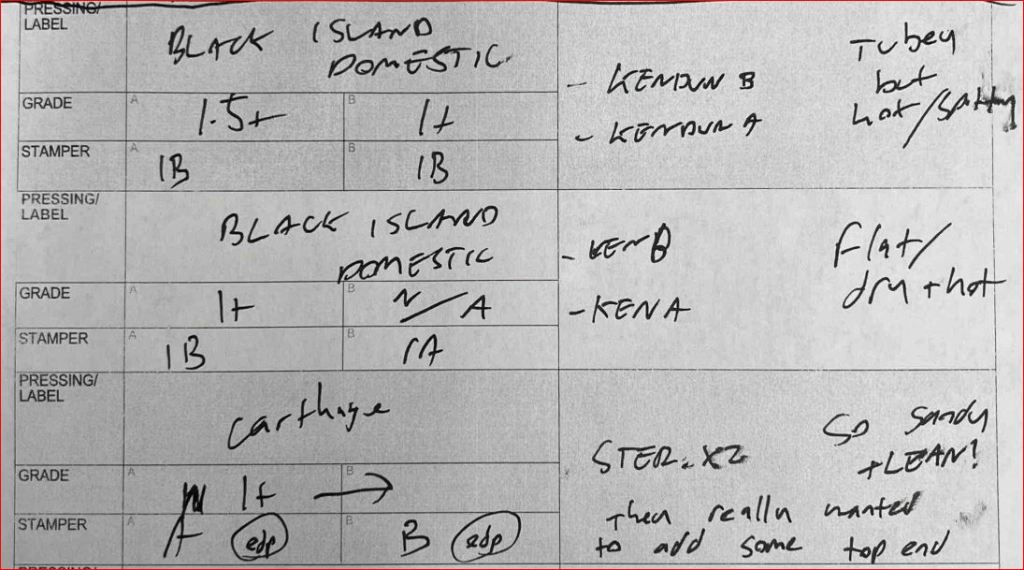
In spite of the fact that the domestic pressings of this Richard and Linda Thompson classic from 1974 were mastered by the likes of Kendun and Sterling — two of the greatest mastering houses of all time, — they have never impressed us with their sound quality.

The biggest problems with this record would be obvious to even the casual listener: gritty, spitty vocals; lack of richness; bright tonality; lack of bass; no real space or transparency, etc.

The domestic Island pressings did not do nearly as well in our shootout as the best Island imports, no surprise there as the early UK records were mastered by one of our favorite engineers.

Avoid the Carthage pressings mastered by Sterling. They came in last in our shootout.

The domestic breakdown follows:

Black Island Domestic #1

  • Tubey but hot and spitty.

Black Island Domestic #2

  • Flat, dry and hot (glary or bright)

Carthage Domestic recut from 1983, Sterling on both sides

  • So sandy and lean! They really wanted to add some top end (!)

Defending the Indefensible

(more…)

The Gayne Ballet on Mercury Can Be a Little Bright

Hot Stamper Pressings of Classical Masterpieces Available Now

UPDATE 2025

The review you see below was written more than ten years ago.

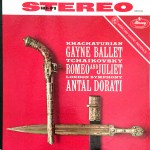
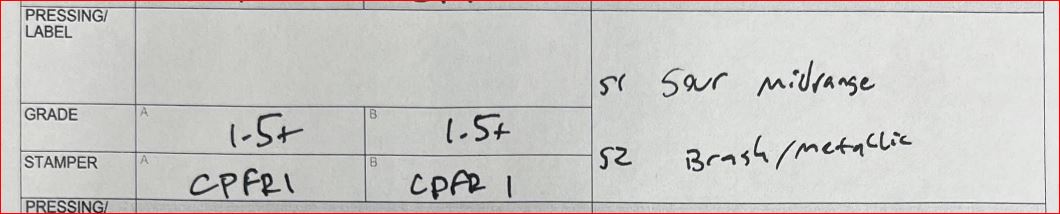
Having just done another shootout for SR 90209, Dorati’s recording of the two works, The Gayne Ballet and Romeo and Juliet, I can now confirm that there are some stampers that are indeed way too bright.

Side one of a recent copy had a sour midrange. Side two of the same copy was brash and metallic.

As for side two not sounding as good as side one in the older review before, seems we clearly got that wrong, the result, to some degree, of having an inadequate sample size.

Also,  we didn’t have as good a stereo as we do now, and we weren’t as good at doing shootouts back then either.


Our Old Review

This side one is truly DEMONSTRATION QUALITY, thanks to its superb low-distortion mastering. It’s yet another exciting Mercury recording. The quiet passages have unusually sweet sound.

This kind of sound is not easy to cut. This copy gets rid of the cutter head distortion and coloration and allows you to hear what the Mercury engineers accomplished.

(more…)