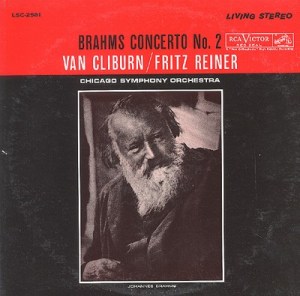
LSC-2581

These Are the Shaded Dog Stampers to Avoid on LSC 2581

Hot Stamper Pressings of Living Stereo Titles Available Now

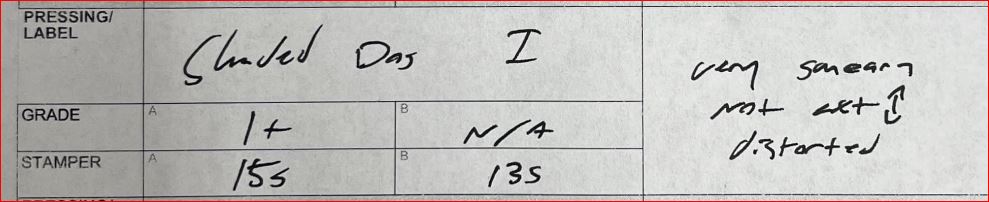
Even though they had the Shaded Dog label, some of the later stampers for this record were not very good sounding compared to the ones that won our shootouts.

15s on side one earned a grade that would prevent it from being sold as a Hot Stamper pressing. There was no reason to play side two (13s) since side one eliminated this copy from the competition.

The 1+ grade found on this side one means it’s simply not very good, Shaded Dog label or no Shaded Dog label.

Pressings with these stampers might be passable, even to some degree enjoyable, especially when played on an old school system, but they would not be worth bothering with on the high quality modern equipment we use.

In this case, the conventional wisdom that the original pressings will most likely have superior sound to the later-numbered copies turns out to be right.

(more…)

Brahms / Piano Concerto No. 2 / Cliburn / Reiner

More of the Music of Johannes Brahms

  • Van Cliburn’s exceptional performance of Brahm’s Piano Concerto No. 2, here with solid Double Plus (A++) Living Stereo sound or close to it throughout this early Shaded Dog pressing
  • It’s also fairly quiet at Mint Minus Minus, a grade that even our most well-cared-for vintage classical titles have trouble playing at
  • This side one is big, full-bodied, clean and clear, with a wonderfully present and solid piano, and plenty of 3D space around it, and side two is not far behind in all those areas
  • One of the best of the Cliburn recordings – most are not very good, the worst of them being LSC 2252 and the best of them being, probably, LSC 2507 with this one right up there with it
  • We’ve liked LSC 2296 with Rubinstein and Krips in the past, but after doing this shootout we have to say that Cliburn and Reiner set a higher standard for a recording of the work
  • On the right shaded dog pressing, LSC 2581 is yet another Must Own orchestral recording from 1962

Our main listening guy made some notes about the sound of the best pressings he heard. Here is what he wrote:

This LP might be tough for some customers to reproduce. The big peak at the end of track one on side one can have some tube/compressor distortion. Only the fullest, richest copies can properly reproduce this section without the piano and low end getting lost.

(more…)

clone me Shaded Dog Stampers to Avoid on XXX passable sheet 1+

Hot Stamper Pressings of Living Stereo Titles Available Now

Even though they had the Shaded Dog label, some of the later stampers for this record were not very good sounding compared to the ones that won our shootouts.

15s on side one earned a grade that would prevent it from being sold as a Hot Stamper pressing. There was no reason to play side two (13s) since side one eliminated this copy from the competition.

The 1+ grade found on this side one means it’s simply not very good, Shaded Dog label or no Shaded Dog label.

Pressings with these stampers might be passable, even to some degree enjoyable, especially when played on an old school system, but they would not be worth bothering with on the high quality modern equipment we use.

In this case, the conventional wisdom that the original pressings will most likely have superior sound to the later-numbered copies turns out to be right.

The average Shaded Dog may be better than the average classical record, but that certainly doesn’t mean it has any claim to audiophile sound. We’ve played bad early RCA pressings by the hundreds. Now, finally, with this blog we can point some of them out to those record lovers who are more interested in top quality sound than an original label.

For those who might be interested, there’s more on our grading scale here.

There are quite a number of other records that we’ve run into over the years with obvious shortcomings.

(more…)

White Dogs or Shaded Dogs on the Brahms Piano Concerto No. 2?

Hot Stamper Pressings of Living Stereo Titles Available Now

UPDATE 2024

The review you see below is quite old. We no longer agree with the statement we made back then that the White Dog pressings are better sounding than the Shaded Dogs.

In our recent shootout, the first one I can remember since 2005 — that was 20 years ago! — the White Dogs did not do nearly as well as the Shaded Dogs we played.


This White Dog pressing is the best sounding copy I’ve ever heard, much better than the earlier pressings. The piano doesn’t break up like it does on those, especially in the second movement.

Finally the piano sounds right – solid and with the correct overtones. It goes without saying that this is an exceptionally good performance as well.

One of the best of the Cliburn recordings which, as you may know, are rarely any good, the worst of them being LSC 2252 and the best of them being, probably, LSC 2507.

Seems we got some of this one wrong. Live and learn is our motto, with mea culpa running a close second.

It’s possible that our mistaken judgment about the superiority of the White Dog pressings in 2005 was mostly the result of sample sizes that were much too small. However, I was operating as a one man band back when I was doing all the classical shootouts, so my chances of getting the wrong answer were fairly high, a reality I have documented on this blog in some detail.

I also was not able to clean the records under comparison very well, a problem that has been solved — and then some — by a great many improvements in techniques, machinery and fluids over the last twenty years.

What we could do back then and what we can do now, after twenty years of constant improvement, are as different as night and day, a subject we write about quite a bit under the heading of audio progress.

I’ve also made a habit of admitting my mistakes in the hopes that other audiophile reviewers would consider following suit. To my knowledge this has yet to happen, but hope springs eternal!

(more…)
In 2005 We Were (Probably) Way Off the Mark for Brahms’ Piano Concerto No. 2

Hot Stamper Pressings of Living Stereo Titles Available Now

UPDATE 2024: This is a very old review. We would no longer agree with the assertion that the White Dog pressings are better sounding than the Shaded Dogs. In our recent shootout, the first one I can remember since 2005 — that was 19 years ago! — the White Dogs did not do nearly as well as the Shaded Dogs we have on hand.

This White Dog pressing is the best sounding copy I’ve ever heard, much better than the earlier pressings. The piano doesn’t break up like it does on those, especially in the second movement.

Finally the piano sounds right – solid and with the correct overtones. It goes without saying that this is an exceptionally good performance as well.

One of the best of the Cliburn recordings which, as you may know, are rarely any good, the worst of them being LSC 2252 and the best of them being, probably, LSC 2507.


This is an Older Classical/Orchestral Review

Most of the older reviews you see are for records that did not go through the shootout process, the revolutionary approach to finding better sounding pressings we started developing in the early 2000s and have since turned into a veritable science.

We found the records you see in these older listings by cleaning and playing a pressing or two of the album, which we then described and priced based on how good the sound and surfaces were. (For out Hot Stamper listings, the Sonic Grades and Vinyl Playgrades are listed separately.)

We were often wrong back in those days, something we have no reason to hide. Audio equipment and record cleaning technologies have come a long way since those darker days, a subject we discuss here.

Currently, 99% (or more!) of the records we sell are cleaned, then auditioned under rigorously controlled conditions, up against a number of other pressings. We award them sonic grades, and then condition check them for surface noise.

As you may imagine, this approach requires a great deal of time, effort and skill, which is why we currently have a highly trained staff of about ten. No individual or business without the aid of such a committed group could possibly dig as deep into the sound of records as we have, and it is unlikely that anyone besides us could ever come along to do the kind of work we do.

(more…)