Overview of the Greats – Rock, Jazz, etc.

In the Court of the Crimson King – An Overview

Hot Stamper Pressings of Progressive Rock Albums Available Now

If you have the Atlantic pressing, from any era, you have never heard this record at its best. The better sounding domestic originals we’ve played are clearly mastered from copy tapes, which results in dubby sound.

In the Court of the Crimson King is such a well recorded album that even the sound quality derived from second-generation tapes is still better than most of what came out in 1969.

(By the way, 1969 was a phenomenal year for audiophile quality recordings – as of 2026 we’ve auditioned and reviewed more than one hundred and twenty titles, and there are undoubtedly a great many more that we’ve yet to play. To make it easier for audiophiles to separate the wheat from the chaff, we’ve also identified more than 25 Rock and Pop albums essential to any audiophile record collection worthy of the name.)

Now on to brass tacks.

UK Polydor Label

Passable, not really worth the labor to put them in a shootout just to have them earn sub-Hot Stamper grades. A1/B5 is a common stamper for these pressings and with those stampes the Polydor is not worth the vinyl it’s pressed on.

Pink Label Island

The same can be said for some of the earliest UK Pink Label Island pressings. None of them has ever won a shootout and probably none of them ever will. (A number of Pink Label Island pressings that never win shootouts can be found here.)

The conventional wisdom which holds that original pressings are superior to reissues in this case turns out to be flat wrong.

The Pink Label pressings can be good, but we rarely buy them, our two best reasons being:

(more…)

An Overview of Beatles Oldies But Goldies

Hot Stamper Pressings of the Music of The Beatles Available Now

This is a Beatles album we think we know well.

We’ve done a number of shootouts for A Collection of Beatles Oldies over the last ten years or so, and our experimental approach using many dozens of copies provides us with strong evidence to support the following conclusions regarding the sound of the originals vis-a-vis the reissues:

  1. The best of the early pressings always win our shootouts. No reissue has ever earned our top grade of A+++ and it is unlikely any reissue ever will.
  2. The reissues can be quite good however. The best of them have earned grades of Double Plus (A++).
  3. The worst of the early pressings also earned grades of Double Plus (A++).
  4. Conclusion: if you have a bad original and a good reissue, you might be fooled into thinking the sound quality was comparable.

(more…)

An Overview of the Reissues of Teaser & The Firecat

Hot Stamper Pressings of the Music of Cat Stevens Available Now

It is my contention that there is no audiophile pressing on the face of the Earth that can compete with the best sounding originals of Teaser and the Firecat. 

Of ANY music. From ANY era.

The best copies of Teaser have a sound I have never experienced with any modern remastered record. There is a magic in its grooves that may simply be impossible to capture with the cutting equipment currently in use. Perhaps one day I’ll be proven wrong, but that day is clearly not yet upon us.

Island 25th Anniversary LP

I remember fifteen years ago when Acoustic Sounds was selling the then in-print 25th Anniversary Island pressing (10U, as I recall) for $15, claiming that it was a TAS list record. If you’ve ever heard that pressing, you know it has no business going anywhere near a Super Disc List. It’s mediocre at best and has virtually none of the magic of the good original pressings. I refused to sell it back in those days, for no other reason than it’s far from a Better Record. I don’t like misrepresenting records and I don’t like ripping off my customers. That pressing was a fraud and I was having none of it.

The Anadisq

In case you don’t already know, one of the worst sounding, if not the worst sounding version of all time, is the Mobile Fidelity Anadisq pressing that came out in the ’90s. If you own that record, you really owe it to yourself to pull it out and play it. It’s just a mess and it should sound like a mess, whether you have anything else to compare it to or not.

It’s also on the TAS Super Disc list, which is sad. Really, really sad. (more…)

Another Unimpressive Reissue Pressing of Coltrane’s Music — What Is Going On?

Hot Stamper Pressings of the Music of John Coltrane Available Now

We had an early Blue Label Prestige mono pressing that was not as awful as the original Yellow Label mono we played, but it’s not very good either. Our grade for a record that earns one plus on both sides is passable.

Which means you could listen to it, maybe even enjoy it, but you would have no idea just how well Rudy Van Gelder recorded the sessions in 1958 that went into the making of the album, which as you know was not compiled for release until 1962.

As you can see from the notes above, it was crude, smeary and thick. We don’t sell records that sound like that.

I can’t say that most modern remastered records are crude, although some of them are, but a great many we’ve played are smeary, and almost all of them are thick — that is, lacking in transparency — to some degree. That last quality — a lack of transparency — may be the most irritating of all, a subject we discuss here.

(A great many records we’ve auditioned over the years are good for testing transparency. Those wanting to improve this aspect of their playback should consider making use of them.

(more…)

Mobile Fidelity Actually Produced a New and Improved Deja Vu in 1983

Hot Stamper Pressings of the Music of Crosby, Stills, Nash and (Sometimes) Young

A letter came to us years ago with the comment “I had no idea that vinyl could produce this sound.”

As the time I made some of the following comments in reply and have added a few new ones since then.

Deja Vu is indeed a very special album, one I have been obsessed with since I first became an audiophile.

I was a big Crosby, Stills and Nash fan already — the first album being life-changing to a 15 year old music lover such as myself, playing over and over on 8-track tape in the car no less — so it was only natural that I would fall in love with Deja Vu when it came out in 1970.

13 Years Go By

Time went by and then, oddly enough, my love for the music was reignited by a pressing that came out 13 years after the album’s first release, on a label you may be familiar with, Mobile Fidelity Sound Labs.

I realized instantly that Mobile Fidelity had indeed improved upon the average original’s sound.

This is not a high bar considering how awful sounding most originals are, but let us give credit where credit is due. With the volume cranked good and loud,  I often played the first track, Carry On, using the MoFi pressing to demonstrate how smooth, rich, big, powerful and dynamic my system could sound.

“The CD may be taking over the world,” I would say, because by 1983 that was exactly what was happening, “but you”ll never hear a CD that sounds like this!”

13 More Years Go By

It would take me many years, at least another 13 or so, to come across the domestic reissues that trounced the MoFi and showed me how colored, compressed, thick, blurry and recessed their pressing was.

Here is the real shocker from that time: I actually thought that the extremely hard-to-find reissue I’d discovered was so flukishly good that it could never be beaten by any other pressing!

(To be fair, my long-time audiophile buddy Robert Pincus probaby deserves the credit for finding it. He found a great many special pressings for me back when I was buying records from him, reaching all the way back to 1987.)

Which is yet another example of everything being relative. I admit I had a poor understanding of that vitally important concept at the time. I really had no idea how good a recording Deja Vu was, and I didn’t really have a way to find out because many of the most important revolutions in audio had not been incorporated into my system, or had yet to be invented.

Within the last five years or so another domestic pressing, and now most recently an import (!), have come to be seen as clearly superior to all of these.

This is the result of having never given up the search for a better Deja Vu.

Record Collecting in My World

Anticipating the release of the newest Half-Speed remastered pressing that would deliver me from the evils of the garden-variety domestic or import LP I happened to own was the dominant feature of my record collecting world in the 70s and 80s.

No one reading this blog will be surprised to learn that almost none of those “new and improved” pressings would pass the test of time. This is an idea I first came to appreciate in the 90s and one that has become more true with each passing year.

With the increasing proliferation of one Heavy Vinyl mediocrity after another, in 2007 we finally recognized we had a duty to our customers to stand athwart audio history and yell “Stop.”

(more…)

Abbey Road – Select Commentaries

Hot Stamper Pressings of Abbey Road Available Now
Below you will find some of the more popular commentaries we’ve written about the album.

For all you record collectors out there, please note that no pressing from 1969 has ever won a shootout. If you have a nice early UK Apple LP, we would love to sell you one that sounds better than yours, if you can spare the kind of bread we charge for the privilege of owning a masterpiece of music and sound such as this.

The Abbey Road Remix on Vinyl

The Beatles – Looking Back on Our First Abbey Road Shootout

Our Four Plus Abbey Road Shootout Winner from Way Back

https://ontherecord.co/2024/05/17/a-fun-and-easy-test-for-abbey-road-mofi-versus-apple/

An Overview of The Soft Parade

Our vintage Doors pressings — either on the Elektra Gold or Big Red E Label, nothing else will do — have the kind of Tubey Magical midrange that modern records are almost never able to reproduce.

Folks, that sound is gone and it sure isn’t showing any sign of coming back.

One of The Records That Did It For Me

Perhaps hearing Dark Side was what made you realize how good a record could sound. Looking back over the last forty years, it’s clear to me now that this album, along with scores of others, is one of the surest reasons I became an audiophile in the first place, and stuck with it for so long. What could be better than hearing music you love sound so good?

It’s clearly an album we are obsessed with. We have written extensively about quite a number of them to date. It is our contention that to be any good at this hobby, you have to become obsessed with well-recorded albums and work out the consequences of those obsessions for yourself.

The Soft Parade was one of those albums that blew my fifteen-year-old mind. Songs for Beginners was another one.

We also wrote about the subject of being obsessed with music here. An excerpt:

(more…)

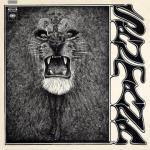
Select Commentaries for Santana’s Phenomenal Debut

Hot Stamper Pressings of the Music of Santana Available Now

Below you will find links to some of the more popular commentaries we’ve written about the album.

As should be clear from our posts, especially the one entitled “Carlos Santana Knows: Louder Is Better,” Santana’s debut was one of the reasons I spent decade after decade improving the playback quality of my system.

I wanted to hear this album at its best, and every time I made an improvement to my stereo, the sound of this album clearly got better, accent on the clearly.

That’s how I knew I was on the right track. I didn’t care about the TAS list. I cared about the albums I wanted to listen to,  like this one. Albums I had been obsessed with for as long as I can remember, and have never tired of in all the years since.

For more album overviews like this one, please click here.

About Santana’s First Album on MoFi Vinyl – We Owe You an Apology

Listening in Depth to Santana’s First Album

(more…)

Crosby, Stills and Nash’s Debut – An Overview

Hot Stamper Pressings of the Music of Crosby, Stills and Nash Available Now

Below you will find some of the more popular commentaries we’ve written about Crosby, Stills and Nash’s debut. It’s an album I have been obsessed with since the age of 15, which I enjoyed mostly on 8-track tape back then.

For those of you too young to know about these things, that speaks volumes about the quality of turntable at the time, which was mounted to an all-in-one auto-changing record player, attached to an AM/FM receiver complete with 8-track tape playback. The thing probably retailed for less than a hundred bucks and sounded like it.

This is also one of the records that we’ve often used to test with in order to improve the quality of our playback over the years, along with scores of others you can read about here on the blog.

Don’t expect to find any Hot Stamper pressings on the site though. They are very hard to find, due to the fact that the right reissues are the only ones that sound good to us and they apparently just did not make very many of them.

Listening in Depth to Crosby Stills and Nash

Although millions of copies of this album were sold, so few were mastered and pressed well, and so many mastered and pressed poorly, that few copies actually make it to the site as Hot Stampers.

We wish that were not the case — we love the album — but the copies we know to have the potential for Hot Stamper sound are just not sitting around in the record bins these days.

Whatever you do, don’t waste your money on the Joe Gastwirt-mastered CD. It couldn’t be any more awful. (His Deja Vu is just as bad.)

(more…)

Wish You Were Here – An Overview

Hot Stamper Pressings of the Music of Pink Floyd Available Now

We have added some helpful title specific advice at the bottom of the listing for those of you want to find your own Hot Stamper pressing.

This is the perfect example of everything we look for in a recording here at Better Records: it’s dynamic, present, transparent, rich, full-bodied, super low-distortion, sweet — good copies of this record have exactly what we need to make us audiophiles forget what our stereos are doing and focus instead on what the musicians are doing.

For those of you who aren’t familiar with the album, Pink Floyd managed to record one of the most amazing sounding records in the history of rock music. The song Wish You Were Here starts out with radio noise and other sound effects, then suddenly an acoustic guitar appears, floating in the middle of your living room between the speakers, clear as a bell and as real as you have ever heard. It’s obviously an “effect,” but for us audiophiles it’s pure ear candy.   

Shine on You Crazy Diamond, Pts. 1-5

Right from the dynamic intro you can tell this is going to be a wild ride. David Gilmour’s haunting guitar line that comes cutting from out of the abyss should be warm with tons of room for his phasers to do their phasing.

After the band comes in and the vocals begin (listen for the man chuckling in the left channel) you should pay attention to the balance of the mix. Most copies tend to be very midrangy which can make the guitars aggressive and harsh, often times taking emphasis away from the vocals. The good copies have lots of transparency and allow everything to sit in their respectively places. This is probably most noticeable during the saxophone solo.

The tenor that starts off this section needs to be breathy, full-bodied, and sitting delicately in the center of your speakers. It does NOT need be be honky and hard sounding without any top extension. As the solo slowly crescendos, notice the guitar line spread across the soundstage that actually bookends the saxophone. The more dynamic copies really let you hear the intricacy and delicacy of his picking that foreshadows the time signature shift about to come.

When the time does change to 6/4, the saxophone player changes to alto, totally changing the sound of the solo! You can clearly hear on the better copies that he is further away from the mic than during the previous section, but if you listen closely, it sounds as though he is moving on and off axis. Whether this is part of his mic technique or him just dancin’ and groovin’ to the music, we may never know. I certainly hope for the latter.

Other Pressings

Most copies of the CBS Half-Speed lack deep bass, and for that matter bass in general.

They’re also consistently brighter. The upper mids and highs call attention to themselves at every turn. When you switch back to a good domestic copy or import, you might not notice as much detail, but everything will sound correct and balanced: less like a recording and more like music.

Phony highs cause listener fatigue for the same reason that bright CDs get tiresome.

Just listen to the sax break on side one. If your pressing is too bright that sax will tear your head off.

The Seventies – What a Decade!

Tubey Magical acoustic guitar reproduction is superb on the better copies of this recording. Simply phenomenal amounts of Tubey Magic can be heard on every strum, along with richness, body and harmonic coherency that have all but disappeared from modern recordings (and especially from modern remasterings).

Big Production Tubey Magical British Prog Rock just doesn’t get much better than Wish You Were Here.

A Big Speaker Record

Let’s face it, this is a big speaker recording. It requires a pair of speakers that can move air with authority below 250 cycles and play at loud levels. If you don’t own speakers that can do that, this record will never really sound the way it should.

It demands to be played loud. It simply cannot come to life the way the producers, engineers and artists involved intended if you play it at moderate levels.

Obsessed? You Better Believe It

Wish You Were Here is yet another record we admit to being obsessed with.

Currently we have identified about 150 that fit that description, so if you have some spare time, check them out.

(more…)