Other Albums We’re Obsessed With

Getting the Balance Right on Mean to Me

Hot Stamper Pressings of Pop and Jazz Vocals Available Now

Mean to Me is a favorite test track for side one, with real Demo Disc quality sound. We credit it with helping us dramatically improve our playback.

Roy DuNann at Contemporary was able to get all his brass players together in one room, sounding right as a group as well as individual voices.

The piano, bass, and drums that accompany them are perfectly woven into the fabric of the arrangement.

What makes this song so good is that when the brass really starts to let loose later in the song, with the right equipment and the right room, you can get the kind of sound that’s so powerful you could practically swear it’s live.

Helen was recorded in a booth for this album, and her voice is slightly veiled relative to the other musicians playing in the much larger room that of course would be required for so many players.

When you get the brass correct, the trick is to get her voice to become as transparent and palpable as possible without screwing up the tonality of the brass instruments.

The natural inclination is to brighten up the sound to make her voice more clear.

But you will quickly be made painfully aware that brighter is not better when the brass gets too “hot” and starts to tear your head off.

The balance between voice and brass is key to the proper reproduction of this album.

Once you have achieved that balance, tweak for transparency while guarding against too much upper midrange or top end. Which also means watch out for audiophile wires that may have fooled you into thinking they were more resolving when actually they were just peakier in some portion of the frequency range.

(more…)

1962 Tubes and The Sound That’s Been Lost for Fifty Years

Hot Stamper Pressings of Pop and Jazz Vocal Albums Available Now

UPDATE 2025

This review was written many years ago, circa 2010 I would guess, right about the time we first started doing shootouts for the album. (Here is what we have to say about I Left My Heart in San Francisco these days, suspiciously similar to what we had to say in 2010. As the song says, ‘”The fundamental things apply…”)


Everything that’s good about All Tube vocal recordings from the 50s and 60s is precisely what’s good about the sound of this record.

The huge studio the music was recorded in is captured faithfully on this pressing. The height, width and depth of the staging are extraordinary, a true Demo Disc in that regard.

We are not big soundstage guys here at Better Records, but we can’t deny the appeal of the space to be found on a record that sounds as good as this one does.

Transparency and Tubey Magic are key to the sound of the orchestra and you will find both in abundance on these two sides.

(Other records that are good for testing those two qualities can be found here and here.)

Albums such as this live and die by the quality of their vocal reproduction. On this record Mr. Tony Bennett himself will appear to be standing right in your listening room, along with the 38 other musicians from the session. (Actually, come to think of it, they’re probably sitting.)

On the best pressings, the space of your stereo room will seem to expand in all directions to accommodate them — an illusion of course, but nevertheless a remarkably convincing one.

(more…)

Sinatra At The Sands through Dahlquist DQ-10’s – My Neophyte Audiophile Mind Is Blown

Hot Stamper Pressings of the Music of Frank Sinatra Available Now

Back in the early 70s this was actually the album that first introduced me to honest-to-goodness “audiophile” sound.  

I was at my local stereo store listening to speakers one day, and the salesman made a comment that the speakers we were listening to (the old Infinity Monitors with the Walsh tweeter) sounded “boxy.”

I confessed to him that I didn’t actually know what that meant or what it would sound like if it weren’t boxy. 

So he hooked up a pair of Dahlquist DQ-10s and put Sinatra at the Sands on. I was amazed at how the sound just floated in the room, free from the speakers, presenting an image that was as wide and deep as the showroom we were in. That speaker may have many flaws, but boxiness is definitely not one of them.

This description is pretty close to what I thought I heard all those years ago:

The presence and immediacy here are staggering. Turn it up and Frank is right between your speakers, putting on the performance of a lifetime. Very few records out there offer the kind of realistic, lifelike sound you get from this pressing.

This vintage stereo LP also has the MIDRANGE MAGIC that’s missing from the later reissues. As good as some of them can be, this one is dramatically more real sounding. It gives you the sense that Frank Sinatra is right in front of you.

He’s no longer a recording — he’s a living, breathing person. We call that “the breath of life,” and this record has it in spades. His voice is so rich, sweet, and free of any artificiality, you immediately find yourself lost in the music, because there’s no “sound” to distract you.

Or so I thought at the time.

(more…)

Balancing the Vocal, Strings and Rhythm on Lady in Satin

Hot Stamper Pressings of the Music of Billie Holiday Available Now

The better copies reproduce clearly the three most important elements in the recording — strings, rhythm, and vocal — and, more importantly, they are properly balanced with one another. 

The monos, as you might expect, balance the three elements well enough, but the problem with mono is that the vocals and instruments are jammed together in the center of the soundfield, layered atop one another.

Real clarity, the kind that live music has in abundance, is difficult if not impossible under those circumstances.

Only the stereo pressings provide the space that each of the players needs in order to be heard.

Naturally the vocals have to be the main focus on a Billie Holiday record. They should be rich and tubey, yet clear, breathy and transparent.

To qualify as a Hot Stamper, the pressings we offer must be highly resolving. You will hear everything, all of it surrounded by the natural space of the legendary Columbia 30th Street Studio in which the recording was made.  (more…)

Dream With Dean – Watch Out for Hard and Honky Vocals

Hot Stamper Pressings of Pop and Jazz Vocal Albums

Dream with Dean is great for finding any traces of “honk” in your midrange. Getting Deano’s baritone to sound tubey and rich, to get the sound that Bing Crosby could get just by opening his mouth, is not all that easy on some systems, mine included.

Correctly set VTA is critical in this regard, but pretty much everything must be working at its best for Dean to sound as intimate and natural as we know he can on the best pressings.

Balancing the lower mids with the upper mids is the goal, and it’s not as easy as it sounds. This album is great for testing, and guaranteed to bring practically any high-dollar system at a stereo showroom, a convention, or your very own home to its knees.

This is my favorite Dean Martin record of all time; just Dean and a jazz guitar quartet behind him (featuring Contemporary favorites Barney Kessel and Red Mitchell!) doing standards. On the best copies, the immediacy is absolutely mind-blowing. It’s a shame that there aren’t more Frank Sinatra records that sound like this.

(more…)

John Coltrane and Johnny Hartman – What a Record!

Hot Stamper Pressings of the Music of John Coltrane Available Now

I defy you to find a Male Vocal record produced in the last forty years that can hold a candle to this one, sonically or musically.

A wonderful collaboration between a horn player and a singer, perhaps the greatest of all time.

We’ve recently compiled a list of records we think every audiophile should get to know better, along the lines of “the 1001 records you need to hear before you die,” with an accent on the joy these amazing audiophile-quality recordings can bring to your life. John Coltrane and Johnny Hartman is a good example of a record many audiophiles may not know well but would be well advised to get to know better.

This could very well be the greatest collaboration between a horn player and a singer in the history of music.

I honestly cannot think of another to rank with it. Ella and Louis has the same feel — two giants who work together so sympathetically it’s close to magic, producing definitive performances of enduring standards that have not been equaled in the fifty plus years since they were recorded. And, on the better copies, or should we say the better sides of the better copies, RVG’s sound is stunning. (His mastering, not so much.) (more…)

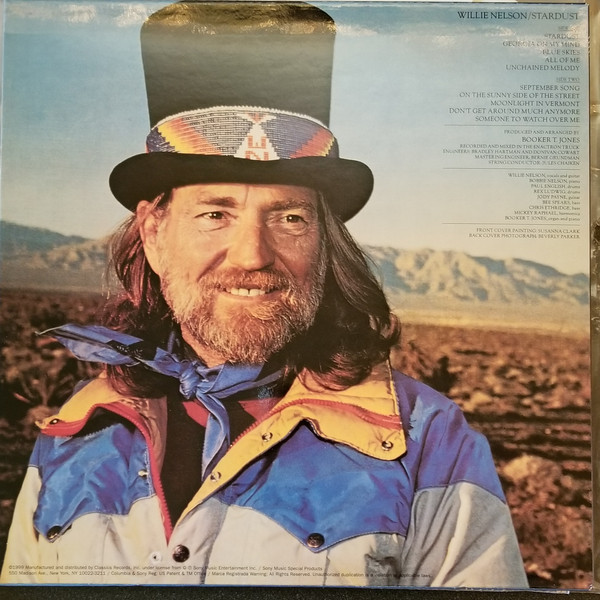
Resolution and Warmth Are Key to the Best Pressings of Stardust

Hot Stamper Pressings of the Music of Willie Nelson Available Now

This copy is hi-res without sacrificing the analog warmth that makes the recording exceptional, especially for one from 1978.

Georgia On My Mind is a DEMO QUALITY track on this album. You aren’t going to believe all the ambience. The top end is gorgeous — sweet, delicate, and silky with loads of extension. The sound is extremely hi-res without sacrificing any of the warmth that makes this music so special.

Just listen to the rimshots and the bell in Georgia On My Mind — we guarantee you have NEVER heard those instruments sound so present, clear, and immediate. 

Willie’s voice is natural and tonally correct, with all the breathy texture you could ever hope to hear. The acoustic guitars and Booker T.’s organ are perfection.

Awareness

Many copies of this album suffer from an phony hi-fi-ish quality (which is probably the reason why Stardust made the TAS List in the first place). You’ve got to play a big stack of copies to come up with a pressing that offers this kind of relaxed, natural sound. That’s our job here at Better Records — playing bad records so you don’t have to.

(more…)

Dindi, or, The Man Is a Genius

sinatjobim_1311_1_1226514510

More of the Music of Frank Sinatra

More of the Music of Antonio Carlos Jobim

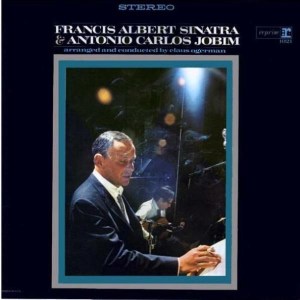
If you like romantic music you would be hard pressed to find a better album than this one. The song Quiet Nights Of Quiet Stars perfectly encapsulates the mood of the album.

Our favorite track here is Dindi. Sinatra is the king of lost loves, and the song Dindi offers him another opportunity for regret. Nobody does it better than Frank. It’s a cliche to say he wears his heart on his sleeve, but the man made a career out of it. If the cliche fits…

The Tony Bennett / Bill Evans Album – One of the All Time Great Male Vocal Recordings

More of the Music of Bill Evans

More of the Music of Tony Bennett

I would have to say that this album, when heard on the best Hot Stamper pressings, would rank up at the top of the All Time Great Male Vocal Recordings. If you like sophisticated vocal jazz I don’t think you can do much better than this record, especially when it sounds like this. Tony Bennett’s voice sounds wonderfully rich, BREATHY, and above all REAL.

The soundstage is open and spacious, the piano full-bodied and clear, and the vocals have the clarity and fullness missing from most pressings. It’s incredible to hear these two top-notch musicians interacting and responding to each other in this kind of huge, open and natural space.

The Acoustic

This is a studio recording in a fairly dead acoustic, worlds away from the echo-drenched sound of his Columbia releases, so for practically the first time on record you can really hear the man’s voice, not the echo chamber they used to process it.

Bill Evans may play the largest piano ever built — it stretches from wall to wall when played over here, not particularly realistic but nothing to get upset over. On the best copies it really has the clarity and heft of the real thing; you can hear the pedal being actuated in the quieter passages if you listen closely. The tonality is also dead on. (A good test for your stereo.)

The overall sound is open, spacious, and tonally correct from top to bottom. It’s a recording with no trace of bad mastering or phony EQ. (I can just imagine what Mobile Fidelity did to make it sound “better” when they remastered it.)

Waltz for Debby is the best thing here. You want to hear the Bennett-Evans Magic? Go right to that track.

(more…)

Love Is The Thing – The Breakthrough We Were Waiting For

Hot Stamper Pressings of Our Favorite Vocal Albums Available Now

Reviews and Commentaries for the Music of Nat “King” Cole

Love Is The Thing has long been one of the best sounding Nat “King” Cole recordings we had auditioned over the years. With a large variety of copies to play, including some interesting “finds” among them, we now know it actually is The Best. We have never heard the man sound better than he does on the hottest copies of this very album.

Of course we’re always on the lookout for Nat King Cole albums with good sound. In our experience that is not nearly as easy as one might expect. Far too many of his recordings are drenched in bad reverb and can’t be taken seriously. At least one we know of has his voice out of phase with the orchestra on most of the copies we played, putting a quick end to that shootout. 

If anything the sound on his albums gets even worse in the ’60s. Many of Nat’s albums from that decade are over-produced, bright, thin and shrill.

We assume most audiophiles got turned on to his music from the records that Steve Hoffman remixed and remastered for DCC back in the mid-’90s, For those of you who were customers of ours back then, you know that I count myself among that group. I even went so far as to nominate the DCC of Nat’s Greatest Hits as the best album DCC ever made. (I know now, as I expect you do, that that’s really not saying much, but at the time I thought it was a pretty bold statement.)

Devoting the Resources

Naturally, having long ago given up on Heavy Vinyl LPs by DCC and others of their persuasion, these days we are in a much better position to devote our resources to playing every Nat King Cole album on every pressing we can get our hands on, trying to figure out what are the copies — from what era, on what label, with what stampers, cut by whom, stereo or mono, import or domestic — that potentially have the Hot Stamper sound, the very Raison d’être of our business.

What we discovered with the more than dozen copies we’d pulled together for our shootout was that different pressings from different eras on different labels can all have the right sound. In fact, while listening to one copy after another, all without the benefit of knowing anything about the specific record on the table, it was simply impossible to predict from the sound alone which label the record was printed on.

Some of the earliest pressings were rich and tubey, but so were some of the later ones. Same with copies that were lean, hard or transistory — they could be on a label from any era with that sound.

(more…)