Pure Pop – Reviews and Commentaries

Hall, Oates and Mobile Fidelity – A Counterfactual Approach to Remastering

Hot Stamper Pressings of the Music of Hall and Oates Available Now

We here present a set of ideas about remastering that Mobile Fidelity could have used to guide them as they went about cutting their version of Hall and Oates’ masterpiece, Abandoned Luncheonette.

This is the approach they could have taken when it came time to produce an audiophile pressing of Abandoned Luncheonette, an album originally released in 1973.

By the time Mobile Fidelity released their version of the album in 1980, the record was already being offered as a Super Saver reissue, of minimal quality at a reduced price, produced solely for the purpose of keeping record store bins stocked with back catalog. (In our experience it is the rare Super Saver pressing that is worth the vinyl it’s pressed on.)

However, there is nothing inherently wrong with such a budget release. And the Super Saver version may even have some merit. But let’s assume for a moment that it does not.

Why Abandoned Luncheonette?

Now imagine that Mobile Fidelity knows, or at least believes, two things.

One, the album is a Masterpiece that belongs in any right-thinking audiophile’s collection, and two, the current version does not sound very good. The wise men at MoFi recognize that an opportunity to do some good for the audiophile community and make a buck at the same time has presented itself.

Audiophiles may not know it, but they are in need of a good sounding copy of this brilliant album, and they deserve one that sounds every bit as good as the shockingly good sounding originals (like the ones we sell).

In addition, we at MoFi can go Atlantic’s original one better.

We can now press the album on quieter vinyl than Atlantic ever could.

Next, Mobile Fidelity greenlights this project and gets a real master tape from Atlantic. (There are many tapes that masquerade as masters and aren’t any such thing, but let’s assume for the moment that Mobile Fidelity did get a real tape.)

They would also need a nice batch of original pressings, which in our opinion are the best, and would easily be recognized as being the best sounding by anyone playing the album on good equipment. The best originals are lively, rich and smooth, befitting an expensive, high quality studio recording from the era.

So instead of Mobile Fidelity trying to create a new sound for this album, they could have taken a different approach. They could’ve just said to themselves: let’s make a copy of the record that sounds as good as the original, and because we can press it on expensive, high-quality Japanese vinyl, we can justify selling it at a premium price to audiophiles looking for the best sound and quiet vinyl.

They could then cut a number of reference lacquers trying to re-create the best qualities of the originals, and then test those lacquers up against the best originals, in something that might be called a “shootout” long before the term was commonly used bu audiophiles of our persuasion.

The Counterfactual Part

This is what they could have done. That’s why we are calling this commentary a counterfactual.

They did something else entirely.

They tried to make the record sound better than any of the copies they had at hand. They tried to fix the sound. In trying to fix the sound, they made it worse because they simply were not capable of recognizing how right the good originals were.

They must have thought them dull, because the Brain Trust at Mobile Fidelity boosted the hell out of the upper midrange and top end. (Using the concept of reverse engineering, I assume their playback equipment was dull, a fairly safe assumption considering how many Mobile Fidelity records are bright enough to peel the paint.)

They Were on a Mission

They of course would never have been able to get the bass right, because half speed mastering always causes problems down low.

But they could have made the record tonally correct, and fairly transparent in the midrange, and then could have pressed that sound onto state-of-the-art Japanese vinyl.

But none of these things interested Mobile Fidelity at the time. They were hell-bent on making everything they touched better. In the process, practically everything they touched got worse, as anyone with good equipment and two working ears who has played a large selection of their records can attest.

(more…)

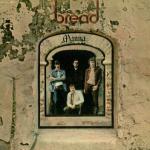
The Music of Bread – It’s Pure Pop for Now People, and We Love It

Hot Stamper Pressings of Pure Pop Albums Available Now

100+ Reviews of Our Favorite Pure Pop Albums

The best copies of Bread’s third album have amazingly sweet and rich 1971 ANALOG sound on both sides. That big rich bottom end and the volume of space that surrounds all the instruments and singers are the purest and most delightful form of Audiophile Candy we know.

The acoustic guitars? To die for. Talk about Tubey Magical Analog, this copy will show you just what’s missing from modern remastered records (and modern music generally). Whatever became of that sound?

This record put Bread’s heavily Beatles-inflected Pure Pop back on the charts after their the single from their previous album, On The Waters, made it to Number One, that song of course being Make It With You. “If”, the big hit off this album, went to number five, but we like it every bit as much as that earlier chart topper. Both represent the perfect melding of consummate songcraft and pure emotion.

We used to think that only the Best of Bread album could get those two songs to sound as luscious and Tubey Magical as they do when they’re playing in our heads, but it seems we were wrong — they’re positively amazing on the best copies of Manna.

A Double Edged Sword

Manna has the clear signature of Elektra from the late ’60s and early ’70s. It’s unmistakably ANALOG, but that double-edged sword cuts both ways. Richness and Tubey Magic (the kind you had in your old ’70s stereo equipment) often comes at the expense of transparency, clarity, speed and transient information (the things your ’70s equipment probably had more trouble with).

We heard a lot of copies that were opaque, smeary and dull up top, so the trick for us (and for those of you doing your own shootouts) is to find a copy with the resolving power and transparency that can cut through the thickness. Look for breath on the vocals (reverb too!) and extended vocal and guitar harmonics; if those two qualities are strongly evident you can’t be too far off the mark. More presence, bigger bass (the bass is HUGE on the best copies), more size, energy and space: these will help take you to the highest (Super Hot and White Hot) levels.

Speaking of bass, notice how prominent, big and clear the bass guitar is on many of these songs. This is not a sound we hear nearly enough. During the shootout we were lovin’ it. The Legacy Focus in our reference system has three twelve-inch woofers per channel. They do a lovely job with this kind of big-bottom-end recording, the kind of recording for which Botnick and The Doors (and Love too, let’s not forget them) are justly famous.

Where is that sound today? We miss it.

Engineering

On the better Hot Stamper copies, the ones with especially sweet and rich ANALOG sound, the credit obviously must go to their brilliant engineer, Armin Steiner, the man responsible for recording some of the best sounding, most Tubey Magical Chart-Topping Pop Rock for this band throughout the ’70s. As would be expected from success on such a scale, Steiner has more than a hundred other engineering credits. He’s also the reason that Hot August Night is one of the best sounding live albums ever recorded.

When you find his name in the credits, there’s at least a chance that the sound will be very good. You need the right pressing of course, but the potential for good sound should be your working hypothesis. Now all it takes is some serious digging in the record bins, tedious cleaning and even more tedious critical listening to determine if you’ve lucked into a diamond in the rough. Or, if you prefer, allow us do all that work for you. After 30 years in the business, we’re gotten pretty good at it.

Pure Pop For Now People

When you hear sound this good, it allows you to appreciate the music even more than the sound. This is in fact the primary raison d’etre of this audiophile hobby, or at least it’s supposed to be. To hear the vocal harmonies that these guys produced is to be reminded of singers of the caliber of The Everly Brothers or The Beatles. It’s Pure Pop for Now People, to quote the famously waggish Nick Lowe.

Analog Heaven

In many ways this recording is state-of-the-art. Listening to the acoustic guitars on the best copies brings back memories of my first encounter with an original Pink Label Tea for the Tillerman. Rich, sweet, full-bodied, effortlessly dynamic– that sound knocked me out twenty plus years ago [now 30 plus], and here it is again! Of course I’m a sucker for this kind of well-crafted pop. If you are too then this will no doubt become a treasured demo disc in your home as well.

Pay close attention to the sound of the drums. We really like the way famous session player Mike Botts’ kit is recorded, not to mention his Hal-Blaine-like — which means god-like — drumming skills.

An Endless Supply

Audiophiles with high quality turntables literally have an endless supply of good recordings such as this to discover and enjoy. No matter how many records you own, you can’t possibly have even scratched the surface of the vast recorded legacy of the last sixty years (the first stereo recording dating from 1954, the year of my birth, good timing on the part of my parents). That’s the positive thought for the day.

We here at Better Records are happy to help you in your quest to find recordings that do justice to the music you have yet to hear.

Old Records Age Well

One further note. As your stereo improves, records like this only get better. Here I speak from experience. There are no shortcomings in this recording to be revealed by better equipment, in stark contrast to the vast majority of audiophile pressings and remasterings flooding the market these days, which to us perfectly embody the worst kind of desiccated, lifeless and often just plain weird sound we excoriate in listing after listing in our Audiophile Hall of Shame.

If you make a change to your stereo (or room or cleaning regimen or something else that affects the fidelity) and this record sounds better, more than likely you did the right thing.


Further Reading

Surfer Girl Takes MoFi Spit to a New Level

Hot Stamper Pressings of the Music of The Beach Boys Available Now

An audiophile hall of shame pressing and another MoFi LP reviewed and found wanting.

I played the MoFi pressing of this record many years ago, some time back in the early 90s if memory serves, and at the time I could hardly believe that the good people of MoFi would release a record that was so ridiculously SPITTY. The sibilance is positively out of control, the result of their wacky cutting system and phony EQ and who knows what else.

But then I remembered that there has never been a title produced by these people with sound so bad that they would have cancelled its release. {This is a classic case of begging the question. I really have no idea why some of their titles that exist only on test pressing — Pearl for one — never saw the light of day. It is possible that it was cancelled because it sounded worse than even the hard-of-hearing Powers That Be at MoFi could tolerate. Doubtful, but possible.)

(more…)

Listening in Depth to Insight Out

More of the Music of The Association

Presenting another entry in our extensive Listening in Depth series with advice on what to listen for as you critically evaluate your copy of Insight Out. Here are some albums currently on our site with similar Track by Track breakdowns.

Never My Love is clearly the best sounding track on the album. Those of you with better front ends will be astonished at the quality of the sound. Windy also sounds excellent, but I hear some sub-generation harmonic distortion, probably caused by bouncing down some of the tracks to make room for others.

This is the era of the four track machine, and when four of the tracks are used up they are bounced down to one track, making available three new tracks. Some of the albums from this era — the Mamas and the Papas come to mind — have multiple bounces, three and four deep, which accounts for the distortion that you hear all through their recordings. The two-track finished master might have upwards of five tape generations or more on some instruments or vocal parts.

Side One

Wasn’t It a Bit Like Now (Parallel ’23)
On a Quiet Night

This is an interesting track, one I never fully appreciated before. It sounds just like the Mamas and the Papas! Perhaps Bones Howe, the man who recorded both groups, had something to do with the crossover harmonies and similiar arrangements. Either way, it’s one of the stronger songs on the album.

(more…)

Sergio Mendes’ Discography – Courtesy of brasil66.com

More of the Music of Sergio Mendes and Brasil ’66

Discography by brasil66.com

1966 Sergio Mendes & Brasil ’66

The Brasil ’66 debut album on A&M opens with a bang–“Mas Que Nada” was, and still is, one of Mendes’ finest recordings. Using a sparse combination of female vocalists, drums, piano, bass and percussion, this album was Brasil ’66 at its leanest. “One Note Samba/Spanish Flea” cleverly combines two popular songs, one of Bossa Nova fame, the other straight out of the Tijuana Brass catalog. Henry Mancini’s “Lujon” (from the excellent Mr. Lucky Goes Latin album) is given vocals and retitled “Slow Hot Wind”. “O Pato” and “Agua De Beber” cover a couple more tracks from the popular Brazilian repertoire, and the American popular scene is represented by “Going Out Of My Head” and “Day Tripper”. One of the more interesting tunes here is “Berimbau”, based on a Brazilian chant. (Interesting tidbit: “Mas Que Nada” has been misspelled, in perpetuity, as “Mais Que Nada” on Brasil 66 albums!)

1967 Equinox

This sophomore effort of Brasil ’66 covers a lot of the same ground as the first album. Most notable is the addition of guitarist John Pisano, from the Tijuana Brass. There are more excellent arrangements; the standouts are “Triste”, “Chove Chuva” and “Night and Day.”

1967 Look Around

Comprised of the same musicians as the first two Brasil ’66 album, there are a few new twists. The most prominent are the two Lani Hall showcases, “Like A Lover” and “So Many Stars”, both lightly sprinkled with strings. Other favorites include “Roda”, “Batucada”, the title track and the distinctly Mendes arrangement of “With A Little Help From My Friends”.

1968 Fool on the Hill

This album presents a second version of Brasil ’66, including the excellent Brazilian musicians Rubens Bassini, Sebastiao Neto and Dom Um Romao. The string arrangements were written by Dave Grusin. What’s different is the direction in which the music on this album took. Turning from pop music influences, these songs reflect more of the Brazilian heritage of the musicians, and are more adventurous as a result. The most-recognized arrangements from this album would be the two cover versions: “Fool On The Hill” and “Scarborough Fair”. In case you’re wondering what kind of “hill” the “fools” on the cover are sitting on, on the original LP gatefold jacket, take a closer look!

(more…)

Sergio Mendes & Brasil ’66 – Another Spitty and Thin MoFi

Sonic Grade: D

An Audiophile Hall of Shame pressing and another MoFi LP reviewed and found wanting.

So spitty and thin! Why, in God’s name, why would you want to ruin such a wonderful recording?

When you have a recording that is already plenty bright, adding top end and taking out more lower midrange is the last thing in the world you should be doing. Since that was the standard operating procedure for MoFi and other Half-Speed mastering outfits around this time, that’s exactly the approach they ended up taking.

Those of you who have had the opportunity to play the Mobile Fidelity pressing of this record should know what a disaster it is.

Is brighter better? Apparently Mobile Fidelity thinks so. It sounds like a bad CD.

But it’s not a bad CD. It’s an expensive audiophile record!

If you’ve spent any time on this site, you should know by now that many audiophile records sound WORSE than the typical CD.

The typical CD does not have an equalization curve resembling a smile. The classic smile curve starts up high on the left, gets low in the middle, and rises again at the end, resulting in boosted bass, boosted top end, and a sucked out midrange — the Mobile Fidelity formula in a nutshell.

But they forgot to boost the bass on this album, so it’s closer to a half-smile I suppose.

More letters, reviews and commentaries for the debut album by Sergio Mendes and Brasil ’66

Our First and Only Shootout for the DCC Pressing of Pet Sounds

Hot Stamper Pressings of the Music of The Beach Boys Available Now

Sonic Grade: D to C+

Not long ago [2014 or so, time flies!] we pulled out the three copies we had in our leftover stock of DCC vinyl and gave them a spin. They weren’t awful, but they weren’t very good either. They sounded like most Heavy Vinyl we’ve played over the years: airless, blurry, smeary, two-dimensional, dull and opaque.

Not surprisingly (to us anyway) one copy was quite a bit better than the other two. I would say that the sound of the three copies would plot on a curve from about a D to maybe a C+, so let’s figure the average would be around a C- or so.

I’d be surprised if the DCC Gold CD didn’t sound better.

More often than not it does. (Kevin Gray’s lousy cutting system would not be involved and that is almost a guarantee that the sound would improve and markedly. We discuss that subject in more depth here.)

If you own the DCC vinyl, buy the CD and find out for yourself if it isn’t better sounding.

The no-longer-surprising thing about our Hot Stamper pressings of Pet Sounds is how completely they trounce the DCC LP. Folks, it’s really no contest. Yes, the DCC is tonally balanced and can sound decent enough, but it can’t compete with the best “mystery” pressings that we sell. It’s missing too much of the presence, intimacy, immediacy and transparency that we’ve discovered on the better Capitol pressings.

As is the case with practically every record pressed on Heavy Vinyl over the last twenty years, there is a suffocating loss of ambience throughout, a pronounced sterility to the sound. Modern remastered records just do not BREATHE like the real thing. Good EQ or Bad EQ, they all suffer to one degree or another from a bad case of audio enervation. Where is the life of the music? You can try turning up the volume on these remastered LPs all you want; they simply refuse to come to life.

(more…)

On Christopher Cross, Listen for Choruses that Are Big, Clear, and Lively

More of the Music of Christopher Cross

Hot Stamper Albums with Choruses that Are Big and Clear

There’s one test on side two that few copies do well on. The mostly instrumental section in the middle of Ride Like the Wind has a huge chorus singing in a wonderfully reverberant studio. Only the most transparent, most distortion-free copies let you clearly hear all their voices bouncing off the walls.

Take any two copies and listen for just this one effect and you will soon see that no two copies reproduce the reverberations identically, and many barely reproduce them at all.

Overall

The sound is full, rich, lively and even Tubey Magical in the best tradition of the glossy Pop Productions that were all the rage in the late-’70s. If you like Michael McDonald, Toto, The Doobies, Hall and Oates, The Bee Gees and countless other bands we have lovingly found a home for in our Hot Stamper sections you will no doubt find much to like here.

A guilty pleasure you say? When a record sounds this good there is nothing to feel guilty about!

(more…)

You Know What’s Shocking About This Dionne Warwick Record?

Another Record We’ve Discovered with (Potentially) Excellent Sound…

and One We Will Probably Never Do Again

Some records are just too consistently noisy to offer to our audiophile customers no matter how good they sound.

We have a section for records that tend to be noisy, and it can be found here.

What’s shocking about a record like this is the fact that the instruments you hear behind and to the side of Dionne Warwick are REAL instruments, and for the most part they are not really being processed much, they are simply being recorded. How many times do you hear a pop album with sound like that? Rarely in our case, and we play them by the hundreds.

Just played a Linda Ronstadt album that she did with Nelson Riddle — you know the one —  and I can tell you one thing, the sound of that album and this one are on opposite sides of the recording spectrum in terms of naturalness. On a scale of one to a hundred, Linda scores about a two, and Dionne scores 90, maybe more. It’s a JOY to hear a record with this kind of sound.

Play this one for your audiophile friends who own and respect the recordings of Dianna Krall, Patricia Barber and the like. Be sure to squeeze in the phrase “Boy, they don’t make ’em like they used to…” whenever there is a pause in the music or conversation.

You might also want to ask them if they think the invention of digital reverb was such a good idea after all.

If they’re good analog buddies, ones that you want to keep being your buddies, you might not want to say anything at all. Just keep quiet and let their own ears shame them. This is the kind of record that can do it. (more…)

The Sensitive Sound of Dionne Warwick Did Not Make the Grade

Hot Stamper Pressings of Pop Albums from the ’60s Available Now

Reviews and Commentaries for the Music of Dionne Warwick

Blary and gritty. Much too unpleasant to be enjoyable on today’s much more revealing high quality equipment.

The only stereo that can play a record that sounds the way this album does — and we had a number of copies that all sounded bad, some worse than others — is a stereo that is powered by a pair of vintage tube amps like the Macs seen below, or something like them. (Some modern amps try to recreate that sound, and if you want to hear what is on your records, you had best avoid them.)

The above approach to record playback is also very good at hiding the faults of the Modern Heavy Vinyl record.

Remastering Out The Good Stuff

What is lost in the newly remastered recordings so popular with the record collecting public these days ? Lots of things, but the most obvious and irritating is the loss of transparency.

Modern records tend to be small, veiled and recessed, and they rarely image well. But the most important quality they lack is transparency. Almost without exception they are opaque. They resist our efforts to hear into the music and get lost in it.

We don’t like that sound, and like it less with each passing day, although we certainly used to put up with it back when we were selling what we considered to be the better Heavy Vinyl pressings from the likes of DCC, Speakers Corner, Cisco and even some Classic Records.

Now when we play the vinyl those companies produced they either bore us to tears or frustrate us with their veiled, vague, lifeless, ambience-challenged presentation.

It was sometime in 2007 when we turned a corner. The remastered Blue on Rhino Heavy Vinyl came out and was such a mediocrity that we asked ourselves “Why are we bothering?” That was all she wrote.

We stopped selling those third-rate remasters and dedicated ourselves to finding, cleaning, playing and critically evaluating vintage pressings, regardless of era or genre of music.

The result is a website full of great sounding records that should find special appeal with audiophiles who set high standards, who own good equipment and who have well-developed critical listening skills.

(more…)