Pure Pop – Reviews and Commentaries

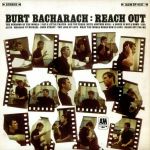
What to Listen For on Reach Out

More of the Music of Burt Bacharach

We played a good-sized stack of these recently, but not many of them sounded the way we wanted them to.

The majority of copies had a tendency to be bright, which is MURDER when the horns start blaring at the levels we play our records at.

In addition there are plenty of copies out there that lack energy, while others suffer from transient smearing, clearly audible on the brass.

And while we’re at it, what would a vintage A&M record be without a healthy amount of Tubey Magic? The best copies have loads of it, without ever becoming thick, fat, or overly smooth, or losing bass definition.

What to listen for? This group of problems that tends to plague the average copy:

  • Brightness,
  • Blare,
  • Lifelessness,
  • Smear,
  • Tubey Magic.

It takes a special copy to make these easy listening numbers sound as fresh and invigorating as they no doubt did in the studio, and that’s what the best Hot Stampers are all about.

Above all, this is simply a fun album of pop tunes, cleverly arranged and played with gusto. (I would be very surprised if these West Coast sessions weren’t Wrecking Crew to a man, or woman as the case may be. Bacharach is known to be a stickler so the best of the best session guys and gals are probably the only ones he would consider.)

When it sounds this good the music is positively wonderful. There are tons of Burt Bacharach hits here — The Look Of Love (sounding in some ways even better than it does on Casino Royale!), Message To Michael, Alfie, What The World Needs Now, I Say A Little Prayer and many more.

(more…)

What Was Harry Up To in 1969?

More of the Music of Harry Nilsson

This forgotten gem sank like a stone in 1969, but time has treated this album well. It holds up to this very day. The production is superb throughout. Judging by this early album and the one before it, it appears he was already a pro in the studio, as well as an accomplished songwriter, and, most importantly, the owner of one of the sweetest tenors in popular music, then or now.

Harry checks off a few very important boxes for us here at Better Records:

What Were You Doing In 1969?

If the answer is “Recording an album of innocent, touching, and completely unironic pop music,”” well, you could only be Harry Nilsson.

(more…)

Manna – Super Hot Versus White Hot

Hot Stamper Pressings of Great Sounding Pop Albums Available Now

Back in the mid- to late-2000s, we felt we owed our Hot Stamper customers a more complete picture of the good and bad qualities we heard in our shootout for practically every record we played.

The idea was that the buyer could listen along for what the record was doing well and what it might not be doing so well. If you noticed that the top end was a little soft, well, that’s what we might have heard too. We would put that shortcoming, and any others we thought worth mentioning, right there in the listing.

Over the years, in order to avoid having to write every listing from scratch, we streamlined the process and dropped the criticisms.

Below you can see a typical example of an older listing. This is how we used to recognize when a record was Super Hot as opposed to White Hot.

This commentary on the famous recording of The Firebird with Dorati discusses the same issues in more depth.

Side One

A++, with good balance and lots of rockin’ energy. It’s transparent — just listen to how clear the drums are on the first track. It’s a bit dry and doesn’t have all the top end extension of the best, so Super Hot is a fair grade we think.

(more…)

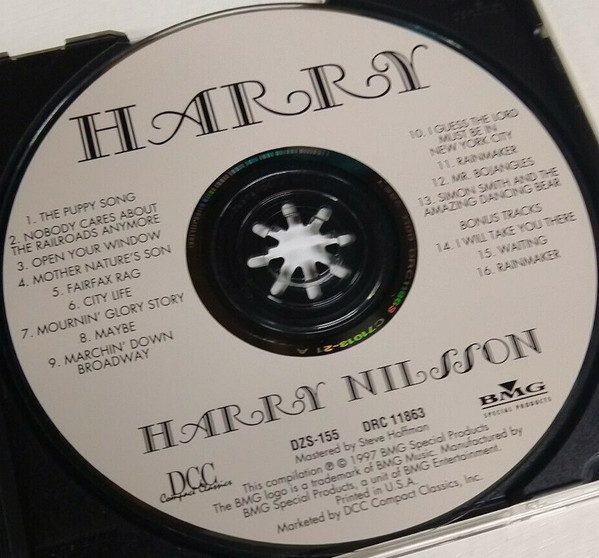
Try the DCC of Harry, It’s Excellent

Hot Stamper Pressings of the Music of Harry Nilsson Available Now

Until recently we had not done a shootout for this album in many years, and the good copies we are offering on the site are far from cheap.

You may not want to pay our prices.

However, the music is so good we think everyone deserves a chance to hear it, so pick up the Hoffman-mastered CD and enjoy the hell out of it in the meantime.

Hoffmann did a great job, as he did on so many of the DCC discs. (The Heavy Vinyl LPs are another matter entirely of course.)

The CD sound is excellent and it will probably cost you a very small fraction of what we would charge for the vinyl.

Harry is a forgotten gem that sank like a stone in 1969, but time has treated the album well, and it still holds up.

The production is superb throughout. Judging by this early Nilsson’s album, it appears he was already a pro in the studio, as well as an accomplished songwriter, and, more importantly, the owner of one of the sweetest tenors in popular music, then or now.

(more…)

Diminishing Returns in Audio? Sez Who?

More of the Music of Sergio Mendes and Brasil ’66

UPDATE 2026

The commentary you see below was written in 2005 or thereabouts. Some changes have been made and links to newer commentaries added.


Thoughts from 2005

I often read about the idea of “diminishing returns” regarding the piece of equipment under review in an audio magazine, as if to say that we are so close to audio perfection that a gain of a few percent is the most we can hope for from this or that new megabuck amp or speaker.

In my experience, precisely the opposite is true. 

There are huge improvements to be made on a regular basis, even without spending all that much money (keeping in mind that this is not exactly a poor man’s hobby).

If you are actively involved in seeking out better equipment, trying new things, and tweaking the hell out of your system as much as time and patience permit, I think an improvement of 10-25% per year in perceived sound quality is not an unreasonable expectation.

The Hallographs, for example, can easily make a system improvement of that magnitude. I have heard it happen on a number of occasions. Is the system twice as good with the addition of the Hallographs? Technically, no. Is it twice as enjoyable? Is it twice as musically involving? Absolutely. Was the system fine before? Of course. Could you even listen to it after removing the Hallographs from the room? Not in a million years.

A similar situation occurred not that long ago with the Townshend Seismic Platter you may have read about on the site. I put a second and third unit under different pieces of equipment (integrated amp, VPI SDS) and the sound just soared. Same equipment, playing the same records, night and day more musically satisfying sound. For relatively small amounts of money. I’ve heard the same thing happen in other systems, so this is no fluke. It can be done.

Change What Exactly?

What specifically needs to be changed in a given system no one can really know. All you can do is take your best shot and hope for a good result.

There is simply no alternative to the ‘hard” work of experimentation and critical evaluation.

The results of these experiments cannot be predicted with much accuracy.

But one thing I can guarantee you: if you don’t change at least something in your system, you can be sure it will never sound any better than it does today. Why would it?

Sergio Mendes and James Taylor

Of course the same principle applies to records. A while back I stumbled upon two pressings that really changed my understanding of the recordings themselves. One was an original copy of Sweet Baby James (similar to this one). The sound was so tonally perfect I could hardly believe what I was hearing. This stamper was so hot it was on fire! No copy in my experience had ever gotten it this right. It was a singular thrill. I was still thinking about it weeks later.

The other amazing LP was a copy of Sergio Mendes and Brazil 66’s first album (similar to this one), with a side two that murdered my best copy. We’re talking here about an album that I have literally been collecting for over 20 years. An album that I have auditioned more than 50 pressings of, maybe even 100. An album that I would have said I know what the best stampers are and that’s that.

But I would have been dead wrong. This stamper for side two takes this familiar recording to a level heretofore unimagined by me. It not only had more smoothness that my best copy — a chronic problem with this title, as they are often tizzy and aggressive — but there was quite a bit more ambience than ever before.

Normally, brighter records appear to have more ambience, as ambience is heard mostly in the treble region. Here we have a copy with “less’ treble (actually more correct treble) that gives us more ambience. More ambience than I have ever heard. A lot more.

And with ambience comes resolution. For the first time ever I can clearly make out the Portuguese words the female vocalists are singing. I still don’t know what they mean, but I can clearly hear the words. Portuguese is a language that is often pronounced with a slur: all the sounds seem to run together. That’s the way I always heard it on this album, so I assumed that’s the way it was always going to sound. Wrong. This pressing showed me a recording I never knew existed — until last week.

This is a perfect example of the thrill one can only get through record collecting. There’s nothing like it.

Actually that’s not true. There is something like it: Making your stereo sound better. Then all your records become less familiar – in a good way.

(more…)

The Beach Boys – Sail on, Sailor

More of the Music of The Beach Boys

Reviews and Commentaries for the Music of The Beach Boys 

The original record is dull on the lead vocal, but the chorus is magic.

All the other versions get is wrong as far as I can tell, and in exactly the way I describe in this commentary for Jackson Browne’s first album:  Jackson Browne’s debut – smooth or detailed, which Is right?


UPDATE 2025

The youtube clip posted here has been removed, sorry!


Most of the clips posted here are so modern and phony and wrong they make my head hurt. Really boosted on the top. Who on earth wants that sound? Apparently some people do.

The real pressings never sounded that way. Although they may need some modest help in the EQ department, making wholesale changes to the sound — as was clearly done for most of these modern versions — is just wrong.

It ruins everything that is good about the recording.

Now do you see why we have so little respect for modern mastering engineers?

They ruin classic titles like Surfs Up with their “improvements.” They destroy what is good about vintage analog while promoting themselves as the protectors of vintage analog.

The only people who can be trusted to promote the sound of vintage analog are the people who sell it and write about it.

The rest of them are frauds and charlatans and, as far as I can tell, deaf as a post.

Listening in Depth to Ye-Me-Le

More of the Music of Sergio Mendes and Brasil ’66

More of our favorite Sixties Pop albums

The first three tracks on side 1 are the best reason to own this album, especially the first two (Wichita Lineman and Norwegian Wood), which are as good as anything the group ever did. I’m a big fan so that has to be seen as high praise indeed.

Let’s be frank: the average LP of this album is terrible. Shrill, aggressive sound is the norm, but compression and overly smooth (read; thick and dull) sound are also problems common to Ye-Me-Le. There’s also a “strained” quality to the loud vocal passages on almost every copy; only the best are free of it.


In-Depth Track Commentary

Side One

Wichita Lineman

The best copies have out of this world sound on this track, every bit as good as anything Sergio Mendes ever did. This was the song that made me search out the best sounding copies. Even when I had mediocre copies, I loved the music and KNEW there had to be better sounding versions out there.

Norwegian Wood (This Bird Has Flown)

Love the arrangement. When the voices get loud, the sound can be painful. On the better pressings there is practically no strain whatsoever.

Some Time Ago

I love this song! It’s so relaxed and easygoing.

Moanin’

This is actually a pretty good arrangement of Moanin’. I’ve grown to like it.

Look Who’s Mine

Side Two

Ye-Me-Le

The best copies have DEMO DISC QUALITY sound for this song.

(more…)

Balancing Richness and Tubey Magic with Transparency, Clarity and Speed

More of the Music of Bread

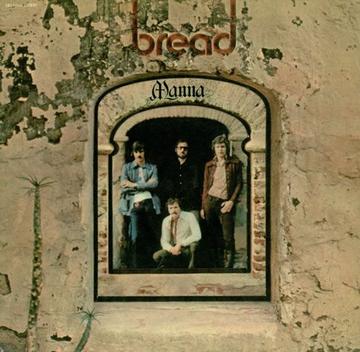
Manna has the clear signature of Elektra from the late 60s and early 70s. It’s unmistakably ANALOG, but that double-edged sword cuts both ways. Richness and Tubey Magic (the kind you had in your old 70s stereo equipment) often comes at the expense of transparency, clarity, speed and transient information (the things your 70s equipment probably struggled with).

We heard a lot of copies that were opaque, smeary and dull up top, so the trick for us (and for those of you doing your own shootouts) is to find a copy with the resolving power and transparency that will cut through the thickness.

Look for breath on the vocals (reverb too!) and extended vocal and guitar harmonics; if those two qualities are strongly evident you can’t be too far off.

More presence, bigger bass (the bass is HUGE on the best copies!), more size, energy and space: these will help take you to the highest (Super Hot and White Hot) levels.

Speaking of bass, notice how prominent, big and clear the bass guitar is on many of these songs. This is not a sound we hear nearly enough of on popular recordings. During the shootout we were lovin’ it.

The Legacy Focus in our reference system has three twelve-inch woofers per channel. They do a lovely job with this kind of big-bottom-end recording, the kind of recording for which Botnick and The Doors (and Love too, let’s not forget them) are justly famous.

Where is that sound today? We miss it.

(more…)

Top End Extension Is Key on Whipped Cream and Other Delights

Hot Stamper Pressings of Sixties Pop Recordings Available Now

The better pressings have the kind of Tubey Magical, big-bottomed, punchy, spacious sound that we’ve come to expect from Larry Levine‘s engineering for A&M. If you have any Hot Stamper pressings of Sergio Mendes & Brasil ’66’s albums, then you know exactly the kind of sound we’re talking about.

Top end extension is critical to the sound of the best copies. Lots of old records (and new ones) have no real top end; consequently, the studio or stage will be missing much of its natural air and space, and instruments will lack the full complement of harmonic information.

In addition, when the top end is lacking, the upper midrange and high frequencies get jammed together — the highs can’t extend up and away from the upper mids.

This causes a number of much-too-common problems that we hear in the upper midrange of many of the records we play: congestion, hardness, harshness, and squawk.

Painstaking Vertical Tracking Angle adjustment is absolutely critical if you want your records to play with the least amount of these problems, a subject we discuss in the Commentary section of the site at length.

Full-bodied sound is especially critical to the horns.

Any blare, leanness or squawk ruins at least some of the fun, certainly at the louder levels the record should be playing at.

The frequency extremes (on the best copies) are not boosted in any way. When you play this record quietly, the bottom and top will disappear (due to the way the ear handles quieter sounds as described by the Fletcher-Munson curve).

Most records (like most audiophile stereos) are designed to sound correct at moderate levels. Not this album. It wants you to turn it up. Then, and only then, will everything sound completely right musically and tonally from top to bottom.

Guilty – Bab’s Best

More of the Music of Barbra Streisand

This ain’t no zombie audiophile BS, the kind of sleep-inducing, reverb-drenched trash that passes for “female vocals” in bad audio showrooms around the globe. (Paging Diana Krall.) This is Barbra and The Bee Gees at the peak of their Pop Powers. It just doesn’t get any better.

This is THE BEST ALBUM Babs ever made, and you can take that to the bank. It’s also one of the best sounding, if not THE best sounding of her later Monster Pop Productions. Can’t say for sure as I haven’t played all that many. Her first album is a true Demo Disc as well, but that one’s all about the Tubey Magical ’60s Columbia era, the Golden Age of Natural Sound, a world away from Guilty and its layers and layers of tracks. Having said that, there are multi-tracks and then there are multi-tracks.

The engineers and producers here pull it off brilliantly.

If you don’t feel something deep inside when playing this record, open up a vein and let some of that ice water that passes for blood in your system run out.

It’s From WHERE?

This very copy was on the site for a long time. Nobody wanted to buy it even though it was quite cheap, and there’s a good reason nobody wanted to buy it: it’s a Japanese pressing.

That’s right, it’s one of those typically awful Japanese pressings that we criticize endlessly on the site, the purest form of audiophle BS vinyl in the history of the world. We played side one and heard the kind of sound that did not exactly float our boats. (Before it was cleaned it really sounded bad.)

But when we filpped it over we were positively KNOCKED OUT by the sound and decided it had to be part of our shootout. While evaluating the record the listening panel (mostly me) had no idea which pressing was playing. When the Side Two A Triple Plus Gold Star was awarded to this much-maligned Japanese pressing we were FLABBERGASTED.

(more…)