mendeequin

Sergio Mendes and Brasil ’66 – Equinox

More of the Music of Sergio Mendes
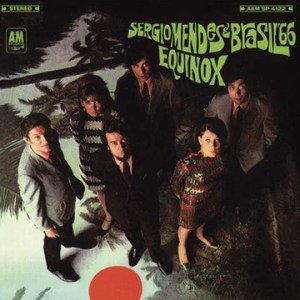
  • An Equinox like you’ve never heard, with solid Double Plus (A++) sound throughout this wonderful copy, along with remarkably quiet vinyl for an original pressing
  • The breathy intimacy of the two wonderful female leads – Lani Hall and Janis Hansen – were brilliantly captured by the engineering team of Bruce Botnick and Larry Levine at A&M
  • It’s humble records like this one that blew my mind when I first discovered them back in the 80s, with their dynamic, energetic, spacious sound, as well as shockingly good music that at the time I had no idea existed
  • “Watch What Happens,” “Night and Day,” “Wave” – Mendes brings his innovative Bossa Nova arranging skills to these timeless classics
  • 4 1/2 stars: “Equinox continues the scrumptiously winning sound that Sergio Mendes cooked up in the mid-60s… Again, the mix of American pop tunes old and new and Brazilian standards and sleepers is impeccable, and the treatments are smooth, swinging, and very much to the point.”
  • We’ve recently compiled a list of records we think every audiophile should get to know better, along the lines of “the 1001 records you need to hear before you die,” with the accent on the joy these amazing audiophile-quality recordings can bring to your life
  • Equinox (along with their first release) is also one of those albums that helped us dramatically improve our playback quality

These Sergio Mendes records can be surprisingly dynamic, but only the better copies (such as this one) will allow those dynamics to explode naturally, with the kind of ease that only analog is capable of reproducing correctly in our experience.

As you’ve no doubt noticed, we’re the world’s biggest fans of Sergio Mendes here at Better Records. Brasil ’66, Stillness, and this album are all Desert Island Discs for us, and we even enjoy the hell out of some of the later albums. You can search all you want, but outside of The Beatles you are going to have a very tough time finding the diverse thrills that this group offers. We go crazy for the breathy, multi-part female vocals, their unusually voiced multi-tracked harmonies, the brilliant percussion, and, let us not forget, Mendes’ superb keyboard work anchoring as well as jazzing up the whole production.

His stuff never sounds dated to us, and we’ve never heard another artist do anything in the ’60s samba idiom nearly as well. We love Astrud Gilberto’s albums from the period, which no doubt served as a template for the style Sergio wanted to create with his new ensemble, but Brazil 66 is clearly a step up in every way: songwriting, arranging, production, and quality of musicianship.

Just play the group’s amazing versions of “Watch What Happens,” “Night and Day,” or “Jobim’s Wave” to hear the kind of Mendes Magic that makes us swoon. For we audiophiles, it just doesn’t get any better. (Well, almost. Stillness is still the Ultimate, on the level of a Dark Side of the Moon or Tea for the Tillerman, but Equinox is right up there with it.)

(more…)

Botnick and Levine Knocked Equinox Out of the Park

Hot Stamper Pressings of the Music of Sergio Mendes Available Now

The music is of course wonderful, but what separates Sergio from practically all of his ’60s contemporaries is the AMAZING SOUND of his recordings. Like their debut, this one was engineered by the team of Bruce Botnick and Larry Levine.

Botnick is of course the man behind the superb recordings of The Doors, Love and others too numerous to mention. 

Levine is no slouch either, having engineered one of the best sounding albums on the planet, Sergio Mendes’ Stillness.

Just play the group’s amazing versions of Watch What Happens, Night and Day, or Jobim’s Wave to hear the kind of Mendes Magic that makes us swoon. For audiophiles it just doesn’t get any better. (Well, almost. Stillness is still the Ultimate, on the level of a Dark Side of the Moon or Tea for the Tillerman, but Equinox is right up there with it.)

Only the best copies are sufficiently transparent to let the listener hear all the elements laid out clearly, with each occupying a real three-dimensional space within the soundfield. When you hear one of those copies, you have to give Botnick and Levine their due. These guys knew what they were doing like few that have come along since.

(more…)

Letter of the Week – “The [Heavy Vinyl] reissues seem to have a little too much sugar coating on them…”

One of our good customers had this to say about some Hot Stampers he purchased many, many years ago.

Hey Tom, 

The two Tull albums I purchased a while back sounded great, especially Aqualung — it didn’t have that murky sound that I remember my original had (same thing with my Black Sabbath albums).

I have a DCC pressing that I compared it to and I do like the Hot Stamper better. The reissues seem to have a little too much sugar coating on them, which makes them sound phony. The Sergio Mendes ‘Equinox’ sounded so much more alive than the copy I have. Keep up the good work.

Shane

Shane,

Records that have less sugar coating and sound more alive are the ones that tend to do well in our shootouts, as you know firsthand being a proud owner of many of them. That’s our sound in a nutshell, and yours too it seems.

Audiophile records are full of colorations, mostly the kind that boost the performance of smaller, less-revealing systems.

Good stereos don’t need their performance boosted; they just need good sounding records to play.

This is precisely why the one piece of advice we give out more than any other is the importance of improving the sound of your system before you waste any more money on audiophile pressings.

To help you to spot the shortcomings of audiophile pressings (at least the ones we’ve auditioned over the years), click here.

And you certainly don’t need to buy our wildly-expensive, obsessively-curated titles in order to get good sounding records.

The methods we’ve developed are sure to guarantee the success of anyone with the dedication, time and money to do the work they entail.

(Robert Brook has been doing shootouts the right way for many years now and has much to teach the readers of his blog. Also, another one of our good customers, Aaron, has documented his own experiences as he travels on the journey to better sound and therefore better sounding records.)

(more…)

Sergio Mendes’ Discography – Courtesy of brasil66.com

More of the Music of Sergio Mendes and Brasil ’66

Discography by brasil66.com

1966 Sergio Mendes & Brasil ’66

The Brasil ’66 debut album on A&M opens with a bang–“Mas Que Nada” was, and still is, one of Mendes’ finest recordings. Using a sparse combination of female vocalists, drums, piano, bass and percussion, this album was Brasil ’66 at its leanest. “One Note Samba/Spanish Flea” cleverly combines two popular songs, one of Bossa Nova fame, the other straight out of the Tijuana Brass catalog. Henry Mancini’s “Lujon” (from the excellent Mr. Lucky Goes Latin album) is given vocals and retitled “Slow Hot Wind”. “O Pato” and “Agua De Beber” cover a couple more tracks from the popular Brazilian repertoire, and the American popular scene is represented by “Going Out Of My Head” and “Day Tripper”. One of the more interesting tunes here is “Berimbau”, based on a Brazilian chant. (Interesting tidbit: “Mas Que Nada” has been misspelled, in perpetuity, as “Mais Que Nada” on Brasil 66 albums!)

1967 Equinox

This sophomore effort of Brasil ’66 covers a lot of the same ground as the first album. Most notable is the addition of guitarist John Pisano, from the Tijuana Brass. There are more excellent arrangements; the standouts are “Triste”, “Chove Chuva” and “Night and Day.”

1967 Look Around

Comprised of the same musicians as the first two Brasil ’66 album, there are a few new twists. The most prominent are the two Lani Hall showcases, “Like A Lover” and “So Many Stars”, both lightly sprinkled with strings. Other favorites include “Roda”, “Batucada”, the title track and the distinctly Mendes arrangement of “With A Little Help From My Friends”.

1968 Fool on the Hill

This album presents a second version of Brasil ’66, including the excellent Brazilian musicians Rubens Bassini, Sebastiao Neto and Dom Um Romao. The string arrangements were written by Dave Grusin. What’s different is the direction in which the music on this album took. Turning from pop music influences, these songs reflect more of the Brazilian heritage of the musicians, and are more adventurous as a result. The most-recognized arrangements from this album would be the two cover versions: “Fool On The Hill” and “Scarborough Fair”. In case you’re wondering what kind of “hill” the “fools” on the cover are sitting on, on the original LP gatefold jacket, take a closer look!

(more…)