Art Rock – Reviews and Commentaries

Expanding Space Itself on The Dark Side of the Moon

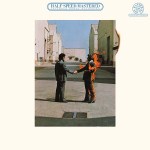
Many years ago, right around 2015 I believe, we played a copy with all the presence, all the richness, all the size and all the energy we could have ever hoped to hear on a pressing of Dark Side of the Moon.

It did it all and then some.

The raging guitar solos (there are three of them) on Money seemed to somehow expand the system itself, making it bigger and more powerful than I had ever heard.

Even our best copies of Blood Sweat and Tears have never managed to create such a huge space with that kind of raw power. This copy broke through all the barriers, taking the stereo system to an entirely new level of sound.

Listen to the clocks on Time. There are whirring mechanisms that can be heard deep in the soundstage on this copy that I’ve never heard as clearly before. On most copies you can’t even tell they are there.

Talk about transparency — I bet you’ve never heard so many chimes so clearly and cleanly, with such little distortion on this track.

One thing that separates the best copies from the merely good ones is super-low-distortion, extended high frequencies. How some copies manage to correctly capture the overtones of all the clocks, while others, often with the same stamper numbers, do no more than hint at them, is something no one can explain. But the records do not lie. Believe your own two ears. If you hear it, it’s there. When you don’t — the reason we do shootouts in a nutshell — it’s not.

The best sounding parts of this record are nothing less than ASTONISHING. Money is the best example I can think of for side two. When you hear the sax player rip into his solo as Money gets rockin’, it’s almost SCARY! He’s blowin’ his brains out in a way that has never, in my experience anyway, been captured on a piece of plastic. After hearing this copy, I remembered exactly why we felt this album must rank as one of the five best Rock Demo Discs to demonstrate the superiority of analog. There is no CD, and there will never be a CD, that sounds like this.

In fact, when you play the other “good sounding” copies, you realize that the sound you hear is what would naturally be considered as good as this album could get. But now we know better. This pressing took Dark Side to places we never imagined it could go.

(more…)

Obscured By Cloudy Japanese Vinyl

Hot Stamper Pressings of the Music of Pink Floyd Available Now

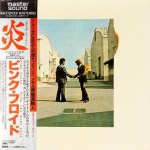
When I was just getting up to speed in audio and exploring the world of music available on vinyl in the 70s, many of the stereo stores I frequented carried Japanese pressings. They were widely believed to have superior sound relative to their domestic counterparts — in this case, the mass-produced pressings I would see at the Tower Records right across from the Sports Arena in my hometown of San Diego. I went there at least once a week, probably more like two or three times.

Tower was far and away the best place to go record shopping in those days. The store was huge and they had dramatically more stock than Licorice Pizza or The Wherehouse.

They also had a separate section for Half-Speed mastered pressings from a number of labels, which of course was the first place in the store I would visit, digging through the bins to see what new remastered titles may have been produced for audiophiles searching for the ultimate in sound quality.

Of course, I identified as just such a person. In terms of sound quality, and with the extremely limited knowledge I had acquired at the time, I believed I set a high standard for the sound of the records I bought. I was willing — eager even, you could even say excited — to pay whatever premium price I had to for a record that was sure to deliver superior sound quality. To me, in the late 70s, that meant two things: direct to disc recordings, and Half-Speed mastered pressings.

(There was a another category of records that did not fall into the above two, best exemplified by American Grammaphone and the Fresh Aire series, but the less said about those schlocky releases the better, other than to point out that some of their titles are TAS list carryovers from HP’s time running the Super Disc list, specifically Fresh Aire 2 and 3, both best avoided.)

And, like any other open-minded individual, when it came to Japanese vinyl I was willing to give a few a spin.

However, the more of them I bought, the more clear it became to me that even the best of them sounded mediocre (veiled, smeary and dubby from second generation tapes) and more often than not they were just plain awful. (Second generation tape issues being the main problem, of course, with the additional insult of poor tonality, the result of being mastered using wacky equalization, typically with added brightness where none was needed.)

Pink Floyd

The notes for the Pink Floyd album you see below, Obscured by Clouds, were written sometime in March of 2025 as part of the shootout we conducted for the album.

If we assume it would be an audiophile who would be attracted to this pressing, perhaps for its quieter playing surfaces, perhaps operating under the assumption that the Japanese engineers mastering the record would be more likely to do a better job as well, then what we have here is a textbook case of an audiophile bullshit pressing.

One that sounds nothing like the album is supposed to, based on having played a number of exceptionally good sounding copies, all British and all on the Green Harvest label, mastered from good tapes, sometimes by the legendary Harry T. Moss. We feel we are more than qualified to make these judgments. If we can’t make them, nobody can.

Discogs allows us to glean some information regarding the desirability of this Japanese reissue with the record buying public currently in the market for Pink Floyd vinyl who register on their site.

(more…)

Breakfast in America – An A&M Half-Speed Mastered Disaster

Hot Stamper Pressings of the Music of Supertramp Available Now

Sonic Grade: F

This title is yet another Half-Speed we think belongs in our audiophile hall of shame.

It’s better suited to the stone age stereos of decades past. I should know — my system in 1976 was one-tenth as revealing as the one we use now.

But this pressing is so awful even my old system could not be fooled by this kind of audiophile BS sound. The console you see pictured might be the ideal system to play it. Hard to say, I haven’t heard one of those since the 60s.

It is just ridiculous that someone would consider marketing this kind of sound to audiophiles.

So washed out, brittle, thin and lifeless, it practically defies understanding that anyone with two working ears ever considered calling this piece of crap an “audiophile” record.

But are today’s remastered records marketed to those looking for superior sound any better? Not the ones we’ve played recently. (If you know of any good ones, please drop us a line.)

Is this A&M pressing the worst version of the album ever made? It’s hard to imagine it would have much competition.

(more…)

The Seeds of Love – A Nearly Perfect Pop Masterpiece

tearsseeds_1510s_1448982243

Hot Stamper Pressings of Art Rock Albums Available Now

The band’s magnum opus, a Colossus of Production to rival the greatest Prog, Psych and Art Rock recordings of all time. (Whew!)

When it comes to Genre Busting Rock I put this album right up at the top of the heap, along with several other landmark albums from the Seventies: Roxy Music’s first, The Original Soundtrack, Crime of the Century, Ambrosia’s first two releases, Fragile, Dark Side of the Moon and a handful of others.

The Seeds Of Love is clearly the band’s masterpiece, and being able to hear it on a White Hot Stamper pressing is nothing short of a THRILL.

I have a long history with this style of Popular Music, stretching all the way back to the early ’70s. I grew up on Bowie, Roxy Music, 10cc, Eno, The Talking Heads, Ambrosia, Peter Gabriel, Supertramp, Yes, Zappa and others, individuals and bands that wanted to play rock music but felt shackled by the constraints of the conventional pop song. Nothing on Sowing the Seeds of Love fits the description of a Conventional Pop Song.

Which albums by The Beatles break all the rules? Side two of Abbey Road and the whole of The White Album, which is why both are Desert Island Discs for me. Can’t get enough of either one.

The Discovery of a Lifetime

When I discovered these arty rock bands in my early twenties I quickly became obsessed with them and remain so to this day.

My equipment was forced to evolve in order to be able to play the scores of challenging recordings issued by these groups and others in the 70s. These albums informed not only my taste in music but the actual stereo I play that music on. I’ve had large dynamic speakers for the last four decades precisely because they do such a good job of bringing to life huge and powerful recordings such as these.

Tears For Fears on this and their previous album continue that tradition of big-as-life and just-as-difficult-to-reproduce records. God bless ’em for it.

Analog Sound

The sound of most copies is aggressive, hard, harsh and thin. What do you expect? The album is recorded digitally and direct metal mastered at Masterdisk.

Most of us analog types put up with the limitations of the sound because we love the music, some of the most moving, brilliantly written and orchestrated psychedelic pop of the last thirty years.

Imagine if the Beatles in their Sgt. Pepper/ Magical Mystery Tour phase kept going in that direction. They very well might have ended up in the neighborhood of Sowing the Seeds of Love.

But wait — the best pressings have smooth, sweet, analog richness and spaciousness I didn’t think was possible for this recording. The bass is full and punchy. When it really starts cooking, such as in the louder, more dynamic sections of Woman in Chains or the title cut, it doesn’t get harsh and abrasive like most copies. It’s got energy and life without making your ears bleed — if you have the system to play it.

(more…)

Letter of the Week – “I heard things on there that I never heard before.”

Hot Stamper Pressings of the Music of Pink Floyd Available Now

One of our good customers had this to say about some a Hot Stamper pressing of Meddle he purchased a while back:

Hi Tom,

Got the Meddle album already.  I sat down as soon as I opened it and listened to both sides with the volume up.

Absolutely blew me away. I heard things on there that I never heard before. Or I just heard them better.

I didn’t have to listen to my other copies. I knew right away this one was IT.

Listening to a record like this just gets me thinking what the other Hot Stampers sound like.

Steve

Steve,

Thanks for writing.

You are completely right. Some pressings are so obviously superior that no comparisons are necessary. Going back to your old copies would be shocking — how could I have put up with such substandard sound quality?

In 2007 we discovered the Hottest Stampers of them all, a reissue pressing if you can believe it — something we have no trouble believing as we much prefer to let the evidence be our guide when it comes to which are the best pressings, not theories, preconceived ideas or conventional wisdom. From that point on there was no going back.

It turns out that there is one and only one set of stampers that consistently wins our shootouts for  Meddle.  This link will take you to other titles with one set of stampers that always come out on top.

The Prelude Record Cleaning System had a lot to do with that breakthrough, and we have been big fans of the system Mr. Walker developed ever since. In addition to getting them clean, we know of nothing that does as much for the sound of records.

(more…)

What to Listen For on Breakfast in America

What follows is some advice on what to listen for.

If you are interested in digging deeper, our listening in depth commentaries have extensive track breakdowns for some of the better-known albums for which we’ve done multiple shootouts.

What to listen for, you ask?

Number One

Too many instruments and voices jammed into too little space in the upper midrange. When the tonality is shifted-up, even slightly, or there is too much compression, there will be too many elements — voices, guitars, drums — vying for space in the upper part of the midrange, causing congestion and a loss of clarity.

With the more solid sounding copies, the lower mids are full and rich; above them, the next “level up” so to speak, there’s plenty of space in which to fit all the instruments and voices comfortably, not piling them one on top of another as is often the case. Consequently, the upper midrange area does not get overloaded and overwhelmed with musical information.

(more…)

Listening in Depth to Hot Rats

Hot Stamper Pressings of the Music of Frank Zappa Available Now

Presenting another entry in our extensive listening in depth series.

Hot Rats was mastered by Jack Hunt, a man we know to be responsible for some of the thickest, dullest, most dead sounding MoFi recuts found in their shameful catalog.

We have to admit that he did a good job cutting this album though.

Of course, not cutting at Half Speed was a big help, because Half Speed mastering is just a bad idea that ends up making some of the wackiest sounding records we have ever played.

Side One

Peaches En Regalia

This track tends to be a bit dull and could use a little sweetening on the top end on almost any copy you find. 1 or 2 dB at 10k might be just what the doctor ordered.

Willie the Pimp

This is one of the two extended tracks on the album; the second track on each side is “the long one,” and they both suffer from the same slight upper midrange boost. This song and The Gumbo Variations on side two are both difficult to turn up due to their tendency to be slightly aggressive.

Son Of Mr. Green Genes

One of the best sounding tracks on the album, and probably the best sound to be found on side one.

(more…)

Does Year of the Cat on Mobile Fidelity Have Audiophile Sound?

Hot Stamper Pressings of the Music of Al Stewart Available Now

Our answer, judging by the copy we played not long ago, would be solidly in the negative. The final grade we awarded both sides was No, our way of saying the record is Not Good.

Below is a description for what a top copy of the album sounds like, based on our most recent shootout:

Incredible sound throughout this vintage Janus pressing of Stewart’s 1976 Masterpiece. With engineering by Alan Parsons, the top pressings are every bit the audiophile Demo Discs you remember. The best sides have sweet vocals, huge amounts of space, breathtaking transparency, and so much more.

Tubey Magical acoustic guitar reproduction is superb on the better copies of this recording. Simply phenomenal amounts of Tubey Magic can be heard on every strum, along with richness, body and harmonic coherency that have all but disappeared from modern recordings (and especially from modern remasterings).

But if you own the wrong Mobile Fidelity pressing — this one was reissued in 1981, the original came out in 1978, so there may be some other pressings that sound better than this one — you would never know how good sounding the album can be. We put a copy we had laying around in a shootout recently and the results were, not to put too fine a point on it, pretty painful.

As the notes make clear, the Mobile Fidelity pressing, with the stampers you see on the sheet above, is:

(more…)

To Find the Most Elusive Hot Stamper Records, “Press On!”

Hot Stamper Pressings of the Music of Ambrosia Available Now

“Nothing in this world can take the place of persistence. Talent will not; nothing is more common than unsuccessful people with talent. Genius will not; unrewarded genius is almost a proverb. Education will not; the world is full of educated derelicts. Persistence and determination alone are omnipotent. The slogan “press on” has solved and always will solve the problems of the human race.”

Calvin Coolidge

If you substitute “finding Hot Stamper pressings” for the words “the human race” you will better appreciate the point we are trying to make with this commentary.

ambrosiasomewhereOur story today revolves around the first Hot Stamper listing we had ever done for Ambrosia’s second — and second best — album. It took us a long time to find the right pressing.

Do you, or any of the other audiophiles you know, keep buying the same album over and over again year after year in hopes of finding a better sounding copy?

We do — and have been for more than twenty years as a matter of fact. Here’s why.

Around 2007 I stumbled upon the Hot Stampers for this record — purely by accident of course, there’s almost no other way to do it — and was shocked — shocked — to actually hear INTO the soundfield of the recording for the first time in my life, this after having played copy after frustratingly opaque copy for roughly thirty years.

(more…)

Leftoverture – “…a certain ‘squawky, pinched’ sound to the guitars…”

Hot Stamper Pressings of Arty Rock Albums Available Now

This is one of the pressings we’ve discovered with reversed polarity.

This copy of Kansas’ most consistent album, their masterpiece I might venture to say, has an OFF THE CHARTS A+++ side two! This copy shows you the ROCK album they actually recorded. The average copy of Leftoverture only hints at the power of the band.

Side two just KILLED from start to finish, with the deepest, punchiest bass, moving up the frequency ladder to the clearest sweetest mids, and following it all the way to the top with the most extended grain-free, silky highs.

Most copies, like so many rock records from the era, are veiled and smeary. Often they lack extension at one or both ends of the frequency spectrum, more often than not up top, which results in harshness and shrillness, not the sound you want on a Kansas record.

But copies such as this one show you the kind of sound that is possible with Leftoverture. It is, in a word, SMEAR-FREE, with superb transients, textures and clarity that are the natural result of getting every last bit of musical information into the grooves.

(more…)