*Doing Audio

This category used to be called Thinking About Audio. We now call it Doing Audio, because thinking about audio won’t get you very far.

When it comes to making progress in this hobby, “thinking about audio’ will always be dramatically less productive than “doing audio,” a reality which we expect will become clearer after reading the commentaries below.

Trying to Get at the Truth with Transistors

More Entries from Tom’s Audiophile Notebook

In 2007 we did a shootout for The Four Seasons on RCA and noted the following:

For those of you with better tube gear, the string tone on this record is sublime, with that rosin-on-the-bow quality that tubes seem to bring out in a way virtually nothing else can, at least in my experience.

Our experience since 2007 has changed our view concerning the magical power of tubes to bring out the rosiny texture of bowed stringed instruments.

We have in fact changed our minds completely with respect to that rarely-questioned belief.

It’s a classic case of live and learn, and represents one of the bigger milestones in audio that we marked in 2007, a year that in hindsight turns out to have been the most important in the history of the company.

Everything changed dramatically for the better for us sometime in 2005. That’s when we discovered the transistor equipment we still use to this day.

We found a low-power integrated amp made in the 70s that was vastly superior to our custom-built tube preamp and amp. We had an EAR tube phono stage at that time, which we quite liked.


UPDATE 2025

We recently hooked up our old 834p phono stage in the system and did not like the sound at all.

Things change. Boy do they ever!


In 2007 we auditioned the EAR 324P transistor phono stage and immediately recognized it would take our analog playback to an entirely new level, one we had simply never experienced before and really had never thought could possbily exist.

(more…)

When You’re Just Getting Started in Audio, It All Looks So Easy

Presenting another entry in a series of big picture observations about records and audio.

John Salvatier has written a very interesting essay. It’s not short but I think it is well worth the time it will take you to read it.

The parallels to records will be clear to anyone who has spent much time in this hobby, or on this blog for that matter.

Those of us who have run record experiments by the thousands have learned to accept results which regularly defy logic.

All the way back in 2007 we learned an important lesson regarding the vagaries of record pressings: that identical looking LPs can have dramatically different sound quality.

Even two sides of the same record can have quite different sound quality. We know, we’ve played them by the hundreds.

(more…)

How We Test Equipment Like the Townshend Seismic Platform

Basic Audio Advice — These Are the Fundamentals of Good Sound
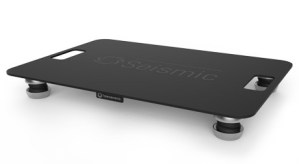
A few years back I discovered something wonderful about the Seismic Sink I was using under my turntable to control vibration.

In our experience, vibration control is one of the most important revolutionary advancements in audio of the last twenty years or so.

We sell the Seismic Sink and this is what I wrote to a customer who recently bought one:

Play your most complex test discs, the ones that are the hardest to get to sound right. Classical is the toughest test if you have some, but Pet Sounds is tough too. [I knew he was a fan and had a good copy of the album.]

Listen to one or two for a good while, at least 20-30 minutes, to know exactly what you are hearing on the tracks you know are the most difficult to get to sound right, the ones with the most problems.

Put the sink under the table. (You can also put it under your receiver, that works great too.)

Then play those tracks again.

Go back and forth a few times.

It should be pretty obvious what is going on.

Then read Robert Brook’s post.

Here is a very special tip.

The sound changes depending on how the seismic sink is “loaded.”

This means two things:

Where the weights are sitting on the sink.

    • For my integrated amp I have it all the way to the front of the sink. Sounds clearly better that way.
    • For the turntable, I have it weighted down with thin but heavy steel plates, about one quarter inch thick, about 4 inches by 8 inches. You can get them at Home Depot and similar places.

(more…)

Diminishing Returns in Audio? Sez Who?

More of the Music of Sergio Mendes and Brasil ’66

UPDATE 2026

The commentary you see below was written in 2005 or thereabouts. Some changes have been made and links to newer commentaries added.


Thoughts from 2005

I often read about the idea of “diminishing returns” regarding the piece of equipment under review in an audio magazine, as if to say that we are so close to audio perfection that a gain of a few percent is the most we can hope for from this or that new megabuck amp or speaker.

In my experience, precisely the opposite is true. 

There are huge improvements to be made on a regular basis, even without spending all that much money (keeping in mind that this is not exactly a poor man’s hobby).

If you are actively involved in seeking out better equipment, trying new things, and tweaking the hell out of your system as much as time and patience permit, I think an improvement of 10-25% per year in perceived sound quality is not an unreasonable expectation.

The Hallographs, for example, can easily make a system improvement of that magnitude. I have heard it happen on a number of occasions. Is the system twice as good with the addition of the Hallographs? Technically, no. Is it twice as enjoyable? Is it twice as musically involving? Absolutely. Was the system fine before? Of course. Could you even listen to it after removing the Hallographs from the room? Not in a million years.

A similar situation occurred not that long ago with the Townshend Seismic Platter you may have read about on the site. I put a second and third unit under different pieces of equipment (integrated amp, VPI SDS) and the sound just soared. Same equipment, playing the same records, night and day more musically satisfying sound. For relatively small amounts of money. I’ve heard the same thing happen in other systems, so this is no fluke. It can be done.

Change What Exactly?

What specifically needs to be changed in a given system no one can really know. All you can do is take your best shot and hope for a good result.

There is simply no alternative to the ‘hard” work of experimentation and critical evaluation.

The results of these experiments cannot be predicted with much accuracy.

But one thing I can guarantee you: if you don’t change at least something in your system, you can be sure it will never sound any better than it does today. Why would it?

Sergio Mendes and James Taylor

Of course the same principle applies to records. A while back I stumbled upon two pressings that really changed my understanding of the recordings themselves. One was an original copy of Sweet Baby James (similar to this one). The sound was so tonally perfect I could hardly believe what I was hearing. This stamper was so hot it was on fire! No copy in my experience had ever gotten it this right. It was a singular thrill. I was still thinking about it weeks later.

The other amazing LP was a copy of Sergio Mendes and Brazil 66’s first album (similar to this one), with a side two that murdered my best copy. We’re talking here about an album that I have literally been collecting for over 20 years. An album that I have auditioned more than 50 pressings of, maybe even 100. An album that I would have said I know what the best stampers are and that’s that.

But I would have been dead wrong. This stamper for side two takes this familiar recording to a level heretofore unimagined by me. It not only had more smoothness that my best copy — a chronic problem with this title, as they are often tizzy and aggressive — but there was quite a bit more ambience than ever before.

Normally, brighter records appear to have more ambience, as ambience is heard mostly in the treble region. Here we have a copy with “less’ treble (actually more correct treble) that gives us more ambience. More ambience than I have ever heard. A lot more.

And with ambience comes resolution. For the first time ever I can clearly make out the Portuguese words the female vocalists are singing. I still don’t know what they mean, but I can clearly hear the words. Portuguese is a language that is often pronounced with a slur: all the sounds seem to run together. That’s the way I always heard it on this album, so I assumed that’s the way it was always going to sound. Wrong. This pressing showed me a recording I never knew existed — until last week.

This is a perfect example of the thrill one can only get through record collecting. There’s nothing like it.

Actually that’s not true. There is something like it: Making your stereo sound better. Then all your records become less familiar – in a good way.

(more…)

Tone Poets and One-Legged Tarzans

Basic Audio Advice — These Are the Fundamentals of Good Sound

A fundamental tenet of conservatism is that we must accommodate ourselves to the world that exists, not the world we might want to pretend exists, or the world we would like to exist.

The laws of physics are laws — not theories, not recommendations — and they operate independently of how convenient we may find them.

It follows from this — if you will allow me to make the case — that not everybody with a stereo can play Rudy Van Gelder’s recordings properly, and some people cannot play Tarzan at all. (More on that below.)

There is a fellow, rl1856, who made some comments on Robert Brook’s blog, addressing the Tone Poets pressings of RVG’s recordings vis-a-vis vintage pressings that RVG mastered. (Emphasis added.)

rl1856 writes:

An original RVG 1st or 2nd pressing has a visceral, “edge of the seat” feeling that is missing in the TP [Tone Poets] and BN [Blue Note] Classic reissues. The RVG has a tighter stereo spread, and is voiced so that the listener feels they are very close to the musicians. The TP and Classic remasters have a more distant perspective. The soundstage is wider, but the added apparent distance between musician and listener significantly reduces the impact of the music. OTOH, the reissues have greater extension at frequency extremes, and reproduce more micro detail than original pressings. We know that RVG used a surprising amount of EQ when mastering his LPs back in the day. So we need to ask ourselves, what do we want ? A better version of what we are familiar with, including EQ compromises, or a more accurate representation of what was actually captured on the master tape in RVG’s studio ? The answers may be mutually exclusive.

My system: Linn LP12 ITTOK LVII, SoundSmith Denon 103D, Audio Research SP10MKIII, Luxman MA 88 monoblocks, or Triode TRV 845PSE, or Mac 240, KEF LS50. Resolving enough to easily hear differences in LP quality.

When an audiophile reveals that his equipment is simply not capable of reproducing the sound of live music, I think that we can safely ignore whatever opinions he may have offered about the sound of the records he is discussing.

It’s obvious that the records were played with unacceptably low fidelity, which means he has all the credibility of a blind man judging paintings.

If this person wants to make the case that he is in fact able to reproduce music with acceptable fidelity, we would need to know more about his system and room in order to take his claim more seriously.

(more…)