*Hey, What’s the Big Idea?

Thoughts on The Big Picture from someone who has been playing records for almost 60 years. I bought a copy of She Loves You on Swan in 1964 and still own it. The disc may be cracked but the picture sleeve is in pretty good shape, just in case you were wondering.

Hot Stampers and Occam’s Razor

Skeptical Thinking Is Critical to Achieving Better Sound

This is an excerpt from a commentary I wrote many years ago in reply to a letter writer who thought our records were ridiculously overpriced. (The original letter is here.)

When people ask us how our records can possibly be worth the prices we charge, this is our answer.

As a skeptic, I require evidence to support what I believe in order to believe it. Although it’s certainly possible that our customers are willing to pay our admittedly high prices on nothing more than our say so, I see no evidence that this is the case.

Absent evidence to the contrary, I think they must really like our records.

They tell us so all the time, and they keep buying them week after week, so if they really are just fooling themselves, they apparently can’t stop doing it.

Occam’s Razor

The scientist’s and skeptic’s best friend, Occam’s razor, comes into play here. It holds that “the explanation of any phenomenon should make as few assumptions as possible.” It’s often paraphrased as “All other things being equal, the simplest solution is the best.” In other words, when multiple competing theories are equal in other respects, the principle recommends selecting the theory that introduces the fewest assumptions…”

Why assume people who buy expensive records are crazy? Why assume that the records they buy aren’t every bit as good as advertised, if not better? Why assume that the “other resources available for buying music” are even remotely as good, absent any evidence?

People assumed that the CD was going to be a cheap and easy source for their music, and look where that got them.

Assumptions? Us?

I could go on for days about assumptions. We try very hard to make as few as we have to around here. We bend over backwards to let the pressings speak for themselves. Most of the time when we’re doing our shootouts we have no idea what pressing is on the table. All we have to go on is the sound.

It may be relative — everything is — but people seem to be able to replicate our findings in their own homes pretty well. Well enough anyway. When they write to us, they really don’t sound all that crazy. In fact they seem fairly rational to us.

More than anything they seem to be enthusiastic about the great sound they’re finally hearing on a favorite album of theirs, courtesy of Better Records. After having played the records ourselves, we don’t think it’s the least bit crazy to believe them.

Some of the assumptions we really do take issue with are these:

(more…)

A Kinder, Gentler Approach to Record Reviewing

Record Collecting for Audiophiles from A to Z

Allow me to respond to a comment left by a fellow named Ian Malone.

It was left in the comments section for the interview Steve Westman did with me.

He wrote:

Quite happy for you to promote your business Tom, but surely you are a better person than doing it in this way. I know that other people in the industry have said unkind things about you but you can rise above these insults.

My response:

I never say that the people making these modern records, as well as those reviewing them, are malicious or evil. I say they make or review bad sounding records and are simply misguided and, more than anything else, incompetent.

Am I being unkind? If Michael Bay makes one bad movie after another, are we unkind to point that out? I don’t know whether or not he is a bad person, but I do know that he is a bad filmmaker, and gets called out regularly for putting out a bad product.

Everyone understands that this is a matter of taste. If you always wished The Beatles albums had more bass, more compression and a smoother tonal balance overall, you can buy the new Heavy Vinyl pressings and get the sound you prefer on every title The Beatles ever released.

However, I hope you know that the sound I have just described does not exist on the master tapes.

I have no way of actually knowing that for a fact, but since no mastering engineer before 2014 had ever put that sound on an actual record, I think we can safely say that the evidence supports the idea that a completely “new sound” was specifically created for The Beatles when their catalog was remastered early in this century. [1]

A New Sound

Call it The New Beatles Sound. I am on record as not liking engineers who create a new sound for records that had perfectly good sound already. Those of us who do not like our Beatles album to have those qualities should not be buying these newly remastered versions.

We offer the consumer an alternative sound, and, since our Beatles Hot Stampers are far and away our best sellers, it seems our customers agree with us that they actually do sound better. Some come back, sure, but not many, and I don’t think anyone has ever said they liked the new pressings better, although I cannot rule out that possibility in the future, audiophiles being who they are.

In some ways we operate like Consumer Reports. Blender X is terrible at making margaritas and blender Y is good at making those delicious drinks. The company that makes bad blenders should be called to account. If there is a name attached to that company, then I guess we can say that the person who runs that company should learn how to make better blenders or find something else to do with his time.

(more…)

A Chat with Yours Truly

The Video That Started It All

Steve Westman graciously invited one of the most controversial members of the Audiophile Community — that would be me — to appear on his youtube channel for a half hour chat. When he couldn’t shut me up, it ended going for an hour.

I want to thank him for putting up with me while I spent the time mostly criticizing all the modern reissues he seems to favor.

Please read the comments and feel free to post your own if you have something you would like to say. I read them all.

Say whatever you like, I can take it!


Unlike the Tom Port of twenty years ago, and some rather famous reviewers still writing today, my skin has grown quite thick since I started causing trouble in the vinyl community with my crackpot ideas and uncontrolled greed. People seem to enjoy  beating up on me and the snake oil they think I am selling, but more than a thousand years ago one of the great Stoic philosophers offered his advice on how to deal with the criticisms of one’s detractors. This is advice that I have tried to heed myself for lo these many years, not always successfully.

Below is an excerpt from an article in The Daily Stoic by Ryan Holiday.

The secret from Marcus Aurelius for when we get flak or insults or judgment from other people? He said we should look inside their soul.

“Get inside him,” Marcus wrote. “Look at what sort of person he is. You’ll find you don’t need to strain to impress him.”

His point was that too often we blindly “accept” what haters throw at us without stopping to actually examine who these haters actually are. You wouldn’t take driving advice from a bad driver, or be guilted about your finances from someone who knows nothing about money.

Nor should you listen to people telling you you’re not good at this or that, that you’re failing here or there, whether you should act in one way or another, if you don’t respect that person and their own choices.

If you want to stop caring what other people think, take a second and actually look at those people for a second. You’ll quickly find that there isn’t much to be harried on about, that you’re doing just fine.

In response to some of my critics, I wrote a commentary entitled a kinder, gentler approach to record reviewing.

Check it out if you have time.

(more…)

Are Hot Stampers a Better Mousetrap? A Case of Added Value? A Scam?

New to the Blog? Start Here

Basic Concepts and Realities Explained

Important Lessons We Learned from Record Experiments 

Finding Hot Stampers is all about doing shootouts for as many different pressings of the same title as you can get your hands on.

There are four basic steps you must take, and you have to do right by each of the four if you are going to be successful at discovering and evaluating your own Hot Stampers. 

We discuss every one of them in scores of commentaries and listings on this blog. Although none of it will come as news to anyone who has spent much time reading our stuff, we cobbled together this commentary to help formalize the process and hopefully make it easier to understand and follow.

If you want to make judgments about recordings — not the pressing you have in your collection, but the actual recording it was made from — you have to do some work, and you have to do it much more thoroughly and carefully and above all scientifically than most audiophiles and record collectors we’ve met apparently think is necessary. Don’t be one of those guys. Do it right and get the results that are simply not possible with any other approach.

(more…)

Obsession Is the Best Predictor of Audio Evolution

Hot Stamper Pressings of the Music of Ambrosia Available Now

Ambrosia‘s debut is an album we admit to being obsessed with.

It is our contention that to reach the most advanced levels of audio, you have to do two things.

First, you must become obsessed with getting your favorite albums to sound their best, and,

Second, you must then turn your obsession with those albums into concrete action.

What kind of action?

Finding better sounding pressings and improving your stereo and room.

We wrote about it here. An excerpt:

As a budding audiophile, I went out of my way to acquire any piece of equipment that could make these records from the ’70s (the decade of my formative music-buying years) sound better than the gear I was then using. It’s the challenging recordings by Crosby, Stills, Nash and Young, as well as scores of other pop and rock artists like them, that drove my pursuit of higher quality audio, starting all the way back in high school.

(more…)

The Recordings Won’t Change, So Other Things Have To

More of the Music of Led Zeppelin

Another entry in our series of commentaries we’ve grouped under the heading what’s the big idea?

It’s amazing how many records that used to sound bad — or least problematical — now sound pretty darn good. The blog is full of commentaries about them. Here’s a personal favorite.

Every one of them is proof that comments about recordings are of limited value.

The recordings don’t change.

Our ability to find, clean and play the pressings made from them does, and that’s what the Hot Stamper revolution is all about.

You have a choice. You can choose to take the standard audiophile approach, which is to buy the record that is supposed to be the best pressing and then just consider the case closed.

You did the right thing, you played by the rules. You bought the pressing you were told to buy, the one you read the reviews about, the one on the list, the one they said was made from the master tape, the one supposedly pressed on the best vinyl, and on and on.

Cross that title off and move on to the next, right?

When — sometimes if but usually when — the sound of the record doesn’t live up to the hype surrounding it, you merely accept the fact that the recording itself must be at fault.

Prepare to allot a fair amount of time to complaining about such an unfortunate state of affairs. “If only they had recorded the album better…” you say to yourself as you toddle off to bed, ending your listening session prematurely, fatigued and frustrated with a record that — for some reason — doesn’t sound as good as you remember.

We did it too, more times than I care to admit.

Try It Our Way

Or you can adopt our approach and hear those very same albums sound dramatically better than you ever thought possible. Better than you remember. It happens all the time here at Better Records and it can happen at your house too. Just follow the yellow brick– uh, scratch that, just follow these four steps.

(more…)

How Much Better Sounding Is a Stradavarius?

A skeptical take on an old claim, using the Gold Standard of Double Blind Testing.

In the record shootouts we do during the week, we evaluate records using something very much like the double blind testing mentioned above.

It’s what makes us unique in the world of record dealers and collectors. We allow the records to speak for themselves.

With the evaluation process we use, there can be no influence or bias from the reviewer’s preconceived notion of what pressing should sound best, because the person sitting in the listening chair does not have any way of knowing which pressing is actually playing.

This is not quite true for audiophile pressings, since the VTA must be adjusted for their thicker vinyl. The way such evaluations are done is simple enough however. We play a top quality Hot Stamper pressing, typically one that received a grade of White Hot (A+++), check the notes for what the test tracks are and what to listen for, and then proceed to test the Heavy Vinyl pressing on those same tracks, listening for those same qualities.

It rarely takes more than a few minutes to recognize the faults of the average audiophile pressing.

When played head to head against an exceptional vintage LP, the audiophile pressing’s shortcomings become all too obvious. Again and again, the audiophile pretender is found to be at best a second- or  third-rate imitation of the real thing, if not downright awful.

How the sound of the modern remastered mediocrity has managed to impress so many self-identified audiophiles is shocking to those of us who have been working to get the best sound from our records for a very long time, developing both our systems and our critical listening skills over the decades.

In defense of these surprisingly easily-impressed audiophiles, I should point out that even we were fooled twenty years ago by many of the Heavy Vinyl records produced around that time, such as those on the DCC label and some by Speakers Corner, Cisco and others. It took twenty years to get to where we are now, taking advantage of much better equipment, better cleaning technologies, better room treatments, and the like, most of which did not even exist in 2000.

A turning point came in 2007 with the Rhino pressing of Blue, a record that made us ask, “Why are we selling records that we would not want to own or listen to ourselves?”

In closing, there is one fact that cannot be stressed enough, which may seem like a tautology but is nevertheless axiomatic for us:

Doing record shootouts, more than anything else, has allowed us to raise our critical listening skills to the level needed to do shootouts correctly. It’s also how we became expert listeners.

Without that process, one which we painstakingly developed over the course of the last twenty-five years, we could not possibly do the work we have set out for ourselves: to find the best sounding pressings of the most important music ever pressed on vinyl.

To learn more about how to conduct your own shootouts and gain the critical listening skills that come from doing them, click here.


Further Reading

How Novel Patterns Emerge During Shootouts

Hot Stamper Pressings of the Music of Ambrosia Available Now

When you sit down to play ten or twelve copies of an album, one right after the other, patterns in the sound are going to emerge from that experience, patterns which would be very likely to pass unnoticed when playing one copy against another or two over the course of the twenty or thirty minutes it would take to do it.

In the case of this album, the pattern we perceived was simply this: About one or two out of that dozen or so will have punchy, solid, rich, deep bass. (There is a huge amount of bass on the recording, so recognizing those special copies is not the least bit difficult if you have a full-range speaker and a properly treated room.)

About one or two copies really get the top end right, which is easily heard when the cymbals splash dynamically, with their harmonics intact, and they extend high about the rest of the soundfield (precisely the way they do in live music).

(Fewer copies have an extended top end compared to those with tight punchy bass by the way.)

Like so many Mastering Lab tube-mastered records from the era, most copies tend to be somewhat smooth.

Only one copy had both the best bass and the best highs.

All the other copies fell short in one or both of these areas.

Think about it: if you do your home shootouts with three or four or even five copies of an album, what are the chances that:

1. You will detect this pattern? Or,
2. That you will run into the one copy that does it all?

This is precisely the reason we have taken the concept of doing comparisons between pressings to an entirely new level.

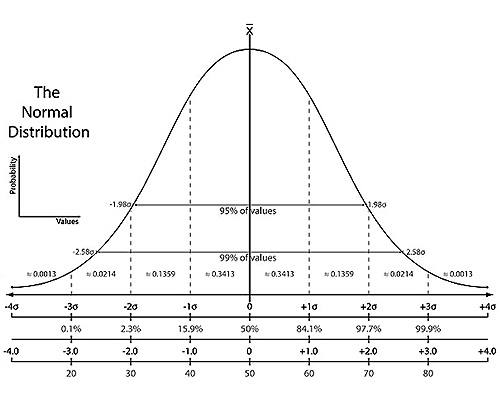
It’s the only way to find the outliers in the group, the “thin tails” as the statisticians like to call them. (More on outliers here.)

(more…)

Which One’s Pink? And What Do All Those Numbers Mean?

This commentary was written at the dawn of the Hot Stamper revolution, circa 2006 I believe. We felt it necessary to explain why we did not give out the stamper information for the pressings we were offering.


UPDATE 2024

We’re so fascinated by the unpredictable nature of the stamper information we often discover in our daily Hot Stamper shootouts that we thought it would be a good idea to create a section on the blog just to draw attention to it. You can find it under the heading of Record Mysteries. Please to enjoy.


Our Letter from 2006

An erstwhile customer wrote to us a while back asking a question about Dark Side of the Moon: “What is the FULL stamper matrix for this record… all the way around the dead wax?”

I replied that we never give out stamper numbers for the records we sell. The only way to find out the stampers for our records is to buy them.

He then countered with this bit of information:

Well, ok. I don’t understand the logic, but it’s your show.

Floyd stampers are probably the most uniquely well documented stampers on [a site that no longer exists] that they’re pretty much common knowledge. If I understand your logic, a first pressing may not be a “Hot Stamper” while a 3rd, 4th or 5th might be. Just a function of the stars aligning when that record is pressed. So what’s the diff?

I would think this would be pretty obvious. If we say pressing X is the best, this is information that you cannot get anywhere else, certainly not on the site you linked to. The day that such a site tells you which stampers sound the best is the day that such a site can have any value to those who are not collecting for the sake of collecting, but actually want to find pressings with the best sound to play

The information on that site has absolutely no value to me, or to any of my Hot Stamper customers, of that I can assure you. [It no longer exists by the way. Why should it?]

If you told me what the stampers were and it was a first pressing and /or issue, it would enhance the marketability of that particular record and I would be more inclined to buy it…not that I would sell it, but just knowing it was a first press would have more value to me.

Why would you want a first pressing if it didn’t sound as good? Or, if a later pressing sounded better, why would that make any difference in your desire to buy it? Isn’t the idea to get good sound?

If you buy records principally to collect original pressings, you will end up with some awful sounding records, that I can tell you without fear of contradiction.

On the other hand, if you want the best sounding pressings, we are the only record sellers on the planet who can consistently find them for you. This is precisely the service we are able to offer, unique in the world as far as we know. 

Anyone can sell originals. Only we can sell the best sound.

Others could of course, but none of them have ever bothered to try, so the result is the same. Finding the best sound is far more difficult and far more rewarding to both the seller and the buyer, as any of our customers will tell you.

I guess the only problem for the “collector” who cares about sound as well as rarity is that your “Hot Stampers” aren’t “certified” in any way. That is, if I went to re-sell a Hot Stamper I bought from you, no one else would know it to be different from any other pressing of the same record. Ever thought about coding your records so that individual record had some kind of verifiable marking that it was a certain level of “hot stamper”???

We do have a customer who makes us fill out hot stamper certificates, but they are really of little value for resell in the real world.

Records aren’t to sell, they are to play and enjoy.

Btw, I collect for sound first, but “collectability / rarity” is up there too. My stone mint MFSL Muddy Waters Folk Singer #0005 / 5000 might fetch a couple more bucks on ebay than number 4999 say, right? I know, 4999 might sound better, but hey, a lot of people don’t have the equipment to tell the difference.

[This is where I got a little fed up and a little testy, or maybe I should say testier than usual.]

Since that is an AWFUL sounding pressing, I hope your equipment is able to tell you what is wrong with its sound. Mobile Fidelity is one of the worst labels in the history of the world; surely you don’t buy their lousy sounding records to play them? Collect them all you want, it’s your money, but who in his right mind thinks they sound any good? There are tons of commentaries on the site detailing their deficiencies. Please take the time to read them.

The fastest way to improve your record collection is to get rid of all your audiophile pressings, since only one out of every ten or twenty is even passable. If your stereo isn’t showing you how wrong the sound of those records is, it’s time to make some serious changes.

Best, 
TP

(more…)

Hall, Oates and Mobile Fidelity – A Counterfactual Approach to Remastering

Hot Stamper Pressings of the Music of Hall and Oates Available Now

We here present a set of ideas about remastering that Mobile Fidelity could have used to guide them as they went about cutting their version of Hall and Oates’ masterpiece, Abandoned Luncheonette.

This is the approach they could have taken when it came time to produce an audiophile pressing of Abandoned Luncheonette, an album originally released in 1973.

By the time Mobile Fidelity released their version of the album in 1980, the record was already being offered as a Super Saver reissue, of minimal quality at a reduced price, produced solely for the purpose of keeping record store bins stocked with back catalog. (In our experience it is the rare Super Saver pressing that is worth the vinyl it’s pressed on.)

However, there is nothing inherently wrong with such a budget release. And the Super Saver version may even have some merit. But let’s assume for a moment that it does not.

Why Abandoned Luncheonette?

Now imagine that Mobile Fidelity knows, or at least believes, two things.

One, the album is a Masterpiece that belongs in any right-thinking audiophile’s collection, and two, the current version does not sound very good. The wise men at MoFi recognize that an opportunity to do some good for the audiophile community and make a buck at the same time has presented itself.

Audiophiles may not know it, but they are in need of a good sounding copy of this brilliant album, and they deserve one that sounds every bit as good as the shockingly good sounding originals (like the ones we sell).

In addition, we at MoFi can go Atlantic’s original one better.

We can now press the album on quieter vinyl than Atlantic ever could.

Next, Mobile Fidelity greenlights this project and gets a real master tape from Atlantic. (There are many tapes that masquerade as masters and aren’t any such thing, but let’s assume for the moment that Mobile Fidelity did get a real tape.)

They would also need a nice batch of original pressings, which in our opinion are the best, and would easily be recognized as being the best sounding by anyone playing the album on good equipment. The best originals are lively, rich and smooth, befitting an expensive, high quality studio recording from the era.

So instead of Mobile Fidelity trying to create a new sound for this album, they could have taken a different approach. They could’ve just said to themselves: let’s make a copy of the record that sounds as good as the original, and because we can press it on expensive, high-quality Japanese vinyl, we can justify selling it at a premium price to audiophiles looking for the best sound and quiet vinyl.

They could then cut a number of reference lacquers trying to re-create the best qualities of the originals, and then test those lacquers up against the best originals, in something that might be called a “shootout” long before the term was commonly used bu audiophiles of our persuasion.

The Counterfactual Part

This is what they could have done. That’s why we are calling this commentary a counterfactual.

They did something else entirely.

They tried to make the record sound better than any of the copies they had at hand. They tried to fix the sound. In trying to fix the sound, they made it worse because they simply were not capable of recognizing how right the good originals were.

They must have thought them dull, because the Brain Trust at Mobile Fidelity boosted the hell out of the upper midrange and top end. (Using the concept of reverse engineering, I assume their playback equipment was dull, a fairly safe assumption considering how many Mobile Fidelity records are bright enough to peel the paint.)

They Were on a Mission

They of course would never have been able to get the bass right, because half speed mastering always causes problems down low.

But they could have made the record tonally correct, and fairly transparent in the midrange, and then could have pressed that sound onto state-of-the-art Japanese vinyl.

But none of these things interested Mobile Fidelity at the time. They were hell-bent on making everything they touched better. In the process, practically everything they touched got worse, as anyone with good equipment and two working ears who has played a large selection of their records can attest.

(more…)