*Hey, What’s the Big Idea?

Thoughts on The Big Picture from someone who has been playing records for almost 60 years. I bought a copy of She Loves You on Swan in 1964 and still own it. The disc may be cracked but the picture sleeve is in pretty good shape, just in case you were wondering.

Gilbert and Sullivan Overtures – How Did They Do It?

Hot Stamper Pressings of Living Stereo Titles Available Now

The hall is HUGE: spacious and open as any you will hear, but not at the expense of richness or fullness. The orchestra is solid and full-bodied, yet the woodwinds and flutes soar above the other sections, so breathy and clear.

How did the Decca (recording) and RCA (mastering) engineers succeed so brilliantly where so many others have failed, failed and failed again, right up to this very day?

Who knows? It’s still a mystery that has yet to be explained, to my satisfaction anyway.

Essential Music – And No Singing

The music of Gilbert and Sullivan belongs in any serious classical collection. This is without a doubt the best way to get the most Gilbert and Sullivan music with the best sound. And no singing.

If for some reason you don’t have a good recording of Gilbert and Sullivan’s Overtures, you are really missing out. This is some of the most wonderful music ever composed. It’s the kind of music that will immediately put you in a good mood. Here the Overtures are played to perfection. For music and sound, this one is hard to fault.

As the liner notes say, “…immense charm, good-natured energy and the ‘rightness’ that announces the influence of a superb musical command”.

(more…)

Is It All About the Music or Is It All About the Sound?

Top Quality Audio Is Key to Finding Good Records 

There is a truism (a statement that is obviously true and says nothing new or interesting) that frequently pops up in the comments section commonly found on audiophile forums.

Working similarly to Godwin’s law, the longer an audiophile thread goes on, the more likely it is to be said. A quick recap of Godwin’s law:

“Godwin’s law, short for Godwin’s law (or rule) of Nazi analogies, is an Internet adage asserting: “As an online discussion grows longer, the probability of a comparison involving Nazis or Hitler approaches 1.”

The truism I’m talking about is commonly phrased, “It’s the music, stupid,” an echo of James Carville’s “It’s the economy, stupid,” from Bill Clinton’s presidential campaign of 1992. (I prefer not to use the word “stupid” when discussing my fellow audiophiles’ comments, but the play on words does not work without it, so there it is.)

Who would be foolish enough to take up the other side of this “argument,” if we can call it that?

Allow me to have a go at it.

So, if I understand correctly, it’s all about the music, right? Not the sound?

What about other kinds of art? What is it about with respect to them?

Christopher Nolan shoots on IMAX film, which in its current iteration is either 65 or 70mm.

If his movies are about a story and its characters, why not shoot them on 35mm? Or 16mm. Or Super 8? Or, gasp, HD-digital?

Same story, same characters.  But it sure wouldn’t be the same experience.

And nobody has trouble understanding that. Here’s Nolan on 70 mm.

“[The] sharpness and the clarity and the depth of the image is unparalleled. The headline, for me, is by shooting on IMAX 70 mm film, you’re really letting the screen disappear. You’re getting a feeling of 3-D without the glasses. You’ve got a huge screen and you’re filling the peripheral vision of the audience. You are immersing them in the world of the film.“

But music is different for some reason? To paraphrase Joe Pesci, different how?

Music is nothing but sound, so without good sound, what do you really have?

(more…)

Some Stereo Systems Make It Difficult to Find Better Sounding Pressings

Hot Stamper Pressings on Decca & London Available Now

Many London and Decca pressings lack weight down low, resulting in an overall thinning of the sound and lower strings that get washed out.

On some sides of some copies of some titles the strings are dry, lacking Tubey Magic. This is decidedly not our sound, although it can easily be heard on many London pressings, the kind we’ve played by the hundreds over the years.

If you have a rich sounding cartridge, perhaps with that little dip in the upper midrange that so many moving coils have these days, you will not notice this tonality issue nearly as much as we do.

Our 17Dx is ruler flat and quite unforgiving in this regard. It makes our shootouts much easier, but brings out the flaws in all but the best pressings, exactly the job we require it to do.

Here are some other records that are good for testing string tone and texture.

If you have vintage tube equipment, or modern equipment that is trying to mimic the sound of vintage tubes, you never have to worry that the strings on your London orchestral recordings will sound too dry.

You haven’t solved the problem, obviously.  You’ve just made it much more difficult — impossible even — to hear what is really on your records.

Some audiophiles have gone down this road and may not even realize what road they are on, or where it leads. Assuming you want to make progress in this hobby, it is, from our point of view, a dead end.

If you want to find Better Records, you need equipment that can distinguish good records from bad ones.

Vintage tube equipment is good for many things, but helping you find the best sounding records is not one of them.

A rack full of equipment such as the one shown here — I suspect it is full of transistors but it really doesn’t matter whether it is or not — is very good at eliminating the subtleties and nuances that distinguish the best records from the much more common second- and third-rate pressings that often look identical to them.

If you have this kind of audio firepower, Heavy Vinyl pressings and Half-Speed mastered LPs don’t sound nearly as irritating as they do to those of us without the kind of filtering you get from the electronic overkill you see.

In my experience, this much hardware can’t help but create a barrier between you and the music you love.

It may be new and expensive, but the result is the kind of old school stereo sound I have been hearing all my life (and was perfectly happy with myself before the early 2000s.)

(more…)

Paraphrasing Hayek – Our Curious Task

F. A. Hayek summarized his views well when he noted that:

“The curious task of economics is to demonstrate to men how little they really know about what they imagine they can design.”

Our curious task has been to demonstrate to audiophiles and the reviewers who write for them how mistaken they are to think that they can understand the sound of a recording by playing a small number of pressings of it.

Similarly, the modern mastering engineer operates with the understanding that he can design and operate a cutting system that produces sound superior to that which was produced by the engineers of the past.

Based on the hundreds of remastered records we have auditioned, this is clearly a case of overpromising and underdelivering.

These assumptions, and the mistaken approach to record collecting that flows from them, are clearly unsupportable.

The scores of commentaries we have written on both subjects provide all the evidence required to falsify them, and — with a fair amount of effort, sorry for the trouble — can be found among the 5000+ postings on this blog.

The Hot Stamper pressings we offer, so much bigger, livelier, and more engaging than anything produced by these so-called audiophile mastering houses, are simply the physical evidence of our deeper and more correct understanding of the true nature of records and their mysterious and confounding properties.

Digging Deep

Everything we think we know about records is based on strictly empirical findings, findings that resulted from critically auditioning thousands and thousands of albums. Many of these albums we have played by the score. For some titles, such as the more popular Beatles’ albums, we have played more than a hundred copies.

No one else has ever dug as deep as we have into the mysteries of pressing variations, for the simple reasons that no individual or group would be motivated to do so and have the resources required to accomplish such a feat.

(more…)

Outliers & Out-of-This-World Sound

More Outlier Pressings We’ve Discovered

This commentary was written about ten twenty years ago and has been updated more than a few times since.

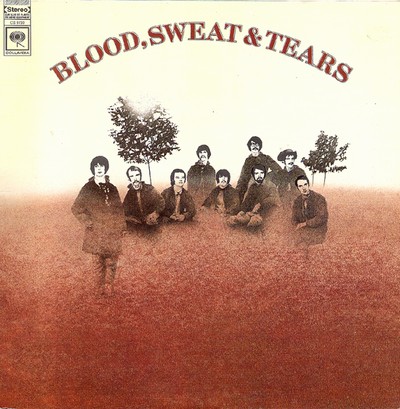
A while back we did a monster-sized shootout for Blood, Sweat and Tears’ second release, an album we consider THE Best Sounding Rock Record of All Time.

In the midst of the discussion of a particular pressing that completely blew our minds — a copy we gave a Hot Stamper grade of A with Four Pluses, the highest honor we can bestow upon it — various issues arose, issues such as: How did this copy get to be so good? and What does it take to find such a copy? and, to paraphrase David Byrne, How did it get here?


  • We no longer give Four Pluses out as a matter of policy, but that doesn’t mean we don’t come across records that deserve them from time to time.
  • Nowadays we usually place them under the general heading of breakthrough pressings. These are records that, out of the blue, reveal to us sound that fundamentally changes what we thought we knew about these familiar recordings.
  • When this pressing (or pressings) landed on our turntable, we found ourselves asking “Who knew?
  • Perhaps an even better question would have been “How high is up?”

Which brings us to this commentary, which centers around the concept of outliers.

Wikipedia defines an outlier this way:

In statistics, an outlier is an observation that is numerically distant from the rest of the data.

In other words, it’s something that is very far from normal. In the standard bell curve distribution pictured below, the outliers are at the far left and far right, far from the vast majority of the data which is in the middle.

In the world of records, most copies of any title you care to name would be average sounding. The vertical line in the center of the graph shows probability; the highest probability is that any single copy of a record will be at the top of the curve near the middle, which means it will simply be average. The closer to the vertical line it is, the more average it will be. As you move away from the vertical line, the data point — the record — becomes less and less average. As you move away from the center, to the left or the right, the record is either better sounding or worse sounding than average.

Hot Stampers are simply those copies that, for whatever reason, are far to the right of center, far “better” than the average. And as the curve above demonstrates, there are a lot fewer of them than there are copies in the middle. 


Measuring the Record

Malcolm Gladwell has a bestselling and highly entertaining book about outliers which I recommend to all. Last year I read The Black Swan (or as much of it as I could stand given how poorly written it is) which talks about some of these same issues. Hot Stampers can be understood to a large degree by understanding statistical distributions. Why statistics you ask? Simple. We can’t tell what a record is going to sound like until we play it. For all practical purposes we are buying them randomly and “measuring” them to see where they fall on the curve. We may be measuring them using a turntable and registering the data aurally, but it’s still very much measurement and it’s still very much data that we are recording.

No Theory, Just Data

Many of these ideas were addressed in the recent shootout we did for BS&T’s second album. We played a large number of copies (the data), we found a few amazing ones (the outliers), and we tried to determine how many copies it really takes to find those records that sound so amazing they defy not only conventional wisdom, but our understanding of records per se.

We don’t know what causes these records to sound so good. We know ’em when we hear ’em and that’s pretty much all we can say we really know. Everything else is speculation and guesswork.

We have data. What we don’t have is a theory that explains that data.

And it simply won’t do to ignore the data because we can’t explain it. Hot Stamper Deniers are those members of the audiophile community who, when faced with something they don’t want to be true, simply manufacture reasons why it can’t or shouldn’t be true.

That’s not science. Practicing science means following the data wherever it leads. The truth is found in the record’s grooves and nowhere else. If you don’t think record collecting is a science, you’re not doing it right.

Ignoring Outliers

Wikipedia has a good line about ignoring outliers. Under the heading of Caution they write: “… it is ill-advised to ignore the presence of outliers. Outliers that cannot be readily explained demand special attention.” Hear hear.

Now let’s see where the grooves for Blood, Sweat and Tears’ second album led us. They demanded special attention and by god we gave it to them.

The Grooves

We noted some new qualities to the sound that we would like to discuss; they’re what separated the men from the boys this time around. What we learned can be summed up in a few short words: it’s all about the brass. Let me give you just one example of how big a role the brass plays in our understanding of this recording. The best copies present a huge wall of sound that seems to extend beyond the outside edges of the speakers, as well as above them, by quite a significant amount. If you closed your eyes and drew a rectangle in the air marking the boundary of the soundscape, it would easily be 20 or 25% larger than the boundary of sound for the typically good sounding original pressing, the kind that might earn an A or A Plus rating.

Size Matters

The effect of this size differential is ENORMOUS. The power of the music ramps up beyond all understanding — how could this recording possibly be this BIG and POWERFUL? How did it achieve this kind of scale? You may need 50 copies to find one like this, which prompts the question: why don’t the other 49 sound the way this one does?

The sound we heard on the Four Plus copy has to be on the master tape in some sense, doesn’t it? Mastering clearly contributes to the sound, but can it really be a factor of this magnitude?

Intuition says no. More likely it’s the mastering of the other copies that is one of the many factors holding them back, along with worn stampers, bad stampers, bad metal mothers, bad plating, bad vinyl, bad needles and all the rest — all of the above and more contributing to the fact that the average copy of this album is just plain bad news.

Conventional Wisdom

Any reason you like for why a record doesn’t sound good is as valid as any other, so you might as well pick one you are comfortable with; they’re all equally meaningless. Of course the reverse of this is just as true: why a record sounds good is anyone’s guess, and a guess is all it can ever be.

People like having answers, and audiophiles are no different from other people in this respect. Since there are no answers to any of these questions, answers in this case being defined as demonstrable conclusions based on evidence gained through the use of the scientific method, most people, audiophiles included, are happy — if not better off — making up the answers with which they are most comfortable.

This is precisely why the term “conventional wisdom” was coined, to describe the easy answers people readily adopt in order to avoid doing the hard work of actually finding out the truth.

(more…)

Finding Good Companies to Invest In Is a Lot Like Finding Good Sounding Records to Play

Important Lessons We Learned from Record Experiments

Which of the copies pictured below sound good and which ones don’t?

If you turn over enough of these “rocks,” you — and you alone — will know.

There are some amazing sounding winners in this pile. If you conduct your shootouts following the  tried and true methods we lay out here on the blog, you will be able to hear One Man Dog and every other album you love sound better than you ever dreamed possible.

Pictured below are just a small fraction of the rocks we’ve turned over in the 20 years since we began doing shootouts.

(more…)

Letter of the Week – “Insulting people is petty and makes you sound as though you are jealous of their success.”

Welcome to the Skeptical Audiophile

Click here to see more letters from fans and detractors alike.

A fellow sent me this email a while back. Normally when people find fault with what we do, or how we do it, or the prices we charge, or the things we say, we figure live and let live and just go about our business (you know, the one where we find the best sounding records ever made).

This fellow took me to task for speaking ill of “people in the record industry,” which is a common complaint their number one apologist, Michael Fremer, likes to make, rather foolishly in my opinion, so I thought I would write a few words addressing the topic.

Ray’s letter:

Everytime I am tempted to make a purchase I always read something where Mr. Port is insulting people in the record industry. I get it. Your records may sound better than an audiophile pressing but for the price, they better! I respect the fact that you put a lot of time and effort into what you do, but insulting people is petty and makes you sound as though you are jealous of their success, you can sell records by simple stating that they sound great and with your money back guarantee (which few people actually take advantage of, from what I have read) You should be able to continue doing what you do with great success.

Just my unsolicited opinion.

Ray

I replied as follows:

Ray,

Thanks you for your letter.

Part of the problem with our approach to vinyl is that we not only sell a product that directly competes with those produced by others in the industry, but we also review the products that these other companies make.

We see it as fundamental to our job — something we owe to our customers — that we compare their Heavy Vinyl remastered pressings to our vintage Hot Stampers.

When we do that, insults are hard to avoid.

Their records are mostly a disgrace, but they don’t seem to notice how bad they sound. Nor do the audiophile types who review them.

This used to confound us. It still confounds us, but over the years we have decided it is better to accept reality and just live with it.

We are of the opinion that the people making records today should be held to account for their substandard work. Who better to do that than us?

We can provide the physical records that, when played properly, prove just how second-rate theirs actually are.

Bernie Grundman cut many of the best sounding pop and rock records ever made. I wanted to pay tribute to his fine work, so I wrote this commentary and tagged many of his best records within it: Thriller is proof that Bernie Grundman was cutting great records in 1982

But the bad records he made are very bad indeed. Most of what he mastered for Classic Records is awful, a more recently he has been doing equally spotty work. Here is a link to a select group of his worst remasterings.

Since no one seems to want to write about just how bad these records are, we felt it was our duty, as experts in the world of records, to point out their specific shortcomings. We do this for the benefit of audiophiles who might actually want good sound and not just quiet vinyl.

(more…)

Are Reviews Objective?

Robert Brook has a blog which he calls

A GUIDE FOR THE DEDICATED ANALOG AUDIOPHILE

Robert recently addressed an issue that came up when someone left a comment about the sound of Tone Poets reissues vis-a-vis the the pressings that Rudy Van Gelder mastered, to wit:

“To say anything other than the difference (between the T.P. and the RVG) is subjective is misleading the audience.”

Robert explains in the post linked below that he has worked very hard to make his system as neutral as he possibly can, and why he thinks that is a good idea. He also notes that he isn’t done, that there is plenty of work left to do, and that a more revealing, more truthful system is his one and only goal.

Any piece of equipment, or tweak, or setup adjustment that brings him closer to the sound his critical listening skills tell him are an improvement is to be adopted. They have passed passed the “more truthful” test.

Are My REVIEWS Objective?

There are scores, maybe even hundreds of posts on this very blog to explain what we do and how we do it.

We tell you about our playback system and why it’s good at its job.

In addition, practically every listing on our site has standardized text detailing the three areas that are key to understanding our vintage vinyl offerings. They include:

  1. What sonic attributes our Hot Stampers have.
  2. How we go about finding records with these attributes, and
  3. What we’re listening for in order to distinguish superior pressings from common ones.

(more…)

Diminishing Returns in Audio? Sez Who?

More of the Music of Sergio Mendes and Brasil ’66

UPDATE 2026

The commentary you see below was written in 2005 or thereabouts. Some changes have been made and links to newer commentaries added.


Thoughts from 2005

I often read about the idea of “diminishing returns” regarding the piece of equipment under review in an audio magazine, as if to say that we are so close to audio perfection that a gain of a few percent is the most we can hope for from this or that new megabuck amp or speaker.

In my experience, precisely the opposite is true. 

There are huge improvements to be made on a regular basis, even without spending all that much money (keeping in mind that this is not exactly a poor man’s hobby).

If you are actively involved in seeking out better equipment, trying new things, and tweaking the hell out of your system as much as time and patience permit, I think an improvement of 10-25% per year in perceived sound quality is not an unreasonable expectation.

The Hallographs, for example, can easily make a system improvement of that magnitude. I have heard it happen on a number of occasions. Is the system twice as good with the addition of the Hallographs? Technically, no. Is it twice as enjoyable? Is it twice as musically involving? Absolutely. Was the system fine before? Of course. Could you even listen to it after removing the Hallographs from the room? Not in a million years.

A similar situation occurred not that long ago with the Townshend Seismic Platter you may have read about on the site. I put a second and third unit under different pieces of equipment (integrated amp, VPI SDS) and the sound just soared. Same equipment, playing the same records, night and day more musically satisfying sound. For relatively small amounts of money. I’ve heard the same thing happen in other systems, so this is no fluke. It can be done.

Change What Exactly?

What specifically needs to be changed in a given system no one can really know. All you can do is take your best shot and hope for a good result.

There is simply no alternative to the ‘hard” work of experimentation and critical evaluation.

The results of these experiments cannot be predicted with much accuracy.

But one thing I can guarantee you: if you don’t change at least something in your system, you can be sure it will never sound any better than it does today. Why would it?

Sergio Mendes and James Taylor

Of course the same principle applies to records. A while back I stumbled upon two pressings that really changed my understanding of the recordings themselves. One was an original copy of Sweet Baby James (similar to this one). The sound was so tonally perfect I could hardly believe what I was hearing. This stamper was so hot it was on fire! No copy in my experience had ever gotten it this right. It was a singular thrill. I was still thinking about it weeks later.

The other amazing LP was a copy of Sergio Mendes and Brazil 66’s first album (similar to this one), with a side two that murdered my best copy. We’re talking here about an album that I have literally been collecting for over 20 years. An album that I have auditioned more than 50 pressings of, maybe even 100. An album that I would have said I know what the best stampers are and that’s that.

But I would have been dead wrong. This stamper for side two takes this familiar recording to a level heretofore unimagined by me. It not only had more smoothness that my best copy — a chronic problem with this title, as they are often tizzy and aggressive — but there was quite a bit more ambience than ever before.

Normally, brighter records appear to have more ambience, as ambience is heard mostly in the treble region. Here we have a copy with “less’ treble (actually more correct treble) that gives us more ambience. More ambience than I have ever heard. A lot more.

And with ambience comes resolution. For the first time ever I can clearly make out the Portuguese words the female vocalists are singing. I still don’t know what they mean, but I can clearly hear the words. Portuguese is a language that is often pronounced with a slur: all the sounds seem to run together. That’s the way I always heard it on this album, so I assumed that’s the way it was always going to sound. Wrong. This pressing showed me a recording I never knew existed — until last week.

This is a perfect example of the thrill one can only get through record collecting. There’s nothing like it.

Actually that’s not true. There is something like it: Making your stereo sound better. Then all your records become less familiar – in a good way.

(more…)

If Records Are About Money, You’re Going About It All Wrong

What Exactly Are Hot Stamper Pressings?

We get letters from time to time chiding us for charging what strikes some as rather large amounts of money for records that we happily admit do not have much in the way of Collector Value, the implication being that collectible records are of course worth the high prices they command in the marketplace. Hot Stampers, however, are somehow different. Clearly they cannot be worth the outrageously high prices we’re asking.

It is our opinion that the writers of these letters have made a rather glaringly erroneous assumption: That the records we sell are not subject to the same market forces as other records. This strikes us as just plain silly.

As anyone with a grounding in basic economics will tell you, we cannot force our customers to buy anything from us, especially old vinyl records, the kind of thing that most people have found they can easily do without, thank you very much.

We even take the time in many of our commentaries to advise you about what to listen for in order to help you find your own Hot Stamper copies.

Even better, we implore you to learn how to do it for yourself. No need to spend a penny with us, just look for the Hot Stampers hiding in your own collection.

Here’s how it’s done. It’s really not all that complicated. Tedious and time-consuming, yes. Hard as in finding-the-cure-for-cancer hard? Not even close. Fun? If you like that sort of thing, absolutely.

Bottom line: If you don’t like our prices, you have plenty of alternative sources for the recordings we sell. (Not the specific Hot Stampers we offer, mind you. Every record is unique, which of course means you can only buy the copy we are selling from us.)

Pricing Strategies

We price our records just like anyone prices anything — according to what we think it’s worth, what we think we can get for it, how many customers will want it, how long it will take to sell at any given price, how many we have on hand, how hard it is to find another one of comparable quality, how much better or worse it is than others we’ve played, how much work went into finding this particular one, how much we paid for it, and on and on and on until we just have to quit thinking about it and pick a number.

If we pick a good number, it probably sells right away (often within an hour of it going on the site). If we pick a bad number, it probably doesn’t. If we pick a number too low, we can’t meet the demand. If we pick a number too high there won’t be enough demand.

It ain’t rocket science, it’s just nuts and bolts business planning, the kind carried out every day by millions of sellers looking for buyers for their wares.

Money Is at the Root of the Problem

The impetus for this discussion of records as an investment was my stumbling upon a letter that a fellow named Jason wrote us all the way back in August of 2007 and the colloquy that followed. We called it Letter From a Thrift Store Junkie. Jason wrote me, I replied, and then he wrote back to make a few points, one of which was this:

3. Your records are a poor value in terms of investment. Until you convince the whole LP community that your HOT-STAMPER choices are the pinnacle of sound a buyer will never be able to re-sell B S & T for $300. Even if they swear it is the best sounding copy in the world.

Which Prompted My Reply as Follows:

(more…)