Month: December 2022

Marty Paich Big Band – What’s New

More Marty Paich

More Jazz Recordings of Interest

  • Discovery may not have produced or released a lot of top sounding titles, but this record by itself puts them well ahead of Classic Records, Mobile Fidelity and the dozens of other remastering houses who have turned out close to zero records of this sonic quality
  • If you’re looking to demonstrate just how good 1957 All Tube Analog sound can be, this killer copy should be just the record for you – the music and sound are enchanting.
  • This copy is super-spacious, sweet and positively dripping with ambience – the liquidity of the sound here is positively uncanny
  • With engineering from the legendary Bones Howe at Radio Recorders, this record’s audiophile credentials are fully in order
  • If you’re a fan of brilliant West Coast Jazz charts, this All Tube Recording from 1957 belongs in your collection.
  • The complete list of titles from 1957 that we’ve reviewed to date can be found here.

This is a wonderful example of the kind of record that makes record collecting FUN.

If you large group swinging West Coast Jazz is your thing – think Art Pepper Plus Eleven – you will really get a kick out of this one.

Albert Marx was the producer of the original sessions back in 1957. Fast-forward to the ’80s and Marx is now the owner of his very own jazz label, Discovery Records. Who would know the sound of the original tapes better than he? Working with Dave Ellsworth at KM, Marx has here produced one of the best jazz reissues we’ve heard in years.

The Original

We finally got hold of an original, and sure enough, it had some of the qualities we might have guessed it would have.

It was big and rich, as expected, but it was also crude and gritty, like a lot of old jazz and pop vocal records from the ’50s are.

(more…)

Listening in Depth to JT

Hot Stamper Pressings of the Music of James Taylor Available Now

There are five or six James Taylor records that are Desert Island Discs for me. His albums really do set a standard that few other singer/songwriters’ albums can meet.

Start with the first album, which we can’t find for you because only the British ones sound good and they are just to hard to find in clean condition [not true, we did the shootout in 2022], Sweet Baby James and JT.

The next group to pursue would contain Mud Slide Slim, One Man Dog and Dad Loves His Work, and then maybe Flag.

As audiophiles we all know that sound and music are inseparable. After dropping the needle on a dozen or so copies, all originals by the way, you KNOW when the music is working its magic and when it’s not. As with any pop album there are always some songs that sound better than others, but when you find yourself marvelling at how well-written and well-produced a song is, you know that the sound is doing what it needs to do. It’s communicating the Musical Values of the material.

The most important of all these musical values is energy, and boy do the best copies have plenty of it.

Side One

Your Smiling Face

Our favorite test track for side one. The best copies have punchy bass and drums that are hard to beat!

(more…)

“Yessir, That’s My Baby” – Two Pianos and No Smear on Either?

More of the Music of Count Basie

More of the Music of Oscar Peterson

There was not a trace of smear on the pianos, which is unusual in our experience, although no one ever seems to talk about smeary pianos in the audiophile world other than us.

With 176 keys on hand, this recording presents the audiophile with a great piano test.

The Piano

If you have full-range speakers, some of the qualities you may recognize in the sound of the piano are WEIGHT and WARMTH. The piano is not hard, brittle or tinkly. Instead the best copies show you a wonderfully full-bodied, warm, rich, smooth piano, one which sounds remarkably like the ones we’ve all heard countless times in piano bars and restaurants.

In other words like a real piano, not a recorded one. This is what we look for in a good piano recording. Bad mastering can ruin the sound, and often does, along with worn out stampers and bad vinyl. But some copies survive all such hazards.

They manage to reproduce the full spectrum of the piano’s wide range (and of course the wonderful performance of the pianist) on vintage vinyl, showing us the kind of sound we simply cannot find any other way.

Analogue Productions Heavy Vinyl

AP did another one of the Basie Peterson collaborations on vinyl, a longtime favorite of ours, The Timekeepers. Considering their dismal track record — an unbroken string of failures, with not one success of which I am aware — I’m quite sure the Hot Stamper we are offering here will blow the doors off anything they will ever do on vinyl.

AMG Review

From the same week that resulted in Night Rider and Timekeepers, this is the fifth album that documents the matchup of Count Basie and Oscar Peterson. The two pianists (backed by bassist John Heard and drummer Louis Bellson) play five standards and three blues with predictable swing, finding much more in common with each other than one might have originally suspected.


Further Reading

Laurindo Almeida – It’s A Bossa Nova World

More of the Music of Laurindo Almeida

  • An original Capitol stereo pressing of this superb Bossa Nova classic with Double Plus (A++) sound throughout
  • Here is the Tubey Magical richness, size and space that only the best vintage pressings are capable of conveying to the critical listener
  • The brilliance of this All Tube Chain recording from Capitol makes all the hard work you’ve put into your system pay off
  • You will certainly hear this music far better than anyone who had the kind of vintage equipment it would have been reproduced with back in the ’60s
  • A Jazz Classic from 1963 that should appeal to any fan of Bossa Nova music
  • The complete list of titles from 1963 that we’ve reviewed to date can be found here.

(more…)

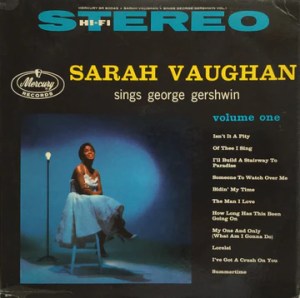
Sarah Vaughan – Sings George Gershwin, Volume One

More Sarah Vaughan

  • Sarah Vaughan’s 1957 release returns to the site for only the second time with excellent Double Plus (A++) sound throughout this early Black Label Mercury stereo pressing
  • This copy has more richness, space, clarity, dynamics and, most especially, vocal intimacy than most of what we played
  • Hard to imagine we would ever run into a quieter copy than this one – Mint Minus Minus with no marks that play and no groove damage makes this a very special copy indeed
  • Hal Mooney brilliantly handles the arrangements, letting Sarah stretch and bend Gershwin’s notes to her heart’s content

(more…)

The First Classic Record We Ever Played – Thus Spake Zarathustra

Hot Stamper Pressings of Living Stereo Titles Available Now

Way back in 1994, long before we had anything like the system we do now, we were finding fault with the “Classic Records Sound.”

With each passing year — 28 and counting — we like that sound less.  Some Classic Records pressings may be on Harry’s TAS list — disgraceful but true — but that certainly has no bearing on whether or not they are very good records. 

I had a chance to play LSC 1806 (pictured above) not long ago and I was dumbfounded at how bright, shrill and aggressive it was.

I still remember playing my first Classic Records title, their first release, which would probably have been in 1994. The deep bass of the organ at the start of Also Sprach Zarathustra, the horns and the tympani blasting out from a dead silent background, put a lump in my throat. Had they actually managed to remaster these old recordings so well that the vintage pressings I was selling for such high prices would soon be worthless? I really do remember having that thought race through my mind.

But then the strings came in, shrieking and as bright as the worst Angel or DG pressing I’d ever heard. It was as if somebody had turned the treble control up on my preamp two or three clicks, into ear-bleeding territory. All my equipment at the time was vintage and tube, and even though my system erred on the dark side tonally, the first Classic release was clearly off the charts too bright and transistory, with none of the lovely texture and sheen that RCA was famous for in the early days of Living Stereo.

I knew right then that my vintage record business was safe.

Here is our review from the ’90s, written shortly after the release of Classic’s first three titles. (With minor additions and changes for clarity and context.)

Hall of Shame Pressings, Every One

I’m reminded of the nonsense I read in TAS and elsewhere in the mid-’90s regarding the reputed superiority of the Classic Records Living Stereo reissues. After playing their first three titles: 1806, 1817 and 2222 (if memory serves), I could find no resemblance between the reviews I read and the actual sound of the records I played. The sound was, in a word, awful.

To this day I consider them to be the single worst reissue series in history.


UPDATE 2025

Analogue Productions now holds that crown, surely. Still going strong, producing one crap pressing for the mid-fi collector market after another, there is simply no recording they won’t see fit to ruin.


When Harry Pearson (of all people! — this is the guy who started the Living Stereo craze by putting these forgotten old records on the TAS list in the first place) gave a rave review to LSC 1806, I had to stand up (in print anyway) and say that the emperor clearly had removed all his clothes, if he ever had any to begin with.

This got me kicked out of TAS by the way, as Harry does not take criticism well. I make a lot of enemies in this business with my commentary and reviews, but I see no way to avoid the fallout for calling a spade a spade.

Is anybody insane enough to stand up for LSC 1806 today? Considering that there is a die-hard contingent of people who still think Mobile Fidelity is the greatest label of all time, there may well be “audiophiles” with crude audio equipment or poorly developed critical listening skills, or both (probably both, as the two go hand in hand), that still find the sound of the shrill, screechy strings of the Classic pressing somehow pleasing to the ear. Hey, anything is possible.

As I’ve said again and again, the better a stereo gets, the more obvious the differences between good vintage pressings and most current reissues become. Modest front ends and mediocre playback systems can disguise these differences and mislead the amateur audiophile.

And the “professional” too. We’ve all had the experience of going back to play a record from years ago that we remember as being amazing, only to find it amazingly bad.

The Japanese Led Zeppelin series from the 90s comes immediately to mind. How could my system have been so dull that those bright pressings actually fooled me into thinking they sounded good all those years ago? I’ve done a few Mea Culpas over the years, and that’s one of the bigger ones.

Remember when Chesky Records were all the rage? Does anybody in his right mind play that shit anymore?

A short anecdote: A good customer called me up one night many years ago. He had just finished playing the Chesky pressing of Spain, and had pulled out his Shaded Dog original to compare. The sound of his Shaded Dog pressing was so much better that he took his Chesky and, with great satisfaction, ceremoniously dropped it in the trash can, noting, “Of course I could have sold it or traded it away, but nobody should have to listen to sound like that.”

Another anecdote: when Chesky first got started in the remastering business, a friend picked up their pressing of LSC 2150, Prokofiev’s Lt. Kije with Reiner. He played it for me when I came over to hear his system, and he and I were both shocked that his ’70s Red Seal pressing was better in every way.

We wanted to know: What kind of audiophile label can’t even go head to head with a cheap reissue put out twenty years after the initial release just to keep the bins stocked and satisfy the needs of the low-budget classical record buyer?

The answer: Plenty of them, and definitely Chesky. Playing most Classic Records classical titles is a painful experience these days. I do not recommend it to anyone with good equipment. If you love the Living Stereo sound and cannot afford vintage pressings, consider playing the CDs RCA remastered. The one I know well is clearly better than Classic’s and AP’s LPs.

(more…)

Spirit’s Third Album, Clear – Another Useless Sundazed Heavy Vinyl LP

Reviews and Commentaries for the Music of Spirit

Hot Stamper Pressings of Psychedelic Rock Recordings Available Now

Sonic Grade: F

Although it’s been many years since I last played it, I’m fairly confidant that the Sundazed only hints at the real sound of the best copies. Most Sundazed records would end up in our Audiophile Hall of Shame if we ever bothered to audition them.

Being in the “record business,” such as it is, I’ve played my share and more of awful sounding Heavy Vinyl.

Even back in the (embarrassing) days when we were selling them we carried only about one out of ten that were in print. A big portion of the nine we didn’t stock were just awful as I recall.

(more…)

Letter of the Week – “…the sound of the vocals on this thing are just incredible!”

Hot Stamper Pressings of the Music of The Beach Boys Available Now

One of our good customers had this to say about some Hot Stampers he purchased recently:

Hey Tom, 

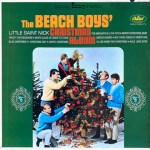
I just had to write in appreciation of a killer Beach Boys pressing I bought from you last year. It’s so funny to me because it’s the Beach Boys Christmas Album, which is the kind of thing I’m sure audiophiles tend to dismiss.

But wow, the sound of the vocals on this thing are just incredible! So much presence and texture in them; and this from a mid-’70s pressing in stereo!

I only wish I could find more sound like this for the Beach Boys, especially from Pet Sounds, but that presents a completely different set of problems I’m sure.

Anyway, I was completely impressed by the A+ sound on these sides. I can only imagine what the White Hot Stamper holds in its grooves.

Ben

Ben,

Thanks for your letter. This is indeed one of the better sounding Beach Boys titles we’ve played. It might even be the best.

Is it surprising that it is a true stereo recording? Not to us it isn’t.

While leader Brian Wilson produced and arranged the rock songs, he left it to Dick Reynolds (an arranger for the Four Freshmen, a group Wilson idolized) to arrange the 41-piece orchestral backings on the traditional songs to which the Beach Boys would apply their vocals.

The album was released in mono and stereo; the stereo mix, prepared by engineer Chuck Britz, would be the last true stereo mix for a Beach Boys album until 1968’s Friends. – Wikipedia

The Warm Moods – The Reissue Is So Good, How Can the Original Be Better?

Our review from years ago for the Discovery reissue of The Warm Moods can be found below.

We loved the sound, so much so that we found it hard to fault.

Imagine our surprise when we discoverd that that the original was clearly better.

Much better. At least a full grade better.

When we did the shootout again, a rare (in stereo anyway) original Reprise showed us just how wrong we were.

The best original pressing we found took the sound of The Warm Moods to another level, and a pretty high one at that.

It’s yet another example in which the most important question in all of audio had been overlooked: compared to what?

Who knew the recording could sound any better than the wonderful Discovery pressing we’d played?

(more…)

Turntable Tweaking Advice – Try This at Home, It Worked for Us

More Setup Advice for Turntables and Cartridges

UPDATE 2020

This commentary was written around 2010 or so. Mapleshade stopped sending me catalogs not long after this commentary, probably not because of anything I’d written. More likely it was because I never bought anything from them. And why would I? They give out some good advice, sure, but it’s mixed in with a lot of audiophile nonsense, the purest kind of nonsense that the audio world is currently drowning in.


The Mapleshade website has a piece of audio advice that caught the eye of one our customers, who sent me the excerpt below.  

Like most advice, especially audio advice, we find that some of it accords well with our own experience and some of it clearly does not. The relationship of good to bad is hard to determine without making a more careful study, but let’s just say that there is plenty of both and let that suffice.

That being the case, we thought it would be of service to our customers to break it down in more detail, separating the wheat from the chaff so to speak.

Here is the complete quote:

To get first rate sound and to get your money’s worth from any expensive cartridge, you MUST meticulously adjust VTA or tracking force every 3-4 months — that’s because stylus suspensions always sag with use. This lowers VTA and seriously kills dynamics and treble sparkle. Lots of people misinterpret this as a worn-out cartridge, an expensive error. Instead, raise VTA or lighten tracking force until your test record’s treble sounds too harsh, then drop VTA or lighten tracking force a hair. Your test record must not be thicker or thinner than the bulk of your record collection. Adjusting tracking force yields slightly better sonic results and longer cartridge life than adjusting VTA — and adjusting tracking force on most arms is WAY easier than adjusting VTA.

The basic idea here is that your cartridge sags over time, causing the VTA (Vertical Tracking Angle) to change, which results in less dynamics and “treble sparkle.”

(By the way, this is a term you will encounter on this blog as a criticism. Treble should never “sparkle,” but we get the point. We make fun of the sparkly sound Mobile Fidelity records are famous for, a sound which bugs the hell out of us, but which does not seem to bother some audiophiles. We assume their speakers or systems lack top end and could use a bit of a boost there. Our Townshend super tweeters allow us to hear all the top end there is on the records we play, unboosted, thank you very much.)

(more…)