Month: May 2022

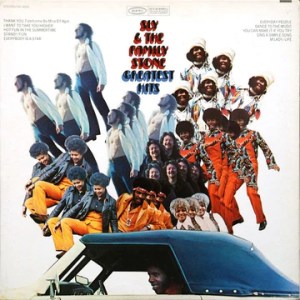
Sly and The Family Stone – Greatest Hits

More Sly and the Family Stone

More Soul, Blues, and R&B

  • An INCREDIBLE pressing of this nearly perfect Sly record, with Nearly Triple Plus (A++ to A+++) sound throughout – just shy of our Shootout Winner
  • The sound is huge – big, wide, deep, and open, with a punchy bottom end and rhythmic energy to spare, as well as cleaner, smoother, sweeter upper mids and a more extended top
  • You will find real high-resolution sound on this pressing, not the congestion, opacity and smear you would expect from a greatest hits compilation
  • 4 1/2 stars: “This summarizes their first four albums perfectly, adding the singles ‘Hot Fun in the Summertime,’ ‘Thank You (Falettinme Be Mice Elf Agin),’ and ‘Everybody Is a Star,’ possibly the loveliest thing they ever recorded… Greatest hits don’t come better than this — in fact, music rarely does.”

Both sides here have lively punchy drums; a big soundfield, front to back and side to side; tonally correct vocals (which obviously are key and sound edgy and thin on most copies), and real resolution to the sound overall, not the opacity and blur you would expect from a greatest hits compilation.

Also, and just as importantly, you lose the sibilance most copies suffer from and the smear on the horns goes away, thank goodness.

(more…)

Dialing in the Anti-Skate with Massed Strings

Hot Stamper Pressings of Orchestral Spectaculars Available Now

I once adjusted my anti-skate while playing this very album, at the time dialing it in to what I thought was a “T.” 

Over the years I’ve found that the best test for fine anti-skate adjustment is massed strings, and not just at the end of a side but right at the part of the record in which the anti-skate has been engaged. This will vary with different arms.

When you have all the rosiny texture, the high-end harmonic extension, the least shrillness and the widest and deepest staging, you are there, assuming that tracking weight, azimuth and VTA are correct as well.

Four variables to mess with is admittedly a bitch, but having the right record to test with is absolutely critical as well. Maybe we should call it five variables.

And if I only had one record to bring to someone’s house in order to evaluate their equipment, this would certainly be a top choice. If you can make this record sound the way it should, your stereo is cookin’. If you are having problems, this record will show them to you in short order.

(more…)

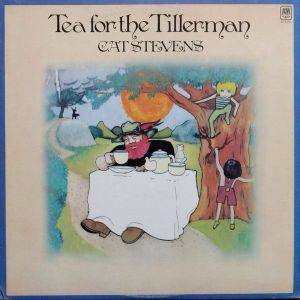
Cat Stevens – Tea For The Tillerman on the A&M Brown Label

More of the Music of Cat Stevens

More Reviews and Commentaries for Tea for the Tillerman

  • This superb Brown Label A&M pressing of TFTT – The Pinnacle of British Folk Rock from 1970 – earned solid Double Plus (A++) grades on both sides – reasonably quiet vinyl too
  • It was mastered by the same guy who cut the British pressings – Lee Hulko – and we guarantee the sound will hold its own against any copy you’ve ever played
  • The emotional power of the songs is communicated completely – we can assure you the experience will be like playing the album for the first time (so this is your chance!)
  • 5 Stars on Allmusic, a stunning Demo Disc, and a permanent member of the Better Records Top 100

Hearing this Hot Stamper is a PRIVILEGE that affords the listener insight into Cat Stevens’ music that is simply not possible any other way. The emotional power of these songs is communicated so completely through our better copies that we can assure you the experience will be like playing the album for the first time.

This is, I hope it goes without saying, one of the greatest Folk Rock records of all time, the kind of music that belongs in any collection. I’ve been playing this album for 40 years and I can honestly say I’ve never once tired of hearing it. I do get tired of hearing bad copies.

Cat’s mixes are full of subtle elements that may require many listening sessions over the course of years, even decades, to recognize and appreciate. Consider them an extra reward for having played the record so many times. I’ve played hundreds of copies over the last thirty plus years and never tired of it once. As every music lover knows, the best albums only get better with time.

(more…)

Heart Like A Wheel Is an Album Everyone Needs to Hear

More of the Music of Linda Ronstadt

Reviews and Commentaries for Heart Like a Wheel

We’ve recently compiled a list of records we think every audiophile should get to know better, along the lines of “the 1001 records you need to hear before you die,” but with less accent on morbidity and more on the joy these amazing audiophile-quality recordings can bring to your life.

The list is purposely wide-ranging. It includes some famous titles (Tumbleweed Connection, The Yes Album), but for the most part I have gone out of way to choose titles from talented artists that are less well known (Atlantic Crossing, Kiln House, Dad Loves His Work), which simply means that you won’t find Every Picture Tells a Story or Rumours or Sweet Baby James on this list because masterpieces of that caliber should already be in your collection and don’t need me to recommend them.

Which is not to say there aren’t some well known masterpieces on the list, because not every well known record is necessarily well known to audiophiles, and some records are just too good not to put on a list of records we think every audiophile ought to get to know better.

Out of the thousands of records we have auditioned and reviewed, there are a couple of hundred that have stood the test of time for us and we feel are deserving of a listen. Many of these will not be to your taste, but they were to mine.

Heart Like A Wheel

I’ve been playing HLAW since the year it came out, roughly 48 years by my calculation, and I can tell you it is no easy task to find this kind of smooth, sweet, analog sound on the album. Folks, we heard it for ourselves: the Heart Like A Wheel magic is here on practically every song.

A Must Own Pop Record

Linda’s Masterpiece, and a recording that should be part of any serious Popular Music Collection. Others that belong in that category can be found here.

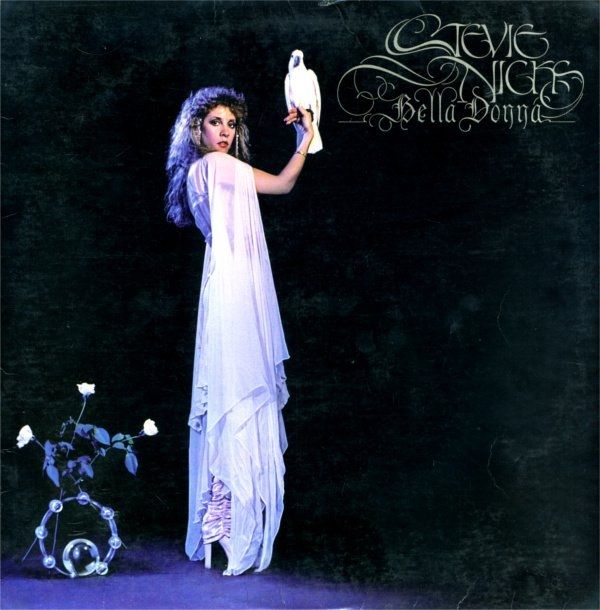
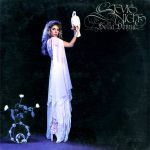
Bella Donna – Speculate Shmeculate

Hot Stamper Pressings of Stevie Nicks’ Music Available Now

The sound of the typical copy can best be summed up in three words: thin, hard and bright.

When the sound is thin or hard or bright, the fun factor of this mainstream rock, at least for us audiophiles, drops to zero.

Stop Draggin’ My Heart Around and Leather And Lace both sound great on the radio, why not on Warners vinyl?

We sure can’t blame Sheffield Labs, the original cutting house: all the copies we played — good, bad and otherwise — were originals and mastered by them.

Could it be the vinyl?

It could. It could be a lot of things, but speculating about them doesn’t really get us or you anywhere, so I’m going to stop doing it and just say we played a big pile of records and heard a lot of unpleasant sound. If you own the record you probably know what I mean.

Our Approach

In order to do the work we do, our approach to audio has to be fundamentally different from that of the audiophile who listens for enjoyment. Critical listening and listening for enjoyment go hand in hand, but they are not the same thing.

The first — developing and applying your critical listening skills — allows you to achieve good audio and find the best pressings of the music you love.

Once you have a good stereo and a good record to play on it, your enjoyment of recorded music should increase dramatically.

A great sounding record on a killer system is a thrill.

A Heavy Vinyl mediocrity, played back on what passes for so many audiophile systems these days — regardless of cost — is, to these ears, an intolerable bore.

If this sounds arrogant and elitist, so be it.

We set a higher standard. Holding our records to that higher standard allows us to price our records commensurate with their superior sound and please the hell out of the people who buy them.

For those who appreciate the difference, and have resources sufficient to afford them, the cost is reasonable. If it were not we would not grown to have a staff of ten doing the work we do. We would have gone out of business years ago. Businesses that do not satisfy the needs of their customers do not stay in business for long.*

Hot Stampers are not cheap. If the price wasn’t more than justified by the better sound quality and quieter surfaces, who in his right mind would buy them? We can’t really be fooling that many audiophiles, can we?

Some folks think the whole Hot Stamper thing is hogwash, a case of mass hysteria, a psychological syndrome that does exist and cannot be ruled out as a possibility. Maybe our customers are as delusional as most forum posters think they are.

Keep in mind that virtually none of the folks who write about us have ever heard one of our records, so that should help you decide how much confidence you should put in whatever explanations they might have to offer.

(more…)
The Planets – MoFi and UHQR Reviewed

Reviews and Commentaries for The Planets

Sonic Grade: Regular MoFi LP: F / UHQR: D

Years ago we auditioned an excellent sounding Decca Purple Label British import LP, the same performance, the same recording that Mobile Fidelity remastered (#510), but, thankfully, it sounded a whole lot better.

I just listened to both and a catalog of the faults of the MFSL pressing would be quite lengthy. I won’t waste your time listing them.

Although the recording is far from perfect, the Decca pressing shows it in its proper light. It finds the right balance between the multi-miked sound of the super disc List Mehta and a vintage recording from the Golden Age such as the famous Boult.

The sound is very dynamic and the brass has tremendous weight.

Not the MoFi. It’s thin and bright.

Their UHQR is somewhat better, not quite as thin and phony up top, but not really very good either.

Avoid them both.

Our Recommendation

Our favorite performance of The Planets can be found here.

Many of Solti’s recordings from the Seventies are not to our liking, for reasons we lay out here.


Our Pledge of Service to You, the Discriminating Audiophile 

We play mediocre-to-bad sounding pressings so that you don’t have to, a free service from your record-loving friends at Better Records.

(more…)

Symphonic Dances and the Need for Full Brass and Clean Cymbals

Hot Stamper Pressings of Orchestral Spectaculars Available Now

This reissue had the sound we were looking for!

One of the biggest advantages this copy had over most of what we played is fuller brass. The shrill sounding horns on most Columbia albums is what gets them tossed in the trade pile.

Fortunately for us audiophiles who care about these sorts of things, the sound here is rich and clean, with solid, deep bass. The stage is huge, with the multi-miking kept to a minimum so that you can really hear the space this big group of musicians occupies.

This pressing is a reissue, not a Six Eye original. The reason this particular LP beat every other pressing we played comes down to one specific quality — the top is dramatically cleaner and more extended.

There is a HUGE amount of top end on this recording. Wildly splashing cymbals and other percussion instruments are everywhere, and they are a joy to hear. No original was as clean up top as this reissue, and without a clear, (mostly) distortion-free top end, the work will simply not sound the way Bernstein wanted it to.

All that percussion is in the score. The high-frequency energy – perhaps the most I have ever heard from any recording of his music — is there for a reason. He conducted his own score, and one can only assume he liked the way it came out. We sure did.

Led Zeppelin II on MoFi — Back to the Stone Age!

Reviews and Commentaries for Led Zeppelin II

More of the Music of Led Zeppelin

An Audiophile Hall of Shame pressing and another MoFi LP reviewed.

Yes, it’s yet another record perfectly suited to the Stone Age Stereos of the Past.

This version of Zep’s sophomore release from 1969 has to be one of the worst audiophile remastering jobs in the history of the world. There is NOT ONE aspect of the sound that isn’t wrong. Not one!

The highs are boosted, the upper midrange is boosted, the mid-bass is boosted, the low bass is missing — what part of the frequency spectrum is even close to correct on this pressing? The answer: none.

If you’re in the market for a Hot Stamper pressing of Led Zeppelin II, we can help you, but prices these days are steep and show no sign of coming down. We typically pay $1000+ or more for the used copies we buy if that tells you anything about what to expect a Hot Stamper pressing will cost you.

Records are getting awfully expensive these days, and it’s not just our Hot Stampers that seem priced for perfection.

If you are still buying these modern remastered pressings, making the same mistakes that I was making before I knew better, take the advice of some of our customers and stop throwing your money away on Heavy Vinyl and Half-Speed Mastered LPs.

At the very least let us send you a Hot Stamper pressing — of any album you choose — that can show you what is wrong with your copy. of the album.

And if for some reason you disagree with us that our record sounds better than yours, we will happily give you all your money back and wish you the best.

(more…)

Oliver Nelson and RVG – Mastering Better than the Master?

More Music and Arrangements by Oliver Nelson

The sound of this Shootout Winning reissue is tonally correct, Tubey Magical and above all natural. The timbre of each and every instrument is right and it doesn’t take a pair of golden ears to hear it. So high-resolution too. If you love ’50s and ’60s jazz you cannot go wrong here.

For those record lovers who still cling to the idea that the originals are better, this pressing will hopefully set you straight.

Yes, we can all agree that Rudy Van Gelder recorded it, brilliantly as a matter of fact. Shouldn’t he be the most natural choice to transfer the tape to disc, knowing, as we must assume he does, exactly what to fix and what to leave alone in the mix?

Maybe he should be; it’s a point worth arguing.

But ideas such as this are only of value once they have been tested empirically and found to be true.

We tested this very proposition in our recent shootout, as well as in previous ones of course. It is our contention, based on the experience of hearing quite a number of copies over the years, that Rudy did not cut the original record as well as he should have. For those of you who would like to know who did, we proudly offer this copy to make the case.

Three words say it all: Hearing is believing.

(And if you own any modern Heavy Vinyl reissue we would love for you to be able to appreciate all the musical information that you’ve been missing when playing it. I remember the one from the ’90s on Impulse being nothing special, and the Speakers Corner pressing in the 2000s if memory serves was passable at best.)

(more…)

How Much Better Sounding Is a Stradavarius?

A skeptical take on an old claim, using the Gold Standard of Double Blind Testing.

In the record shootouts we do during the week, we evaluate records using something very much like the double blind testing mentioned above.

It’s what makes us unique in the world of record dealers and collectors. We allow the records to speak for themselves.

With the evaluation process we use, there can be no influence or bias from the reviewer’s preconceived notion of what pressing should sound best, because the person sitting in the listening chair does not have any way of knowing which pressing is actually playing.

This is not quite true for audiophile pressings, since the VTA must be adjusted for their thicker vinyl. The way such evaluations are done is simple enough however. We play a top quality Hot Stamper pressing, typically one that received a grade of White Hot (A+++), check the notes for what the test tracks are and what to listen for, and then proceed to test the Heavy Vinyl pressing on those same tracks, listening for those same qualities.

It rarely takes more than a few minutes to recognize the faults of the average audiophile pressing.

When played head to head against an exceptional vintage LP, the audiophile pressing’s shortcomings become all too obvious. Again and again, the audiophile pretender is found to be at best a second- or  third-rate imitation of the real thing, if not downright awful.

How the sound of the modern remastered mediocrity has managed to impress so many self-identified audiophiles is shocking to those of us who have been working to get the best sound from our records for a very long time, developing both our systems and our critical listening skills over the decades.

In defense of these surprisingly easily-impressed audiophiles, I should point out that even we were fooled twenty years ago by many of the Heavy Vinyl records produced around that time, such as those on the DCC label and some by Speakers Corner, Cisco and others. It took twenty years to get to where we are now, taking advantage of much better equipment, better cleaning technologies, better room treatments, and the like, most of which did not even exist in 2000.

A turning point came in 2007 with the Rhino pressing of Blue, a record that made us ask, “Why are we selling records that we would not want to own or listen to ourselves?”

In closing, there is one fact that cannot be stressed enough, which may seem like a tautology but is nevertheless axiomatic for us:

Doing record shootouts, more than anything else, has allowed us to raise our critical listening skills to the level needed to do shootouts correctly. It’s also how we became expert listeners.

Without that process, one which we painstakingly developed over the course of the last twenty-five years, we could not possibly do the work we have set out for ourselves: to find the best sounding pressings of the most important music ever pressed on vinyl.

To learn more about how to conduct your own shootouts and gain the critical listening skills that come from doing them, click here.


Further Reading