Month: January 2022

The Music of Leonard Bernstein – White Hot Stampers Revealed!

More Stamper and Pressing Information

Looking to pick up a Hot Stamper locally on your own? Easy — all the best Decca and London copies (British only of course) are 1L on both sides.

I suppose it’s only fair to point out that all the worst copies have 1L on both sides, the reason being that all the copies are 1L on both sides, regardless of how they sound.

And here you thought I was actually being helpful. But we are being helpful. We’re sharing with you an important truth.

Stamper numbers only tell a part of the story. They can be very misleading, in the sense that a little knowledge can be a dangerous thing. To know what a record sounds like you have to play it.

This is a subject near and dear to us here at Better Records, and has been for many decades. We discuss it at length in a commentary you may have seen on the site called The Book of Hot Stampers.

This London Phase 4 British import has some of the most SPECTACULAR sound I have ever heard reproduced from disc. The sound is so BIG and BOLD that it handily puts to shame 95% or more of all the Golden Age Shaded Dogs, London Bluebacks, Mercury Living Presence’s, EMI’s and Decca’s we’ve ever played. If we had a Classical Top 100 list, this record would belong in a Top Ten taken from it, right near the top judging by what I heard when I played it.

If you have a system with the speed, power, and size to play this record properly (yes, you will need all three and a whole lot more), it’s hard to imagine it would not qualify as the best-sounding orchestral recording you’ve ever heard.

Demo Disc barely begins to do it justice. What sound. What music. What a record!

(more…)

Swingin’ in ’61 with the Help of Billy May

More of the Music of Frank Sinatra

Of the five records Sinatra released in 1961 (Sinatra’s Swingin’ Session!!!; Come Swing with Me!; Ring-a-Ding-Ding!; Swing Along with Me; and I Remember Tommy), this is clearly one of our favorites. (And by the way, what’s with all the exclamation marks?)

Billy May deserves much of the credit for the “swing” that’s all over the album. His band is jumpin’, and on the best pressings — such as this one — the sound conveys the energy with virtually none of the grit and hardness you hear on so many of Sinatra’s other albums (Sinatra at the Sands comes immediately to mind, but there are far too many others).

This is 1961, and tubes and ribbon mics are in charge of the live-in-the-studio proceedings. With a vintage original pressing such as this one, you hear the kind of sound they heard.

And if you play the record at ear-splitting levels you will hear even more of that sound. Can you imagine how loud this band was playing?

We were especially impressed with the large dynamic swings of the arrangements. And the fact that the best pressings never get aggressive even during their most dynamic passages.

(more…)

This Tchaikovsky 4th Turned Out to Be Not as Good as We’d Hoped

Hot Stamper Pressings of the Music of Tchaikovsky Available Now

About ten years ago we dropped the needle on this Mehta recording and thought it had potential, so we went about acquiring more copies for an eventual shootout.

A few years back we gave them another listen and found the sound not to our liking.

We have not done a shootout for any of the major Tchaikovsky symphonies (4, 5 and 6) in a very long time, but we hope to do them in the future, although that future could be many years from now. Nothing we have dropped the needle on has knocked us out, and that’s usually what it takes to get the ball rolling.


UPDATE 2024

Actually we quite like this RCA reissue with Monteux, and there are some other recordings we know to be good, but they are turning out to be very hard to find.


These Mehta Londons have revealed themselves to be much more artificial sounding than we thought they were, or, more accurately, could tell they were back in 2011.

Like every Royce Hall recording we’ve ever played, including the one everybody knows, there is too much multi-miking and spotlighting going on for us to suspend our disbelief and feel like we are in the living presence of the musicians, to borrow a phrase. The orchestra in this recording is not presented with anything resembling the experience one would have in the concert hall.

James Lock is a brilliant recording engineer, but his work here in the states leaves a lot to be desired.

(more…)

McDonald and Giles – McDonald and Giles

More Prog Rock

  • You’ll find incredible sound on both sides of this very well recorded proggy album
  • These early UK pressed sides are full of the kind of Tubey Magic that makes us (and other right-thinking audiophiles) swoon – thanks Brian Humphries!
  • If you like early King Crimson – they were in the band don’t you know – you will surely get a big kick out of this one-of-a-kind sleeper from 1970
  • 4 stars: “The main attraction is really the performances turned in by McDonald and the Giles brothers — they all sound fabulous…”
  • If you’re a Prog Rock or Art Rock fan, this is a classic from 1970 that belongs in your collection.
  • The complete list of titles from 1970 that we’ve reviewed to date can be found here.

Brian Humphries engineered the album, and although you may not be all that familiar with his name, if you’re an audiophile you know his work well. Take a gander at this group:

  • Traffic – John Barleycorn Must Die
  • Black Sabbath – Paranoid
  • Traffic – The Low Spark Of High Heeled Boys
  • Pink Floyd – Wish You Were Here

Two are of course on our Top 100 Rock and Pop List, and all four — five if you count McDonald And Giles — qualify as State of the Art Rock Recordings from the era. (more…)

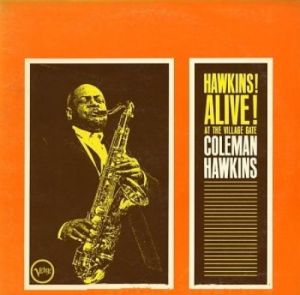
At Ease With Coleman Hawkins from 1960

More of the Music of Coleman Hawkins

More recordings by Rudy Van Gelder

This 1960 Saxophone Ballad session has to be seen as yet another recording triumph for Rudy Van Gelder. The best pressings of these OJC reissues from 1989 sound like the vintage jazz albums they emulate, and sometimes they even beat the originals at their own Tubey Magical game. They can be every bit as rich, sweet and spacious as their earlier-pressed brethren in our experience.

In the case of At Ease with Coleman Hawkins, we simply have never seen an original copy clean enough to buy, so we have no reference for what an original would sound like.

But, having critically auditioned literally hundreds and hundreds of vintage jazz records over the course of the last few years, we’re pretty confidant we know what they are supposed to sound like.

And they sound just like the best copies of this very pressing.

What to Listen For

The best copies are rich and tubey; many pressings were thin and modern sounding, and for that they would lose a lot of points. We want this record to sound like something RVG recorded in 1960, and the best copies give you that sound, without the surface noise and groove damage the originals doubtless have to offer.

Some copies have much more space; some are more present, putting the musicians right in the room with you; some are more transparent, resolving the musical information much better than others, letting you “see” everyone in the studio clearly. Some have more rhythmic drive than others. On some the musicians seem more involved and energetic than they do on the average pressing.

The copies that do all these things better than other copies are the ones that win our shootouts.


Today’s Heavy Vinyl Mediocrity Is… Fragile

Hot Stamper Pressings of the Music of Yes Available Now

The Analogue Productions 180g reissue shown here is mastered by Steve Hoffman and Kevin Gray, two guys with reputations for doing good work, but the results of their collaboration [can you believe this record came out in 2006!?] leave much to be desired.

The overall sound is too lean.

This is especially noticeable on the too-thin-sounding guitars and vocals.

Believe me, it’s no fun to play a Yes album with thin guitars and vocals.

Also, there’s a noticeable lack of ambience throughout the record. What comes to mind when I hear a record that sounds like this is the dreaded D word: dubby.

I find it hard to believe they had the actual two-track original master tape to work with. The sound is just too anemic to have come from the real tape. If they did have the real tape, then they really botched the job.
(more…)

Richie Havens – The End Of The Beginning

More Richie Havens

  • A stunning A&M pressing with Nearly Triple Plus (A++ to A+++) sound on both sides, just shy of out Shootout Winner – exceptionally quiet vinyl too
  • Both sides here are super open and transparent with more bottom end weight and presence than just about every other copy we played
  • “1976’s The End Of The Beginning certainly represents a radical stylistic departure – Havens is backed by Booker T & The MGs and tries his hand, fairly successfully, at covering 10cc’s I’m Not In Love, Bob Dylan’s If Not For You, Van Morrison’s Wild Night and The Doobie Brothers’ Long Train Running.” – Record Collector Mag

(more…)

Dave Brubeck – Brubeck a La Mode

More of the Music of Dave Brubeck

  • You’ll find superb sound on this very well-recorded Fantasy session from 1960
  • Wonderfully Tubey Magical and natural – this may not be an original, but it sure sounds like a good All Tube recording from 1960 should
  • Exceptionally quiet vinyl throughout with both sides playing Mint Minus to Mint Minus Minus – they didn’t press them any quieter
  • “One of Brubeck’s three recordings of the 1959-61 period that featured clarinetist Bill Smith in the place of altoist Paul Desmond with the Quartet, this one finds Smith contributing ten originals that use various modes and unusual scales. The music generally swings and there are some fine solos…”
  • Fans of Brubeck and company should find this well recorded Fantasy title from 1960 of interest

(more…)

Chicago – Chicago VI

More Chicago

More Pure Pop Recordings

  • An outstanding copy of Chicago VI, with solid Double Plus (A++) sound from first note to last – fairly quiet vinyl too
  • The sound of the brass on any Chicago album is key and these sides have the horns sounding clear and really jumping out of the speakers
  • VI was propelled to the top of the charts for five full weeks by two of the band’s best tracks: “Just You ‘n’ Me” “Feelin’ Stronger Every Day”
  • 4 stars: “Chicago VI is an undeniably strong effort – supported at the time by its chart-topping status…”

The background vocals on these sides are breathy and clear, a far cry from the typically smeary, dark voices we heard on most of the pressings we played, all originals in this case.

More often than not the brass lacks bite and presence, but these sides had the Chicago horns leaping out of the speakers. What is a Chicago record without great horns? Without that big bold sound you may have something, but it sure ain’t Chicago.

The sound of the brass on any Chicago album is key — it has to have just the right amount of transient bite yet still be full-bodied and never blary. In addition, on the best of the best pressings you can really hear the air moving through the horns.

(more…)

Are Hot Stamper Pressings Quiet?

More Answers to Your Frequently Asked Questions

They’re about as quiet as vintage LPs ever are.

Some surface noise is always going to be audible on an old record. We believe we sell the quietest vintage pressings in the world, but they are certainly not silent. Lately we’ve been adding the following text to our listings to clarify our position on surface noise:

Mint Minus to Mint Minus Minus is about as quiet as any original pressing will play, and since only the right originals have any hope of sounding amazing on this album, that will most often be the playing condition of the copies we sell. (The copies that are even a bit noisier get listed on the site are seriously reduced prices or traded back in to the local record stores we shop at.)

We continued:

Those of you looking for quiet vinyl will have to settle for the sound of later pressings and Heavy Vinyl reissues, purchased elsewhere of course as we have no interest in selling records that don’t have the vintage analog magic of these wonderful originals. If you want to make the trade-off between bad sound and quiet surfaces with whatever Heavy Vinyl pressing might be available, well, that’s certainly your prerogative, but we can’t imagine losing what’s good about this music — the size, the energy, the presence, the clarity, the weight — just to hear it with less background noise.

We do a much better job of cleaning our records than we did years ago. In fact, any record that hasn’t been cleaned recently gets recleaned and replayed in a shootout, and many of them sound better and play quieter than our original grades would indicate.

How to Find Our Quietest Records

This section has the Hot Stamper pressings that earned our highest play grades.

However, for those who like their records to play with minimal surface noise, I recommend a quiet cartridge and very high quality arm and table.

In my experience they should be good for at least one full grade of improvement in the reduction of surface noise. They should be able to take you from “Mint Minus to Mint Minus Minus” — the grade a brand new record from the ’70s would play at — to “Mint Minus” or something very close to it.

I have heard many of my quietest pressings play noisy on very expensive equipment owned by friends and I’ve made an effort to help some of them fix their problems.

Some audiophiles have a bad habit of getting married to their equipment, which makes it hard for them to find solutions to their problems.

The solution is more often than not different equipment. I’ve found this especially true in the case of cartridges.

One Further Note

The record cleaning advice we offer lays out the methods and materials we use to get our records to play as quiet as possible while still sounding as good as possible.

There are some fluids on the market that may get records to play quieter than the fluids we use, but we have yet to hear such fluids make the records sound as good as they do with the Walker System that’s at the heart of our cleaning regimen.

Again, it’s a matter of tradeoffs. We want the best sound for our records, period. Apparently our customers do too, as less than 1% of the records we sell are ever returned for excessive surface noise. (more…)