unnatural-sound

Linda Ronstadt – Lush Life

More Linda Ronstadt

More Nelson Riddle

  • A vintage copy of Ronstadt’s 1984 release with INCREDIBLE Shootout Winning Plus (A+++) sound or close to it on both sides
  • Here are just a few of the things we had to say about this stunning copy in our notes: “big and weighty”…”huge and rich and dynamic vox”…”3D and jumping out of the speakers”…”big bass”…”silky and huge”
  • Getting the strings to sound sweet and rosiny, not smeary and hard, is no mean feat, but it’s the kind of thing the best Hot Stamper pressings are guaranteed to give you on any of Linda’s American Songbook period albums
  • Marks and problems in the vinyl are sometimes the nature of the beast with these vintage LPs, but once you hear just how killer sounding this copy is, you might be inclined, as we were, to stop counting ticks and pops and just be swept away by the music
  • “What’s New illustrated that Linda Ronstadt was no longer interested in contemporary pop, and since it was a surprise success, there was no reason not to repeat the formula on Lush Life. Working again with Nelson Riddle, Ronstadt runs through several pop standards — ‘When I Fall in Love,’ ‘Sophisticated Lady,’ ‘Falling in Love Again,’ ‘It Never Entered My Mind’…”

(more…)

Linda Ronstadt – What’s New

More of the Music of Linda Ronstadt

  • Boasting KILLER Shootout Winning Triple Plus (A+++) grades or close to them on both sides, we guarantee you’ve never heard What’s New sound this good
  • So hugely spacious and three-dimensional, yet with a tonally correct and fairly natural sounding Linda, this is the way to hear it
  • What engineer George Massenburg gets right is the sound of an orchestra, augmented with jazz musicians (Ray Brown, Tommy Tedesco, Plas Johnson, Bob Cooper), all performing live in a huge studio
  • “…the best and most serious attempt to rehabilitate an idea of pop that Beatlemania… undid in the mid-60s.”
  • If you’re a Ronstadt fan, this title from 1983 is surely a Must Own. The complete list of titles from 1983 that we’ve reviewed to date can be found here.

With two outstanding sides, this pressing gets two critically important elements of the recording right:

The strings in the orchestra, and, for obvious reasons, even more importantly, Linda’s voice.

We guarantee that these sides give you a more natural sounding Linda than you’ve ever heard, or your money back.

If all you own is a mediocre sounding pressing or the truly awful Mobile Fidelity from 1983, you are in for a world of better sound with this pressing.

(more…)

This Recording of The Planets Has “Blockbuster Sound,” for Better or Worse

Hot Stamper Pressings of the Music of Gustav Holst Available Now

This recording has what we here at Better Records like to call blockbuster sound.

Even on the best copies, the recording does not sound very much like a live orchestra, nor is it actually even trying to sound like a live orchestra in concert.

It’s trying to be huge and powerful in your home.

Which is more in line with a rock Demo Disc such as Crime of the Century or Dark Side of the Moon.

Everything has been carefully and artificially placed in the soundfield. Each instrument or group of intstruments is given its own space and (sometimes ridiculous) location.

It’s clearly not the recreation of a live orchestral event.

No live concert I have ever attended sounds anything like this record.

Instead it’s the actual creation of a unique orchestral sound, with unique staging of its own design.  Lots of microphones were used, which cause instruments and sometimes whole sections of the orchestra to appear in places and take up spaces they could not possibly occupy in the real world.

If you have a good-sized listening room and your stereo images well, with realistic three-dimensional staging and depth, you will have no trouble hearing what we are talking about with any pressing of the album.

This is the sound that Bernard Herrmann made such wonderful use of with his series of Phase IV recordings for Decca, rather different than the four mics and two stereo channels of the Fiedler Gaite Parisienne from RCA in 1954.

Which is ironic. HP talked about The Absolute Sound of live unamplified music as being the standard, yet somehow this recording ended up in his Top Twelve all time greats. Makes no sense to me, but neither do many of the records on the TAS Super Disc list.

That said, our current favorite Planets is the other Planets on the TAS List, Previn’s reading on EMI from 1974.

(more…)

Paul Simon – Graceland

More Paul Simon

Hot Stamper Pressings of Graceland Available Now


  • With two outstanding Double Plus (A++) sides, you’ll have a hard time finding a copy that sounds remotely as good as this vintage pressing – fairly quiet vinyl too
  • Richer and smoother, two important qualities all the best pressings must have, yet still clear and resolving – this is the sound you want for Graceland
  • Guaranteed to trounce the well-reviewed but nevertheless awful Heavy Vinyl LP in every way, or your money back and the shipping is on us
  • There’s a delicate, extended top end on this pressing that simply does not exist on the new reissue
  • 5 stars: “An enormously successful record, Graceland became the standard against which subsequent musical experiments by major artists were measured.”

(more…)

Morph The Cat – Mastered by the Cats from DCC

More of the Music of Steely Dan

Yet another disastrous Heavy Vinyl release with godawful sound, and in this case, equally godawful music, a fitting entry for our audiophile hall of shame.

Hopelessly murky, muddy, opaque, ambience-free sound, and so artificial I honestly cannot make any sense of it.

This is someone’s idea of analog? It sure ain’t mine.

Is this music for robots? That would explain a lot. Audiophile robots, perhaps?

Why do audiophiles waste their money on crap like this?

(more…)

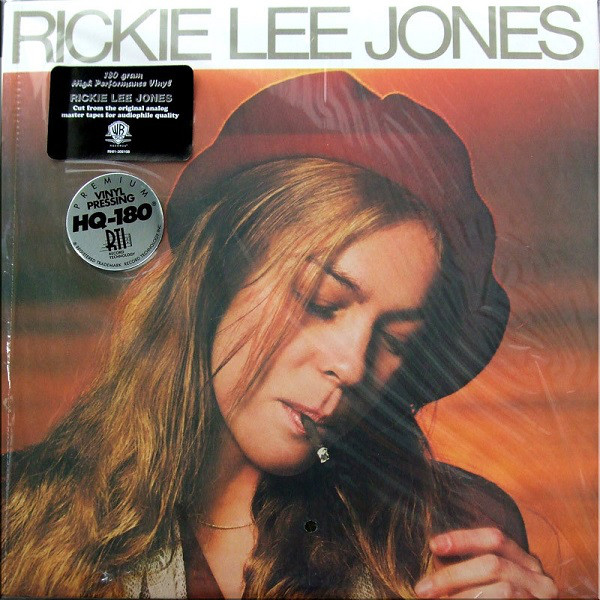
Rickie Lee Jones on Rhino Records – Not Our Idea of Good Sound, and We Hope Not Yours

Hot Stamper Pressings of the Music of Rickie Lee Jones Available Now

We were fairly unimpressed with the Rickie Lee Jones on Warners that came out a few years back [2008 in fact, time flies!].

It has that same phony modern mastering we find so unappealing on the Heavy Vinyl reissue of Blue. (We seem to be pretty much alone in not liking that one, and we’re proud to say we still don’t like it. We encourage you to play The Blue Game and maybe you’ll see why we feel the way we do.)

We liked the new Sweet Baby James Hoffman and Gray cut. We note in our review that:

Hoffman and Gray can take pride in this Sweet Baby James. It’s some of the best work I’ve heard from them to date. If more DCC and Heavy Vinyl reissues sounded like this, we wouldn’t be so critical of them. Unfortunately they don’t, and there are scores of pages of commentary on the site to back up that statement for those of you interested in the subject.

We went on to say

The amazing transparency and dynamic energy of the best originals will probably never be equaled by an audiophile pressing like this. (It hasn’t happened yet and we remain skeptical of the possibility.) Considering that this pressing is sure to beat most reissues, imports and other such like, we have no problem heartily recommending it to our customers, especially at the price.

So, What’s Wrong With Rickie Lee?

Simple. They took a somewhat artificial, hi-fi-ish, close-miked, heavy-on-the-reverb recording and made it sound even more artificial, phony and hi-fi-ish (but less-heavy-on-the-reverb; there is always a noticeable loss of resolution in these modern mastering jobs).

What were they thinking?

The best copies have warmth, richness and sweetness to balance out the more unnatural elements in the recording. Copies with these qualities are not that common, but we’ve run across plenty of them in our shootouts and proudly offered them for sale, where of course they sold quickly for lots of money. Major league audiophile appeal, this one. In its day it was heavily demo’ed in every stereo store in town, and for good reason — the sound positively jumps out of the speakers.

It’s a Trap

The average copy of this album is a sonic disaster, akin to the average copy of Famous Blue Raincoat or — gulp, even worse — Graceland. If you’re a detail freak, this Rhino pressing may be just what you are looking for. It’s got detail all right.

But all that phony detail obscures what is wrong with the sound. Overly detailed sound is a trap that is all too easy to fall into.

Plenty of recordings designed to appeal to audiophiles strike us as being phony in this way. Stan Ricker cut a lot of overly-detailed records for Mobile Fidelity in the 70s and 80s, records that may have sounded fine on the lo-rez stereos of that era (like the one I owned), but are positively painful to play on the top quality equipment that is available (but rare) today. [1]

I would hope that the audiophile community would have developed their listening skills to a level sufficient to recognize what this pressing doesn’t have — warmth, richness and sweetness — but I get the feeling I will be proved wrong yet again in that regard.

This Performance Is High?

Rhino Records has really made a mockery of the analog medium. Rhino bills their releases as pressed on “180 gram High Performance Vinyl.” However, if they are using performance to refer to sound quality, we have found the performance of their vinyl to be quite low, lower than the average copy one might stumble upon in the used record bins.

The CD versions of most of the LP titles they released early on are far better sounding than the lifeless, flat, pinched, so-called audiophile pressings they released starting around 2000. The mastering engineer for this garbage actually has the nerve to feature his name in the ads for the records. He should be run out of town, not promoted as a keeper of the faith and defender of the virtues of “vinyl.”

If this is what vinyl sounds like I would switch to CD fast enough to make your head spin.

And the amazing thing is, as bad as these records are, there are people who like them. I’ve read postings on the internet from people who say the sound on these records is just fine.

Their Grateful Dead titles sound worse than the cheapest Super Saver reissue copies I have ever heard.

The Yes Album sounds like a cassette, a mere ghost of the real thing.

(more…)

Linda Ronstadt – For Sentimental Reasons

More Linda Ronstadt

  • An incredible copy of Ronstadt’s 1986 release with Shootout Winning Triple Plus (A+++) sound or close to it from first note to last
  • Linda is fuller, sweeter, breathier, less spitty (some tracks more than others) and just plain less artificial here than on all other copies we played in our recent shootout
  • The final installment of the jazz trilogy that Ronstadt recorded with bandleader and arranger Nelson Riddle
  • “… it is in the hushed intensity of Mr. Riddle’s string arrangements for the album’s ballads that one senses a musician reaching deeply into his soul to make eloquent final statements… The arrangements’ emotional gravity reverberates in Miss Ronstadt’s singing…”

With two outstanding sides, this pressing gets two critically important elements of the recording right: the strings in the orchestra, and, for obvious reasons, even more importantly, Linda’s voice. We guarantee that these sides give you a more natural-sounding Linda than you’ve ever heard, or your money back. (more…)

George Michael – Listen Without Prejudice, Vol. 1

More George Michael

Records We Only Sell on Import Vinyl

  • This original import pressing was doing practically everything right, with both sides earning incredible Nearly Triple Plus (A++ to A+++) grades, just shy of our Shootout Winner – fairly quiet vinyl too
  • Dramatically more “natural” than almost all other copies (the scare quotes are there for a reason; it’s clear that George has never been interested in that kind of sound) – feel free to donate your dubby domestic pressings to the Goodwill, they’re a joke next to this
  • Michael’s second studio release, a far superior album to Faith in our opinion, shows the maturation of his skills in songwriting and production – it’s a Personal Favorite of mine to this day
  • The sound may be too heavily processed and glossy for some, but we find that on the best copies that sound really works for this music
  • 4 stars: “… the highlights — the light, Beatlesque harmonies of “Heal the Pain,” the plodding number one “Praying for Time,” and also “Waiting for That Day” as well as the Top Ten “Freedom” — make a case for his talents as a pop craftsman.”
  • This recording ranks high on our Difficulty of Reproduction Scale. Do not attempt to play it using any but the best equipment.

(more…)

My Romance – Forget the Vinyl, Just Buy the CD

More of the Music of Carly Simon

This album from 1990 contains lovely music, for the most part, but the CD-like sound is just not going to cut it. I had played the album ten or twenty years and liked it just fine, but the last time we dropped the needle on it we realized the sound was unacceptably processed, especially the vocal.

Don’t get me wrong, there are plenty of heavily-processed recordings we like.

But for this album, covers of some of Sinatra’s most iconic songs, we felt the sound was completely wrong for the material.

Our advice: If you like the album, you might as well just buy the CD.

(more…)

Chad Has Served Poor Jethro Tull Most Barbarously

Hot Stamper Pressings of the Music of Jethro Tull Available Now

With a nod to our old friend, John Barleycorn.

We were finally able to get our hands on Analogue Productions’ newly remastered Stand Up, an album we know well, having played the British copies from every era by the score. Our notes for the sound can be seen below.

If ever a record deserved a “no” grade, as in “not acceptable,” this new 45 RPM pressing mastered by Kevin Gray deserves such a grade, because it’s just awful. (This link will take you to a great many more records best avoided by audiophiles in search of better sound. Although we’ve only linked to about 75 pressings here on the blog, it should be noted that the world is full of bad sounding records.)

But let’s put that grade in context. The last time a good sounding version of Stand Up was released, as far as we can tell, was 1989, and that version was the Mobile Fidelity Gold CD. I bought mine soon after it came out. I wasn’t even planning on buying a CD player when the Compact Disc was first invented, but then Mobile Fidelity played a dirty trick on me. Instead of releasing Loggins and Messina’s first album on vinyl, they put it out exclusively on CD as part of their Silver MFCD series.
As a die-hard MoFi fan, that sealed the deal: now I had to buy a CD player. I picked up a cheap Magnavox player, the 1040. I think it ran me less than $100, and played my new Sittin’ In CD, which, as I recall, sounded pretty good. (One of my other early CD purchases was Tumbleweed Connection, the regular label release, and it was dreadful.)

I still own Stand Up on Gold CD, and I still find it superb in every way. (Many of the MFSL Gold CDs from this era are excellent and worth seeking out.)

It sounds nothing like this new vinyl release, and that’s a good thing.

On vinyl, Stand Up has rarely been given the care it deserved. The last version of Stand Up to have sound we would want to listen to was pressed in the UK in the early ’70s. That was close to fifty years ago.

We sold some domestic pressings of the album back in the early 2000s, describing them at the time as made from dub tapes with all the shortcomings that entails, but mastered very well from dub tapes. The best domestic pressings are rich, smooth, tonally correct and natural sounding. They’re too dubby to sell as Hot Stampers, but they are not bad records. Some later Chrysalis pressings are big and open, but often they are too thin and bass-shy for the music to work. We’ve never taken them seriously.

It wasn’t long before we’d eliminated everything but the early UK pressings for our shootouts, and we quickly discovered that the earliest of the UK pressings on the older Island label were not good at all. We wrote about the problem with some originals more than ten years ago.

What was surprising about the shootouts we had done in past years was how disappointing most of the early British pressings we played were. They were flat, lacked energy and just didn’t rock the way they should have.

We learned the hard way that most British Pink label pressings aren’t especially rich, that some are small and recessed, and some are just so smeary, thick and opaque that they frustrate the hell out of you as you’re trying to hear what any of the musicians other than Ian Anderson is doing.

So when a reviewer comes along and says something positive about the new pressing compared to some unidentified original, we appreciate the problem that is at the root of his mistaken judgments:

Here’s the deal: if the goal was to duplicate the original pink label Island sound, this reissue misses that, which is good because this new double 45 reissue is far superior to the original in every possible way.

The tape was in great shape, that’s for sure. Clarity, transparency, high frequency extension and especially transient precision are all far superior to the original. Bass is honest, not hyped up and the mastering delivers full dynamics that are somewhat (but only slightly), compressed on the original. Ian Anderson’s vocals are naturally present as if you are on the other side of the microphone. Most importantly, the overall timbral balance sounds honest and correct. But especially great is the transient clarity on top and bottom.

If you’re fortunate to have an original pink label Island, at first you might think the sound is somewhat “laid back”, but that’s only because the mids and upper mids are not hyped up as they are on the original. That adds some excitement, but it clouds the picture and greatly obscures detail.

If you scroll down to our notes, you will see what we thought of the “laid back” sound this reviewer talks about. (Keep in mind that we first read the above review mere moments ago.)

We think “smaller, thick and stuck in the speakers” may be someone’s idea of “laid back,” but, just so there is no misunderstanding, it’s our idea of “awful.”

None of these are good things. Our Hot Stamper pressings are never small, thick or stuck in the speakers. They’re the records with the opposite of that sound. Our records are big, transparent and open. That’s why we can charge so much money for them and have people scooping them up from our Wednesday mailer the moment they become available.

They deliver the big, bold sound that the brilliant engineer for the album, Andy Johns, was known for. Laid back was not in his vocabulary.

Here is more of what we heard on side one.

Jeffrey Goes to Leicester Square

“Transients are sharp but body is dull. Kinda phony.”

Phony sound is the key here. Messing with the EQ in the mastering benefits some aspects of the sound at the expense of others.

Nothing new there. Audiophile pressings with wacky EQ are the norm. I would be surprised if any common Reprise pressing from back in the day wouldn’t sound more “right,” more tonally correct, more seamless. I’ve played quite a few and I don’t recall ever hearing one sound “phony.”

On side two we played the first two tracks.

(more…)