ronstwhats

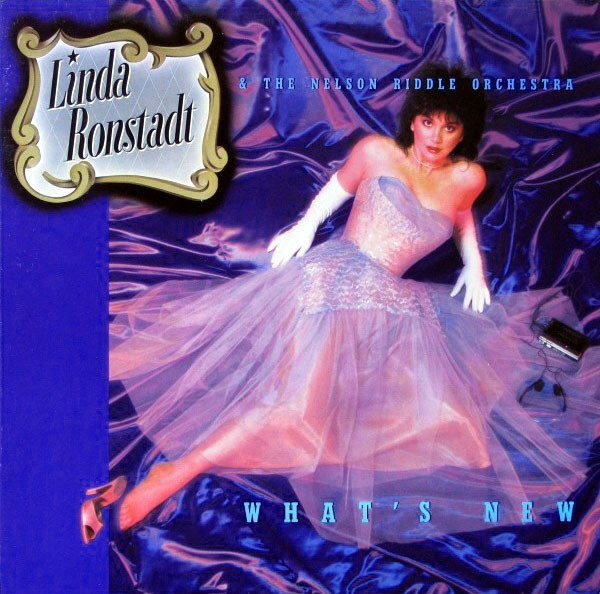
Linda Ronstadt – What’s New

More of the Music of Linda Ronstadt

  • Boasting KILLER Shootout Winning Triple Plus (A+++) grades or close to them on both sides, we guarantee you’ve never heard What’s New sound this good
  • So hugely spacious and three-dimensional, yet with a tonally correct and fairly natural sounding Linda, this is the way to hear it
  • What engineer George Massenburg gets right is the sound of an orchestra, augmented with jazz musicians (Ray Brown, Tommy Tedesco, Plas Johnson, Bob Cooper), all performing live in a huge studio
  • “…the best and most serious attempt to rehabilitate an idea of pop that Beatlemania… undid in the mid-60s.”
  • If you’re a Ronstadt fan, this title from 1983 is surely a Must Own. The complete list of titles from 1983 that we’ve reviewed to date can be found here.

With two outstanding sides, this pressing gets two critically important elements of the recording right:

The strings in the orchestra, and, for obvious reasons, even more importantly, Linda’s voice.

We guarantee that these sides give you a more natural sounding Linda than you’ve ever heard, or your money back.

If all you own is a mediocre sounding pressing or the truly awful Mobile Fidelity from 1983, you are in for a world of better sound with this pressing.
(more…)

String Tone and Texture Are Key to the Best Pressings of What’s New

Hot Stamper Pressings of the Music of Linda Ronstadt Available Now

We’ve criticized the engineer George Massenburg in the past, but with this copy we almost want to take it all back.

What he gets right on this recording is the sound of an orchestra, augmented with various jazz musicians (Ray Brown, Tommy Tedesco, Plas Johnson, Bob Cooper), all performing live in a huge studio.

The sound stretches far to Linda’s left, far to her right, as well as back far behind her in a huge semi-circle. She is of course singing in a vocal booth, with her vocal placed front and center in the soundstage.

What to Listen for

That’s easy on this album: the strings. When the strings are big and rich, not shrill and thin, that’s a good thing. Rosiny texture means you have a copy with less smear and higher resolution. Harmonics up top means that the top end of your copy is extending properly.

Bottom line: If the strings are bad on this album probably everything else is too.

Here are some records that are good for testing string tone and texture.

Having said that, this is an album of standards sung by a woman with a very recognizable voice. If Linda doesn’t sound right, what’s the point of the record? To hear Nelson Riddle’s well-recorded strings?

The best copies have Linda sounding rich and breathy. Few managed to pull off that particular trick as well as we would have liked. We took major points off for those copies that had her sounding too thin or forced in her upper range.

(more…)