thin-sound

These titles can lack richness on at least one side.

To be more precise, some, but not all pressings of these titles can lack richness on at least one side.

Waiting for the Sun – Don’t the DCC Pressings All Sound Different Too?

More of the Music of The Doors

I recently had a chance to listen again to this DCC pressing for the first time in many years. I was putting it up on ebay to sell and dropped the needle to check the sound. I can’t say I liked what I heard. Knowing the record as well as I do, I could her that the DCC was clearly to be brighter in the midrange.

When I went back to read what I had said about the DCC years ago, I saw that I had described that copy the same way. You can read it for yourself.

Our old review follows.

We rate the DCC LP a B Minus

We used to like the DCC pressing of this Doors album. Now… not so much. It’s a classic case of Live and Learn.

Keep in mind that the only way you can never be wrong about your records is simply to avoid playing them. If you have better equipment than you did, say, five or ten years ago, try playing some of your MoFi’s, 180 gram LPs, Japanese pressings, 45 RPM remasters and the like. You might be in for quite a shock.

Of course the question on everyone’s mind is, “How does this Hot Stamper copy stack up to the famous DCC pressing?” After all, the DCC was the one we were touting all through the ’90s as The One To Beat.

Well, to be honest, the DCC is a nice record, but a really special original copy throws a pretty strong light on its faults, which are numerous and frankly fairly bothersome.

The top end on the copy I played was a touch boosted, causing a number of problems.

For one, the cymbals sounded slightly tizzy compared to the real thing, which had a fairly natural, though not especially extended, top end.

But the real problem was in the midrange. Morrison sounded thinner and brighter, more like a tenor and less like a baritone, with a somewhat hi-fi-ish quality added to the top of his voice. Folks, I hate to say it, but if someone had told me that the record playing was half-speed mastered, I probably would have believed it. I detest that sound, and the DCC pressing bugged the hell out of me in that respect.

Morrison has one of the richest and most distinctive voices in the history of rock. When it doesn’t sound like the guy I’ve been listening to for close to forty years, something ain’t right.

The mid-bass was also a tad boosted — not in the deep bass, but more in that area around 100-200 cycles, causing the sound to be overly rich. None of the originals we played had anything like it, so I’m pretty sure that’s a bit of added EQ Hoffman introduced for reasons best known to him. (Did he like it that way, or was he pandering to some of the audiophile community’s preference for overly rich sound, the kind they confuse with “analog”? Nobody knows.)

Not So Fast There, O Hot Stamper Guru

But wait a minute — don’t all records sound different? Is it really fair to paint his version with such a broad brush on the basis of having played only one copy?

Of course not. Perhaps other copies sound better. It wouldn’t be the first time. (Maybe they sound worse. Think about that.)

So here’s our offer to you, dear customer: We absolutely guarantee our Hot Stamper copies will handily beat the DCC pressing or your money back. We’ll even pay the return domestic shipping if for some reason you are not 100% satisfied with the sound of our Hot Stamper. Now there’s an offer you can’t refuse, for any one of you who love the album and have a wad of money burning a hole in your pocket.

(more…)

Two CDs that Sound Nothing Like Their Vinyl Counterparts

Reviews and Commentaries for Sticky Fingers

Reviews and Commentaries for Back in Black

I made the mistake of buying both Back in Black and Sticky Fingers on CD to listen to in the car, and both are a disaster — no bass, no rock weight, with boosted upper mids, no doubt in a misguided attempt to provide more “clarity” and “detail.”

But trying to achieve more clarity at the expense of the rock and roll firepower that makes both of these albums Must Own Rock Records is beyond foolish.

These albums did not need a new sound or a more modern sound. The sound of the original pressings of both of them is superb, as close to faultless as you are likely to find in this world.

Mobile Fidelity managed to get more transparency in the midrange for their pressing, and look what it got them: our award for the worst version ever.

On both of these CDs, even in the car I couldn’t get past the third song.

If this is what the digital lovers of the world think those albums actually sound like, they are living in some kind of parallel universe.

The best pressings on vinyl sound nothing like them. In fact the best pressings sound so good they are on our Rock and Pop Top 100. Rest assured that you don’t get to be on our Top 100 with anemic, upper midrangy sound.


New to the Blog? Start Here

(more…)

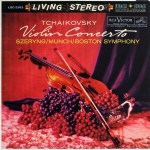
Another Dubious Recording of Tchaikovsky’s Violin Concerto

Hot Stamper Pressings of the Music of Tchaikovsky Available Now

1S/1S Shaded Dog original pressing.

Ooh, let the drooling begin. 

Here is our admittedly very old review for exactly the one copy we had on hand to play, although, to be fair, we have played more than one copy of the album over the years, and it never sounded especially good to us on any of the copies we auditioned.

The violin is very immediate sounding on this recording, maybe too much so.

Either way, the sound of the orchestra is where this record falls short.

It’s congested, thin and shrill in places. The right copy of Heifetz’s performance on LSC 1992 is a much better record overall. Some may prefer Szeryng’s way with this famous piece, which, as a matter of taste, is fine by us.

If you’re listening for just the performance and the sound of the violin, you may find this record to be more acceptable than we did.

(more…)

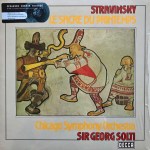
Stravinsky / Le Sacre du Printemps – Speakers Corner Reviewed

More of the music of Igor Stravinsky

We used to think this was one of the better Speakers Corner Deccas.

Having recently played the London pressing of the same performance (CS 6885), cut by Decca of course, we think we are almost certainly wrong about the quality of the sound, but who knows? Maybe Speakers Corner remastered the record properly and fixed its shortcomings.

Hah, just joking. In our experience that has never happened and we think it is very unlikely that it ever will.

Years ago we wrote the following:

Wow! What a performance! What dynamic full bodied sound! To be fair, I pulled out my original London, one of those awful mid-’70s English pressings that are never quiet, and yes, some of the ambience on the original is missing here on the new version, but everything else seems right: dynamics, tonality, the frequency extremes (including some pretty awesome deep bass).

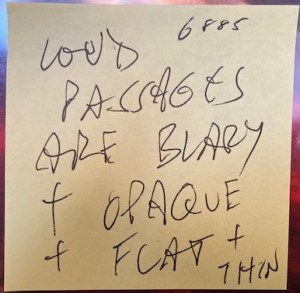
Some of the above could be right, the parts about the tonality and such. Speakers Corner could have added some bass and lower midrange to make the sound less thin, and taken out some of the upper midrange to make the loud passages less blary, but it certainly doesn’t solve the most serious issues we had with the recording, which is the fact that it is opaque and flat, two qualities that are the death of orchestral music on vinyl.

Here are the notes we made for the London.

The two paragraphs you see reproduced below are also full of bad advice we had given out in the past:

1. Can’t be sure we would still feel that way but I’m guessing this is a good record if you can pick one up at a cheap price. 

2. If you have a quiet original, great, consider yourself lucky. As few of you have any copy at all, I recommend this one. The alternative is to miss Solti’s energetic performance and the precision of the Chicago Symphony, one of the few orchestras capable of making sense out of this complex and infuriating work. (At least it used to infuriate audiences. Now our modern ears can take a difficult work like this and appreciate the complex rhythms and atonality as the expression of a truly original mind.

This paragraph we would still agree with wholeheartedly:

This is not music to play while you are having dinner. This is music to engage the mind fully. It belongs in any collection. Yours in fact. Unless you have small speakers, in which case you would be wasting your money, as small speakers cannot begin to reproduce the power of this work in the hands of Solti and the CSO [or anybody else for that matter].

How Do the Butterfly and Small Red E Pressings Sound on Strange Days?

Hot Stamper Pressings of the Music of The Doors Available Now

The Butterfly and Small Red E labels are so contemptibly thin and harsh they are not worth the vinyl they were pressed on.

You would be much better off with the DCC Gold CD than any of the reissue vinyl we’ve played.

The fact of the matter is that good digital beats bad analog any day.


This a Must Own Record, a 1967 recording with unbelievable RAW POWER. Most audiophiles very likely have no idea how well recorded this album is, simply because most pressings don’t do a very good job of translating the energy and life of the master tape onto the vinyl of the day.

The second Doors album is without a doubt one of the punchiest, liveliest, most POWERFUL recordings in the entire Doors catalog, right up there with their debut.

I’m guessing this statement does not comport with your own experience, and there’s a good reason for that: not many copies of the album provide evidence of any of the above qualities. Most pressings are opaque, flat, thin, veiled, compressed and lifeless. They sound exactly the way so many old rock records sound: like any old rock record.

Botnick Knocks It Out of the Park

But this album is engineered by Bruce Botnick. The right pressings give you the kind of low-end punch and midrange presence you hear on Love’s first album (when you play the right gold label originals). Botnick engineered them both, and what’s even more amazing is that The Doors second is in many ways an even better recording than Love’s!

Very tubey from start to finish, the energy captured on these Hot Stampers has to be heard to be believed. Not to mention the fact that the live-in-the-studio musicians are swimming in natural ambience, with instruments leaking from one mic to another, and most of them bouncing back and forth off the studio walls to boot.

But the thing that caught us most by surprise is how much LIFE there is in the performances on the better Hot Stamper copies. Morrison pulled out all the stops on songs like Love Me Two Times and the last track on the album, When the Music’s Over. Unless you have a very special pressing there is almost no chance you will ever hear him with this kind of raw power.

Top 100? If we could find more than a sporadic few clean, good sounding copies each year it would surely make the list, joining the other two of the band’s first four albums on there now.

The D4/D5 Stereo Pressings Are Just Awful on My Fair Lady

Hot Stamper Pressings Featuring Shelly Manne Available Now

In our experience, the Black Label stereo originals with D4/D5 stampers are terrible sounding.

With those stampers, My Fair Lady is undoubtedly a hall of shame pressing, as well as another early pressing we’ve reviewed and found wanting.

Both sides graded “No,” our not-especially-technical term for a record that sounds really bad.

Notes for Side One:

Track one is bright and unnatural up top. Track two is not very musical.

Notes for Side Two:

Track one is very weird sounding, thin and small.

(Obviously there was no need to play a second track.)

As you may have read elsewhere on the site, some Contemporary label originals are very poorly mastered, which should put paid to the idea that Hot Stampers are only, or even usually, original pressings.

In our most recent shootout, the second-best sounding pressing was on the early Black Label. We would love to give out the stampers for that one, but we don’t do that.

(more…)

The Planets – MoFi and UHQR Reviewed

Reviews and Commentaries for The Planets

Sonic Grade: Regular MoFi LP: F / UHQR: D

Years ago we auditioned an excellent sounding Decca Purple Label British import LP, the same performance, the same recording that Mobile Fidelity remastered (#510), but, thankfully, it sounded a whole lot better.

I just listened to both and a catalog of the faults of the MFSL pressing would be quite lengthy. I won’t waste your time listing them.

Although the recording is far from perfect, the Decca pressing shows it in its proper light. It finds the right balance between the multi-miked sound of the super disc List Mehta and a vintage recording from the Golden Age such as the famous Boult.

The sound is very dynamic and the brass has tremendous weight.

Not the MoFi. It’s thin and bright.

Their UHQR is somewhat better, not quite as thin and phony up top, but not really very good either.

Avoid them both.

Our Recommendation

Our favorite performance of The Planets can be found here.

Many of Solti’s recordings from the Seventies are not to our liking, for reasons we lay out here.


Our Pledge of Service to You, the Discriminating Audiophile 

We play mediocre-to-bad sounding pressings so that you don’t have to, a free service from your record-loving friends at Better Records.

(more…)

Ray Charles & Betty Carter – DCC Clear Vinyl Pressing

More Soul, Blues and R&B Albums with Hot Stampers

This Dunhill Compact Classics LP pressed on CLEAR VINYL is one of DCCs earliest forays into analog production from way back in 1988.

Unfortunately it sounds like a bad CD.

Screechy, bright, shrill, thin and harsh, it’s hard to imagine worse sound for this music.

No warmth.

No sweetness.

No richness.

No Tubey Magic. In other words,

No trace of the original’s analog sound.

I have to wonder how records this awful get released.

You can be sure that Hoffman’s Gold CD murders it in every way.

(more…)

Bill Evans – Live and Learn

Hot Stamper Pressings of the Music of Bill Evans Available Now

A classic case of live and learn. Many years ago we had played copies of the record and thought the sound was fine, shootout material in fact.

Flash forward to 2015 or 2016.  Now it sounds thin, flat and opaque.

Worse, it’s actually in mono.

On today’s modern stereos it leaves a lot to be desired, and for that reason we say skip it.

A stereo recording reissued in mono for no apparent reason?

What were they smoking over there at Milestone? 

(more…)

Sergio Mendes & Brasil ’66 – Another Spitty and Thin MoFi

Sonic Grade: D

An Audiophile Hall of Shame pressing and another MoFi LP reviewed and found wanting.

So spitty and thin! Why, in God’s name, why would you want to ruin such a wonderful recording?

When you have a recording that is already plenty bright, adding top end and taking out more lower midrange is the last thing in the world you should be doing. Since that was the standard operating procedure for MoFi and other Half-Speed mastering outfits around this time, that’s exactly the approach they ended up taking.

Those of you who have had the opportunity to play the Mobile Fidelity pressing of this record should know what a disaster it is.

Is brighter better? Apparently Mobile Fidelity thinks so. It sounds like a bad CD.

But it’s not a bad CD. It’s an expensive audiophile record!

If you’ve spent any time on this site, you should know by now that many audiophile records sound WORSE than the typical CD.

The typical CD does not have an equalization curve resembling a smile. The classic smile curve starts up high on the left, gets low in the middle, and rises again at the end, resulting in boosted bass, boosted top end, and a sucked out midrange — the Mobile Fidelity formula in a nutshell.

But they forgot to boost the bass on this album, so it’s closer to a half-smile I suppose.

More letters, reviews and commentaries for the debut album by Sergio Mendes and Brasil ’66