rrr

Cat Stevens on 2 Heavy Vinyl 45 RPM Discs, Part 1 – Is This the Truest Tillerman of Them All?

About ten years ago we auditioned and reviewed the 2011 edition of Tea for the Tillerman pressed by Analogue Productions, the one that came on a single Heavy Vinyl 33 RPM LP.

I wrote a very long commentary about the sound of that record, taking it to task for its manifold shortcomings, at the end of which I came to the conclusion that the proper sonic grade for such a record is F as in Fail. My exhaustive review asked the not-very-subtle question, this is your idea of analog?

Our intro gave this short overview:

Yes, we know, the folks over at Acoustic Sounds, in consultation with the late George Marino at Sterling Sound, supposedly with the real master tape in hand, and supposedly with access to the best mastering equipment money can buy, labored mightily, doing their level best to master and press the Definitive Audiophile Tea for the Tillerman of All Time.

It just didn’t come out very well, no matter what anybody tells you.

Recently I was able to borrow a copy of the new 45 cutting from a customer who had rather liked it. I would never have shelled out my own money to hear a record put out on the Analogue Productions label, a label that has an unmitigated string of failures to its name. But for free? Count me in!

The offer of the new 45 could not have been more fortuitous. I had just spent a number of weeks playing a White Hot Stamper Pink Label original UK pressing in an attempt to get our new Playback Studio sounding right.

We had a lot of problems. We needed to work on electrical issues. We needed to work on our room treatments. We needed to work on speaker placement.

We initially thought the room was doing everything right, because our Go To setup disc, Bob and Ray, sounded super spacious and clear, bigger and more lively than we’d ever heard it. That’s what a 12 foot high ceiling can do for a large group of musicians playing live in a huge studio, in 1959, on an All Tube Chain Living Stereo recording. The sound just soared.

But Cat Stevens wasn’t sounding right, and if Cat Stevens isn’t sounding right, we knew we had a Very Big Problem. Some stereos play some kinds of records well and others not so well. Our stereo has to play every kind of record well because we sell every kind of record there is. You name the kind of music, we probably sell it. And if we offer it for sale, we had to have played it and liked the sound, because no record makes it to our site without being auditioned and found to have excellent sound.

But I Might Die Tonight

The one song we played over and over again, easily a hundred times or more, was But I Might Die Tonight, the leadoff track for side two. It’s short, less than two minutes long, but a lot happens in those two minutes. More importantly, getting everything that happens in those two minutes to sound not just right, but as good as you have ever heard it, turned out to be a tall order indeed.

I could write for days about what to listen for in the song, but for now let me just point the reader to one of the most difficult parts to reproduce correctly.

At about 50 seconds into the track, Cat repeats the first verse:

I don’t want to work away
Doing just what they all say
Work hard boy and you’ll find
One day you’ll have a job like mine, job like mine, a job like mine

Only this time he now has a multi-tracked harmony vocal singing along with him, his own of course, and he himself is also singing the lead part louder and more passionately. Getting the regular vocal, call it the “lower part,” to be in balance with the multi-tracked backing vocal, call it the “higher part,” turned out to be the key to getting the bottom, middle and top of the midrange right.

When doing this kind of critical listening we play our records very loud. Live Performance level loud. As loud as Cat could sing, that’s how loud it should be when he is singing his loudest toward the end of the song for the final “But I might die tonight!” If he is going to sing loudly, I want my stereo to be able to reproduce him singing as loud as he is actually singing on the record. No compression. No distortion. All the energy. That’s what I want to hear.

The last fifteen seconds or so of the song has the pianist (Cat himself) banging out some heavy chords on the piano. If you have your levels right it should sound like there is a real piano at the back of the room and that someone is really banging on it. It’s a powerful coda to the song. (more…)

Audiophiles Should Skip Swingin’ the ’20s on OJC

Hot Stamper Pressings of Contemporary Jazz Records Available Now

This album is fairly common on the OJC pressing from 1988, but more recently we’ve found the sound of the OJC pressings we’ve played seriously wanting. They have the kind of bad reissue sound that plays right into the prejudices of record collectors and audiophiles alike, the kind for whom nothing but an original will do.

They were dramatically smaller, flatter, more recessed and more lifeless than even the worst of the ’70s LPs we played. (We tend to like those, by the way.)

The lesson? Not all reissues are created equal. Some OJC pressings are great — including even some of the new ones — some are awful, and the only way to judge them fairly is to judge them individually, which requires actually playing a large sample.

Since virtually no record collectors or audiophiles like doing that, they make faulty judgments – OJC’s are cheap reissues sourced from digital tapes, run for the hills! – based on their biases and reliance on inadequate sample sizes.

You can find those who subscribe to this approach on every audiophile forum there is. The methods they have adopted do not produce good results, but as long as they stick to them, they will never have to worry about discovering that inconvenient truth.

(more…)

Let Us Help You Back Up Your Claims

How to Become a Better Listener

UPDATE 2026

We wrote this commentary a couple of years back and now, having played some of the Tone Poets pressings we thought would have bad sound, have updated it with all the latest information on that sorry label.

Credibility is at the heart of our many disagreements with the online audiophile community, so we felt we needed to offer a way for audiophiles to do a better job of giving some context to their opinions.


When we run experiments that include modern remastered Heavy Vinyl records, comparing them to the vintage vinyl pressings we have on hand for our shootouts, the one thing we can say about them is that they are almost certain to be inferior. (Well, almost, but not quite.)

Some are a great deal worse than others, to be sure, but they are all inferior to one degree or another.

On another blog we were taken to task — by those who felt their systems were more than adequate to judge the sound quality of the real Blue Notes compared to the new releases — for predicting that Joe Harley’s Tone Poets releases, once we finally got around to playing them, would be just as awful as all the other records he has had a hand in producing

For the thirty years since these Heavy Vinyl pressings have come along, it has seemed to us that all the evidence pointed in the same direction — namely that audiophile systems are rarely capable of showing their owners the strengths and weaknesses of the records they play.

We discussed that very issue here in some depth. Curiously, the audiophile systems of reviewers has seemed to fail them every bit as badly.

If you, speaking as an audiophile, want to make the case for the superior quality of the records put out on the Tone Poets label, we are happy to entertain the possibility. Having played Heavy Vinyl pressings by the hundreds over the past three decades, the chances of their records having sound we would find acceptable are vanishingly small, but we can’t say the chances are zero.

Repeating the tiresome truism (aren’t they all?) that because reviews are subjective, your review is as credible as any other, simply will not do.

When we wrote the above we had yet to play a Tone Poets reissue in one of our shootouts. (We’d dropped the needle on a couple, but to get deep into the sound we really needed to do a shootout with a good-sized pile of cleaned Blue Note pressings, with special emphasis on those mastered by RVG. They’re the ones that most often win shootouts.)

We actively started to search out real Blue Note pressings, on various labels from various eras, for a couple of titles. After about two years we were able to do the shootouts and report our findings.


UPDATE 2026

We have now played a couple of the Tone Poets releases, for two of the very best sounding Blue Note recordings we’ve had the pleasure to play: Dexter Gordon’s One Flight Up and Lee Morgan’s Cornbread.

To read our reviews, click on the respective links for either or both of them: One Flight Up and Cornbread.

(more…)

Our Previous Two Shootouts for Straight Up

Hot Stamper Pressings of the Music of Badfinger Available Now

UPDATE 2025

This title, like all the best Badfinger records, is almost always noisy, which is why you will rarely find it on our site. Most of what we buy is just not quiet enough to sell.

We were finally able to do a shootout for Straight Up again in 2025, our first in fifteen years! There is one Hot Stamper pressing active on the site at the time of this writing, but it will most likely be gone soon.


Our Thinking Circa 2010

This relatively quiet WHITE HOT STAMPER Straight Up is KILLER, with a A++ side one and an A+++ side two — you can’t do much better than that! Side two has Master Tape Sound, the kind that we like to call AGAIG — As Good As It Gets. Both sides have the kind of PRESENCE in the midrange that most copies can’t begin to compete with. The sound here just JUMPS out of the speakers, which is exactly what the best copies of the album are supposed to (but rarely) do. For fans of the band — and Power Pop in general — this is the Straight Up you have been waiting for!

Our last shootout was in 2007, not because we don’t like the record or have customers for it; rather it’s the fact that clean copies of the album just aren’t out there in the bins the way they used to be. Two or three a year is all we can find, and that’s with hitting the stores every week.

2007 vs 2010

In 2007 we wrote: “Having played more than half a dozen copies of this record during the shootout I can tell you that the most common problem with Straight Up is grainy, gritty sound. Most copies of this record are painfully aggressive and transistory.”

With improvements to cleaning and playback i would say that’s not actually true in 2010. There is some grit to the sound to be sure, but like most records from the era, veiling and smearing are what really hold most copies back

Good copies of this record, ones that are mastered properly and pressed on “good” vinyl, sound a lot like a stipped down version of Abbey Road, which is what they’re supposed to sound like. That’s clearly the sound Badfinger and their producers George Harrison and Todd Rundgren (with some help from the Beatles’ engineer Geoff Emerick* ) were aiming at.

You will also hear some influences from All Things Must Pass and McCartney’s first . The music owes a lot to both The Beatles as well as Harrison and McCartney as individuals. What’s not to like? Catchy pop songs with grungy guitars — it’s ear candy when the sound is good, and the sound is very good here!

(more…)

Mussorgsky / Pictures At An Exhibition – A Good Record (Potentially), Not a Great One

More of the music of Modest Mussorgsky

More of the music of Benjamin Britten

This Chicago Symphony recording by RCA in 1968 has that BIG HALL SOUND we love here at Better Records.

Multi-miking is kept to a minimum, which allows the listener to visualize the orchestra from a more natural perspective than some of the other recordings of the work you may have heard. 

The sound is open and spacious, with lovely texture to the strings. The larger horns are especially well-captured here, Their dark and powerful sound, coupled with the fact that the recording is so dynamic and full-bodied, can really be quite moving. It might just send some shivers up your spine. (more…)

Julie Is Her Name – A Boxstar Bomb from Bernie

Hot Stamper Pressings of Pop and Jazz Vocals Available Now

One question: Where’s the Tubey Magic?

We would never have pointed you in the direction of this awful Boxstar 45 of Julie Is Her Name, cut by Bernie Grundman in 2009, supposedly on tube equipment. I regret to say that we actually sold some copies, but in my defense I can honestly and truthfully claim that we never wrote a single nice thing about the sound of the record. That has to count for something, right?

We found the Tubey Magic on his pressing to be non-existent, as non-existent as it is on practically every Classic Record release he cut. If you have his version you are in for quite a treat when you finally get this one home and on your table. There is a world of difference between the sound of the two versions and we would be very surprised if it takes you more than ten seconds to hear it.

(more…)

Turning Master Tapes into Mud Pies – The Magic of the Electric Recording Company

Hot Stamper Pressings of Psychedelic Rock Recordings Available Now

UPDATE 2026

This commentary originally came out in 2023 I believe. The comments section at the end is a bit of a hoot. Man, there sure are some real wackos in the world of audio.


““It’s magical what they’re doing, recreating these old records,” Fremer said as he swapped out more Electric Recording discs.”

Swapped them out? Anyone with an ounce of respect for Love’s music would have tossed them into the nearest trash bin.

We did a shootout for Love’s Forever Changes earlier this year, and it was our good luck to get hold of a copy of the Electric Recording Company’s pressing of the album in order to see how it would fare against our Gold Label Stereo original LPs.

As you can see from the notes, to say that we could hardly believe what we were hearing clearly understates the depth of our befuddlement.
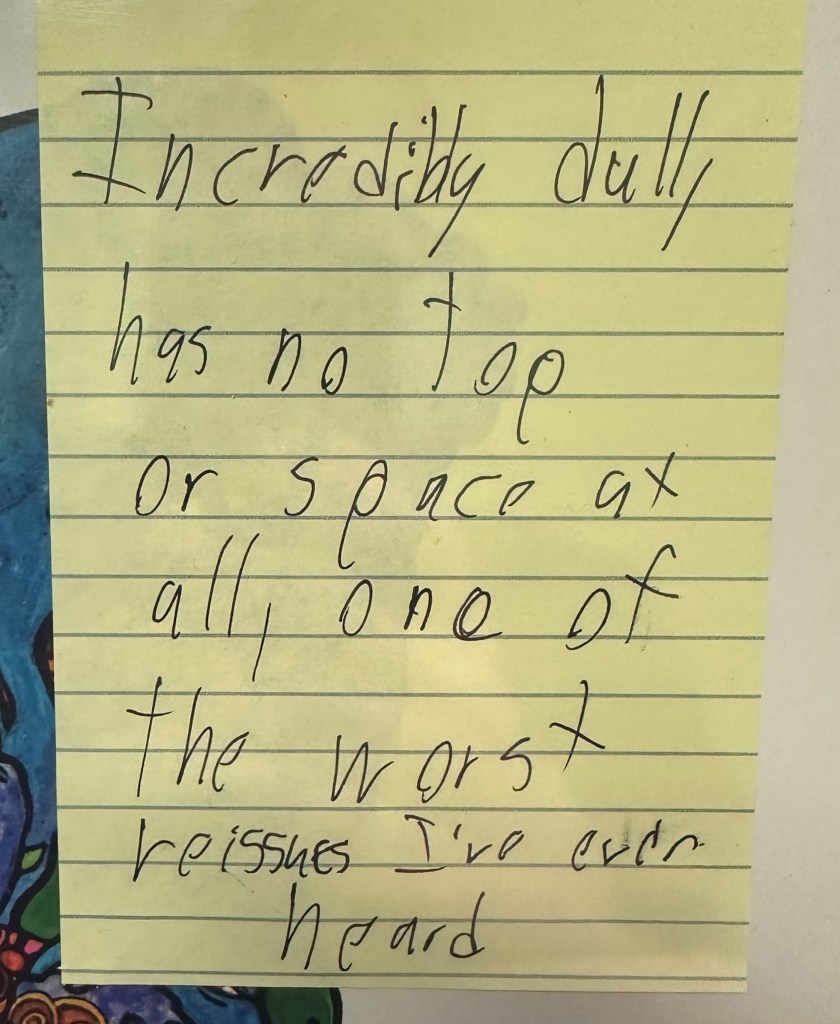
We simply have no context for a record that sounds as bad as this record sounds. We’ve never heard anything like it, and we’ve played a lot of records in the 37 years we’ve been in business. After critically auditioning thousands upon thousands of pressings in our shootouts, all day every day for the last twenty years, we’ve worn out scores of cartridges and even our Triplanar tonearm.

But this is new ground for us. A quick recap:

  • Incredibly dull,
  • Has no top or space at all,
  • One of the worst reissues I’ve ever heard.

You get the picture. What more needs be said? Last year I wrote the following:

Pete Hutchison of The Electric Recording Company makes some of the worst sounding records I have ever played in my life.

If you play me one of his awful records, and don’t tell me who made it, I can judge the record on its merits, the way we judge all records. We test records blindly for precisely this reason. We let the record tell us how well it was made, what it does right and wrong relative to other pressings of the same album, comparing apples to apples.

His records tell me he loves the sound of the murkiest, muddiest vintage tube equipment ever made, and wants every record he produces to have that sound.

In my book that is an egregious case of My-Fi, not Hi-Fi. We wrote about it here.

It’s astonishing to me that anyone takes this guy seriously.

In the Washington Post video, we did a little comparison on camera for two pressings of Quiet Kenny, a record I will have more to say about in Part Two of this commentary. Here is Geoff Edgers’ description in the article of how it all went down.

(more…)

Cat Stevens Part 2 – Is This the Truest Tillerman of Them All?

If you haven’t read Part 1 of this story, please click here.

Back to our real story. I listened to my good original pressing. I call it White Hot at least!

Then I put the new pressing on the table, set the SDS for 45 RPM, and got the volume just right. I proceeded to carefully adjust the VTA by ear, going up and down with the arm until the sound was right, which is simply standard operating procedure for every record we audition.

These are my actual notes for But I Might Die Tonight.

This is what I heard as the song worked its way through the various sections, in real time.  The first thing I heard at the start was Zero Tubey Magic for the first verse. One of the last things I heard at the end was No Real Space. Space is what you hear at the end for the big piano and drums finish.

Let’s take it line by line. First up:

Zero Tubey Magic

I didn’t hear much Tubey Magic on the new pressing. The best early pressings — domestic A&M Browns, Pink or Sunray UK Islands — often have simply phenomenal amounts of the stuff. It’s a hallmark of the recording.

If a new pressing comes along without it, that’s a problem. I guess that George Marino‘s cutting system at Sterling could probably do some things well, but it sure doesn’t seem to be able get the sound of tubes right. His 33 RPM cutting had no Tubey Magic, and this one has no Tubey Magic. If I had hired him to cut a record for me and it came out sounding like this, I would find somebody else to cut records for me.

He’s dead now, rest in peace. I would doubt that anyone at Sterling has a better cutting system, and therefore no one should expect any records that have been mastered there to sound very good.

Vocal Is Clear, Clean and Dry

This is the sound you sometimes get with modern, super-clean transistor cutting equipment. It’s low distortion, like a CD is low distortion. We don’t think we should have to put up with dry vocals on records when the good pressings we have been playing all our lives have noticeably richer vocals.

Not rich like Dream With Dean, nothing is that rich, but rich and full-bodied the way the good pressings of this album always make them sound.

(more…)

Son of Schmilsson at 45 RPM – How Can It Possibly Sound This Bad?

Hot Stamper Pressings of the Music of Harry Nilsson Available Now

Alternately titled: Forty Five, Schmorty Five.

Recently someone loaned us a copy of the Mobile Fidelity pressing of this album, the one they put out in 2021 on two discs cut at 45 RPM, remastered by that notorious hack, Krieg Wunderlich.

Our last shootout took place all the way back in 2021. Although I listen to this title regularly,  unfortunately it does not sell all that well, so we haven’t been making the effort we should to find copies in order to offer the best of them to our customers.

Why the album is not more popular is a question we ask about a number of titles on our site. We love the music and we love the sound, as can be seen from what we (with the help of Allmusic) had to say about a very good sounding pressing back then:

  • This is one of Nilsson’s best albums, sonically and musically. (With Ken Scott at the board at Trident Studios the sound just has to be good, doesn’t it?)
  • Son of Schmilsson has more than half a dozen of the best songs Nilsson ever wrote, and should make it a Must Own for every right thinking audiophile with sophisticated tastes in popular music (we hope this means you)
  • 4 1/2 stars: “… this is all married to a fantastic set of songs that illustrate what a skilled, versatile songsmith Nilsson was. No, it may not be the easiest album to warm to — and it’s just about the weirdest record to reach number 12 and go gold — but if you appreciate Nilsson’s musicality and weirdo humor, he never got any better.”

So true!

The MoFi, however, is a joke next to a properly-mastered and properly-pressed RCA vintage release. Our notes for it read:

  • Big but flat
  • Voice is recessed and lacks richness
  • Rock songs, track one in particular work OK but
  • Ballads lose all the magic

(more…)

How Paul and Judy Finally Turned Me Against DCC

Hot Stamper Pressings of the Music of Paul Simon Available Now

When I finally got around to comparing the two, I remember being taken aback by how much better my original Artisan pressing sounded than the supposedly superior DCC, the one pressed at high quality Heavy Vinyl at RTI to the most exacting standards possible, yada, yada, yada.

What finally turned me completely against DCC were the awful Paul Simon solo albums they remastered.  Two were released, two I had as unreleased test pressings, and all of them were clearly and markedly inferior to the good original pressings I had owned.

So much for believing in DCC.

Since that time we have learned that placing your faith in any record label or cutting operation is a mistake.

You have to play the records to know how they sound.

Nothing else works, and nothing else can work.

(more…)