pretense

When someone pretends to know things they cannot possibly know, such a person can be said to be suffering from a “pretense of knowledge.”

Many of the precepts that audiophiles willingly believe — that original pressings have the best sound, or that modern engineers doing their best to carefully remaster recordings to the highest standards produce records with superior quality — are best seen as articles of faith. The empirical data to support them is lacking, if it exists at all.

Either way, any such claims are beside the point. Records must be judged by the way they sound, not by how they were made or by whom.

Turning Skeptics into Believers, One Hot Stamper at a Time

More on the Subject of Hot Stamper Pricing

About 15 20 years ago we received a letter from a fellow on our email list who found our prices for vinyl curious, as he considered vinyl a bygone technology. (You may have noticed that it has since made quite a comeback.)

Bygone technology? Can’t say I agree with that assessment. It sure would be nice to demonstrate for him how much better records sound than the supposedly superior technologies that have — for most people, perhaps even for this gentleman — replaced them.

Wait, there is a way!

A Hot Stamper, 100% Guaranteed to Satisfy or Your Money Back. One click is all it takes. Which is pretty much what I said in my reply to his letter below.

Tom,

I receive your HTML email regularly. Along with the curious prices of your offerings, I occasionally wonder about the opinions expressed in your e-missives. A Roman senator once said that all mortal things are ‘only perfect in death.’ Ashes to ashes, and dust to dust aside: vinyl (of which I own a considerable library) is merely a bygone technology at this point in time. The opinions expressed on your website rarely credit the writer. Whose words are these? And why should I accept the opinions of someone who only stands to profit from their fanaticism?

Cheers, 
Bruce R. 

Bruce, most of us write the commentary, there are five of us fanatics here. (Six if you count our record cleaning person, but I’m not sure how fanatical she is, so let’s go with five.)


UPDATE 2019

There are ten of us now, a number that has remained constant for about the last ten years. That’s how many people it takes to do the work we do.

If you don’t have a staff of your own, you can still make plenty of progress by doing your own shootouts, one title at a time. It won’t be easy, but you will learn more from doing them than you could from all the audiophile reviews ever written, including the ones on this blog.


Please keep in mind one very important thing: it matters not a whit what we say about a record, it only matters what you hear on your stereo when you play it. If for any reason you are not happy, we give you all your money back.

(Some number of times a year this actually happens and we really do pay up. If we didn’t your credit card provider would make us refund your money anyway, but that’s hardly the point. It’s our written policy; there’s no fine print — that’s not how we run our business — so we pay. The same record, sold to the very next customer, has never in the history of Better Records ever been returned. Hey, we can find you good records, but we sure can’t fix your stereo for you, know what I mean?)

There’s a great deal of commentary on the site about how easy it is to verify the truth of what we say about pressing variations, and the nice thing about it is that you can actually run the tests using records you already own. A good start is to play side one of any record against side two, and of course the best test if to play two different copies of the same record against each other. If your stereo is even halfway decent, the differences should be noticeable, if not pronounced.

You don’t have to take our word for it. Unlike audio reviewers, we actually have something to back up our claims: the record we send you. If you find us to be in error, you get your money back, no two ways about it. This is what makes us unique and successful in the record business — we actually can send you the record that’s as good as we say it is. Would love to have you try one. Like we say, you have nothing to lose.

Hey, I’m a skeptic myself and proud of it. But I know good sound when I hear it. I’ve found it’s best to let my ears guide me in this hobby. If some piece of expensive audio gear sounds good, then it sounds good, whether I like the price or not. I may not be able to afford it — hell, I can’t afford the records I sell either — but that has nothing to do with the fact that it sounds good. Most expensive audio gear doesn’t sound good, but some of it does, and there is no point denying it.

Same goes for our records. They sound amazing. Like you, I wish they were cheaper, but that doesn’t change the fact that they really do sound amazing. If you would let us prove it to you, we would love to be given the opportunity to do so. Even though it happens all the time, we can’t really take credit for turning skeptics into believers. The records do that for us.


(more…)

How Does the Heavy Vinyl Rubber Soul Sound?

Hot Stamper Pressings of Rubber Soul Available Now

This review was originally written in 2015.


We are so excited to tell you about the first of the Heavy Vinyl Beatles remasters we’ve played! As we cycle through our regular Hot Stamper shootouts for The Beatles’ albums we will be of course be reviewing more of them*. I specifically chose this one to start with, having spent a great deal of time over the last year testing the best vinyl pressings against three different CD versions of Rubber Soul.

The short version of our review of the new Rubber Soul vinyl would simply point out that it’s awful, and, unsurprisingly, it’s awful in most of the ways that practically all modern Heavy Vinyl records are: it’s opaque, airless, energy-less and just a drag.

I was looking forward to the opportunity to take Michael Fremer, the foremost champion of thicky vinyl, to task in expectation of his usual rave review, when to my surprise I found the rug had been pulled out from under me — he didn’t like it either. Damn!

MF could hear how bad it was. True to form, he thinks he knows why it doesn’t sound good:

As expected, Rubber Soul, sourced from George Martin’s 1987 16 bit, 44.1k remix sounds like a CD. Why should it sound like anything else? That’s from what it was essentially mastered. The sound is flattened against the speakers, hard, two-dimensional and generally hash on top, yet it does have a few good qualities as CDs often do: there’s good clarity and detail on some instruments. The strings are dreadful and the voices not far behind. The overall sound is dry and decay is unnaturally fast and falls into dead zone.

It strikes me as odd that the new vinyl should sound like a CD. I have listened to the newly remastered 2009 CD of Rubber Soul in stereo extensively and think it sounds quite good, clearly better than the Heavy Vinyl pressing that’s made from the very same 16 bit, 44.1k remixed digital source.

If the source makes the new vinyl sound bad, why doesn’t it make the new CD sound bad? I can tell you that the new CD sounds dramatically better than the 1987 CD I’ve owned for twenty years. They’re not even close. How could that be if, as MF seems to believe, the compromised digital source is the problem?

Lucky for me I didn’t know what the source for the new CD was when I was listening to it. I assumed it came from the carefully remastered hi-rez tapes that were being used to make the new series in its entirety, digital sources that are supposed to result in sound with more analog qualities.

Well, based on what I’ve heard, they do, and those more analog qualities obviously extend to the new Rubber Soul compact disc. At least to these ears they do.

It’s possible my ignorance of the source tape allowed me to avoid the kind of confirmation bias — hearing what you expect to hear — that is surely one of the biggest pitfalls in all of audio and a pit that Fremer falls into regularly.

(more…)

Apparently, “…no one is sitting in a perfect stereo field…”

Hot Stamper Pressings of Revolver Available Now

A letter and some commentary about Revolver in mono follows the comment that was left by a Mr. Doodah defending The Beatles in mono. My reply then follows.

First up, Mr. Doodah.

“you have absolutely no clue what you’re talking about. That’s exactly the point why the mono sounds good because no one is sitting in a perfect stereo field listening to music these days.

“They are either listening on Headphones or undoubtedly hundreds of degrees off access in another room or whatever they’re doing in their car or whatever so the stereo mixes will not stand up under those kinds of conditions.

“It’s only for nuts, so it’s like you sit down with a supposedly perfect acoustically design [sic] room and perfectly aligned speakers. Not exactly real world for the masses.

“I always tell people I teach engineering to… First thing… And learn how to do a great mono mix. Then you can start with all the fakery.

“You are way out of your league even pretending to know what you’re talking about”

Dear Mr. Doodah,

I would think that anyone reading this blog would see that we are not the least bit concerned with anything the masses are up to.

The masses seem to like streaming. Why should anyone waste his time taking what they like seriously? I suppose if you’re teaching those looking for work in an industry providing music to the masses, what you are telling them may be of some value.

It is surely of no value to those of us who aspire to high quality sound. Yes, the experience we are after does indeed require special rooms and speakers and, most especially, high quality stereo records to play.

If you’ve never heard The Beatles’s music reproduced at the highest levels on a big system in a dedicated room, why would you pretend to know anything about it?

Our customers can easily access the mono mixes and the modern digital releases. They have chosen instead to spend a great deal of money on our vintage records. The abundant evidence — sales figures, letters, etc. — should make it clear that our stereo Hot Stamper pressings do in fact deliver the superior sound we promised them.

Hondas and Ferraris

Some people drive Hondas and some people drive Ferraris. You can try telling people who drive a Ferrari that nobody needs such a car in this day and age, that they should get real and just switch to a Honda, but do you really think Ferrari drivers care what other people are driving in this day and age?

We have nothing against people who choose to listen to The Beatles’ music with the lowest possible fidelity imaginable. I grew up doing exactly that, hearing them for the first time in 1964, in mono, on an AM car radio. That low-fidelity mono sound worked for me and millions of others. As a matter of fact, 1964 was the very year I became a lifelong fan.

Perhaps this is the kind of sound you are teaching your students to strive for. I certainly hope not.

Some of us have moved on from car radios and mono mixes. With all the latest playback technology, and the right stereo pressings, The Beatles’ recordings, more so than for those of any other band, can now come alive in ways unimaginable to my younger self.

I hope your students get the chance someday to hear The Beatles’ music in all its glory, on a truly high-fidelity system, in stereo.

(more…)

Hot Stamper Sharing Can’t Get Off the Ground, How Come?

Basic Concepts and Record Realities Explained 

The above link takes you to our blog. Normally such a link would take you to our in-stock Hot Stamper pressings on the site for the band in question, but we rarely have any Traffic albums to sell these days, which is the case as of this writing.

Finding just the right Traffic pressings, with audiophile-quality vinyl no less, requires effort and resources that we just haven’t been committing to lately. We hope to do better in 2025.

In 2014 somebody on the Hoffman forum tried to get a Hot Stamper thread going under this heading: cheap Hot Stampers revealed.

The thread:

“If you have a “hot stamper” record – one that smokes and takes no prisoners, I mean a BADASS pressing, show it here with matrix info, label or other identifying features so we can all hunt with a bit of a head-start.

“I know these records are out there, just looking for a place to show off their analog glory.

“Here is a recent find that fits the bill and then some:

“Traffic: Best Of Traffic UK.

“Matrix # ILPS 9112 A-1/B-1”

OK, let’s talk about this Island reissue. We know the record well. If it sounds the way the copies we played over the years have sounded, we would say it can be good, not great, and if it qualified for Hot Stamper status, it might — might — earn a plus and a half at best. (1.5+.)

We don’t even bother to pick them up at any price these days, if that tells you anything.

He got very little support in his endeavor. The thread closed after a while with practically nothing in it.

Could it be that the folks on the Hoffman forum have a poor grasp of the amount of effort, time and money it takes to find Hot Stampers?

And, having committed to neither the effort, the time nor the money, find that they have nothing of any value to contribute to such a list?  

Yes, that could be. That definitely could be. Thank god it doesn’t keep them from criticizing those of us who, working in concert with a staff of ten or so, have devoted ourselves to the task and found them by the thousands.

By the way, we know that Traffic title very well. The Pink Label original is by far the best pressing in our experience. No copy we have ever heard on the label promoted by this poster would qualify as much more than a bargain Hot Stamper in comparison to the Pink Label and Pink Rim label pressings that we sell, although of course, not having heard his copy, we can’t say it’s not fabulous. 

It’s just not very likely to be fabulous. 

(more…)

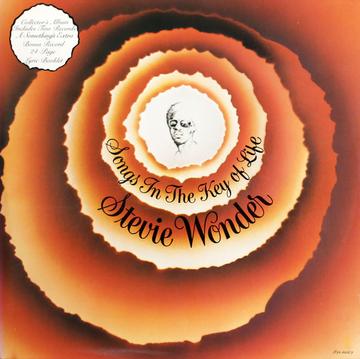
Songs in the Key of Life – Is This a Well-Engineered Album?

Hot Stamper Pressings of the Music of Stevie Wonder Available Now

Full disclosure: This commentary was written more than ten years ago and probably updated a bit here and there since then.


I’ve just gone to this reviewer’s website to make sure the quote below is accurate, and everything you need to see is still up and as misguided as ever.

Some audiophiles never learn, and a great deal of this blog is devoted to helping audiophiles avoid the errors this reviewer and others like him have been making for decades. In the mid-90s I wrote my first commentary about the awful audiophile records this person had raved about in his review in one of the audiophile rags.

In the years since it seems that nothing has changed. Bad sounding audiophile pressings make up the bulk of this person’s favorable reviews to this day. Here are 157 of them.

How it is possible to spend so much time doing something, yet learn so little in the process? It is frankly beyond me.

I put the question to you again:

Is this a well-engineered album?

The first question that comes to mind is:

How on Earth could anyone possibly know such a thing?

Some background. Years ago our first Hot Stamper shootout for Songs in the Key of Life had us enthusiastically singing its praises:

Hot Stampers discovered for one of the funkiest and most consistent double albums of all time! It’s beyond difficult to find great sounding Stevie Wonder vinyl, but here’s a copy that proves it’s possible if you try hard enough. So many copies are terrible in so many different ways — we should know, we played them. And just to be clear, this copy is far from perfect as well, but it did more things right in more places than we ever expected it would or could. And that means it showed us a great sounding Stevie Wonder record we never knew existed.

But a well known reviewer says it’s a bad recording. Does he know something we don’t?

(more…)

Is Digital Really the Problem on this Cowboy Junkies Album?

Hot Stamper Pressings of Digital Recordings with Audiophile Sound 

The RCA domestic pressings cut at Sterling are not worth the vinyl they’re pressed on.

Don’t be one of those die-hard analog types who point fingers at the fact that there was digital in the recording chain when their pressing doesn’t sound good.

It’s got nothing to do with digital. It has everything to do with Sterling doing a bad job mastering the domestic vinyl.

(Keep in mind that a very large group of audiophiles, including some well-known reviewers, had no idea there was a digital step used in the process of making some of the records they had raved about. Apparently the only way to hear it is when you already know it’s there.)

Our notes for the domestic pressing below read:

  • Flat and dry vox.
  • Shifted up [tonally]
  • A bit scooped [or “sucked out” in the midrange, meaning the middle of the midrange is missing to some degree]

The midrange suckout effect is easily reproducible in your very own listening room. Pull your speakers farther out into the room and farther apart from each other and you can get that sound on every record you own. I’ve been hearing it in the various audiophile systems I’ve been exposed to for more than 40 years.

Why Defend the Indefensible?

When good mastering houses like Kendun and Sterling and Artisan make bad sounding records, we offer no excuses for their shoddy work. The same would be true for the better-known cutting engineers who’ve done work for them, as well as other cutting operations.

Individuals working for generally good companies sometimes produce substandard work product.

How is this news to anyone outside of the sycophantic thread posters, youtubers, and self-identified record experts who write for the audiophile community?

(more…)

Cognitive Dissonance, or, I Just Paid $600 for This LP – Was That Too Much?

New to the Blog? Start Here

This letter came to us when we first started selling Hot Stamper pressings on our website way back in 2004-2005. Since that time we have received many other letters like it. Apparently, charging a lot of money for used records upsets people. Who knew?

Don, who wrote us the following letter, applauds us for being able to convince our customers to pay forty times the going rate for some of the records we sell — and like it!

The subject line of Don’s letter is Music.

What a great example of free market capitalism at it’s [sic] finest. Your web site is truly a unique example of marketing. You’ve taken a medium that [sic] completely relative and you can convince someone to pay upwards of 40X the going rate because….well, you said so. That doesn’t mean that the record will sound the same to them or that their experience of music is the same as yours as a reviewer. I guess if someone decides to spend $600 on a record they damn well better find a reason why it’s worth it even if they’re not completely convinced. (I took the time to read some of the other comments on your site.)

Don’t understand why someone would be upset about that or how they could argue that the records aren’t worth the price. They’re worth whatever someone is willing to pay for them as I see it. Maybe because they didn’t think of it first or they have some misplaced sense of ethics….who knows. I know it’s not worth it to me and thankfully there are plenty of other resources available for buying music. Another great example of capitalism…..

Sincerely,

Don L.

Don, honestly, I’m positively blushing at the thought that my “say so” is what gets people to pay the ridiculously high prices we charge for what appear to be fairly common rock records, the kind that might be worth roughly, oh, I don’t know, 1/40th of what we are asking? (Truth be told, probably even less.)

Ah, but here’s the kicker: there’s actually a scientific explanation for it!

It’s called cognitive dissonance, and it works like this. Let’s say someone decides to spend $600 on a record — sound familiar? — yet for some reason they’re not completely convinced it’s worth it — ring any bells? — so they find a way to justify the purchase to themselves by rationalizing one of two things: their actions or their perceptions.

In this case, although the actual record may not sound all that good when they get it home, because it costs so much they must find a way to make it somehow seem better than it really is. Failing to do so, this person, demonstrably $600 poorer, would have to conclude that he, like an idiot, has just let himself get ripped off, in this case by us.

Twisted Logic

The logic at work here is pretty straightforward. The buyer says to himself: I am not an idiot. Only an idiot would pay $600 for a record that doesn’t sound amazingly good, especially one that can easily be had for one-fortieth the amount of money I have paid, therefore the record must sound better than my ears tell me it does.

Which — let’s be honest here — may in fact be happening. I don’t know what these records sound like in my customer’s homes. How could I? They live all over the world. I have certainly taken some of my best sounding pressings with me while visiting customers, and they sure sounded good on their systems. But I can’t vouch for systems I have never heard and people I have never met. That would be silly.

You Are Correct Sir

You are certainly correct in pointing out that musical values are relative. The famous Latin proverb “De gustibus non est disputandum,” roughly translated “There’s no accounting for taste,” is one with which I am very familiar. (When somebody pays $600 for The Hunter on vinyl, you don’t have to tell me there’s no accounting for taste.)

As a skeptic I require evidence for what I believe in order to believe it. Although it’s certainly possible that our customers are willing to pay our admittedly high prices on nothing more than our say so, I see no evidence that this is in fact the case. All things being equal I think they must really like our records. They tell us so all the time, and they keep buying them week after week, so if they really are just fooling themselves, they apparently can’t stop doing it.

Occam’s Razor

The scientist’s and skeptic’s best friend, Occam’s razor, comes into play here. It holds that “the explanation of any phenomenon should make as few assumptions as possible.” It’s often paraphrased as “All other things being equal, the simplest solution is the best.” In other words, when multiple competing theories are equal in other respects, the principle recommends selecting the theory that introduces the fewest assumptions…”

Why assume people who buy expensive records are crazy? Why assume that the records they buy aren’t every bit as good as advertised, if not better? Why assume that the “other resources available for buying music” are even remotely as good, absent any evidence?

People assumed that the CD was going to be a cheap and easy resource for their music, and look where that got them.

Assumptions? Us?

(more…)

Hearing Is All It Should Take, Right?

Hot Stamper Classical and Orchestral Pressings Available Now

Some person on some audiophile forum might feel obligated at some point to explain to you, benighted soul that you are, that the old classical records you — and other audiophiles like you — revere so highly have to be recognized these days for what they are: drastically compromised by the limits of their old technology.

Simply put, there’s just no way they can sound good.

It’s just a fact. It’s science. Technology marches on and those old records belong on the ash heap of history collecting dust, not sitting on the platter of a modern turntable.

That’s why the audio world was crying out for Bernie Grundman to recut those Living Stereo recordings from the 50s and 60s on his modern transistorized cutting equipment and have RTI press them on quiet, flat, high-resolution 180 gram vinyl, following the best practices of an industry that everybody knows has been constantly improving for decades.

Right?

For those of us who actually play these records, there is little evidence to support this narrative.

It’s a story made up mostly of assertions, along with an unhealthy amount of faith in so-called experts. [1]

Note that Bernie had no experience cutting classical music. He was a rock, pop and jazz guy. Robert Ludwig was the classical guy, cutting hundreds of albums for labels like Nonesuch in the 60s. What a different world it would be if he was the guy who cut for Classic Records! This review gets to the heart of the matter.

However, the contrarian view outlined above only really holds true for a very small minority of audiophiles of the analog persuasion: those given to empirical testing of such propositions. [2]

For an audiophile to compare the new pressings to the old ones, proper testing requires that the following four conditions can are met:

  1. He or she has a revealing, accurate stereo,
  2. A good record cleaning system, and
  3. Knows how to do shootouts using his or her
  4. Well-developed critical listening skills

If you’ve spent much time on this blog, you’ve probably read by now that the first three on this list are what allow you to achieve the fourth.

Compromises?

The best classical recordings of the 50s, 60s and 70s were compromised in every imaginable way, yet still they sound amazing.

(more…)

Paraphrasing Hayek – Our Curious Task

F. A. Hayek summarized his views well when he noted that:

“The curious task of economics is to demonstrate to men how little they really know about what they imagine they can design.”

Our curious task has been to demonstrate to audiophiles and the reviewers who write for them how mistaken they are to think that they can understand the sound of a recording by playing a small number of pressings of it.

Similarly, the modern mastering engineer operates with the understanding that he can design and operate a cutting system that produces sound superior to that which was produced by the engineers of the past.

Based on the hundreds of remastered records we have auditioned, this is clearly a case of overpromising and underdelivering.

These assumptions, and the mistaken approach to record collecting that flows from them, are clearly unsupportable.

The scores of commentaries we have written on both subjects provide all the evidence required to falsify them, and — with a fair amount of effort, sorry for the trouble — can be found among the 5000+ postings on this blog.

The Hot Stamper pressings we offer, so much bigger, livelier, and more engaging than anything produced by these so-called audiophile mastering houses, are simply the physical evidence of our deeper and more correct understanding of the true nature of records and their mysterious and confounding properties.

Digging Deep

Everything we think we know about records is based on strictly empirical findings, findings that resulted from critically auditioning thousands and thousands of albums. Many of these albums we have played by the score. For some titles, such as the more popular Beatles’ albums, we have played more than a hundred copies.

No one else has ever dug as deep as we have into the mysteries of pressing variations, for the simple reasons that no individual or group would be motivated to do so and have the resources required to accomplish such a feat.

(more…)

I Knew This Guy Was Full of Sh*t, But I Had to Be Sure

Skeptical Thinking Is Critical to Achieving Better Sound

Recently a fellow named Jared tried to correct our assertion that Rod Stewart’s early albums from the US are made from dubbed tapes, as is our contention.

Here is his letter:

Hey there. Just wanted to point out some errors on your listing for Rod Stewart’s “An Old Raincoat…” LP. The UK pressings are the ones made from dupes.

The first generation masters for all of Rod’s Mercury albums are in the US. All vinyl vintage pressings, UK or US, are made from EQ dupes.

The original US Polygram CDs mastered by Dennis Drake are straight off the original masters.
Thanks!

Naturally this information took us by surprise. We replied:

Jared,

Can you refer me to the source of your information?

Thanks,

TP

There was no answer to my query. Nor was I able to find any source for this information.

I hadn’t played a domestic copy of The Rod Stewart album, the title Old Raincoat was released under in the states, in at least twenty years, probably more like thirty. It had sure sounded dubby to me back then. I stopped buying them a long time ago.

Was I remembering the sound right? The odds were very high that I was, but I had to know for sure, even though I had no idea who Jared was or where his information came from.

I asked my main man Fred to get one in and give it a listen. Here is his report:

We played The Rod Stewart Album (domestic Old Raincoat) we got in and it sounds absolutely terrible. Super spitty and bright.

Are they all this bad? Who can say?

Could my UK pressing be made from copy tapes?

I suppose it’s possible. It doesn’t sound dubby to me, but it is not an especially good sounding record, unlike Rod’s third album, which is about as good sounding a rock record as is possible to make. (In the case of Every Picture, it’s the imports that are made from dubs. Go figure.)

Maybe Dennis Drake actually did get hold of the real master tapes when making his CD. He is a very talented engineer; I have many compact discs mastered by him and I don’t know of any that aren’t at least good sounding. For those of you who play CDs, you are free to give his version of An Old Raincost a try. Please let me know what you hear.

What’s that Smell?

But the reason Jared letter is being published is that it reeks of information that has not been verified by anyone’s ears. Certainly not Jared’s.

If, like Jared, you read something that sounds plausible, that you think might be true, why would you be so willing to believe it without any real evidence to back it up?

Even worse, the comments Jared makes weren’t even prefaced with “I’ve read that…” or “People seem to agree that…” No, Jared leaves no room for doubt. The information is presented as true.

Can anyone who has played both versions of Old Raincoat not hear how much better the UK pressing is?

We couldn’t. Nothing could have been more obvious to us than that one version is made from good tapes and one version is made from bad tapes.

(more…)