pass/not-yet

Some pressings are so wrong, or are so lacking in qualities that are crucial to hi-fidelity sound — qualities typically found in abundance on the right vintage pressings — that the fans of these records are utterly failing to judge their sound correctly.

We used to call these records pass-fail. Now we call them pass/not-yet, implying that these listeners are not where they need to be in audio yet, but that there is still hope, and if they keep at it, they can get where they need to be the same way we did, by learning from all the mistakes we made.

Tea for the Tillerman on the new 45 RPM pressing may be unacceptable in many ways, but it is not a complete failure. It lacks one thing above all others, Tubey Magic, so if your system has an abundance of that quality, the way many vintage tube systems do, the new pressing may be quite enjoyable.

Those whose systems can play the record and not notice this important shortcoming are not exactly failing. They most likely have a system that is heavily colored and not very revealing, but it is a system that is not hopeless.

A system that can play the Mobile Fidelity pressing of Aja from 1980 without revealing how wrong it is is simply failing. We would judge that system as one that is “not yet” where it needs to be. I thought my system in the 80s played the MoFi just fine. Looking back on it now, I realize my system must have been doing more wrong than right.

Speakers Corner Ruins a Classic Mercury, Part One

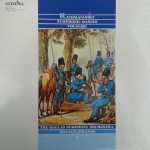
More of the Music of Sergei Rachmaninoff (1873-1943)

This commentary was written in 2004.

We carried Heavy Vinyl back then, and for that, knowing what I know now, I can only apologize.

Back then, I thought I knew a great deal more about records and  how to reproduce them than I actually did.  Yes, I have to admit it: I suffered from the Dunning-Kruger effect.

On the bright side, there is one very powerful benefit that I gained from being so mistaken. Having failed to recognize my own shortcomings, the signs that someone thinks they know more than they do are easy for me to spot. Here is one of my favorite examples. I link to it a lot.

If you want to see the effect played out in the cyber world, go to any audiophile forum and start reading any thread about records you find there. The D-K effect is hard to miss. Some of the experts on these forums have even convinced themselves that they know things that cannot be known, which is always a sure sign they know a great deal less than they think they do.  

Our Old Commentary

Some thoughts on the new 180 gram Mercury reissues by Speakers Corner and a bunch of other record related stuff.

The Absolute Sound weighed in with their view of the series:

Speakers Corner has given these recordings the respect they deserve. The packaging is gorgeous: a black album titled “The Living Presence of 20th Century Music” and displaying the Mercury logo holds the three records with their original covers and liner notes. In addition, there are informative annotations on the music and Dorati, and a history of Mercury Living Presence…They sound at least as good and in some ways better than the originals…There are no negatives and not enough superlatives to describe these magnificent reissues. It’s rare that performance, sound, and musical value combine at this level in a recording.

Arthur B. Lintgen, The Absolute Sound, February/March 2004

Let me start by saying that I have not listened to a single one of the new Mercury titles.

Now that that’s out of the way, let me state for the record that the chances of the above statements being true are so close to zero that they cannot be calculated by anything but the latest Cray computer.

Has Speakers Corner produced a single classical record that’s better than a well-mastered, properly-pressed vintage pressing? One or two. Maybe. [These days we would say zero is the right number.]  So what are the chances they did so with these? Almost none I would say.

The above review reminds me of the nonsense I read in TAS and elsewhere in the mid-’90s regarding the supposed superiority of the Classic Living Stereo reissues. After playing their first three titles: 1806, 1817 and 2222, I could find no resemblance between the reviews I read and the actual sound of the records I heard.

The sound was, in a word, awful. To this day I consider them to be the Single Worst Reissue Series in the History of the World. [Presently there are too many contenders for that title to hold that view anymore.]

(more…)

If This Is Your Idea of a Reference Record, You Are in Real Trouble

Hot Stamper Pressings of TAS List Super Disc Albums Available Now

An astoundingly bad Sound Show!!

An audiophile hall of shame pressing and a Half-Speed mastered disaster if there ever was one. If this Reference LP isn’t the perfect example of a pass/not-yet record, I can’t imagine what would be. It is just awful.

Mastered by none other than Stan Ricker. RR-7 also appears to still be on Harry Pearson’s TAS List.

My recent notes can be seen below. (The 1 in the upper left hand corner is my abbreviation for side one, which seems to be the worst side of the two here.)

Track two, the Red Norvo selection, is a real mess, highlighting the problems typically caused by Half Speed Mastering, especially at the hands of one of the most notorious “Audiophile” Mastering Engineers of All Time, the late Stan Ricker. Who cut as many bad sounding records as SR/2 himself? No one I can think of comes close.

His records, with few exceptions, suffer from bad bass (probably bloated and poorly defined in this case, my notes don’t say but after playing these records for thirty years I doubt I’m very off with this guess) and phony, boosted highs, which cause the striking of the mallets to be emphasized in an especially unnatural and unpleasant way.

Arthur Lyman had dramatically better sound in the 50s.

How come none of the audiophiles at Reference Records bothered to figure out how he did it?

Can anybody take sound like this seriously?

(more…)

The Pretenders on Nautilus – Dead As a Doornail Sound

More of the Music of The Pretenders

An audiophile hall of shame pressing and another Half-Speed mastered audiophile LP reviewed and found wanting.

This pressing is completely lifeless. The brain trust at Nautilus managed to take all the rock out of this rock and roll band.

It’s yet another ridiculous joke played on a far-too-credulous audiophile public.  If this Nautilus LP isn’t the perfect example of a pass/not-yet record, I can’t imagine what would be.

But look who’s talking? I bought plenty of Nautilus pressings in the ’70s and ’80s, some good ones, some not so good. And some of them I still liked well into the 2000s. What’s my excuse?

Even as recently as, say, fifteen years ago, I still had yet to achieve much of the progress in audio I would need to achieve in order to get past the last of the audiophile pressings I still clung to.

And there’s still one that just cannot be beat, even now.

Keep in mind I had been heavily into audiophile equipment and high quality records for thirty years at that point.

(more…)

Jethro Tull – One of the Worst Releases on DCC (and That’s Saying Something!)

Sonic Grade: F

The DCC pressing is a complete disaster, one of the worst sounding versions of the album ever made.

As bad as the MoFi is, the DCC is even worse. Murky and bloated, to my ear it does almost nothing right, not on vinyl anyway. The DCC Gold CD is better, and it’s certainly nothing to write home about. 

Our Hot Stamper commentary below sorts out the DCC, the Classic Records Heavy Vinyl pressing and the MoFi Half-Speed Mastered LP, as well as British and domestic originals.

We love this album and we’ve played every kind of pressing we could get our hands on. The winner? Read on!

Over the course of the last 25 years we was wrong three ways from Sunday about our down-and-out friend Aqualung here. We originally liked the MoFi.

When the DCC 180g came along we liked that one better, and a few years back I was somewhat enamored with some original British imports.

Our first big shootout disabused us of any notion that the British originals were properly mastered. As we noted in our Hot Stamper commentary, “The original Brits we played were pretty hopeless too: Tubey Magical but midrangy, bass-shy and compressed.”

Another myth bites the dust.

The same is true for Thick As A Brick; the best domestic copies are much more energetic and tonally correct.

Letter of the Week – “How the hell did this get released???”

Letters Comparing Hot Stamper Pressings to Their Heavy Vinyl Counterparts

One of our good customers had this to say about a record he played recently:

Hey Tom,   

Not a hot stamper update, but thought to write briefly…

I’ve been experimenting a bit with some of the Analogue Productions stuff, as unlike you I’ve had some mixed success here. However…

OMG. I just opened their pressing of Junior Welles’ Hoodoo Man Blues. It’s, pardon my crudity, not fit to wipe your ass with. The most disgusting perversion of this record imaginable. I’m choking even hearing it. Rank amateurs at the controls it seems… how the hell did this get released??? Are they deaf? Are they even listening to what they’re putting out, or just pressing money? It’s too nauseating to describe, but all your usual terms fit exactly; no ambience, bloated, unreal EQ, compressed and flat and dead, completely f*cking off. I’m just amazed.

The only reason I ventured here is that I have had some good luck with them on various jazz recordings, where the tricks do seem to help (45rpm, master tapes all analogue, etc.). Not so here. Everything you rage about holds true and is possibly the worst case of it I’ve ever come across.

Just sharing with the thought that there is a RANGE of AP stuff; it’s not all this bad. This pressing is escort-it-off-the-property-and-dispose-of-in-someone-else’s-garbage-can-bad.

C

(Meanwhile, latest box of hot stampers arrived today, and are glorious as usual.)

Conrad,

I take issue with any of AP’s records being any good.  None of their “tricks” ever managed to help them produce a record I would want to own. The best one I heard was Fragile, and even that was mediocre. [More recent reviews of AP’s records can be found here. Even though some of them are better than Fragile, I still would not want to have anything they’ve ever pressed in my own collection. In 2007 I swore off mediocrities and feel no need to go back on my word.]

You are mistaken about the “Rank amateurs at the controls it seems…”

The man at the controls was Kevin Gray. He is a professional mastering engineer and has been for a very long time. His records don’t sound very good though, as our reviews make clear for those who care to read them.

Here is a typical review for one of this label’s godawful remasterings:

Vince Guaraldi – a bloated mess at 45 RPM from Acoustech

We flushed good money down the drain in order to suffer through the 45 Analogue Productions cutting of the album. What a mess. Ridiculously overblown bass is its major shortcoming, but dynamic compression and an overall lifeless quality are obvious problems that made us give up on it pretty quickly.

This is the kind of sound that audiophiles want? I find that hard to believe. It’s what they’re stuck with because the good early pressings are just too hard to find and noisy and groove damaged when you do find them.

Most pressings of this album, the OJC and the later reissues especially, are just plain awful, so for the typical audiophile record collector the 45 might actually be a step up over those pressings. Like so much of the heavy vinyl we have played in the last few years, we did not find the sound enjoyable or compelling. I would venture a guess that the DCC gold CD is clearly better overall.

Some audiophiles have complained that we spend too much time bashing Heavy Vinyl, but if ever a record deserved it, it’s that one. It’s a failure as a remastering and an insult to the analog buying audiophile public at large. Searching the web I am glad to see that no one seems to have anything nice to say about it as of this writing. No one should, but that has not deterred the reviewers and forum posters in the past.

Chad was interviewed at the AXPONA show in 2022 by a writer for The Absolute Sound and this is how the conversation went:

“Everything here that I reissued, I wouldn’t have reissued it if I didn’t think it was killer,” Chad said. “At Analogue Productions I’m doing my favorite records, the ones that I think are killer. Otherwise I wouldn’t do it.

“All of those records, you won’t go wrong. If they don’t impress or satisfy you, you might oughta find another hobby.”

Chad also praised the remastered Analogue Productions pressing of Junior Wells’ Hoodoo Man Blues on the Delmark label.

“We’re in Chicago, so if you got a preference for Chicago blues, you need this.”

Our customer is pretty convinced that he “did go wrong.”

Since he was not able to return the record owing to Chad’s “no returns for bad sound” policy, I guess Chad would say that he “might oughta find another hobby.”

Or wise up and stop buying records from someone who apparently doesn’t have faith in his own product.

The Graceland Remastering Disaster, Part 2

Hot Stamper Pressings of the Music of Paul Simon Available Now

Click on the link below to read the story behind an interview conducted by a well-known reviewer of an engineer who was tasked (by whom I wonder?) with remastering Graceland on Heavy Vinyl.

He apparently had never played an original Sterling-mastered copy of Graceland. Either that, or this  engineer thought the original “needed improvement,” the kind supplied by taking a hatchet to the sound of the original tape.

Analogplanet Visits Sterling Sound and Interviews Mastering Engineer Ryan K. Smith

The interviewer apparently does not know how bad the new version sounds, but we had no trouble recognizing its awfulness here at Better Records. As a public service, we soon set about describing what we heard when we put this remastered piece of junk to the test.

Up against a properly-mastered, properly-pressed early pressing, it earned a failing grade.

Is it the worst version of the album ever pressed on vinyl? Hard to imagine it would have much competition. 

The title of our review gives away the game:

The reviewer who interviewed the remastering engineer responsible for this and no doubt many other awful sounding records has never been able to tell a good record from a bad one, and he carries on that tradition with Graceland.

Ryan Smith, the hack who cut this album, has done quite a lot of work for Analogue Productions. We can’t say we’ve played many of his recuts, but the ones we have played are hopelessly bad, with the overly smooth sound so much in vogue today.

We played his recut of Scheherazade, and rather than just give it the failing grade it deserved, we explained how any audiophile could go about using its mistaken EQ in order to recognize what is wrong with it, and of course, others like it.

(Contrary to popular opinion, it is no better than Bernie Grundman’s bad sounding version from the 90s, the one he cut for Classic Records.)

One of my good customers read this rave review from this same reviewer for the Texas Hurricane Box Set and made the worst mistake any audiophile can make: he believed it.

“His overdriven Stratocaster sound is one that guitar aficionados never tire of hearing live or on record, especially when it’s well recorded. … Yet again, Chad Kassem sets high the box set reissue bar delivering a “must have” package for SRV fans, every bit the equal of the one Doors fans have come to cherish. …every one of these records betters the originals and by a considerable margin. It is not even close…You’ve never heard these albums sound like this. That is a 100 % guaranty. …this is an impeccably produced box set physically and especially sonically. It’s the best these albums have ever and probably will ever sound.” — Music = 9/11; Sound = 10/11 — Michael Fremer

Sure, he’s out $400, but on the bright side he’s now learned a lesson he is very unlikely to forget.

(more…)

Casino Royale Is Really a Mess on Classic Records Vinyl

Hot Stamper Pressings of the Music of Burt Bacharach Available Now

Casino Royale under the sway of Bernie’s penchant for bright, gritty, sour, ambience-challenged sound? Not a good match. There is no reissue, and there will never be a reissue, that will sound as good as a properly-mastered, properly-pressed, properly-cleaned original.

And I hope it would go without saying that most copies cannot begin to do what a real Hot Stamper original can.

As is often the case, the Classic Heavy Vinyl Reissue is simply a disgrace.

Is it the worst version of the album ever made?

That’s hard to say. But it is the worst sounding version of the album we’ve ever played, and that should be good enough for any audiophile contemplating spending money on this Heavy Vinyl trash. Our advice: don’t do it.

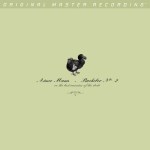
Bachelor No. 2 – MoFi Reviewed

More Rock and Pop Personal Favorites

An Audiophile Hall of Shame pressing and another Mobile Fidelity LP incompetently mastered for the benefit of those given to falling for easy answers and quick fixes.

I had not actually played the LP when I reviewed the MoFi CD, noting that the CD sounded great and that I expected the vinyl to be even better. In 2006 I should have known better but apparently I did not.

Mea culpa.

Boy, was I ever wrong. The vinyl has a bad case of sucked-out half-speed midsIt’s far too polite and lifeless to be taken seriously.

Is it the worst version of the album ever made? Since every CD I own sounds better, that would seem to be the case.

The comments about the music of course still apply — it’s brilliant — but I recommend the Gold or regular CD over this audiophile Heavy Vinyl pressing.

I used to consider this Mann’s One True Masterpiece. It’s actually her co-masterpiece, taking its place alongside the amazing I’m With Stupid, which is more of the rocker side of Mann. This is her Burt Bacharach side, prettier, sweeter and more melodic. Both are brilliant.

Aimee Mann is one of a handful of artists from the ’90s who actually makes music that can hold its own against the best popular recordings of the last forty years. There are few albums that I prize more highly or that have provided me with more musical satisfaction than those by Aimee Mann.

If you don’t know her music try one or both of the above-mentioned titles. Modern pop music just doesn’t get any better.   (more…)

A Night at the Opera – A DCC Disaster

Hot Stamper Pressings of the Music of Queen Available Now

Sonic Grade: F

This DCC pressing is a disaster, one of the worst releases that Kevin Gray and Steve Hoffman ever mastered.

Murky, opaque and compressed: yes, we can agree it has never been an especially good sounding record on anything but the most difficult to find UK pressings [and we know exactly which ones those are now, which only makes this record sound even worse in comparison], but does it deserve this kind of mastering disrespect?

Isn’t the idea to try and FIX what is wrong, rather than to make it worse?

Whether made by DCC or any other label, starting at some point in the mid-90s many audiophile pressings started to have a shortcoming that we find insufferable these days — they are just too damn smooth.

At collector prices no less. Don’t waste your money.

Is it the worst version of the album ever made?

That’s hard to say. But it is the worst sounding version of the album we’ve ever played, and that should be good enough for any audiophile contemplating spending money on this kind of trash. Our advice: don’t do it.

(more…)

One of the Great Audio Disasters, Courtesy of Mobile Fidelity

More of the Music of Steely Dan

We recently amended this listing. Scroll down to see what we have to say about it in 2023.

More MoFi bashing, but boy does this MoFi deserve it. In our estimation, it is tied with the Cisco 180g pressing (2007) for the worst version ever.

I remember back in 1977 when Aja was released. I was a big Steely Dan fan by then, having been turned on to their albums with Countdown to Ecstasy in 73. With each new Dan record I became more impressed with their music, from Pretzel Logic to Katy Lied to Royal Scam and finally on to this, their commercial breakthrough.

At the time I thought the album sounded pretty good on my plain old ABC original.

Then I got a copy of the Mobile Fidelity pressing and I thought it sounded much, much better.

Side two of the MoFi had bass that was only hinted at on my domestic copy. Wow! Listen to all that bass!

Sometime in the 80s, I realized that the MoFi was hideously phony sounding, and that all the bass on side two was boosted far out of proportion to what must be (I’m guessing) on the master tape.

If I May

How much bass is on the master tape is of course of no concern to anyone not mastering the record. The bass has to be right on the record, not the tape.

The song Home At Last has at least an extra three or four DBs added around 50 cycles. It’s ridiculous.

And that’s just the bottom end; the highs are every bit as wrong.

(more…)