nfg/no

For a record to end up on this list, our review notes must say NFG or NO on at least one side.

Sometimes one side of the record will be passable, but the other side will be so awful it earns the “no f-ing good” grade.

Those of you who own these records may want to compare the two sides and listen for the differences we ascribe to them.

Son of Schmilsson at 45 RPM – How Can It Possibly Sound This Bad?

Hot Stamper Pressings of the Music of Harry Nilsson Available Now

Alternately titled: Forty Five, Schmorty Five.

Recently someone loaned us a copy of the Mobile Fidelity pressing of this album, the one they put out in 2021 on two discs cut at 45 RPM, remastered by that notorious hack, Krieg Wunderlich.

Our last shootout took place all the way back in 2021. Although I listen to this title regularly,  unfortunately it does not sell all that well, so we haven’t been making the effort we should to find copies in order to offer the best of them to our customers.

Why the album is not more popular is a question we ask about a number of titles on our site. We love the music and we love the sound, as can be seen from what we (with the help of Allmusic) had to say about a very good sounding pressing back then:

  • This is one of Nilsson’s best albums, sonically and musically. (With Ken Scott at the board at Trident Studios the sound just has to be good, doesn’t it?)
  • Son of Schmilsson has more than half a dozen of the best songs Nilsson ever wrote, and should make it a Must Own for every right thinking audiophile with sophisticated tastes in popular music (we hope this means you)
  • 4 1/2 stars: “… this is all married to a fantastic set of songs that illustrate what a skilled, versatile songsmith Nilsson was. No, it may not be the easiest album to warm to — and it’s just about the weirdest record to reach number 12 and go gold — but if you appreciate Nilsson’s musicality and weirdo humor, he never got any better.”

So true!

The MoFi, however, is a joke next to a properly-mastered and properly-pressed RCA vintage release. Our notes for it read:

  • Big but flat
  • Voice is recessed and lacks richness
  • Rock songs, track one in particular work OK but
  • Ballads lose all the magic

(more…)

Hey, Maybe Rudy Van Gelder IS as Bad a Mastering Engineer as Some Say

Hot Stamper Pressings of Recordings by Rudy Van Gelder Available Now

It’s certainly a proposition worth considering, mostly because so many audiophiles seem to believe it. Or maybe in spite of their believing it, skeptics such as myself being the troublemakers they always are.

So let’s dig down into the dirt of a record that Rudy both recorded and mastered.

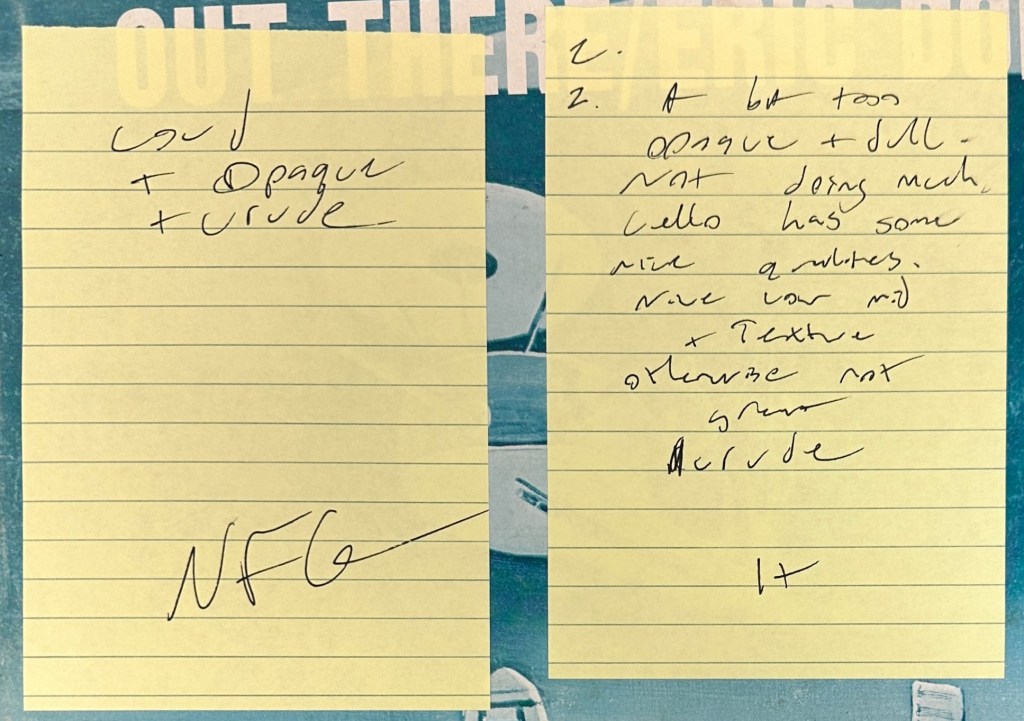
None of the Rudy Van Gelder cuttings we played of Eric Dolphy’s 1961 release of Out There were better than passable, and some had sides that were downright awful sounding, as you can plainly see from our notes.

The copies that won our most recent shootout were mastered by George Horn, and the best of them sound amazing. Here are some comments we made for the album years back as well as the Allmusic review:

Insanely good sound throughout with both sides earning Shootout Winning Triple Plus (A+++) grades. This copy was doing it all right: rich, full-bodied and Tubey Magical yet still super open and spacious.

“A somber and unusual album by the standards of any style of music, Out There explores Dolphy’s vision in approaching the concept of tonality in a way few others — before, concurrent, or after — have ever envisioned.” – 5 stars

As you will see from our notes, we played some very disappointing early pressings. All the early pressings we had on hand were expensive to acquire, the vintage jazz pressing market being what it is: expensive and full of optimistic record graders of questionable skill. (For these kinds of vintage pressings we probably return 70-80% of what comes our way.)

We have to pay top dollar to get copies that are clean, even on the 60s and 70s reissue labels. Noisy old jazz records are simply not saleable to audiophiles no matter how good they sound.

None of the early copies we played earned grades good enough to bother pursuing, not when there are wonderful sounding vintage reissues from the 80s available. On a more positive note, this being our first shootout for the album in many years, we certainly learned a lot, so let’s just chalk up the losses to the cost of doing business. Our newfound knowledge of the best pressings will continue to pay dividends for years to come now that we know what the right stampers tend to be.

(more…)

Does Year of the Cat on Mobile Fidelity Have Audiophile Sound?

Hot Stamper Pressings of the Music of Al Stewart Available Now

Our answer, judging by the copy we played not long ago, would be solidly in the negative. The final grade we awarded both sides was No, our way of saying the record is Not Good.

Below is a description for what a top copy of the album sounds like, based on our most recent shootout:

Incredible sound throughout this vintage Janus pressing of Stewart’s 1976 Masterpiece. With engineering by Alan Parsons, the top pressings are every bit the audiophile Demo Discs you remember. The best sides have sweet vocals, huge amounts of space, breathtaking transparency, and so much more.

Tubey Magical acoustic guitar reproduction is superb on the better copies of this recording. Simply phenomenal amounts of Tubey Magic can be heard on every strum, along with richness, body and harmonic coherency that have all but disappeared from modern recordings (and especially from modern remasterings).

But if you own the wrong Mobile Fidelity pressing — this one was reissued in 1981, the original came out in 1978, so there may be some other pressings that sound better than this one — you would never know how good sounding the album can be. We put a copy we had laying around in a shootout recently and the results were, not to put too fine a point on it, pretty painful.

As the notes make clear, the Mobile Fidelity pressing, with the stampers you see on the sheet above, is:

(more…)

Nilsson’s Aerial Pandemonium Ballet Sounds Absolutely Awful

Hot Stamper Pressings of the Music of Harry Nilsson Available Now
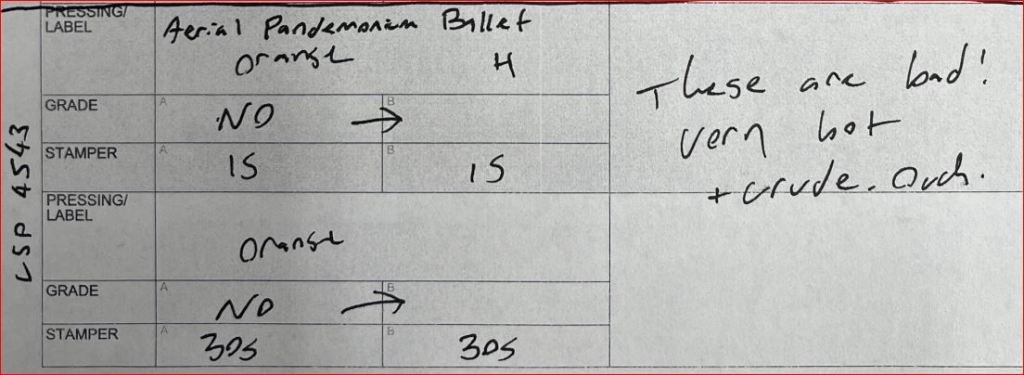
Tracks from the first two Nilsson albums were turned into this monstrosity in 1971. Some were remixed, some parts rerecorded, but whatever they did, they really screwed up the sound of the finished LP.

I cannot even say that the remixing and rerecording and editing are not an improvement on the songs found on the first album — they may be, it’s not a record I know well. What I do know is that this compilation is so bad sounding it doesn’t matter what they did or how well they did it. The record is simply unplayable.

We’ve never done a shootout for the first album, but the second album we know can have wonderful sound on the right pressings. We described a recent Hot Stamper of the second album this way:

Both of these sides are big, clear and full-bodied throughout – if you are a Nilsson fan, this copy is guaranteed to beat anything you’ve heard before, and by a wide margin.

All of the elements are working here – you get silky vocals, punchy bass, breathy brass, silky highs, superb immediacy, remarkable clarity, and the list goes on.

AMG writes:

4 1/2 stars: “As ‘Good Old Desk’ opens Aerial Ballet with a cheerful saunter, it’s clear that Harry Nilsson decided to pick up where he left off with his debut, offering another round of effervescent, devilishly clever pop, equal parts lite psychedelia, pretty ballads, and music hall cabaret.”

All true! Nilsson is one of my favorite artists to this day, 56 years after I first heard the album “Harry,” which is still a personal favorite and one I listen to regularly, along with many others, including a compilation I think is excellent, Personal Best — The Harry Nilsson Anthology.

However, this compilation is shockingly bad — It’s cut loud, and it’s very hot and crude. Ouch is right.

(more…)

Porgy and Bess Gets the Speakers Corner Treatment, from Sterling No Less

Hot Stamper Pressings of Pop and Jazz Vocals Available Now

Here is how we described a recent Shootout Winning copy of Porgy and Bess.

Spacious, full-bodied and Tubey Magical, with Ella and Louis front and center, this is the sound you want to hear on their brilliant collaboration from 1958.

Two vocal giants came together to perform Gershwin’s timeless opera, revered by both music lovers and audiophiles to this day. If you’ve never heard exceptionally well recorded male and female vocals from the 50s, this is a great opportunity to have your mind blown.

Speakers Corner contracted Ryan Smith at Sterling to remaster their Heavy Vinyl pressing in 2013, which might sound like a wise move — Sterling has a good reputation around these parts, even if RKS does not — but the results were disastrous.

Or maybe it wasn’t such a good idea after all. Our notes tell the story of the sound, and it’s not pretty. Painful is actually the word that comes to mind.

Pity our poor listening panel that had to sit through a record that sounds as bad as this one does.

(This is a four sided set but we could not see the point in playing all of them when the first two sucked so badly.)

(Technically they don’t “have to” play these Heavy Vinyl pressings. We don’t force our talented staff to waste their time on modern records. They do it because they choose to, in order to have a better idea of what the competition is up to. Turns out the competition is up to no good.)

Our two sentence review should tell you everything you need to know. Let us hope it saves you from throwing your money away the way we did.

  • Loud, dry and pinched.
  • Hot vocals, no space, very sour and lacking bass.

When the voice is wrong, the sound is wrong. What more do you need to know?

And when the voice is wrong on a legendary recording such as this, you have a worthless piece of vinyl no matter how much you may have paid for it. (Current price on Discogs: about a hundred bucks.)

(more…)

Could This Be More of the Sound Audiophiles Complain About with RVG’s Mastering?

Hot Stamper Pressings of the Music of John Coltrane Available Now

Some of the Rudy Van Gelder cuttings of this album were decent, but had you bought a copy with these stampers, you could be forgiven for using the man’s name in vain.

VAN GELDER in the dead wax is no guarantee of high quality sound, on any record. Records don’t work like that.

The 1+ grade found on side one of both discs means the sound for those two sides may be passable, but the NFG sound on side two of record one means you have at best only half an album with decent sound, and what good is that?

As you can see from our notes, the sound is way too hot and messy and thin.

Note that side two of the second record wasn’t played at all. Why waste more time on a record that clearly did not come off the press properly, whether from bad mastering or bad vinyl? Or bad something else, who can say?

We do not sell records with 1+ grades. You should have no trouble finding those on your own. The world is full of them.

Poor Rudy

Rudy Van Gelder comes in for a lot of criticism from the audiophile community, especially from audiophiles who tend to prefer the remastered Heavy Vinyl pressings made from his recordings.

Unsurprisingly, much of the criticism comes from some of the very same engineers responsible for the remastering those records.

Those who produce reissues of his recordings are notable critics as well.

(more…)

Kevin Gray Sacrifices Another Blue Note to the Lo-Fi Crowd

Hot Stamper Pressings of Blue Note Recordings Available Now
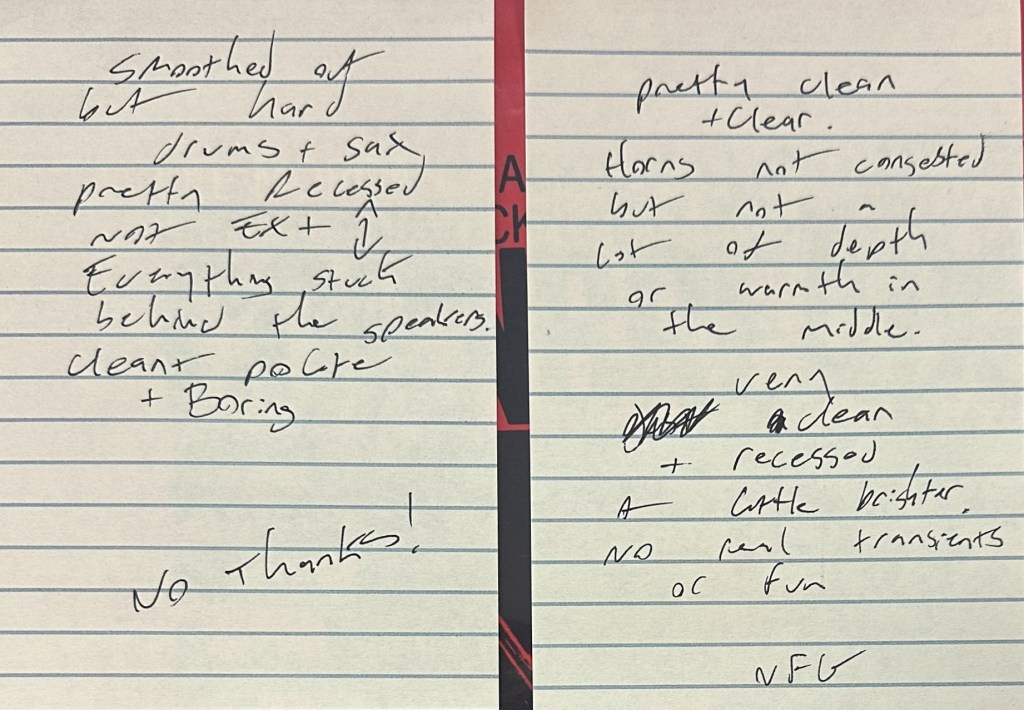

We did a shootout for Cornbread in 2023 and again in 2025. For our latest one, we were fortunate to be able to include both the Tone Poets pressing that came out in 2019 as well as the 75th Anniversary Blue Note pressing from 2014.

Here is the way we described a Hot Stamper that ended up being the best sounding pressing we played on one of its sides, and coming in second on the other side.

  • The sound is everything that’s good about Rudy Van Gelder‘s recordings – it’s present, spacious, full-bodied, Tubey Magical, dynamic and, most importantly, alive in that way that modern pressings never are
  • Exceptionally spacious and three-dimensional, as well as relaxed and full-bodied – this pressing was a big step up over nearly all other copies we played

After hearing a copy of the album that sounded as good as that one, the Tone Poets pressing would have had to be at least a bit of a letdown, right?

To be fair, all it really has to be is good sounding. For $30, the price of the average copy that sells on Discogs, can you really expect great?

I don’t know what any of the purchasers of these Tone Poets records — of this or any other title — are expecting for their thirty bucks, but I can tell you what they are getting. We took notes while their remastered pressing played, and here’s what we heard.

Side One

(more…)

Why Are the Earliest Stampers on 461 Ocean Boulevard So Bad Sounding on Side Two?

Hot Stamper Pressings of the Music of Eric Clapton Available Now

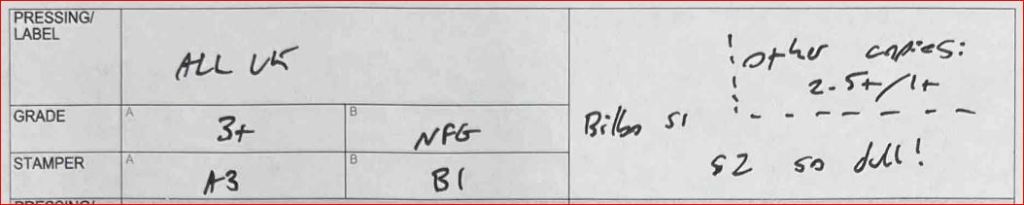
The UK pressings with the side two stampers shown below have not done well in our shootouts for a number of years now. If you own a copy with B-1 stampers on side two, the good news is that we can get you a much better sounding copy of 461 Ocean Boulevard than you have ever heard.

Stamper numbers are not the be-all and end-all in the world of records, a subject we discuss below, but after hearing too many copies with these stampers and substandard sound, from now on we are going to focus our attention on the stampers that do well and avoid copies with the B-1 marking on side two.

Bilbo cut the A-3 side one and did a great job; his side one won our most recent shootout.

Whoever cut side two really screwed it up, as you can see from our notes for our last two shootouts.

When it comes to stampers, labels, mastering credits, country of origin and the like, we make a point of revealing very little of this information on the site, for a number of good reasons we discuss here.

The idea that the stampers are entirely responsible for the quality of any given record’s sound is a mistaken one, and a rather convenient one when you stop to think about it. Audiophiles, like most everybody else on this planet, want answers.

In the world of records, there aren’t many, but B-1 for side two of this album is a clear exception to the rule that the stamper numbers are one part of a multi-faceted puzzle. In this case, B-1 is awful and is best avoided at all costs.

The Biz

Being in the shootout business means we have no way to avoid such realities, which is why it is so easy for us to accept them.

The amateurs and professionals alike who review records for audiophiles want there to be clear-cut answers for every album they write about. Uncertainty and trade-offs upset them no end.

We recognized twenty years ago that the empirical pursuit of record knowledge, practiced scientifically, must be understood as incomplete, imperfect, and provisional.

That is not going to change no matter how upsetting anyone may find it.

(more…)

Helpful Stamper Information You Can Use – Episode 108

Hot Stamper Pressings of the Music of Genesis Available Now

British Pressing? Check.

Pink Label? Check.

Sound Quality?  Side One:: 1+ (dubby). Side One of another copy: NFG (no good).

Apparently something went wrong, but exactly what, nobody really knows.

And if for some reason somebody actually believes they know what went wrong, we tell them that that kind of thinking is detrimental to whatever success they hope to achieve in finding better sounding records, if our experience over the last fifty years has any bearing.

We don’t know it all and we’ve never pretended to. All our knowledge is provisional. We may not be the smartest guys in the room, but we’re sure as hell smart enough to know that much.

If somehow we did know it all, there would be no need for the two hundred entries in our live and learn section about all the mistakes we’ve made over the years trying to understand record pressings at the sonic level.

We take a different approach to searching out better sounding pressings. Instead of reading about them — who made them, how they were made, where they were made, all that sort of thing — we instead devoted our efforts to cleaning and playing them, so that we could make our own judgments about the sound and the music we heard.

Our experiments, conducted using the shootout process we’ve painstakingly developed over the course of the last twenty years, produce all the data we need: the winners, the losers, and the rankings for all the records in-between.

Free Stamper Info

By my count this is the 108th stamper sheet we have posted on The Skeptical Audiophile.

In the case of this title, these are what we would call bad stampers for Genesis’s 1973 prog album Selling England by the Pound (a record we rarely have in stock because the best stampers are just too hard to find, at least they are on copies in audiophile playing condition).

If you are looking for top quality sound — and seriously, what else would you be looking for if you are reading this blog? —  then make sure not to buy just any old early Pink Label UK pressing of the album. You may end up with one that sounds as bad as this one did.

(more…)

“KEV” Didn’t Have a Clue How to Master Teaser and the Firecat

Hot Stamper Pressings of the Music of Cat Stevens Available Now

In 2025, in preparation for a new shootout, we ordered a copy of Teaser from overseas that supposedly had the right stampers — we know what they are and we are only interested in copies with the right ones — and were sent this “KEV” pressing by accident.

Accident is right — whoever KEV is, he sure has no business mastering records if the one we played is anything to go by.

Discogs has an entry for it, current price around $10. (Apparently the word got out about the sound of this miserable pressing.)

  • This release is the pink ring Island Label. No Sterling etchings. (KEV) in matrix.
  • Side 1 has 9514 hashed out and 9154 etched above
  • Matrix / Runout (A-side runout. etched): ILPS 9154A-1K 1 KEV B
  • Matrix / Runout (B-side runout. etched): ILPS 9154B-1K 1 KEV B

Our notes read:

  • Loud, congested and hot.
  • Big, wonky bass.
  • Opaque and so compressed that it pumps.

And the best line of all:

  • Not too different sounding from the 2021 remaster that’s on Spotify. (!)

I looked up that 2021 release, mastered at Abbey Road Studios, and it appears they remixed it for some reason, as those who work at Abbey Road are wont to do, the result of which seems to be one disaster after another.

(more…)