fix-up-and-post

Letter of the Week – “I know in one sense you’re only doing your job but who the hell else does what you do?”

Hot Stamper Pressings of the Music of Crosby, Stills and Nash Available Now

One of our good customers had this to say about some Hot Stampers he purchased recently:

Hey Tom, 

Just received Deja Vu – so good. I have never ever heard the vocals sound so natural and so full of power and energy.

The only similar record I have is After The Gold Rush and I got that from you guys too.

I know in one sense you’re only doing your job but who the hell else does what you do?

Thanks again guys for a brilliant record, a fantastic piece of history and art that I can hear whenever I want to.

Peter

Peter,

Thanks for your letter. Those are two of our favorite records too, with sound that is hard to beat once you figure out which stampers are the ones with the potential for top quality sound.

These two records have a lot in common as it turns out.

(more…)

Rainbow Seeker – Live and Learn

Reviews and Commentaries for Mobile Fidelity Records

A classic case of Live and Learn

[This commentary is at least fifteen years old. We mention Disc Doctor below, and once we had discovered the Walker System in 2007, we stopped using it to clean our records.]

Hot Stampers discovered! It took years, decades even, but it FINALLY happened. This copy has a side one with all the sound I always knew must be on the tape but somehow never seemed to make it to the vinyl. This copy has that sound!

Let me backtrack a bit. I’ve been recommending the MOFI for as long as I can remember, because it has always been the only copy that didn’t sound like a bad cassette.

The domestic pressings and imports I had run into over the years had no top end whatsoever, no bass below 50 or 60 cycles, and enough veils over the midrange to cover an entire harem. (No top and no bottom is our definition of boxy sound.)

The sound was also Pure Compressed Cardboard.

The best MOFI copies had an actual top end; a real bottom too. (Not a tight or deep one but that’s MOFI for you.) I’ve always loved the music, so even though the sound was somewhat washed out and lifeless, you could listen to the MOFI and enjoy it for what it was: not perfect, but a whole lot better than the alternatives. (The CD was hopeless by the way, no surprise there.)

Ah, but all that changed this week. We finally broke through.

I had just picked up a sealed original copy at a local store and was considering putting it up on the site, sealed of course. Then a thought went through my mind. I’ve always loved this record. What if this copy is The One? So I did the unthinkable. I cracked it open, and soon enough the needle was in the groove on my favorite track, Fly With Wings of Love.

To my surprise it had the BEST SOUND I had EVER heard for that song. When all was said and done, when all the copies in the backroom had been disc doctored, along with my three MOFI copies, and each carefully evaluated, sure enough this is the side two that turned out to be the King. I give it an A with Two Pluses. The typical domestic copy gets an F.

Wait, there’s more.

So with all our copies cleaned and ready to play, it was now time to play all the side ones. Even more shocking and surprising, one copy had a side one that was OUT OF THIS WORLD. Master tape sound, As Good As It Gets, perfection.

That’s this copy. Side two is pretty good, maybe a B+ or so. Better than average, but no Hot Stamper.

Since this is one of my favorite pop-jazz albums, I can’t recommend this album highly enough. It may not be deep — for real piano trio jazz check out Sample’s The Three — but it’s not trying to be. It is what it is — sophisticated, melodic, well-crafted piano-based easy-going jazz. With the awesome Eric Gale on guitar too.


Further Reading on Half-Speeds

The best place to start is here:

How come you guys don’t like Half-Speed Mastered records?

(more…)
Our Advice on the Sgt. Peppers Pressings to Avoid

beatlessgtHot Stamper Pressings of Sgt. Peppers Available Now

Chris, an erstwhile customer from a very long time ago, sent us a letter describing his search for a good sounding Sgt. Pepper.

The first thing that comes to mind when reading his letter is that many record collecting rules were broken in going about his search the way he did. But then I thought, What rules? Whose rules? Where exactly does one find these rules? If one wants to avoid breaking them they need to be written down someplace, don’t they?

Wikipedia maybe?

Sadly, no, not at Wikipedia, or any place else for that matter — until now. As crazy as it sounds, we are going to try to lay down a few record collecting rules for record loving audiophiles, specifically to aid these individuals in their search for better sounding vinyl pressings. And by “these individuals” we mean you.

See if you can spot the rules that were broken by Chris in his fruitless search for a good sounding Sgt. Pepper. Note that this letter came to us long before the new Beatles CDs and vinyl had been remastered.

Hi Tom

A few months ago, I purchased a new UK import of Sgt Pepper. Too bad it turned out to be digitally remastered. I had been checking your site for this album over the last few months, but only saw two: a sealed MFSL UHQR for $1000, and a hot stamper for $500, both out of my price range. So then I started looking at Ebay, and recently purchased two “sealed” versions of Sgt Pepper – a USA Apple, which cost me $170, and a USA Capitol (original rainbow label) for which I paid $80.

Tonight, I wanted to copy one of the Sgt Pepper’s to Hi-rez (192/24) DVD audio. Both sealed records from Ebay were cleaned with Last RCM record cleaner on a VPI 16.5, and treated with LAST record preservative. (My usual routine)

First I tried the Capitol (rainbow). It even had “mastered by Capitol” stamped on the run-out area, usually a good sign, I thought. The sound was quite good, except for two things:

1) the sound level drops about 3 db in the first track where they sing “We’d love to take you home with us , we’d love to take you home” (3 db drop occurs) followed by “I don’t really want to…” 2) the record has thousands of audible ticks. No kidding, when I recorded it, and looked at the waveform in Adobe Audition, there are really about 20 little ticks per second. If I try to clean it up manually, one click at a time, (my usual routine), it will take an eternity to finish the job. (slight exaggeration) [sic] So I tried the $170 sealed “Apple” purchased from someone named “sealedbeatles”.

This record is a total disaster. It has no high end. It’s like someone turned the treble all the way down (if my system had a treble control). I looked at the spectrum of a few seconds of music, and the level at 8 khz is the same as the level at 60 khz, down about 90 db. (duller than poor AM radio). The record is loaded with surface noise too. The record is totally useless.

Finally I tried the UK digitally remastered Parlophone, purchased probably from Music Direct, or some place like that. It sounds harsher than hell, and oddly has a tone actually recorded on the record at about 70 Khz, which you can “see” poking up from the noise floor in its spectrum.

I’m still looking.

Chris

My first thoughts upon receiving this letter:

There is almost no chance Chris would be successful with the approach he took.

The following would have been my five pieces of advice had he told me in advance what he was planning to do.

(more…)

Alone Together – What’s with All the Bad Vinyl and Murky Sound?

Reviews and Commentaries for the Music of Dave Mason

What follows is some advice on What to Listen For.

If you are interested in digging deeper, our Listening in Depth commentaries have extensive track by track breakdowns for some of the better-known albums for which we’ve done multiple shootouts.

On to Alone Together.

Some records are consistently too noisy to keep in stock no matter how good they sound.

This is one of them. We have a section for records that tend to be noisy, and it can be found here.

We struggled for years with the bad vinyl (on the original vomit-colored vinyl pressings, those are the ones that have the potential to win shootouts) and the murky sound of this album.

Finally, with dozens of advances in playback quality and dramatically better cleaning techniques, we have now [circa 2012] managed to overcome the problems which we assumed were baked into the recording.

I haven’t heard the master tape, but I have heard scores of pressings made from it over the years. I confess I actually used to like and recommend the Heavy Vinyl MCA pressing. Rest assured that is no longer the case. Nowadays it sounds as opaque, ambience-challenged, lifeless and pointless as the rest of its 180 gram brethren.

You want to keep what is good about a Tubey Magical analog recording from The Golden Age of Rock while avoiding the pitfalls so common to them:

  • poor resolution,
  • heavy compression,
  • thickness,
  • opacity,
  • blubber,
  • compromised frequency extremes,
  • lack of space and
  • lack of presence.

How’s that for a laundry list of all the problems we hear on old rock records, old classical records, and old jazz records?

All records when you stop to think about it.

What record doesn’t have at least some of these faults? Not many in our experience. A copy with few or none of these problems would do very well in our Hot Stamper shootouts indeed.

This is, of course, a list of all the faults we hear just as often in the Heavy Vinyl pressings we audition.

Records are records. Thick ones have the same problems as thin ones. Why wouldn’t they?

(more…)

Transparency, Energy, and Whomp Are Key on Eat a Peach

xxxMore of the Music of The Allman Brothers

Reviews and Commentaries for Southern Rock Albums

What do high grades give you for this album? Unbelievably Tubey Magical guitars, huge whomp factor on the bottom end, incredible dynamics and life, shocking transparency and clarity, and the kind of immediacy that puts these crazy southern rockers right in your very own living room. The overall sound is impressively BIG, BOLD, and POWERFUL.

This and Live At Fillmore East are the two monumental albums these guys put out, and they have a lot in common. You know what you’re gonna get with the Allmans: dueling electric guitars, sweet acoustic guitars, energetic drumming, and full-bodied vocals throughout. There’s obviously a lot of exploration — two complete sides are dedicated to the song Mountain Jam — but the heartfelt radio-friendly songs such as Melissa and Little Martha keep up the energy and provide maximum enjoyment factor.

The Three Keys: Transparency, Energy, and WHOMP

A great copy like this one really lets everything that’s great about this music come through. You can easily pick out each of the musicians and follow their contributions over the course of the songs. The huge WHOMP factor throughout kicks up the excitement factor and sets the foundation for the extended guitar jams to work their Southern bluesy magic. The top end extends beautifully to bring out all the ambience and spaciousness of the Fillmore. (more…)

Ridiculously Phony and Compressed Sound – The White Album on MoFi

Sonic Grade: F

An Audiophile Hall of Shame pressing and another MoFi LP reviewed and found seriously wanting. The phony sound here is perfectly suited to the stone age stereos of the past. I should know. I had a stereo like that back in 1982 when this record came out, and I thought it sounded great.

The last time I played a copy of the MoFi, I could not believe how ridiculously bright, phony and compressed it was.

As sibilant as any Beatles record they ever did. Cry Baby Cry spits like crazy!

And to think I used to like their version when it came out back in the 80s.

A good example: on Yer Blues, the MFSL pressing positively wreaks havoc with all the added bass and top end The Beatles put on this track. The MoFi version is already too bright, and has sloppy bass to start with, so the result on this track is way too much BAD bass and way too much BAD spitty 10k-boosted treble. The MoFi is nothing like the good imports, which have way too much GOOD bass and treble.

Yer Blues ROCKS! Listen to the big jam at the end of the song, where John’s vocal mic is turned off but his performance is still caught by a room or overheard mic. They obviously did this on purpose, killing his vocal track so that the “leaked” vocal could be heard. (We have since learned from Ken Scott that it was mistake, but one they liked and left in.)

Those crazy Beatles! It’s more than just a cool “effect.” It actually seems to kick the energy and power of the song up a notch. It’s clearly an accident, but an accident that works. I rather doubt George Martin approved. That kind of “throw the rule book out” approach is what makes Beatles recordings so fascinating, and The White Album the most fascinating of them all.

The EQ for this song is also a good example of something The Beatles were experimenting with, as detailed in their recording sessions and later interviews with the engineers. They were pushing the boundaries of normal EQ, of how much bass and treble a track could have. This track has seriously boosted bass, way too much, but somehow it works.
(more…)

The Recordings of Milt Jackson – These Two Didn’t Make the Grade

Hot Stamper Pressings of Jazz Recordings Available Now

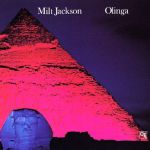
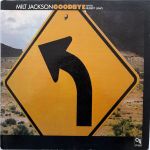
Pictured to the left are a couple of the Milt Jackson albums we’ve auditioned over the years, both on CTI, a label we like very much.

Without going into specifics, we’ll just say these albums suffer from weak music, weak sound, or both. They may have some appeal to fans of the man, but audiophiles looking for top quality sound and music — our stock in trade — are best advised to look elsewhere.

We play mediocre-to-bad sounding pressings so that you don’t have to, a public service from your record-loving friends at Better Records.

You can find these two in our Hall of Shame, along with others that — in our opinion — are best avoided by audiophiles looking for hi-fidelity sound. Some of these records may have passable sonics, but we found the music less than compelling.  These are also records you can safely avoid.

We also have an Audiophile Record Hall of Shame for records that were marketed to audiophiles for their putatively superior sound. If you’ve spent any time on this blog at all, you know that these records are some of the worst sounding pressings we have ever had the misfortune to play.

We routinely put them in our Hot Stamper Shootouts against the vintage records that we offer, and are often surprised at just how bad an “audiophile record” can sound and still be considered an “audiophile record.”

Does the term still have any meaning?

(more…)

Recent Revolutions in Audio Can Make a Huge Difference on Familiar Recordings

This White Hot Stamper Ambrosia LP from some years ago had the kind of sound you would never expect to find in the grooves of this album. It was a THRILL to hear it, especially at the volumes at which we were playing the record.

The transparency and openness were off the charts, and unmatched by any other copy in our shootout. We’re big fans of this band here at Better Records — we love their take on complex, big production arty rock.

It’s also yet another example of the value of taking part in the myriad revolutions in audio.

If you never want your prized but sonically-challenged records to sound any better than they do right now, this minute, don’t bother to learn how to clean them better, play them back better or improve the acoustics of your room.

No one can make you do any of those things. The only reason you might have for doing them is so that you can enjoy more of your favorite music with much better sound. 

Is that a good enough reason? If you’re on this site I’m guessing it is.

That’s the reason we do it. We want records like this one, which didn’t start sounding good until about 2005, and now sound much better than I ever thought they could, to keep getting better and better. Why shouldn’t they? Because some people think we’ve reached the point of diminishing returns in audio? Those people do not know what they are talking about.

(There is a reference to racing cars in the Washington Post article about Hot Stampers which is pure poppycock, or at least those of us who have been in audio for a long time know it is. Lap times are not a good analogy. We need to be thinking about immersive experiences being ten times more immersive for a hundred times as many recordings as was possible when I started.)

And these improvements we talk about have allowed us to enjoy records we could never fully enjoy before because they never really sounded all that good to us.

Now they do, and they will keep getting better, as more and more developments come along in all areas of analog reproduction.

(more…)

Answers to Some of Your Hot Stamper Questions

The Beatles in Mono, Our Grading System, Our Cleaning System and More

We discuss a number of issues with our letter writer, the kinds of questions we often get, so here are some of the answers we often give out.

  • While Prices for Many Records Have Trended Down, Others Have Gone Up
  • The Beatles in Mono
  • Our White Hot Triple Plus Grade
  • Why Our Stereo Is Good at Its Job, and
  • Record Cleaning

  Hey Tom, 

First off, I got to say, congratulations on a great concept. Also, congrats on having the balls to charge what these albums are worth.

Thanks. Like any business, we charge what the market will bear, and it seems people are willing to pay a lot for these records, although less for some than they used to — some of our records now sell for half or even less than what we were getting two or three or five years ago.

That said, the top copies have held their prices pretty well over the years and often gone up substantially. It’s the second tier and third tier titles and the Super Hots that have really fallen in price. That’s where the real “bargains” are these days.

Ok – I spent a fortune on my system. Including acoustic design, the best of everything – speakers, turntable, preamp, amps – you get it. The whole set up probably cost me over $600k.

Wow. I don’t have $600k in my system, but I do have about $600k worth of labor in it (!) You can read all about Our Stereo here.

I am a crazy fanatic – audio perfection is something that really moves me.

Me too. I wrote about it here, when I fell in love with a record that gave me a good reason to get seriously into audio.

So, you can imagine I am intrigued with what you are doing. I will try you guys out (already bought my first album – CSNY) very hopeful that I will notice a difference between your albums and others.

Hard to imagine that you won’t hear a huge difference. Most versions of Deja Vu, including audiophile ones, are terrible.

I’d love to set up a call to discuss some questions I have regarding some of your best vs. say, they latest Neil Young releases with his archive release bundles. I have first pressings of the newly analog remasters and they are amazing.

I hope we’re not talking about this pressing: After the Gold Rush

I also purchased the Beatles mono set and have a separate mono cartridge and tone arm just for this set. They are real nice – not as great sonically as the Neil releases, but better than the Beatles Stereo box set.

We had a mono set in and spent about a half hour trying to figure out what was wrong with it. I realized in the end that the sound was dead as a doornail. If you want to hear The Beatles sound better than you ever imagined, we can make that happen.

But not in mono. Here are our in-stock Hot Stampers pressings of The Beatles, guaranteed to blow your mind.

I am also curious as to the system you use to evaluate your albums – and what you see as the holy grail of the A+++ standard.

Triple Plus means this: (more…)

The Turn Up Your Volume Test – Home Plate

More of the Music of Bonnie Raitt

This is a classic case of a record that really starts to work when the levels are up. It’s so free from distortion and phony processing it wants to be played loud, and that’s the level this music works at. It’s the level it was no doubt mixed at, and that mix sounds pretty flat at moderate levels. If you want to hear the real rockin’ Bonnie Raitt you gots to turn it up!

Like a lot of the best recordings from the mid-’70s, the production and recording quality are clean and clear, and we mean that in a good way. There is very little processing to the sound of anything here; drums sound like drums, guitars like guitars, and Bonnie sings without the aid of autotuning –– because she can sing on-key, and beautifully. Her vocals kill on every song. (Her dad had a pretty good set of pipes too.)

Her Best Material

What sets this album apart from others made around this period is the strength of the material. Every song on side one would fit nicely on a greatest hits album, they’re that good. The reason side one has always been a personal favorite is that it ends with the best track on the album, maybe the best song Bonnie ever sang, the excruciatingly heartfelt ballad, My First Night Alone Without You. If that one doesn’t hit you hard, something somewhere is very wrong. 


More Hot Stamper Commentary from 2008

This original WB Palm Tree label LP has THE BEST SIDE ONE we have ever heard here at Better Records. “A Triple Plus” sound means you’re probably hearing the album better than they did when they played back the master tape in the control room. (Studio monitors being what they are.) Since this is one of my three favorite Bonnie Raitt albums — the others being Sweet Forgiveness and Nine Lives — and quite possibly the best sounding album she ever made, it goes without saying that this is THE Must Own Bonnie Raitt Hot Stamper Pressing of All Time.

Nine Lives? Luck of the Draw?

What about the Capitol albums she recorded with Don Was?

Man, they sure don’t sound like this! That stuff is way too digital, overly-processed and modern sounding for my taste, not to mention my delicate hearing.

The first two she did for Capitol are fine albums in their own right, but she was already out of gas by the time she got accepted by the record buying public and the Grammy Award committee.

That was 1989; this album is from 1975 when she still had her groove on. You may gain a lot of wisdom as you age from thirty-six to fifty, but you don’t gain a lot of rock and roll energy (or any other kind, for that matter).

The Big Sound

This a big production, with horns and strings and lots of wonderful sounding instruments thrown into the mix such as tubas, mandolins and autoharps to name just a few. Getting all these sounds onto the vinyl of the day is a tough challenge, but some copies had the goods, and this is one of them.