dubby-sound

Records that are made from sub-generation tapes, tapes dubbed from the masters, or dubbed from second generation tapes previously dubbed from the masters, tend to have what we call “dubby sound.”

They will usually be somewhat veiled, small, smeary and opaque. They tend to get congested in loud passages. They sometimes have more tape hiss.

Many of these shortcomings are the ones we regularly hear on the Modern Heavy Vinyl reissue.

We suspect that many of them are made from copy tapes, but whether they are or aren’t is immaterial. The bulk of them simply do not sound very good to us. Regardless of what tape was used, they should be avoided by those who are interested in high quality analog.

Seriously, This is Your Idea of Analog?

Audiophile Quality Pressings of Orchestral Music Available Now

Whether made by Klavier or any other label, starting at some point in the mid-90s, many Heavy Vinyl pressings started to have a shortcoming that nowadays we find insufferable: they are just too damn smooth.

Smeary, thickdullopaque, and lacking in ambience, this record has all the hallmarks of the modern Heavy Vinyl reissue.

The sound is smeary, thick and opaque because, among other things, the record was mastered by Doug Sax from a copy tape, and not all that well either.

It is yet another murky audiophile piece of trash from the mastering lathe of the formerly brilliant Doug Sax. He used to cut the best sounding records in the world. Then he started working for Analogue Productions and never cut a good record again as far as I know.

On this record, in Doug’s defense it’s only fair to point out that he had dub tapes to work with, which is neither here nor there as these pressings are not worth the dime’s worth of vinyl used to make them.

Maybe the hearing-challenged Chad Kassem wanted this sound — almost all his remastered titles have the same faults as this Klavier — and simply asked that Doug cut it to sound real good like analog spossed to sound in the mind of this kingpin, which meant smooth, fat, thick and smeary.

Yes, this is exactly what some folks think analog should sound like.

Just ask whoever mastered the Beatles records in 2014. Somebody boosted the bass and smoothed out the upper midrange, and I don’t think they did that by accident. They actually thought it was good idea.

Harry Moss obviously would not have agreed, but he’s not around anymore to do the job right.

(more…)

I Knew This Guy Was Full of Sh*t, But I Had to Be Sure

Skeptical Thinking Is Critical to Achieving Better Sound
Recently a fellow named Jared tried to correct our assertion that Rod Stewart’s early albums from the US are made from dubbed tapes, as is our contention.

Here is his letter:

Hey there. Just wanted to point out some errors on your listing for Rod Stewart’s “An Old Raincoat…” LP. The UK pressings are the ones made from dupes.

The first generation masters for all of Rod’s Mercury albums are in the US. All vinyl vintage pressings, UK or US, are made from EQ dupes.

The original US Polygram CDs mastered by Dennis Drake are straight off the original masters.
Thanks!

Naturally this information took us by surprise. We replied:

Jared,

Can you refer me to the source of your information?

Thanks,

TP

There was no answer to my query. Nor was I able to find any source for this information.

I hadn’t played a domestic copy of The Rod Stewart album, the title Old Raincoat was released under in the states, in at least twenty years, probably more like thirty. It had sure sounded dubby to me back then. I stopped buying them a long time ago.

Was I remembering the sound right? The odds were very high that I was, but I had to know for sure, even though I had no idea who Jared was or where his information came from.

I asked my main man Fred to get one in and give it a listen. Here is his report:

We played The Rod Stewart Album (domestic Old Raincoat) we got in and it sounds absolutely terrible. Super spitty and bright.

Are they all this bad? Who can say?

Could my UK pressing be made from copy tapes?

I suppose it’s possible. It doesn’t sound dubby to me, but it is not an especially good sounding record, unlike Rod’s third album, which is about as good sounding a rock record as is possible to make. (In the case of Every Picture, it’s the imports that are made from dubs. Go figure.)

Maybe Dennis Drake actually did get hold of the real master tapes when making his CD. He is a very talented engineer; I have many compact discs mastered by him and I don’t know of any that aren’t at least good sounding. For those of you who play CDs, you are free to give his version of An Old Raincost a try. Please let me know what you hear.

What’s that Smell?

But the reason Jared letter is being published is that it reeks of information that has not been verified by anyone’s ears. Certainly not Jared’s.

If, like Jared, you read something that sounds plausible, that you think might be true, why would you be so willing to believe it without any real evidence to back it up?

Even worse, the comments Jared makes weren’t even prefaced with “I’ve read that…” or “People seem to agree that…” No, Jared leaves no room for doubt. The information is presented as true.

Can anyone who has played both versions of Old Raincoat not hear how much better the UK pressing is?

We couldn’t. Nothing could have been more obvious to us than that one version is made from good tapes and one version is made from bad tapes.

(more…)

The UK Imports of On the Third Day Are Made from Dubs

Hot Stamper Pressings of the Music of The Electric Light Orchestra Available Now

It’s obvious, or should be, that the British vinyl pressings are made from sub-generation copy tapes.

The imports make it sound as if someone threw a blanket over your speakers.

We know this because we had a bunch of them cleaned up for our shootout many years ago and they all sucked.

We tend to buy Electric Light Orchestra records on import vinyl; those are the ones that have proven themselves to have the best sound.

Most of the domestic pressings of their albums sound as though they were mastered from dub tapes.

But On The Third Day is proof that this is not always the case, just as Siren proves that the best Roxy Music albums are not always British.

(more…)

Crosby, Stills and Nash – You Do the Best You Can with What You’ve Got to Work With

Hot Stamper Pressings of the Music of Crosby, Stills and Nash Available Now

The founding members of CSN chose the Albert brothers to engineer this 1977 reunion.

Their most famous album is Layla. Ever heard a great sounding Layla? Me neither. Can you hear the sound of Layla in your head? That’s more or less what this album sounds like. There are better and worse Layla’s — we’ve done the shootout many times — just as there are better and worse CSNs, but we have never played amazing Demo Disc pressings of either and I doubt we ever will.

The problem with the sound cannot be “fixed” in the mastering, and here’s how we know: on either side some songs have wonderful sound — the midrange magic, the “breath of life” that makes the first Crosby, Stills and Nash album such a special listening experience — and some don’t.

That’s a recording problem.

It sounds like too many generations of tape were used on songs like Shadow Captain and Dark Star, among others.

But Just a Song Before I Go on side two can sound wonderful: rich, sweet, present and surrounded by lovely studio ambience.

So we listen for the qualities of a specific song that help us pinpoint what the best copies do well and the rest do less well and grade them accordingly, on a curve.

Animals will never sound like The Wall. You do the best you can with what you’ve got to work with.

(more…)

Toto – Copy Number Three Finally Showed Us the Magic We Were Looking For

More of the Music of Toto

Our first shootout from way back when [2010?] got off to a very rocky start; we were on the verge of giving up after playing two very bad, sub-generation side ones, cut at The Mastering Lab just like all the rest, but so bad even the CD might be better. If you have an awful copy, we feel your pain.

But Copy Number Three showed us the real Toto sound: the kind of sweetness and warmth we had been hoping to hear and fearing might not exist.

Sure, Toto IV has killer sound, but that’s no guarantee that the first album would be recorded (or mastered or pressed) as well.

In the world of audio — vinyl, equipment, what have you — there are no guarantees. The average 180 gram remastered audiophile pressing should be all the proof you need.

Good intentions don’t count for much in this business, or anywhere else for that matter.

Enough about bad audiophile records.

Copy number three also had jump-out-of-the-speakers presence without being aggressive, gritty or strident, no mean feat for a pop record from this era. Like all the best rock records, the good ones make you want to turn up the volume; the louder they get the better they sound.

(more…)

If You Can’t Make a Good Record, Why Make Any Record At All?

Hot Stamper Pressings of the Music of Steely Dan Available Now

This Speakers Corner Heavy Vinyl pressing has to be one of the worst sounding versions of the album ever pressed.

You think the average ABC or MCA pressing is opaque, flat and lifeless, not to mention compromised at both ends of the frequency spectrum?

You ain’t heard nothin’ yet!

As bad as the typical copy of this album is, the Speakers Corner Heavy Vinyl is even worse, with not a single redeeming quality to its credit.

If this is what passes for an Audiophile Record these days, and it is, it’s just one more nail in the coffin for Heavy Vinyl.

But that’s not the half of it.

Go to Acoustic Sounds’ website and read all the positive customer reviews — they love it! Is there any heavy vinyl pressing on the planet that a sizable contingent of audiophiles won’t say something nice about, no matter how bad it sounds? I can’t think of one.

To sum up, this record is nothing less than an affront to analog itself. I guarantee you the CD is better, if you get a good one. I own four or five and the best of them has far more musical energy than this thick, dull, opaque and boring piece of audiophile analog trash.

It was probably made from a digital copy of the master, or more likely a digital copy of an analog dub of the master — three generations, that’s sure what it sounds like — but that’s no excuse.

If you can’t make a good record, don’t make any record at all. Shelve the project. The audiophile vinyl world is drowning in bad sounding pressings; we don’t need any more, thank you very much.

(more…)

The Free Story – Another Dubby Compilation

Hot Stamper Pressings of British Blues Rock Albums Available Now

This is a Limited Edition Black Label Island Numbered Import 2 LP set.

The sound is passable at best. Unfortunately, like many of the compilations done over the years, this is a very dubby sounding album. It’s smearyveiled, and lacks space.

The good vintage pressings of the original albums just kill it. 

Not all compilation albums are bad. Here are some with the potential for very good sound.

(more…)

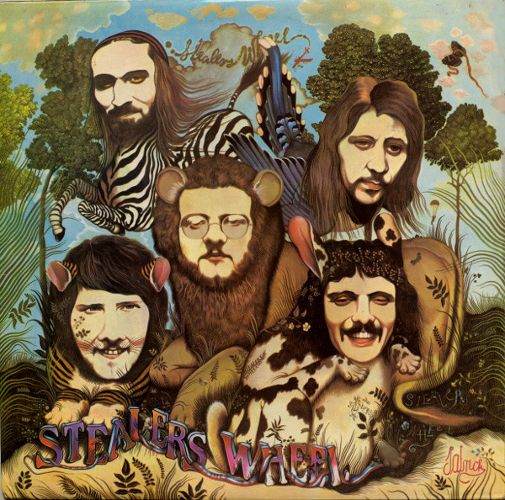
British A&M Vinyl Versus Domestic A&M Vinyl on Stealers Wheel’s Debut

Hot Stamper Pressings of the Music of Gerry Rafferty Available Now

Like so many British bands on the A&M label, when it came time to master the album for the domestic market, the people in charge (whoever they may have been) took the easy way out and simply ordered up a dub of the master tape to cut the album.

Spooky Tooth, Procol Harum, The Police (often but not always), Fairport Convention, my beloved Squeeze and too many others to think about all had their records ruined by sub-generation masters.

But our Hot Stamper pressings will always be British-pressed vinyl from the real master tapes, and that makes all the difference in the world.

Engineering

The legendary Geoff Emerick engineered (along with John Mills) at Apple Studio, which explains why the sound is so good on these import pressings. The album went on to receive the European Edison Award for recording excellence, whatever that is).

Our standard boilerplate for these kinds of records follows:

Tubey Magic Is Key

This original British pressing has the kind of Tubey Magical Midrange that modern records cannot even BEGIN to reproduce. Folks, that sound is gone and it sure isn’t showing signs of coming back. If you love hearing INTO a recording, actually being able to “see” the performers, and feeling as if you are sitting in the studio with the band, this is the record for you. It’s what vintage all analog recordings are known for — this sound.

If you exclusively play modern repressings of vintage recordings, I can say without fear of contradiction that you have never heard this kind of sound on vinyl. Old records have it — not often, and certainly not always — but maybe one out of a hundred new records do, and those are some pretty long odds.

(more…)

Love – Revisited

Hot Stamper Pressings of Psych Rock Albums Available Now

This is a very old review. The sound of this “greatest hits” compilation, on even the best copies, is unlikely to be good enough to qualify for Hot Stamper status these days.

We will never really know of course, as we no longer buy these pressings or take the time to clean and play them.

Love is a shockingly well-recorded band, one that deserves to be heard on top quality vintage pressings.

Our review from way back when:

This album was made from dub tapes and has some of that dubby sound (smeary, veiled, lacking in space), but in its defense we can say that it was very well mastered from those copy tapes and for the casual fan of the band is worth picking up if the price is right.

We had a chance to shootout a handful of copies recently and didn’t hear any others that could compete with this Elektra Original Pressing. We are HUGE fans of Love and this copy will show you why.

(more…)

More Bad Tube Mastering from the Formerly Brilliant Doug Sax

Audiophile Quality Pressings of Orchestral Music Available Now

Sonic Grade: F

The sound is smeary, thick and opaque because, among other things, the record was mastered by Doug Sax on tube equipment from a copy tape, and not all that well either.

It is yet another murky audiophile piece of trash from the mastering lathe of the formerly brilliant Doug Sax. Back in the day he cut some the best sounding records ever made.

Then he started working for Analogue Productions and never cut a good sounding record again as far as I know. (Obviously I cannot have played everything he worked on from the mid-90s on. Who would have the time? Who would even want to?)

On this Offenbach record, in Doug’s defense it’s only fair to point out that he had dub tapes to work with, which is neither here nor there as these pressings are not worth the dime’s worth of vinyl used to make them.

Should you buy a record because it was made this way?

According to the back of the jacket:

Mastering by Doug Sax at The Mastering Lab using an all vacuum tube system.

Single Step processing was used for this “Limited Edition” release. The stamper was made from the first generation master and not more than 500 were pressed from each stamper. This process allows all records to be of “test pressing quality.” Klavier records are used by many manufacturers and audio specialty shops for demonstrating their equipment.

Maybe the notoriously hearing-challenged Chad Kassem wanted this sound — almost all his remastered titles have the same faults — and simply asked that Doug cut it to sound real good like analog spossed ta sound in the mind of this kingpin, which meant smooth, fat, thick and smeary. (Back in the 70s, if you had a fairly typical stereo system — Japanese receiver and three-way box speakers with a 12″ woofer — you surely know the sound I am talking about. Record stores are one of the few places one can go to hear that sound these days. If you’re old like me, it can really take you back.)

This Is Analog?

Apparently, even in our modern era this is what some folks think analog should sound like.

(more…)