dry-sound

These are some of the records that we’ve found to have dry sound. We felt they could benefit greatly from more Tubey Magic somewhere in the recording chain.

London Orchestral Records from the 70s and the Problem of Opacity

Decca and London Hot Stamper Pressings Available Now

The average copy of this 1976 recording has that dry, multi-miked modern sound that the 70s ushered in for many of the major labels, notably London and RCA.

How many Solti records are not ridiculously thick and opaque? One out of ten? If that. We’re extremely wary of records produced in the 70s; we’ve been burned too many times.

And to tell you the truth, we are not all that thrilled with most of what passes for good sound on Mehta‘s London output either, especially those recorded in Royce Hall. If you have a high-resolution system, these recordings, like those on Classic Records Heavy Vinyl that we constantly criticize, leave a lot to be desired.

Opacity is a real dealbreaker for us. Most of the classical records we play from later eras simply do not have the transparency essential to transporting us from our listening room into the concert hall.

One thing you can say about live classical music, it is never opaque. (It can be dry though. Some concert halls have that sound.)

No recording in our experience — our experience having been informed by playing thousands upon thousand of them — can ever be remotely as transparent as live music.

If you have any doubts, next time you come home from the concert hall, take a moment to put on a favorite recording of the same music. You may be in for quite a shock.

Other Deccas and Londons that we’d cleaned and played and found to be disappointing can be seen here.

For more on the subject of opacity on record, click here.

Here are some of the other records we’ve discovered that are good for testing string tone and texture.

(more…)

Observations on RCA’s Chamber Recordings

beethseren_LSC2550

Hot Stamper Pressings of Living Stereo Titles Available Now

What do the best copies of this album sound like?

The sound is RICH and TRANSPARENT, and unlike a lot of RCA’s chamber recordings, not dry.

The tonality is also Right On The Money.

The performers are present and the transients of their instruments are not in the least bit smeared.

A case of good tube mastering?

On the best pressings, absolutely.

(More on the subject of tubes in audio here.)

Classical Shootouts

RCA is justly famous for its chamber recordings, which tend to be somewhat rare for some reason. Let’s be honest: we did not conduct this shootout with a dozen copies of the album. (It would take us at least twenty-five years to find that many clean pressings.)

What we had were quite a few other Heifetz RCA chamber recordings, as well as some favorites by the Quartetto Italiano and I Musici that we are very fond of and know well.

After thirty two years in business selling vintage vinyl, by now we’ve played scores if not hundreds of good violin recordings. We have no problem recognizing good violin sound (as well as correct violin tone, not exactly the same thing) when we hear it. In the past our top Hot Stamper classical pressings would go directly to our best customers, customers who want classical recordings that actually sound good. not just the kind of Golden Age Recordings that are supposed to. Now that we are able to do classical shootouts on a regular basis, we hope to have enough superb sounding classical recordings for all of our audiophile customers.

I’ve commented often over the years of the benefits to be gained from listening to classical music regularly. Once a week is a good rule of thumb I would say. I love rock and roll, jazz and all the rest of it, but there is something about classical music that restores a certain balance in your musical life that can’t be accomplished by other means. It grounds your listening experience to something perhaps less immediately gratifying but deeper and more enriching over time. Once habituated, the effect on one’s mood is not hard to recognize.

Orchestral Music Is Hard to Record, Master and Press, Apparently

(more…)

The Times They Are A-Changin’ – Leave It Dry, Or Add Some Reverb?

More of the Music of Bob Dylan

The noisy (aren’t they all?) mono copy we keep around as a reference presents Dylan and his guitar in a starkly immediate, clear and unprocessed way. The stereo version of the album is simply that sound with some light stereo reverb added.

More than anything else, on some tracks the mono pressing sounds like a demo.

It’s as if the engineers threw up a mic or two, set the EQ for flat and proceeded to roll tape. This is a good sound for what it is, but it has a tendency toward dryness, perhaps not on all of the tracks but clearly on some. Certainly the first track on side one can have that drier sound.

What the stereo reverb does is fill out the sound of Dylan’s voice respectfully.

The engineers of the late ’50 and ’60s had a tendency to drown their singers in heavy reverb, as anyone who’s ever played an old Tony Bennett or Dean Martin album knows all too well.

But a little reverb actually benefits the vocals of our young Mr. Dylan on The Times They Are A-Changin’, and there is an easy way to test that proposition. When you hit the mono button on your preamp or phono stage, the reverb disappears, leaving the vocal more clear and more present, but also more dry and thin. You may like it better that way. Obviously, to some degree this is a matter of taste.

The nice thing about this stereo copy, assuming you have a mono switch in your system (which you should; they’re very handy), is that you have the option of hearing it both ways and deciding for yourself which approach you find more involving and enjoyable — if not necessarily truthful.

We suspect your preference will be both listener- and system-dependent. Isn’t it better to have the option and be able to make that determination for yourself?

To see our current selection of Hot Stamper pressings that we think sound better in mono, click here.

To see our current selection of Hot Stamper pressings that we think sound better in stereo, click here.

(more…)

What Do You Mean by “Boxy” Sound?

More of the Music of Tchaikovsky

Many Golden Age classical records simply do not have very good sound, and this is one of them.

We’ve never heard a good sounding copy of LSC 2216, and we’ve played quite a number of them over the decades that we’ve been in the business of selling them. (LSC 1901, with Monteux conducting, is no better.)

A copy came in a while back so I figured it was time to give it a spin and see if there was any reason to change my opinion. Hey, maybe this one had Hot Stampers!

Can’t say it wouldn’t be possible. Unlikely, yes, impossible, no.

So here’s what I heard. No real top above 6k, hardly any bottom, but with a very wide stage – the textbook definition of “boxy sound.” (Dry and thin too, on a vintage RCA pressing no less!)

If you are a fan of Living Stereo pressings, have you noticed that many of them – this one for example – don’t sound good?

If you’re an audiophile with good equipment, you should have. But did you? Or did you buy into the hype surrounding these rare LSC pressings and just ignore the problems with the sound?

(more…)

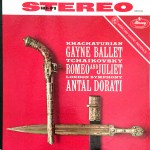
Tchaikovsky / Romeo & Juliet – On the Orange Label?

Hot Stamper Pressings of Classical Masterpieces Available Now

UPDATE 2025

This is a very old review from from way back in 2011 which we think is wildly off the mark.

I can’t remember when was the last time we played an Mercury Orange Label pressing that had sound competitive with the best earlier pressings.

Back in 2011 we liked reissue pressings of Golden Age recordings a lot more than we do now, so take the review below with a huge grain of salt. Only the advent of top quality cleaning equipment and much improved playback made it possible for us to hear the earlier pressings in all their glory.

A lot of records that I used to like because they were cleaner and brighter — later Red Seal Living Stereos, some OJC jazz, some reissues of rock — sounded much better when my system was darker and less revealing.

There are plenty of live and learn entries about these records. This one from 14+ years ago could (probably, the record is long gone and not around to be played) not be more wrong.

Our advice in 2025 would be to avoid any pressing on the Orange Mercury label.


We played an Orange label late reissue of this title a while back and had this to say about it:

DEMO QUALITY thanks to superb low distortion mastering. Another very exciting Mercury recording. Some of these Orange Label pressings, which are cut with much better cutting equipment than was available when the original album was released, can show you just how good the master tape really is.

This kind of sound is not easy to cut, and it appears that the amplifiers of the day just weren’t up to it. This copy gets rid of all the cutter-head distortion and coloration and allows you to hear what the Mercury engineers accomplished.

Dorati breathes fire into the famous Tchaikovsky Romeo and Juliet on side 2. Unfortunately, the mastering on this copy is not very good. The sound is bright and dry.

This work frequently is recorded with harsh sound; the orchestration must be difficult to capture on tape. But Mercury here seems to have managed a feat few others can claim. I’m guessing the earlier pressings have too much cutter distortion to get this one right; I don’t recall the other copies I’ve heard sounding this good.

(more…)

The Not-So-Magnificent Thad Jones – More Dreck on Heavy Vinyl

Hot Stamper Pressings of Blue Note Albums Available Now

After discovering Hot Stampers and the mind-blowing sound they deliver, a new customer generously sent me a few of his favorite Heavy Vinyl pressings to audition, records that he considered the best of the modern reissues that he owns.

He admitted that most of what he has on Heavy Vinyl is not very good, and now that he can clearly hear what he has been missing, having played some of our best Hot Stamper jazz pressings, he is going to be putting them up on Ebay and selling them to anyone foolish enough to throw their money away on this kind of junk vinyl.

We say more power to him.  That money can be used to buy records that actually are good sounding, not just the ones that are supposed to be good sounding, perhaps because they were custom manufactured with the utmost care and marketed at high prices to soi-disant audiophiles.

Audiophile records are a scam. They always have been and always will be.

The three of us who do the critical listening here at Better Records dropped the needle on the first disc in this set and, once the VTA was properly adjusted, gave it a chance to show us just what expert remastering from vintage mono tapes, at 45 RPM, on two slabs of luscious, thick vinyl, could do for the sound of Thad Jones’s trumpet, circa 1956.

The reissue we are playing is the one Music Matters released in 2010. There was a single disc version released by them in 2016, recut by Kevin Gray and Ron Rambach. At the time of this writing, there is one for sale on Discogs for $235.

None of us had ever heard the album on any media, vinyl or otherwise, but we know a good sounding jazz record when we hear one, and we knew pretty early on in the session that this was not a good sounding jazz record.

Two minutes was all it took, but we wasted another ten making sure it was as bad as we thought.

(more…)

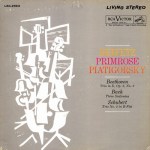
Brahms / Trio & Beethoven / Sonata for Horn and Piano

This is an exceptionally good sounding chamber record on the RCA White Dog label, especially on side two, which earned a sonic grade of A++ to A+++. Side two has the Beethoven work for horn and piano, and it sounds about as real and natural as a chamber recording can. Side one is not quite up to the same sonic standards, but is quite good nevertheless, earning a very respectable grade of A+ to A++.

This title is so rare I had literally never seen one in my 25+ years as a dealer in audiophile-oriented recordings. The other bit of good news is that the vinyl is unusually quiet, playing as it does mostly Mint Minus. How many early RCA pressings can make such a claim? No more than five per cent I would think, if that. (more…)

Striking It Rich Is a Tough One

Hot Stamper Pressings of Folk Rock Albums Available Now

We just did out first shootout for this album in more than five years. Our last one was 2019.

When albums are hard to find with good sound and audiophile quality surfaces, we often go five or more years between shootouts.

Our commentary from 2019 follows:

Normally this record sounds thick and dead. It’s very rare to find a copy like this that has any real transparency. The vocals are sweet and silky and the string instruments are more clear in the mix.

There’s nothing more frustrating than a record that defies every effort to hear into it, typically the feeling I get when listening to Dan Hicks’ recordings.

But on this pressing I could actually appreciate the music without having to fight the sound.

The tracks with violin accompaniment tend to sound the best for some reason. Some tracks are recorded a bit dry for my taste, but others are just right.

This is probably the band’s masterpiece, all things considered. It’s the most consistent album of theirs overall and has wonderful high points in I Scare Myself and Canned Music.

(more…)