con-wis-fail

Many audiophiles are inclined to believe the conventional wisdom they receive from like-minded enthusiasts.

Some of it is right, some of it is wrong, but if you don’t know how to critically listen to records for yourself, you will never be able to tell which is which.

You’ll be stuck with the approaches most audiophiles use — guessing and assuming. Neither are a reliable method for getting to the truth.

RCA Produced this Amazing Budget Reissue in 1976

Hot Stamper Pressings of the Music of Tchaikovsky Available Now

This review was written in 2011 shortly after our first Hot Stamper shootout for the work.

It still holds up though — I wouldn’t change a thing, other than to add a few links to help audiophiles and record collectors gain a better understanding of the shortcomings of received wisdom when it comes to finding that small subset of pressings capable of offering significantly higher sound quality.

Conventional record collector thinking generally works fine most of the time, but Monteux’s recording of the 6th Symphony in 1955 is a good example of the standard advice for finding better pressings turning out to be completely wrong.

For more on this subject, including the solution we came up with to fix the problem, click here.


Our Original Review

Presenting a first for Better Records: a White Hot Stamper copy of this CORRECTLY remastered version of LSC 1901, which just happens to be a recording from the earliest days of stereo, 1955! It’s guaranteed to KILL any and all original Shaded Dogs, as well as the more common reissues; White Dogs, Red Seals, Victrolas, Classic Heavy Vinyl, you name it, this pressing will beat the pants off of it and in the process show you precisely what is wrong with each and every one of them.

Over the past twenty years we’ve played hundreds of early RCAs and we have sure never heard one sound like this, with so much richness, Tubey Magic, LIFE and CLARITY.

(more…)

There’s a Very Good Chance We Were Wrong about Mulligan Meets Getz

More of the Music of Stan Getz /More of the Music of Gerry Mulligan

This is an album that we were probably wrong about in 2021 when the following Hot Stamper two-pak pressing went up for sale on the site. (The pressings we liked at the time are long gone by now.) Here is what we wrote back then:

Mulligan and Getz’s 1957 collaboration arrives on the site with this superb 2-pack offering Nearly Triple Plus (A++ to A+++) sound on both sides – just shy of our Shootout Winner

Full, rich, and spacious with tons of Tubey Magic and, better yet, not the least bit dry, hard or transistory

Practically impossible to find in stereo with audiophile playing surfaces – it took two different pressings to get two good sides, and they are very good indeed

The reissues we discovered in 2025 trounced the originals (in both stereo and mono) as well as the early reissues (on the Verve T Label) we played in our shootout, as you can see from the stamper sheet notes below:

Our mistaken judgment is simply the result of ignorance. In 2021 we simply had no idea just how good this recording could sound on vintage vinyl. We hadn’t done our homework properly, and because of that we came up with the wrong answer.
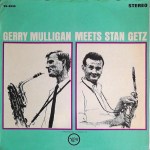
We only discovered the right pressings, with the right stampers, pressed in the right era, and mastered by the right guy, sometime in 2024 or so. We bought a bunch of those and in 2025 did the shootout with all kinds of copies, just to keep everybody honest.

That was the year much better sounding reissue copies that look like the one you see on the left came along. As we noted in the listing:

  • Leave it to Better Records to figure out a complicated title with a long history such as this one – originals, reissues, monos, stereos, we had to play them all to find a copy that sounds as good as this one does.
  • Full, rich, and spacious with an abundance of Tubey Magic and, better yet, not the least bit dry, hard or transistory.

Some quick notes:

Bowtie Label Stereo

  • Veiled and dry
  • Tons of reverb
  • 1.5+ at best (a good, not great Hot Stamper grade)

Our understanding is that Steve Hoffman chose to use the mono tapes as the source material for his DCC Gold CD because he felt there was too much reverb on the stereo tape. We heard too much reverb too.

What tapes our wonderful sounding reissues are made from we have no way of knowing. They do not suffer from too much reverb, that much we can tell you. The best pressings we offer sound great, and quite a bit better than any Gold CD will. However, if money is tight, the Gold CD is not a bad way to go for this music.

T Label Stereo

  • Dry, some squawk
  • 1+, what we would call passable sound

Mono Early Pressings

  • Rich but hot horns
  • 1.5+ at best

Lessons Learned

In this case, the conventional wisdom that the stereo originals would be the best sounding turned out to be incorrect.

Our lengthy commentary about conventional wisdom seeks to make the case that, although the most common record collecting approaches are more often right than wrong, there is simply no way to know what approach — original versus reissue, import versus domestic, mono versus stereo — will work the best for any given title.

(more…)
Does 1s Sound Great or Does It Sound Good (but Hot, Dry and Crude)?

Hot Stamper Pressings of Living Stereo Recordings Available Now
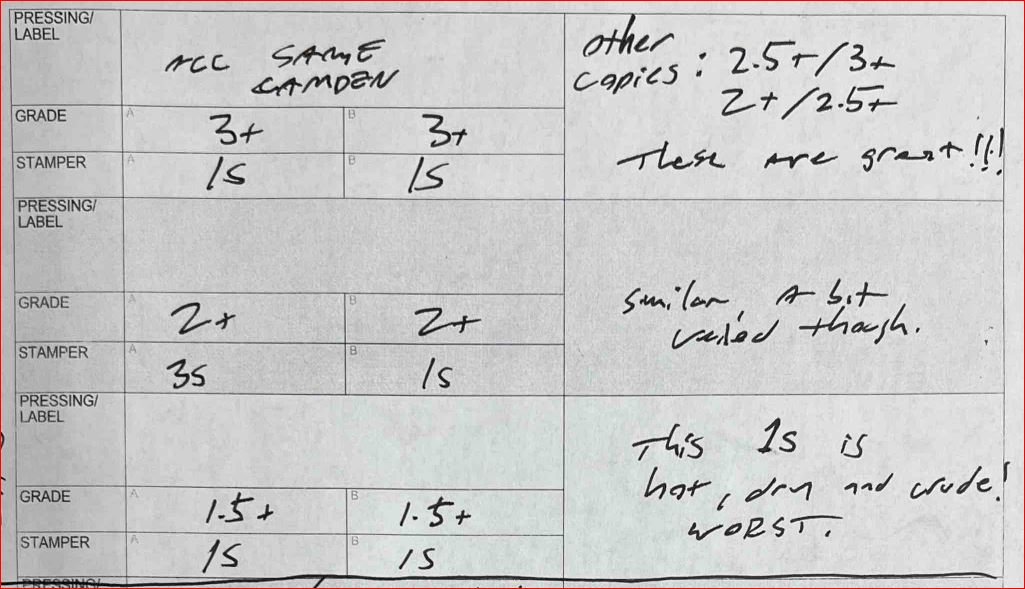
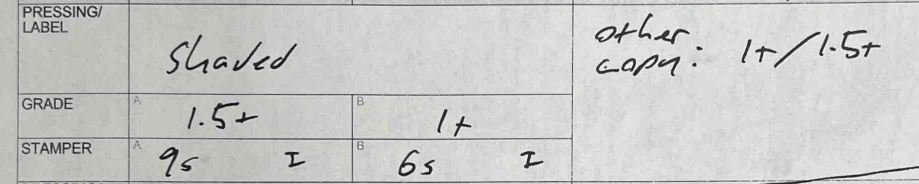
Below you will see the complete stamper sheet for a shootout we did recently.

Note that the album you see pictured is not the record we did the shootout for.

We are not revealing what record had these stampers and earned these grades for the simple reason that we rarely if ever give out the specific information that identifies the best sounding pressing of any album.

As I’m sure you can understand, we want you to buy the copy with the Hottest Stampers from us, not find one on your own! We’re happy to be moderately helpful, but naturally we find it necessary to draw the line somewhere, and giving out “the shootout winning stampers” is where we choose to draw it.

How Come?

Since, as we discovered recently, 1s wins, and handily, why would any 1s pressing sound as bad as the one at the bottom does?

(Which by the way is not actually bad — just far from the best.)

If the 1s wins the shootout as it did here, that means that the received knowledge about RCA Living Stereo pressings being better on the first pressing is correct.

But if you are the unlucky buyer of the 1s that did not do nearly as well, you might say to yourself “Hey, I thought the 1s pressing was supposed to be the hot ticket. Wha’ happen?” (Assuming you don’t conclude that the recording is at fault, which is what most audiophiles and record collectors would be likely to do. I did it and I bet you did too.)

We noted in a commentary from many years ago that the record collecting theories we see commonly promoted by those who consider themselves “in the know” seem to have a great deal of trouble accounting for these anomalies.

We had two copies of Court and Spark, each with one good side opposite a bad side on the same pressing. An excerpt:

(more…)

On Ballet Music From The Opera, How Much Tubey Magic Is Too Much?

Hot Stamper Pressings of Living Stereo Recordings Available Now

UPDATE 2023

We have stopped buying the original LSC 2400 for the simple reason that it is not competitive with the budget VICS 1206 reissue from 1960 that replaced it in the RCA catalog.

The review we wrote for the Shaded Dog is probably close to twenty years old. There was a time when the shortcomings of the original RCA were not nearly as easy for us to recognize, but that time has long since past.

If any copy of the original, or any remastered version from the modern era sounds good to you, we can almost guarantee that you are mistaken about the quality of the sound, and, even better, we can offer you the pressing that makes our case better than any review can.


Our Old Review

The hall is HUGE — so transparent, spacious and three-dimensional it’s almost shocking, especially if you’ve been playing the kind of dry, multi-miked modern recordings that the 70s ushered in for London and RCA. (Many of Solti’s recordings from the decade are not to our liking, for reasons we lay out here.)

EMI recordings may be super spacious but much of that space is weird, coming from out-of-phase back channels folded in to the stereo mix. And often so mid-hall and distant. Not our sound, sorry.

We strongly believe that there will never be a modern reissue of this record that even remotely captures the richness of the sound found on the best of these Living Stereo original pressings.

Here are some of the strengths and weaknesses we noted on a copy we played way back when.

Side One

Big and lively. The Tubey Magical colorations are a bit much for us, with too much tube smear on the strings and brass to earn more than a single plus. 

Side Two

Even bigger and more spacious, with some smear caused by the serious amounts of tube compression being used, of course, but the quiet passages are magical. [Which is precisely what heavy tube compression is designed to accomplish.]

The Victrola Reissue

We much prefer the sound of the Victrola reissue, VICS 1206, which came out in 1966.

As for the Victrola pressing, we’re guessing — how could we possibly know for sure? — that less tube compression was used in the mastering.

It’s still plenty tubey, but more to our taste for not being overly tubey.

(more…)

How Do the Early Pressings of The Poll Winners Sound?

Hot Stamper Pressings of Contemporary Jazz Albums Available Now
A recent Shootout Winning copy with the early stereo badge cover was described this way:

Stunning sound throughout this vintage Black Label Stereo Records pressing, with both sides earning Shootout Winning Triple Plus (A+++) grades or close to them

Roy DuNann always seems to get the real sound out of the sessions he recorded – amazingly realistic drums in a big room; Tubey Magical guitar tone; deep, note-like bass, and on and on

4 1/2 stars: “The choice of material, the interplay between the three players, and the lead work all meld together beautifully on The Poll Winners, making it a classic guitar album in a small-group setting.”

Musically, all true. Sonically, not so much. The early D1/D2 stampers on the early Black Label might be passable on side one (1+), but side two was just a mess (NFG).

Side One

Track Two

  • A bit bright and flat

Track One

  • Very clear but lacking richness, weight and depth
  • Thin, and bright up top
  • 1+

Side Two

Track One

  • Narrow stereo field
  • Weird tape hiss
  • Metallic top end
  • Very recessed and weird
  • Nope

A different Stereo Badge Cover copy sporting a Black Label won the shootout by the way. Go figure.

(more…)

How Good Are the UK Original Unboxed Deccas of Satanic Majesties?

Hot Stamper Pressings of the Music of The Rolling Stones Available Now

How good are the original Unboxed Deccas on Satanic Majesties?

They can be very good.

But they are never as good as the right later pressings with the Decca in a box label, the ones produced from about 1970 on.

The Unboxed Decca pressing earned a Super Hot Stamper grade (A++). The later pressing, with the right stamper, showed us just how good the album can sound.

Since the originals are pricey and hard to find, and, as a rule, noisier than the later pressings, we don’t pick them up unless we find them for cheap, which rarely happens. They have not won any shootouts, and that is very unlikely to change.

There is one set of stampers for this album that always wins, and those stampers are not found on the early label.

(more…)

Bernie Finds the Right Sound for The Genius After Hours

charlgeniusHot Stamper Pressings of Titles that Sound Better in Mono Available Now

This commentary was written about ten years ago has been updated with the latest information from the shootout we did in 2025.


Proof positive that there is nothing wrong with remastering vintage recordings if you know what you’re doing. These sessions from 1956 (left off of an album that Allmusic liked a whole lot less than this one) were remastered in 1985 and the sound — on the better copies mind you — is correct from top to bottom.

The highest compliment I can pay a pressing such as this is that it doesn’t sound like a modern remastered record.

It sounds like a very high quality mono jazz record from the 50s or 60s.

Unlike modern recuts, it doesn’t sound EQ’d in any way.

It doesn’t lack ambience the way modern records do.

It sounds musical and natural the way modern records rarely do.

If not for the fairly quiet vinyl, you would never know it’s not a vintage record. The only originals we had to play against it were too noisy and worn to evaluate critically. They sounded full, but dark and dull and somewhat opaque.


UPDATE 2025

The originals on the Atlantic Plum and Red Label are not the way to go on this album. Our shootout notes below make that clear. Take our friendly and helpful advice and steer clear of them.

(more…)

Today’s Rock Record Mystery – How Can Stampers 3, 4 & 6 Beat 1 & 2?

Hot Stamper Pressings of the Music of Tom Petty Available Now

The earliest stampers for this mysterious Tom Petty album — not the one you see pictured — were some of the worst sounding in our shootout.

Most audiophiles, when given a choice between earlier stampers and later stampers, all other things being equal, would take the early ones, right?

As a matter of fact, so would we. Most of the stamper sheets we put up on this blog show the early numbers beating the later numbers.

As a rule of thumb it’s not a bad one, but unless you actually do a shootout, how would you know that your SS1/SS2 copy isn’t the best?

How could you possibly know that the SS4/SS3 murdered it?

The promo cover might be helpful, but lots of promo pressings don’t win shootouts, or even do all that well in them.

Like so many realities of the world of records, these are all mysteries, ones that are very unlikely to be solved.

The winners of the next shootout could have the exact same stampers as the record that did the worst in this one. It happens!

One of the best reasons mysteries such as this have little chance of being solved is that no one with any real expertise, using methodologies that are reliable and reproducible in any serious way, is taking on this kind of work — other than us.

We actually like testing records, and over the many years we have been in business we’ve refined* a method for doing it that is as reliable and reproducible as any method can be in the world of audio: the record shootout.


*As far as I know, my friend Robert Pincus was the one who invented the record shootout. He would evaluate each side of a record independently against other copies of the same album, taking notes that described the strengths and weaknesses he heard on each copy he played.

He assumed nothing, and neither do we. Our rigorous controls, blinded experiments and use of the scientific method to arrive at reproducible results are simply advances on his original approach.

(One of the most important differences between his shootouts and ours is that we have someone whose only job is to play the records, and another person to do the listening and take the notes. When the listener has no idea what pressing is being played, there is little chance of the kinds of psychological biases that are the scourge of the record shootout.)

(more…)

Reposted in Honor of Ozzy’s Passing — Import or Domestic on Paranoid?

Hot Stamper Pressings of the Music of Black Sabbath Available Now

The domestic copies we’ve played over the years for all the Black Sabbath titles are clearly better sounding than any import we’ve ever auditioned. It may be counterintuitive, but these are exactly the kinds of things you find out when doing blinded shootouts.

We have little use for intuitions (UK recording, UK pressing) and rules of thumb (original = better sound). We call that way of approaching the search for better sounding pressings mistaken audiophile thinking. 

Hard data — the kind you get from actually playing the records — trumps them all.

(We recently posted a lengthy commentary about conventional wisdom, attempting to make the case that, although the most common record collecting approaches are more often right than wrong, there is simply no way to know when any given approach will work for any given title.)

Want to find your own killer copy?

Consider taking our moderately helpful advice for how to find your own shootout winners.

(more…)

Why are the First Pressings of this Title the Worst Sounding?

Hot Stamper Pressings of Recordings by Decca Available Now

The record you see pictured is not the record we are discussing in this posting. The stamper numbers you see below belong to a different album.

We’ve lately been giving out much more stamper information than we used to, but for now we are keeping this title close to the vest.

We happen to know the best stampers for this album, but somehow a copy with the “bad” stampers ended up in our shootout. It did about as badly as they usually do.

Of course, the person sitting in the listening chair had no idea that a copy with the worst stampers was playing. The jackets and labels of this pressing are identical to the copies with the good stampers.

He simply heard what the recording actually sounds like when it’s mastered badly and registered his complaints.

Side One

  • Dull and crude. Old school.
  • 1+

Side Two

  • So metallic and crude and lo-fi. Nasty!
  • NFG

Apparently Mr. D, real name: Jack Law, did a piss-poor job mastering this album. Another engineer would come along sooner or later and master the record right, so right that it became one of our favorite Demo Discs for sound and performance.

How did this pig’s ear eventually manage to become a silk purse?

Simple. It was always a great recording, it just needed to be mastered right, and whoever got the job to remaster it knocked it out of the park the first time through.

(more…)