 Hot Stamper Pressings of Titles that Sound Better in Mono Available Now
This commentary from ten years ago has been updated with the latest information from the shootout we did in 2025.
Proof positive that there is nothing wrong with remastering vintage recordings if you know what you’re doing. These sessions from 1956 (left off of an album that Allmusic liked a whole lot less than this one) were remastered in 1985 and the sound — on the better copies mind you — is correct from top to bottom.
The highest compliment I can pay a pressing such as this is that it doesn’t sound like a modern remastered record.
It sounds like a very high quality mono jazz record from the 50s or 60s.
Unlike modern recuts, it doesn’t sound EQ’d in any way.
It doesn’t lack ambience the way modern records do.
It sounds musical and natural the way modern records rarely do.
If not for the fairly quiet vinyl, you would never know it’s not a vintage record. The only originals we had to play against it were too noisy and worn to evaluate critically. They sounded full, but dark and dull and somewhat opaque.
UPDATE 2025
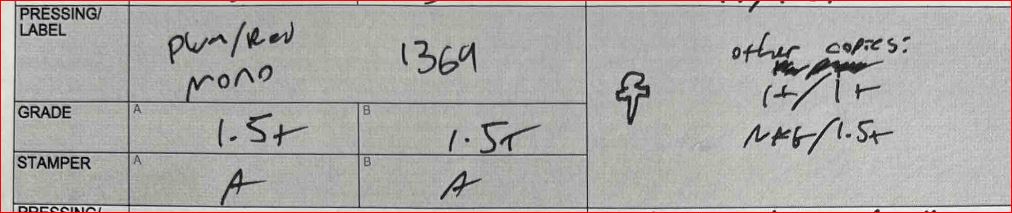
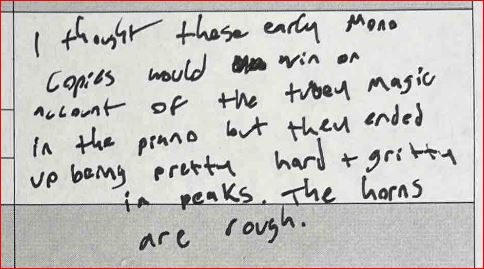
The originals on the Atlantic Plum and Red Label are not the way to go on this album. Our shootout notes below make that clear. Take our friendly and helpful advice and avoid them.
And although it is obviously a budget reissue, it sure doesn’t sound cheap to these ears.
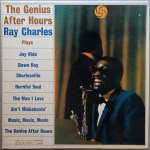 Tender Loving Care?
Was it remastered with great care, or did the engineer just thread up the tape on a high-quality, properly-calibrated deck and say “Nice, sounds good, let her rip”?
Either explanation works for me, because I really don’t care who made the record or how much work they put into it.
In the case of The Genius After Hours it seems they found the real master tape and just did their job right, the way mastering engineers — well, some of them anyway — have been doing for decades.
A scant ten years later, Bernie Grundman, a true Hall of Famer, started cutting for Classic Records and ruined practically every tape handed to him.
Our explanation? We don’t have one!
We played the Classic Records that came our way in the 90s and early 2000s and reported our findings. We offered to our customers the ones we thought sounded good and didn’t bother with the rest.
Sometimes we made a real mess of it, as was the case with Witches’ Brew, a Classic Records pressing you can read all about here and here.
Testing
Lately we have been writing quite a bit about how good pianos are for testing your system, room, tweaks, electricity and all the rest, not to mention turntable setup and adjustment.
- We like our pianos to sound natural (however one chooses to define the term).
- We like them to be solidly weighted.
- We like them to be free of smear (a quality, we can’t help but notice, that is rarely mentioned in the audiophile record reviews we read).
Further Reading