con-wis-fail

Many audiophiles are inclined to believe the conventional wisdom they receive from like-minded enthusiasts.

Some of it is right, some of it is wrong, but if you don’t know how to critically listen to records for yourself, you will never be able to tell which is which.

You’ll be stuck with the approaches most audiophiles use — guessing and assuming. Neither are a reliable method for getting to the truth.

Today’s Rock Record Mystery – How Can Stampers 3, 4 & 6 Beat 1 & 2?

Hot Stamper Pressings of the Music of Tom Petty Available Now

The earliest stampers for this mysterious Tom Petty album — not the one you see pictured — were some of the worst sounding in our shootout.

Most audiophiles, when given a choice between earlier stampers and later stampers, all other things being equal, would take the early ones, right?

As a matter of fact, so would we. Most of the stamper sheets we put up on this blog show the early numbers beating the later numbers.

As a rule of thumb it’s not a bad one, but unless you actually do a shootout, how would you know that your SS1/SS2 copy isn’t the best?

How could you possibly know that the SS4/SS3 murdered it?
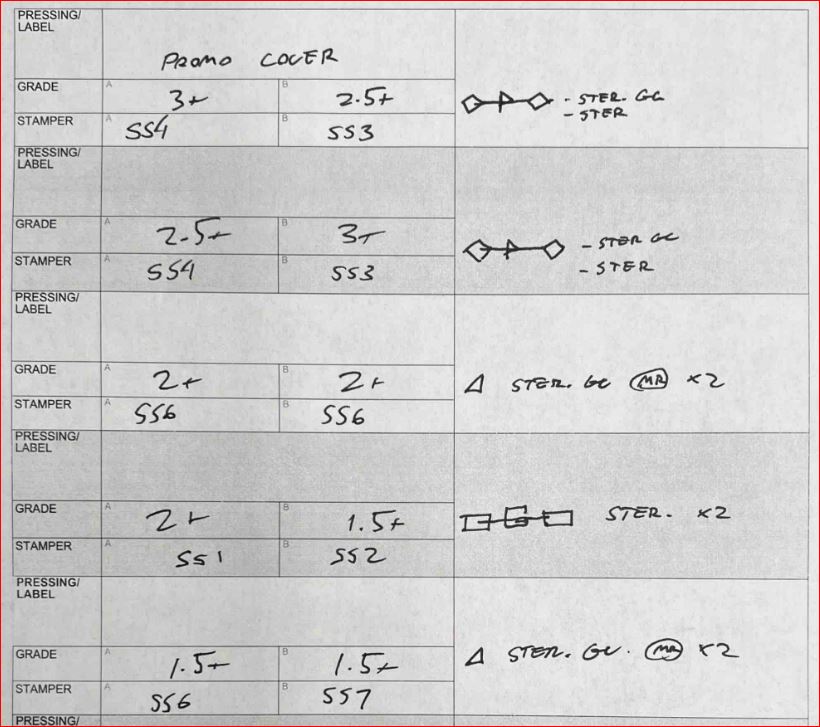
The promo cover might be helpful, but lots of promo pressings don’t win shootouts, or even do all that well in them.

Like so many realities of the world of records, these are all mysteries, ones that are very unlikely to be solved.

The winners of the next shootout could have the exact same stampers as the record that did the worst in this one. It happens!

One of the best reasons mysteries such as this have little chance of being solved is that no one with any real expertise, using methodologies that are reliable and reproducible in any serious way, is taking on this kind of work — other than us.

We actually like testing records, and over the many years we have been in business we’ve refined* a method for doing it that is as reliable and reproducible as any method can be in the world of audio: the record shootout.


*As far as I know, my friend Robert Pincus was the one who invented the record shootout. He would evaluate each side of a record independently against other copies of the same album, taking notes that described the strengths and weaknesses he heard on each copy he played.

He assumed nothing, and neither do we. Our rigorous controls, blinded experiments and use of the scientific method to arrive at reproducible results are simply advances on his original approach.

(One of the most important differences between his shootouts and ours is that we have someone whose only job is to play the records, and another person to do the listening and take the notes. When the listener has no idea what pressing is being played, there is little chance of the kinds of psychological biases that are the scourge of the record shootout.)

(more…)

Reposted in Honor of Ozzy’s Passing — Import or Domestic on Paranoid?

Hot Stamper Pressings of the Music of Black Sabbath Available Now

The domestic copies we’ve played over the years for all the Black Sabbath titles are clearly better sounding than any import we’ve ever auditioned. It may be counterintuitive, but these are exactly the kinds of things you find out when doing blinded shootouts.

We have little use for intuitions (UK recording, UK pressing) and rules of thumb (original = better sound). We call that way of approaching the search for better sounding pressings mistaken audiophile thinking. 

Hard data — the kind you get from actually playing the records — trumps them all.

(We recently posted a lengthy commentary about conventional wisdom, attempting to make the case that, although the most common record collecting approaches are more often right than wrong, there is simply no way to know when any given approach will work for any given title.)

Want to find your own killer copy?

Consider taking our moderately helpful advice for how to find your own shootout winners.

(more…)

Why are the First Pressings of this Title the Worst Sounding?

Hot Stamper Pressings of Recordings by Decca Available Now
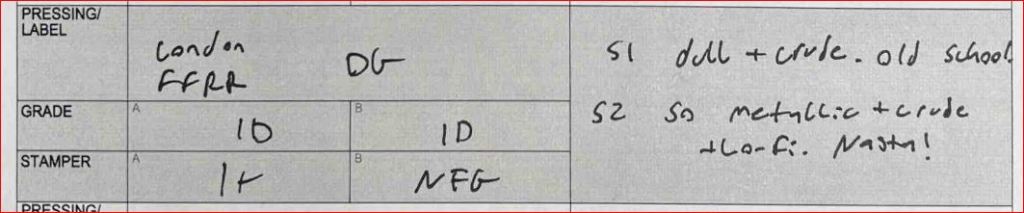

The record you see pictured is not the record we are discussing in this posting. The stamper numbers you see below belong to a different album.

We’ve lately been giving out much more stamper information than we used to, but for now we are keeping this title close to the vest.

We happen to know the best stampers for this album, but somehow a copy with the “bad” stampers ended up in our shootout. It did about as badly as they usually do.

Of course, the person sitting in the listening chair had no idea that a copy with the worst stampers was playing. The jackets and labels of this pressing are identical to the copies with the good stampers.

He simply heard what the recording actually sounds like when it’s mastered badly and registered his complaints.

Side One

  • Dull and crude. Old school.
  • 1+

Side Two

  • So metallic and crude and lo-fi. Nasty!
  • NFG

Apparently Mr. D, real name: Jack Law, did a piss-poor job mastering this album. Another engineer would come along sooner or later and master the record right, so right that it became one of our favorite Demo Discs for sound and performance.

How did this pig’s ear eventually manage to become a silk purse?

Simple. It was always a great recording, it just needed to be mastered right, and whoever got the job to remaster it knocked it out of the park the first time through.

(more…)

Thinking Inside the Box

Hot Stamper Pressings of Jethro Tull Albums Available Now

The concepts we discuss below were hashed over in a 2023 letter written to us about a video interview with Michael Fremer, a video, I confess, I’ve never watched.

For background purposes, you should know that Steve Westman and Michael Fremer really like Heavy Vinyl records. Because of this shared interest, they naturally get along well.

I was invited on Steve’s show for a couple of episodes myself, as was Robert Brook, but because neither I nor Robert care much for Heavy Vinyl pressings, we had little in common with Steve or his roundtable. There was no reason for either one of us to be there, and it is unlikely we will be invited back. What would we talk about? How bad the sound quality is on the new records you guys talk about endlessly to the exclusion of everything else? You can imagine what they thought of my views, and vice-versa.

Back to the letter. As I explained to my customer, making generalizations about records is rarely of much use. The devil is in the details. Let’s take a look at what Michael Fremer has written recently about originals.

(more…)

How Is It that the Earliest Pressings from the Tube Era Often Lack the Sound of Tubes?

Hot Stamper Pressings of Music on Island Records Available Now
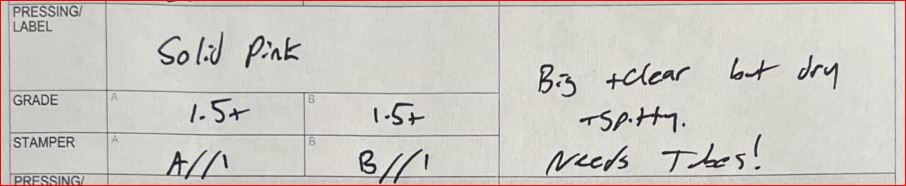
Please note that the album you see pictured on the left is not the one we are discussing here.

It has been our experience going back many years that the earliest pressings for many records on the Island label are not very good.

To be fair, this one — again, not Mr. Fantasy — is not a bad sounding pressing.

With grades of 1.5+ on both sides, it fits comfortably in our section for good, not great sounding LPs. But the right reissues are a big step up in class sonically. They’re the ones that win shootouts, not these Pink Label LPs.

It’s big and clear but dry and spitty and badly needs tubes — or the sound of tubes — in the cutting chain.

That’s not supposed to happen, the early pressings are supposed to be the most Tubey Magical ones, with the reissues being less Tubey Magical — but in the world of records, when has that rule of thumb ever counted for anything?

Been There, Done That

We’ve run into so many sonically-flawed Pink Label Islands by now that hearing one sound lackluster if not actually awful doesn’t phase us in the least. Some of the other Pink Labels that never win shootouts can be found here.

(more…)

We Forgot How Mediocre the Originals of A Winter Romance Are

Hot Stamper Pressings of the Music of Dean Martin Available Now

We gave a couple of early pressings another chance and they blew it!

The copies we sell as Hot Stampers are the reissues from the 60s. Here is what we had to say about a copy we posted for sale recently:

With a voice that is relaxed, smooth and warm, Dino is the perfect guy to sing these songs.

The sound of this reissue is far better than any of the originals we played, which mostly weren’t very good. Which just goes to prove (once again) that in the world of vinyl, the idea that the original will have the best sound is a pernicious falsehood.

Rich, sweet, full of ambience, dead on correct tonality, and wonderfully breathy vocals – everything that we listen for in a great record is here.

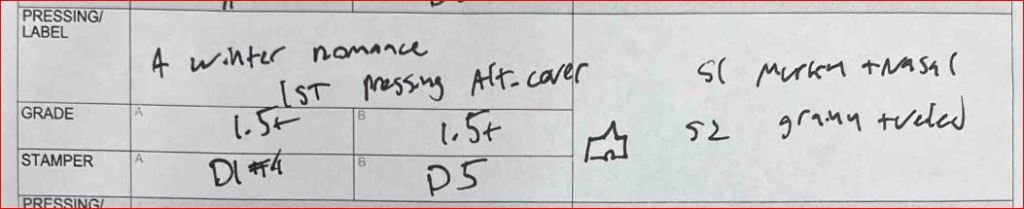
To back that up with actual stamper sheet evidence, here are the grades for the two early pressings we put in our shootout. We’d heard the originals before and never liked them, but sometimes if a particular presssing is cheap and easy to find, we give it another chance.

I think we’re done with the originals now though. They’ve let us down too many times.

Who wants to hear Dean Martin’s gorgeous baritone sounding lean, dry and recessed, or, alternately, murky, nasal, grainy and veiled?

If I didn’t know better I would suspect these originals were modern reissues. This kind of crap sound is all over the Heavy Vinyl records we play, although nobody but us ever seems to notice.

The Point Is

This serves to make a very important point that is near and dear to our hearts:

(more…)

Why Do the Later Stampers of this Shaded Dog Sound So Much Better than the Earlier Ones?

Hot Stamper Pressings of Living Stereo Recordings Available Now
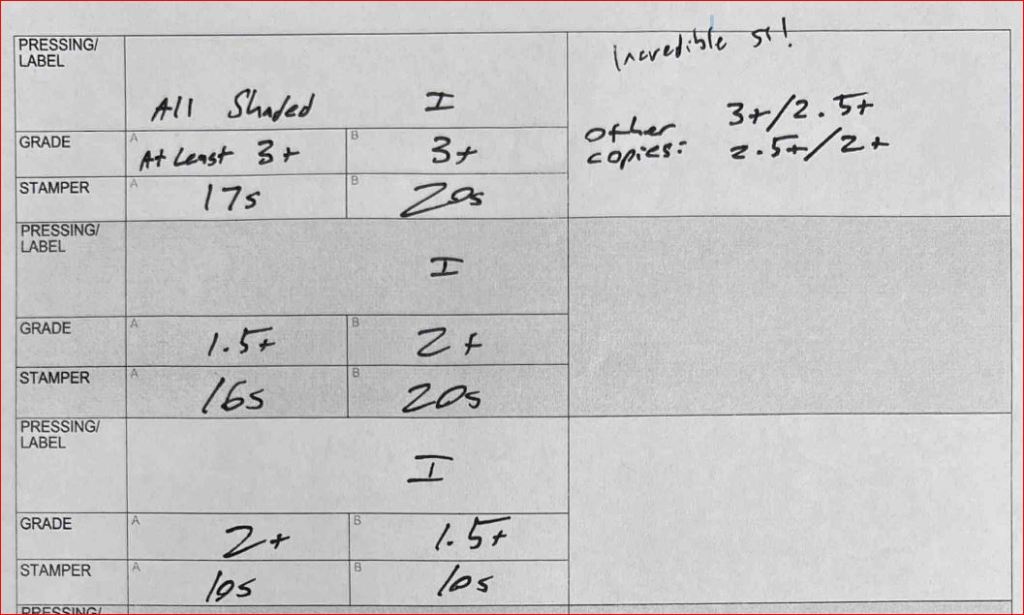
For RCA classical and orchestral recordings, the earliest pressings on the Shaded Dog label, in stereo, tend to be the best sounding, right? 

Maybe. It’s an open question, at least it is for us when we consider how many exceptions to the rule we’ve run into over the 30+ years we’ve been buying and selling them.

If we tallied all the copies we’ve played and created a very large spreadsheet using the data, perhaps we could give you a better answer than “we don’t know,” but we’ve definitely never tallied them up and have no plans to do so. It sounds to me like a lot of work.

However, in our experience, and contrary to the conventional wisdom, sometimes the higher-numbered pressings are better sounding than the lower-numbered pressings. This is true of the stampers for the Shaded Dog pressings below.

Keep in mind that the stamper numbers you see belong to a different album.

The questions that audiophiles who collect shaded dog pressings should be asking themselves right about now are:

  • Why is 17s/20s consistently better sounding than any copy with any other stampers?
  • Why is the 16s pressing worse sounding than even the worst 17s pressing when they are both Indianapolis pressings only one digit apart?
  • Why does the 20s side two potentially win the shootout with a 3+ grade, but more often only earn a grade of 2.5+ or 2+?
  • And the hardest to stomach of them all are those second-rate 10s stampers. How on earth can they come in last in a shootout against all the copies with higher numbers?

It turns out that the old rule of thumb that the lower-numbered stampers will sound better than the higher-numbered ones is not nearly as reliable as some folks would like it to be.

If it were more reliable, we could all just buy the lowest-numbered stamper copies we could find and know that we had the best available pressing. Then, if we were lucky enough to encounter an even lower-numbered stamper copy, we could buy that one and know that we now had an even better sounding pressing, all without having to play the old “best” one against the new “best” one.

It’s so convenient and logical this way, why would anyone want to bother with a different illogical, inconvenient and obviously counterintuitive method when the other one has so much going for it?

There is only one problem with the idea of collecting the earliest shaded dog pressings in order to secure the best sounding pressings — the fact that the evidence to support such an approach is so spotty. Yes, early stampers win lots of shootouts. No, early stampers do not win all the shootouts, or even a majority of them, judging by a rough calculation using the data from the many hundreds of stamper sheets we’ve created over the years.

Predictions Are Futile

The unfortunate reality we run into is that most of the time we are not able to predict which stampers will win a shootout before we actually sit down to play all our copies.

Although it’s true that there are many pressings in which one set of stampers always wins, the odds are that any particular pressing with those stampers will do well but won’t win, and it sometimes happen that some pressings with those stampers won’t do well at all.

This is why we have to do shootouts, and why you have to do them too, if finding the highest quality pressings is important to you.

Fortunately for readers of this blog, our methods are explained in detail, free of charge.

We’ve also written quite a few commentaries to help audiophiles improve the way they think about records.

I implore everyone who wants to make progress in this hobby to learn from the mistakes we’ve made. There are 146 “we were wrong” listings on the site as of this writing, and we learned something from every damn one of them, painful and costly as those experiences may have been.

(more…)

The Yes Album – What a Recording!

Hot Stamper Pressings of the Music of Yes Available Now

At its best, this album is a Big Speaker Prog-Rock opus with tremendous power and dynamic range, but it takes a special pressing to really bring the album to life. 

These guys — and by that I mean this particular iteration of the band, the actual players that were involved in the making of this album — came together for the first time and created the sound of Yes on this very album, rather aptly titled when you think about it.

With the amazing Eddie Offord at the board, as well as the best batch of songs ever to appear on a single Yes album, they produced both their sonic and musical masterpiece — good news for audiophiles with Big Speakers!

Drop the needle on a top copy and you will find yourself on a Yes journey the likes of which you have never known.

And that’s what I’m in this audiophile game for.

The Heavy Vinyl crowd can have their dead-as-a-doornail, wake-me-when-it’s-over pressings that are typically cheap to buy and tend to play quietly.  Here’s one I couldn’t sit through with a gun to my head.

The amount of effort that went into the recording of this album is comparable to that expended by the engineers and producers of bands like Supertramp, ELP, The Who, Jethro Tull, Ambrosia, Pink Floyd and far too many others to list.

It seems that no effort or cost was spared in making the home listening experience as compelling as the recording technology of the day permitted. Tubey Magical British Prog Rock just doesn’t get any better.

Obsession

Yes, we admit to being obsessed with The Yes Album.

It is our belief that to reach the most advanced levels of audio,you have to do two things:

  1. You must become obsessed with getting your favorite albums to sound their best, and,
  2. You must then turn your obsession into concrete action.

What kind of action?

Finding better sounding pressings and improving your stereo and room.

(more…)

Out of Two Jazz Samba Originals, Only One Had Even One Good Side

Hot Stamper Pressings of Bossa Nova Albums Available Now

Recently we did a shootout for one of our favorite Bossa Nova albums and had this to say about it:

As you can see from the notes, both sides of our most recent White Hot shootout winning copy were doing everything right.

This is by far the best copy of the album we have ever played — we had no idea a copy could possibly sound this good and be pressed on vinyl this quiet.

Remarkably spacious and three-dimensional, as well as relaxed and full-bodied – this pressing was a big step up over all of the other pressings we played in our recent shootout.

No other copy earned a better grade than 2+ on either side, and some of the originals were godawful (watch for the “wrong” stampers coming to the blog soon).

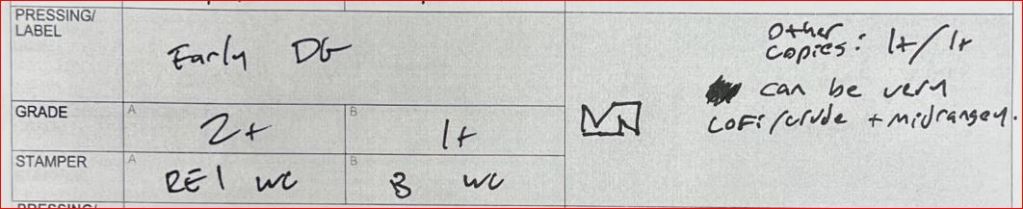
Here are the wrong stampers we aluded to above, the originals with these markings:

As you can see from the notes, these original stereo pressings can be lo-fidelity, crude and midrangey.

This serves to make a very important point that is near and dear to our hearts:

The idea (and operational premise of most record collectors) that the originals are always better is just a load of bunk.

They might be and then again they might not be. If you want better sounding records, you had better open your mind to the idea that some reissues have the potential to sound better than even the best original pressings.

These, for starters, and there are hundreds more on the blog you can read about here.

(more…)

Out To Lunch on Liberty UA – “The Worst. So Metallic.”

Hot Stamper Pressings of Blue Note Albums Available Now

In our review for the White Hot Stamper shootout winner of Out to Lunch we played in 2023, we wrote:

Out To Lunch is finally back on the site after a four year hiatus, here with INCREDIBLE Shootout Winning Triple Plus (A+++) sound throughout this early pressing.

Dolphy’s debut for Blue Note is an absolute knockout musically, and the quality of the sound on this pressing was everything we could have hoped for.

Both of these sides are amazingly transparent, with stunning immediacy and exceptional clarity – thanks, RVG!

Bobby Hutcherson murders on the vibes on this album – hearing his stellar, groundbreaking work played back on a Top Shelf (3+/3+) copy through a high-end stereo is nothing less than a thrill.

Turn this one up good and loud and revel in the glory that is Out To Lunch, the man’s Masterpiece, and a Must Own jazz album from 1964.

However, if you made the mistake of buying a Black and Blue Liberty UA label pressing, the one that came out in 1970, what you heard bears absolutely no resemblance to the glorious sound we describe above.

Black & light blue label with Blue Note 70’s logo in a square on left, Liberty UA. Inc., Los Angeles, California text on bottom. Runout is etched apart from “VAN GELDER” and “STEREO” that is stamped.

Yes, it may have been mastered by RVG himself, but it sure doesn’t sound much like the better pressings of the album we played in our shootout.

You might think that if Rudy recorded it, he should have known how to master it, so why pay the big bucks for the originals when the man himself was still cutting Blue Note pressings as late as 1970.

Seems like a good rule of thumb to follow, but in this case, it turns out to be a badly mistaken one.

(more…)