big-spkr

Robert Brook Discusses His Evolving Understanding of Bass

More from Robert Brook

Robert Brook has a blog which he calls

A GUIDE FOR THE DEDICATED ANALOG AUDIOPHILE

Below you will find a link to Robert’s story about the famous Charlie Mingus record you see pictured.

He had a number of different pressings, each of which showed him some qualities that the others lacked. Ultimately you have to pick one to play, and he did.

“GETTING” BASS with Charles Mingus’ BLUES & ROOTS

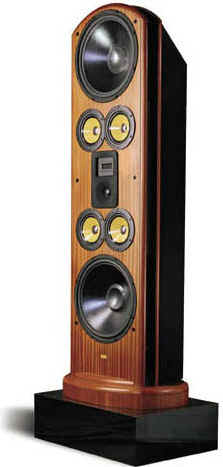
Robert went from a $20,000 speaker with one eight inch woofer to the Legacy III’s, a speaker costing less than half as much, with three ten inch woofers, to the Legacy Focus, a speaker quite a bit less than $20k, with three twelve inch woofers.

Robert learned something about his Parsifals by playing a speaker that could do so much more down low:

But I’ve learned since that, for all their strengths, the Parsifal had at least one fatal flaw – they made just about every record sound good.

Adding:

Making every record sound good is, it turns out, not a good quality to have in a speaker, nor in any other piece of equipment you use. At least it’s not if you want the best possible sound from your analog system.

(more…)

Baby You’re a Rich Man

Hot Stamper Pressings of the Music of The Beatles Available Now

Below we discuss listening to Baby You’re a Rich Man from side two of the German MMT.

If you own a copy of the album, play yours and listen for what we describe in this track by track breakdown.

For those of you interested in digging deeper into the sound of scores of other titles, our listening in depth commentaries have track breakdowns for some of the better-known albums we’ve done shootouts for.

Baby You’re A Rich Man

This track is Demo Disc Quality on the best Hot Stamper pressings. As I was playing this song for the shootout, the thought occurred to me that if I had one track to play to someone to demonstrate what a thrill it is to have a big, expensive stereo, it would be hard to pick a better song than Baby You’re A Rich Man.

The only other one that occurs to me off the top of my head is Sergio Mendes’ For What It’s Worth off of Stillness.

The sound is wall-to-wall and floor-to-ceiling and big as life. You can’t get that sound with screens and you can’t get it with smaller speakers and their smaller drivers.

Once you’ve heard that sound it’s hard to get too excited about any other.

(more…)

Our 2016 Unplugged Shootout Winner Just Sounded More Like Live Music

Hot Stamper Pressings of the Music of Paul McCartney Available Now

Back in 2016 we had this to say about a copy of the album we had just played:

This copy will put you front and center for the single greatest Paul McCartney recorded concert of all time.

In the final round of shootouts on both sides, this copy showed itself as clearly superior in terms of transparency and three-dimensionality, as well as having the most rock solid bottom end. To sum it up, my notes read “so real,” which is exactly what makes this copy THE one to have. This is Paul and his mates LIVE in your listening room like you have never heard them before.

This copy gave us the feeling that we were right there in the audience for the taping of this amazing performance. It made other copies sound like records — good records, but records nonetheless. This one has the IMMEDIACY of a live show, one which just happened to be fronted by one of the greatest performers in the history of popular music, Sir Paul McCartney.

We shootout this album about once a year, which means that many changes will have occurred to the stereo in the meantime. One of the qualities that we noticed this time around was how much like live music this album can be when the pressings have one specific quality — tons of bass.

Live music, especially live music heard in a club, tends to have plenty of bass. It’s the sonic quality that’s by far the most difficult to recreate in the home.

When a record manages to capture that kind of “live” low end energy, it really helps make the connection between the sound of live music and the sound coming out of your speakers.

(more…)

Big Speakers and Loud Levels Bring Out the Power of the Orchestra

Hot Stamper LPs that Sound Their Best on Big Speakers at Loud Levels

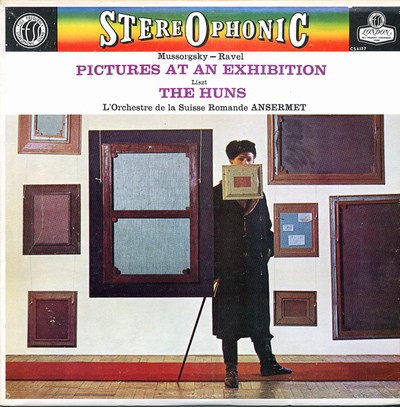
The darker brass instruments like tubas, trombones and french horns are superb here. Other Golden Age recordings of the work, as enjoyable as they may be in other respects, do not fully reproduce the weighty quality of the brass, probably due to limiting, poor eq, poor miking, or some combination of the three.

The brass on this record has a power like practically no other.

It’s also tonally correct. It’s not aggressive. It’s not irritating. It’s just immediate and powerful the way the real thing is when you hear it live. That’s what really caught my ear when I first played the recording.

There is a blast of brass at the end of Catacombs that is so big and real, it makes you forget you’re listening to a recording. You hear every brass instrument, full size, full weight. I still remember the night I was playing the album, good and loud of course, when that part of the work played through. The power of it was truly startling.

Back then I had the Legacy Whisper speaker system, the one with eight 15″ woofers. They moved air like nobody’s business. If you want to reproduce the power of the trombone, the loudest instrument in the orchestra, they’re the speaker that can do it.

Some of Ansermet’s recordings with the Suisse Romande are absolutely the best I’ve ever heard. It was a magical combination of the right hall, the right engineers, the right orchestra and the right technology — the pure tube ANALOG technology of the 50s and 60s!

Dynamics

Another thing this recording has going for it is dynamic power. This is a dynamic piece of music. Few recordings I have ever heard have the dynamic contrasts that this one does. It really gets loud when it needs to. The best pressings sound completely uncompressed. Although I’m sure there has to be compression of one kind or another, the listener is rarely made aware of it.

Dynamics such as these are thrilling. They let the music come alive.

(more…)

Dynamic Vocals Like Thelma Houston’s Require Really Big Speakers

houstivego

Hot Stamper Pressings of Direct-to-Disc Recordings Available Now

Unlike most Direct to Disc recordings, this album actually contains real music worth listening to — but only when the pressing lets the energy of the musicians through, accompanied, of course, by fidelity to the sound of their instruments.

Brass without bite is boring.

Drummers who drum too delicately will put you to sleep.

But the focus of this commentary is on dynamic vocals.

To Know You Is to Love You has the potential to come right at you in a shockingly powerful way. This lady can sing as loud as the best of all the greats.

It sounds like there is virtually no compression on Ms Houston’s vocals whatsoever. There has to be a limiter of some kind, but when she starts to really belt it out, you will not believe how powerfully she can sing. Might just give you goosebumps.

Don’t Misunderstand on side two has an equally dynamic vocal. It’s probably my favorite track on the album.

The loudest choruses of Got to Get You into My Life / I’ve Got the Music in Me are a tough test for any system as well.

This could easily be the most dynamic vocal album you have ever heard. It’s right up there at the top for us too.

(more…)

Big Speakers, Loud Levels and Plenty of Bass Work Their Magic on Stand Up

Hot Stamper Pressings of the Music of Jethro Tull Available Now

It’s common for pressings of Stand Up to lack bass or highs, and more often than not the copies that we play in our shootouts, shootouts which are strictly limited to import pressings on Island or Chrysalis, lack both.

The bass-shy ones tend to be more transparent and open sounding — of course, that’s the sound you get when you take out the bass.

90-plus percent of all the audiophile stereos I’ve ever heard were bass shy, no doubt for precisely that very reason: less bass equals more detail, more openness and more transparency. Go to any stereo store or audiophile show and notice how bright the sound is. (Yet another good reason not to go to those shows. We stopped decades ago.)

Just what good is a British Classic Rock Record that lacks bass?

It won’t rock, and if it don’t rock, who needs it? You might as well be playing the CD. (The average CD of Stand Up — I have a couple of them — is terrible, but the MoFi Gold CD is superb in all respects.)

The copies that lack extreme highs are often dull and thick, and usually have a smeary, blurry quality to their sound. When you can’t hear into the music, the music itself quickly becomes boring. Most Island pressings suffer from these shortcomings.

If I had to choose, I would take a copy that’s a little dull on top as long as it had a meaty, powerful, full-bodied sound over something that’s thinner and more leaned out. There are many audiophiles who can put up with that sound — I might go so far as to say the vast majority can — but I am not one of them.

(more…)

Robert Brook Gets Mugged by an Audio Reality

A fellow audiophile, who also happens to be a friend and good customer, has a blog which he calls

A GUIDE FOR THE DEDICATED ANALOG AUDIOPHILE

He recently made an attempt to hear for himself a speaker that others had spoken of highly. He was able to take part in two demos at the homes and offices of “passionate” audiophiles selling the speaker in question — stereo showrooms being a thing of the past — as well as lots of other high-end equipment.

Let’s just say that all did not go as well as Robert had hoped.

On the bright side, he now has a newfound appreciation for the listening skills, or lack thereof, of some of the folks in our hobby.

Spatial Audio Lab M3 Sapphires: NOT a Review!

This youtube demonstration of the speakers is worth watching, or at least skimming through, which is about all I could manage. I’ve added some of my own comments at the end of Robert’s review which you may find interesting.

One quick note: the monstrous Legacy Whisper speaker system I used to own had a similar design, with four 15″ woofers per side in an open baffle array. It did some things I have never heard any other speaker do, and the free-air design no doubt was a big part of its remarkable ability to move air with great speed and authority above a hundred cycles or thereabouts.

Below that, not so much, which turns out to be a problem that is very difficult to solve.

It was fun while it lasted, but it had too many shortcomings, shortcomings its little brother, the Legacy Focus, I discovered to my endless joy, did not have. The Focus sounds right to us in every way, which is why it is our reference speaker and will likely remain so far into the future.

I freely admit that there are surely better speakers in the world. I just have not heard them.


(more…)

Sometimes the Most Fundamental Questions in Audio Are Simply Overlooked

Hot Stamper Pressings that Sound Their Best on Big Speakers at Loud Levels

This post was written circa 2005.

This commentary is about two things — knowing the kind of music you like, and getting the kind of sound you want.

If you believe what you read on the various sites where audiophiles freely dispense advice about everything under the sun regarding music, recordings and equipment, you are asking for trouble and you are surely going to get it.

You will encounter an endless supply of half-truths, untruths and just plain nonsense, more often than not defended tooth and nail by those with impressive typing skills but not much enthusiasm for the tedium of tweaking and critical listening

big_speakersWhat kind of equipment are these people using?

How deep is their experience in audio?

Truth be told, I was pretty misguided myself during the first ten (or twenty, gulp) years I spent in audio, reading the magazines, (I still have my Stereophiles and Absolute Sounds from the 70s in boxes in the garage), traipsing from stereo store to stereo store, trying to figure out what constituted Good Sound so that I could manage to get my own equipment to produce something closer to the best of what I was hearing.

Questions

I sympathize with those who have trouble making sense of this hobby. It can be very confusing, especially to the neophyte. It takes a long time (with plenty of effort and money expended along the way) to be able to answer some of the most fundamental (and most often overlooked) questions in audio:

1.) What kind of music do you like?

2.) What aspects of sound quality are the most important to you?

Armed with answers to the above two, the next question to be asked is:

3.) What equipment will best be able to give you the sound you want on the music you like, within the limits of your budget, room, WFA (Wife Acceptance Factor), etc.

If you haven’t been doing this audio stuff for at least ten years, you probably don’t know the answers to those last two questions. In other words, you still have a lot to learn.

I may not have all the answers, but after being in audio for more than thirty years [now close to 50], about half of that full-time (full-time being sixty to seventy-plus hours a week), I can say without embarrassment that I have some of them.

And for the most part I got them the old-fashioned way: I earned them.

Do You Like Rock Music?

Then make sure you buy speakers that can play rock music.

Don’t buy screens, panels or little boxes. With subs or without, don’t buy them.

(more…)