bg-bad

Here you will a small sampling (two dozen or so) of Bernie Grundman’s worst mastering jobs.

Most of the Classic Record classical releases would qualify, but even his work since they went under (Craft, for example) is very spotty.

Brilliant Corners – This Pig Sure Wears Pretty Lipstick

Hot Stamper Pressings of the Music of Thelonious Monk Available Now

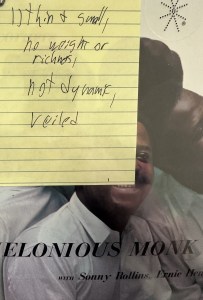
During our most recent shootout of Brilliant Corners, we took the opportunity to play the Craft pressing cut by Bernie Grundman and released in 2023.

We thought it was godawful, the worst sounding version of the album we’ve ever played.

But how is that possible? Read all about the best practices being followed and look at the description of the fancy packaging below. Why would they go to all that trouble just to produce a bad souding record?

For the answer to that question, you will have to ask them. We’re stumped.

  • Pressed using a one-step lacquer process at RTI utilizing Neotech’s VR900 compound
  • All-analog mastering by Bernie Grundman from the original master tapes
  • Housed in a foil-stamped, linen-wrapped slipcase
  • Numbered and limited to 4,000

They used Neotech’s VR900 compound! Really?! That must be one awesome compound!

Apparently even the VR900 compound was not enough to save this pathetic excuse for a record.

For those of you who might be new to this blog, we should point out that we have been dumbfounded by Bernie Grundman’s work for more than twenty five years. The first RCA he remastered for Classic Records, LSC 1806, was so bright and the strings were so shrill that it probably lasted on our turntable maybe all of three minutes. My ears just couldn’t take it, even on a system that was dramatically darker and less revealing than the one we have now.
Equally bad sounding Classic Records were to follow by the hundreds.

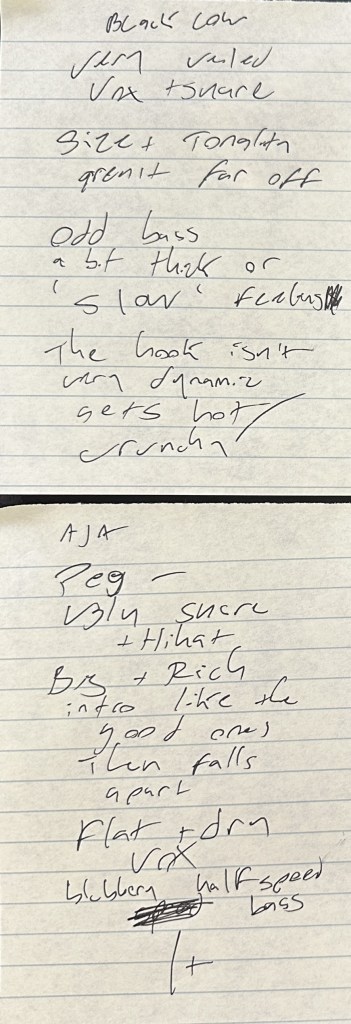
Our quickie notes for side one are shown on the left. After hearing side one fall so short of the mark, we dropped it from the shootout and put the Craft pressing on the shelf to go back to whoever loaned it to us. Who cares what side two sounds like if side one is that bad? Time is money. We are in the business of finding good records to sell to our customers, not playing crap Heavy Vinyl that only the most hard-of-hearing collector types would consider owning.

Before long we had a change of heart. We thought we owed it to Bernie’s fans to be more thorough, so we took our best side two and played it against the Craft pressing.

(more…)

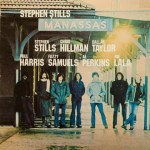
Manassas – A Classic Records Disaster

Hot Stamper Pressings of the Music of Stephen Stills Available Now

The Classic pressing was a disaster. Can you imagine adding the kind of grungy, gritty sound that Bernie’s mastering chain is known for (around these parts, anyway) to a recording with those problems already?

It was a match made in hell.

Back in the day when I was selling lots of Classic Heavy Vinyl, this was one of the titles I refused to have anything to do with. This and Stephen Stills’ first album — both were personal favorites of mine and both were awful on Classic Records.

Is it the worst version of the album ever made? Hard to imagine it would have much competition.

Lots of rave reviews for the two of them in the audiophile press at the time though. I guess nothing ever really changes, does it? Played a Sundazed record lately? Well, there you go. How are these people impressed with such bad sound?
Of course I know exactly how it is possible to be impressed by bad sound. I spent my first twenty years in audio being clueless. Why should I expect the audiophile of today to have figured things out in less time than it took me?

(more…)

Bernie Leaned Out the Vocals on Morrison Hotel, to Ruinous Effect

Hot Stamper Pressings of the Music of The Doors Available Now

Sonic Grade: D (at best)

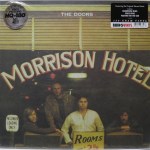
A few years back we played the 180 gram reissue of Morrison Hotel that came out in 2009. Initially we thought it pretty good, but the longer it played, the more leaned-out and unpleasant it sounded.

Just listen to the vocals — they’re all wrong.

Jim Morrison has one of the richest and most distinctive baritone voices in the history of rock. When he doesn’t sound like the guy I’ve been listening to for more than forty years, something ain’t right.

And what ain’t right — not to put too fine a point on it — is the sound of that record.

Here are a few commentaries you may care to read about Bernie Grundman‘s work as a mastering engineer in the modern era.

We much prefer the work he did back in the old days.

(more…)

A Simple Listening Test Makes It Easy to Judge Pressings of Scheherazade

Hot Stamper Orchestral Pressings Available Now

The Classic reissue of LSC 2446, as well as the Analogue Productions version from 2013 (the original 33 is the only one I have played, mastered by Ryan Smith at Sterling), are both disasters for many reasons, but they do have one specific failing that is easy to recognize.

Both pressings are worth further discussion and analysis because they provide an easy test that can show you how wrong they are.

When reading the commentary below, keep in mind that what is bad about the Classic Records reissue from 1995 is what is bad about the Analogue Productions remaster put out many years later.

As I noted for some of the Classic Heifetz titles a while back, for all I know the CDs for his Living Stereo recordings may have better sound. That’s probably the first place to go, considering Classic’s rather poor track record regarding the remastering of his music.

Case in point: The Living Stereo CDs I own (both the CD and the SACD) of Scheherazade are dramatically better than the awful Classic Records pressing of it.

Audiophiles who don’t notice what is wrong with the Classic pressing need to get hold of a nice RCA White Dog pressing to see just how poorly the Classic stacks up. (They could even find one that’s not so nice and listen through the surface noise. The difference would still be obvious.)


UPDATE 2025

It has been many years since a White Dog pressing won a shootout. In our last listing for a Hot Stamper White Dog pressing in 2024, we noted:

Now that we know which stampers have the potential to win our shootouts, the right Shaded Dog originals have lately been coming out on top, although the White Dog pressings can still sound quite good, just not as good.

No White Dog earned a higher grade than 2+, and none of the three WD pressings we had on hand earned 2+ on both sides.

Our notes for the various sides of the WD pressings read: “a bit brash, sometimes squawky, dry and bright,” and the like.

Those of you looking for the best sound should stick to the Shaded Dog label originals. They are rich and lush in a way that the WD reissues in our experience never are. I used to swear by the WD reissues, but I see now how wrong I was. My judgments were colored by a darker, less revealing stereo than the one we use now, and that makes all the difference in the world.


Back to LSC 2446

The solo violin in the left channel at the opening of the first movement should be all it takes to hear what is wrong with the modern remastered pressings.

Anyone has ever attended a classical music concert will have no trouble recognizing that the violin on any of the Heavy Vinyl pressings, including the Analogue Productions pressing, is completely wrong and sounds nothing like a violin in a concert hall would ever sound.

And I mean ever.

No matter where you might be sitting.

No matter how good or bad the hall’s acoustics.

The violin on these Heavy Vinyl pressings is dark, it’s veiled, and it’s overly rich, as well as lacking in overtones.

Solo violins in live performance never sound like that.

They are clear, clean and present. You have no trouble at all “seeing” them, no matter where you sit.

(more…)

Can’t Buy Much of a Thrill – Now with Notes!

Hot Stamper Pressings of the Music of Steely Dan Available Now

At least some of the thrills are here, and for any record on Chad’s label, that is really saying something.

Sonic Grade: B+ to A-

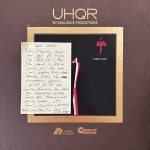
A few comments for the UHQR have been added since this went up on 4-4-23, now that I’ve had a chance to see the notes in full. I’ve noted the additions in brackets and sectioned some off as well.

Word from the listening panel is in, and they say the new Bernie Grundman mastered UHQR is actually not bad! [Not good, but not bad.]

The tonality is much closer to correct than a lot of the Heavy Vinyl LPs we’ve played recently. Oddly enough, instead of the EQ being overly smooth, in the way that appears to be all the rage these days, the tonality instead errs on the side of somewhat thinner and brighter than ideal. (One could also use the term “correct.”)

This should not be especially surprising. Bernie Grundman has been remastering Heavy Vinyl records since the mid-’90s. Overly smooth titles that he cut are hard to find, on the hundreds of titles he did for Classic Records or anywhere else. The more of his recent work I play, the more I have come to see his disastrously dull Giant Steps as an outlier.

The instruments where these tonality issues are most easily recognized are two that we have written a great deal about on this blog: pianos and snare drums.

The snare sound on the Brothers in Arms that Chris Bellman cut at Bernie Grundman Mastering has the same problem as this new Can’t Buy a Thrill. (Review with specifics coming, sorry for the delay, it has only been two years and I’ve been busy with other things.)

The thin sounding piano on the Cisco pressing of Aja is likewise a common shortcoming we notice on many of the modern recuts we play.

With links to 29 titles to test for a correct piano sound, and 13 for the snare test, the critical listener should be able to find some records in his own collection that will shed light on the problems we heard on Chad’s UHQR.

If your system errs on the side of fat and dark, Chad’s repress has what you need to “fix” the sound of the album. Instead of a murky piano, now you have a clear one. Instead of a too-fat snare getting lost in the mix, now you have a clear snare that you can more easily separate out from the other instruments.


Added 4/5

Note that we did not play all four sides. We felt sides one and three were enough to get an idea of how thrilling this pressing was going to be. We don’t get paid to play Heavy Vinyl pressings. We play them to help audiophiles understand their strengths and weaknesses. We hope that some audiophiles will hear what we have described and perhaps consider that there is a better way. That other way can be found in the bins of their local record store or, for those with deeper pockets, on our site. Either way, settling for the kind of sound found on these modern reissues is the one choice no one should be making.

We played the following four songs, and heard the sonic qualities described below:

(more…)

Casino Royale Is Really a Mess on Classic Records Vinyl

Hot Stamper Pressings of the Music of Burt Bacharach Available Now

Casino Royale under the sway of Bernie’s penchant for bright, gritty, sour, ambience-challenged sound? Not a good match. There is no reissue, and there will never be a reissue, that will sound as good as a properly-mastered, properly-pressed, properly-cleaned original.

And I hope it would go without saying that most copies cannot begin to do what a real Hot Stamper original can.

As is often the case, the Classic Heavy Vinyl Reissue is simply a disgrace.

Is it the worst version of the album ever made?

That’s hard to say. But it is the worst sounding version of the album we’ve ever played, and that should be good enough for any audiophile contemplating spending money on this Heavy Vinyl trash. Our advice: don’t do it.

The First Classic Record We Ever Played – Thus Spake Zarathustra

Hot Stamper Pressings of Living Stereo Titles Available Now

Way back in 1994, long before we had anything like the system we do now, we were finding fault with the “Classic Records Sound.”

With each passing year — 28 and counting — we like that sound less.  Some Classic Records pressings may be on Harry’s TAS list — disgraceful but true — but that certainly has no bearing on whether or not they are very good records. 

I had a chance to play LSC 1806 (pictured above) not long ago and I was dumbfounded at how bright, shrill and aggressive it was.

I still remember playing my first Classic Records title, their first release, which would probably have been in 1994. The deep bass of the organ at the start of Also Sprach Zarathustra, the horns and the tympani blasting out from a dead silent background, put a lump in my throat. Had they actually managed to remaster these old recordings so well that the vintage pressings I was selling for such high prices would soon be worthless? I really do remember having that thought race through my mind.

But then the strings came in, shrieking and as bright as the worst Angel or DG pressing I’d ever heard. It was as if somebody had turned the treble control up on my preamp two or three clicks, into ear-bleeding territory. All my equipment at the time was vintage and tube, and even though my system erred on the dark side tonally, the first Classic release was clearly off the charts too bright and transistory, with none of the lovely texture and sheen that RCA was famous for in the early days of Living Stereo.

I knew right then that my vintage record business was safe.

Here is our review from the ’90s, written shortly after the release of Classic’s first three titles. (With minor additions and changes for clarity and context.)

Hall of Shame Pressings, Every One

I’m reminded of the nonsense I read in TAS and elsewhere in the mid-’90s regarding the reputed superiority of the Classic Records Living Stereo reissues. After playing their first three titles: 1806, 1817 and 2222 (if memory serves), I could find no resemblance between the reviews I read and the actual sound of the records I played. The sound was, in a word, awful.

To this day I consider them to be the single worst reissue series in history.


UPDATE 2025

Analogue Productions now holds that crown, surely. Still going strong, producing one crap pressing for the mid-fi collector market after another, there is simply no recording they won’t see fit to ruin.


When Harry Pearson (of all people! — this is the guy who started the Living Stereo craze by putting these forgotten old records on the TAS list in the first place) gave a rave review to LSC 1806, I had to stand up (in print anyway) and say that the emperor clearly had removed all his clothes, if he ever had any to begin with.

This got me kicked out of TAS by the way, as Harry does not take criticism well. I make a lot of enemies in this business with my commentary and reviews, but I see no way to avoid the fallout for calling a spade a spade.

Is anybody insane enough to stand up for LSC 1806 today? Considering that there is a die-hard contingent of people who still think Mobile Fidelity is the greatest label of all time, there may well be “audiophiles” with crude audio equipment or poorly developed critical listening skills, or both (probably both, as the two go hand in hand), that still find the sound of the shrill, screechy strings of the Classic pressing somehow pleasing to the ear. Hey, anything is possible.

As I’ve said again and again, the better a stereo gets, the more obvious the differences between good vintage pressings and most current reissues become. Modest front ends and mediocre playback systems can disguise these differences and mislead the amateur audiophile.

And the “professional” too. We’ve all had the experience of going back to play a record from years ago that we remember as being amazing, only to find it amazingly bad.

The Japanese Led Zeppelin series from the 90s comes immediately to mind. How could my system have been so dull that those bright pressings actually fooled me into thinking they sounded good all those years ago? I’ve done a few Mea Culpas over the years, and that’s one of the bigger ones.

Remember when Chesky Records were all the rage? Does anybody in his right mind play that shit anymore?

A short anecdote: A good customer called me up one night many years ago. He had just finished playing the Chesky pressing of Spain, and had pulled out his Shaded Dog original to compare. The sound of his Shaded Dog pressing was so much better that he took his Chesky and, with great satisfaction, ceremoniously dropped it in the trash can, noting, “Of course I could have sold it or traded it away, but nobody should have to listen to sound like that.”

Another anecdote: when Chesky first got started in the remastering business, a friend picked up their pressing of LSC 2150, Prokofiev’s Lt. Kije with Reiner. He played it for me when I came over to hear his system, and he and I were both shocked that his ’70s Red Seal pressing was better in every way.

We wanted to know: What kind of audiophile label can’t even go head to head with a cheap reissue put out twenty years after the initial release just to keep the bins stocked and satisfy the needs of the low-budget classical record buyer?

The answer: Plenty of them, and definitely Chesky. Playing most Classic Records classical titles is a painful experience these days. I do not recommend it to anyone with good equipment. If you love the Living Stereo sound and cannot afford vintage pressings, consider playing the CDs RCA remastered. The one I know well is clearly better than Classic’s and AP’s LPs.

(more…)

The Voice (Isn’t What It Should Be) on Heavy Vinyl

More of the Music of Frank Sinatra

Reviews and Commentaries for the Music of Frank Sinatra

Sonic Grade: D

An audiophile hall of shame pressing and another Classic Records popular music LP badly remastered for the benefit of audiophiles looking for easy answers and quick fixes.

There is a boatload of TUBEY MAGIC to be heard on the early pressings, no doubt due to the fact that they are mastered with tube equipment, but you would never know it by playing this barely passable Classic repressing.

The difference is night and day.

It’s been quite a while since I played the Classic pressing, but I remember it as nothing special. Like a lot of the records put out by this label, it’s tonally fine but low-rez and lacking spacewarmth and above all, Tubey Magic.

I don’t think I’ve ever played an original that didn’t sound better, and that means that the best grade to give Classic’s pressing is probably a D, for below average. It sounds far too much like a CD.

Who can be bothered to play a record that has so few of the qualities we audiophiles are looking for on vinyl?

Back in 2007 we put the question this way: Why own a turntable if you’re going to play mediocrities like these?

(more…)

Thick and Dull Analog? Sorry, Not Really Our Sound

More of the Music of John Coltranecoltranegiant45x

John Coltrane – Giant Steps / Rhino 45 RPM 2 Disc Set 

The sound of the 45 RPM 2 disc version cut by Bernie Grundman does not exactly tickle our fancy. It sounds thick, dull, and entirely too smooth.

It reminds us of the awful Deja Vu Bernie remastered years ago for Classic Records.

As is the case with so many of the Heavy Vinyl reissues released these days, the studio ambience you hear on these pressings is a pitiful fraction of the ambience the real pressings are capable of revealing. Real pressings like, you know, the ones mass-produced by Atlantic, original and reissue alike. What’s Bernie’s excuse?

Rhino bills their releases as being pressed on “180 gram High Performance Vinyl.” However, if they are using “performance” to refer to sound quality, we have found the performance of their vinyl to be quite low, lower than the average copy one might stumble upon in the used record bins.


If you are stuck in a Heavy Vinyl rut, we can help you get out of it. We did precisely that for these folks, and we can do it for you.

(Like the gentleman who sent me the Steppenwolf album, you may of course not be aware that you are stuck in a rut. Most audiophiles aren’t.)

The best way out of that predicament is to hear how mediocre these modern records sound compared to the vintage Hot Stampers we offer.

Once you hear the difference, your days of buying newly remastered releases will most likely be over.

Even if our pricey curated pressings are too dear, as a Brit might put it, you can avail yourself of the methods we describe to find killer records on your own.

(more…)

Today’s Heavy Vinyl Disaster from Classic Records… Zep IV

Hot Stamper Pressings of the Music of Led Zeppelin Available Now

A classic case of live and learn

Back in the day I thought the Classic 180 and then 200 gram pressing was the king on this title. In late 2006 I wrote:

“You can hear how much cleaner and more correct the mastering is right away…”

Folks, I must have been out of my mind.

No, that’s not quite fair. I wasn’t out of my mind. I just hadn’t gotten my system to the place where it needed to be to allow the right original pressings to show me how much better they can sound.

Our EAR 324 phono stage and constantly evolving tweaks to both the system and room are entirely responsible for our ability to reproduce this album correctly. If your equipment, cleaning regimen, room treatments and the like are mostly “old school” in any way, getting the album to sound right will be all but impossible. Without the myriad audio advances of the last decade or so you are just plain out of luck with a Nearly Impossible to Reproduce album such as this.

All of the above are courtesy of the phenomenal revolutions in audio that have come about over the last twenty years or so. It’s what progress in audio in all about.

The exact same 200 gram review copy now [this was written about ten years ago] sounds every bit as tonally correct as it used to, and fairly clean too, as described above, but where is the magic?

You can adjust your VTA until you’re blue in the face, nothing will bring this dead-as-a-doornail Classic LP to life.

(more…)