7-2021

Dream Weaver – A Good Test Record for Gritty, Grainy Sound

More Records that Are Good for Testing Grit and Grain

Most pressings of this album tend to err in one of two ways: either they’re a little bright and get hard and gritty in the upper mids, or they’re wrong in the opposite direction, with sound that is smeary and dull.

Our best copies get the balance right — plenty of texture on the keyboards and drums, with vocals that still have presence and breathiness — and not too much grit.

An all-keyboard pop record like this was a rarity at the time. The only other instruments besides drums (and one track with guitar) are keyboards. Every song is layered with multi-tracked clavinets, organs, and Moogs — it was a remarkable feat in 1975 to create an album with nothing but keys.

Listen to the title track, the most dynamic song on the record, and you will hear just how well all of those stacked keyboards and synths work together. (Steve Winwood’s Back in the High Life borrowed a page or two from Gary’s solo debut here.)


  • If you’re a Gary Wright fan, or perhaps a fan of mid-’70s synth-pop, this title, a personal favorite of mine from 1975, is surely a Must Own.
  • In our opinion, Dream Weaver is his best sounding album, and probably the only Gary Wright record you’ll ever need. Click on this link to see more titles we like to call one and done.
  • The sound may be too heavily processed for some, making it fairly difficult to reproduce, but the best sounding pressings, played at good, loud levels on big dynamic speakers in a large, heavily-treated room, are a fun listen. They sound just fine to us.
  • 1975 was a good year for music on vinyl — here are some excellent pressings of well-recorded albums available for purchase now.

(more…)

Turntable Setup Guide Part 2: Dialing In Tracking Force By Ear

Robert Brook runs a blog called The Broken Record, with a subtitle explaining that the aim of his blog is to serve as:

A GUIDE FOR THE DEDICATED ANALOG AUDIOPHILE

We know of none better, outside of our own humble attempt to enlighten that portion of the audiophile community who love hearing music reproduced with the highest fidelity and are willing to go the extra mile to make that happen.

Below you will find a link to an article about turntable setup. I would have loved to write something along these lines myself, but never found the time to do it. Robert Brook took the job upon himself and has explained many aspects of it well, so if you would like to learn more about turntable setup, I encourage you to visit his blog and read more about it.

I do have some ideas of my own which I hope to be able to write about soon, but for now, check out what Robert has to say.

Turntable Setup Part 2: What To Do For EXCELLENT SOUND

Robert’s Approach

Robert has methodically and carefully — one might even say scientifically — approached the various problems he’s encountered in this hobby by doing the following:

(more…)

A Gift From a Flower To a Garden – And Old Copy with Some Good Points and Some Bad Points

More of the Music of Donovan

Reviews and Commentaries for the Music of Donovan

Side one of this two record box set has Wear Your Love Like Heaven in Super Hot stamper sound, with some of the most natural vocal reproduction we heard in our entire shootout. Many copies had “hyped-up” phony sound — fine for the old consoles and radios of the day (1967) but not too enjoyable on the modern, much more revealing rigs we use today.

The tonality of the midrange — where the guitars and vocals are found of course — must be correct for this music to work. This copy does a very respectable job on three of the sides, and that’s not easy to do. 

Not to mention condition issues. When’s the last time you saw a clean yellow label Epic original Donovan record in the bins? It takes us years to find enough clean copies to do a shootout like this, and we are out beating the bushes every week in the record capital of the world.

That said, Epic ’60s vinyl is rarely of audiophile quality.

Side One

A++ sonics, the best of the four sides. More extension up top than most, and clear mids. The bottom could use a bit more weight, thus the Two Plus grade, not three. (more…)

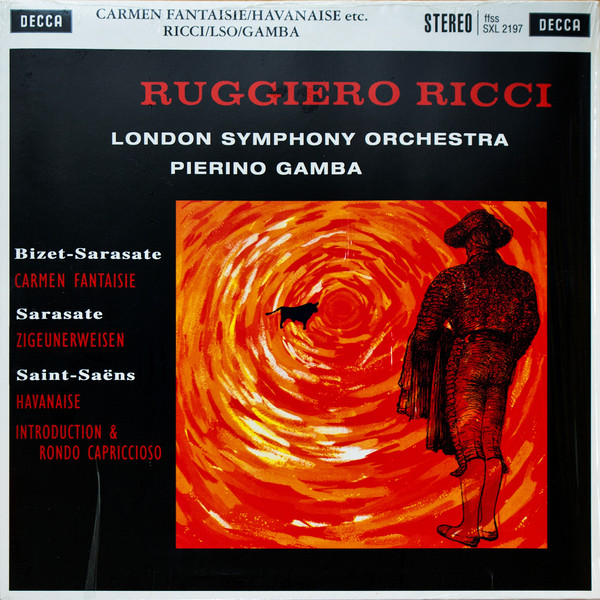
Bizet / Carmen Fantasie on Speakers Corner Vinyl

Hot Stamper Pressings of the Music of Georges Bizet Available Now

Speakers Corner remastered this title back in the 90s and did a decent enough job. I would guess my grade would be about a “C.” We carried it and recommended it at the time. I doubt if I would have very many kind things to say about it now. We’ve played an enormous number of superb classical records in the last ten years or so, raising the bar dramatically higher than it used to be.

To illustrate what we don’t like about these Heavy Vinyl pressings, even when they’re good, or decent as in the case of this title, we have reproduced our review for the Speakers Corner pressing of The Tale of the Tsar Saltan which we had played in a recent shootout against the vintage Londons we had on hand.

We cracked open the Speakers Corner pressing in order to see how it would fare up against our wonderful sounding Londons. Here’s what we heard in our head to head comparison.

The soundstage, never much of a concern to us at here at Better Records but nevertheless instructive in this case, shrinks roughly 25% with the new pressing; depth and ambience are reduced about the same amount. Similar and even more problematical losses can be heard in the area of top end extension. But what really bothered me was this: The sound was just so VAGUE.

There was a cloud of musical instruments, some here, some there, but they were very hard to SEE. On the Londons we played they were clear. You could point to each and every one. On this pressing it was impossible.

Case in point: the snare drum, which on this recording is located toward the back of the stage, roughly halfway between dead center and the far left of the hall. As soon as I heard it on the reissue I recognized how blurry and smeary it was relative to the clarity and immediacy it had on the earlier London pressings. I’m not sure how else to describe it – diffuse, washed out, veiled. It’s just vague.

This particular Heavy Vinyl reissue is more or less tonally correct, which is not something you can say about many reissues these days. In that respect it’s tolerable and even enjoyable. I guess for thirty bucks that’s about the most you can hope for.

But… when I hear this kind of sound only one word comes to mind, a terrible word, a word that makes us recoil in shock and horror. That word is DUB. This reissue is made from copy tapes.

Copies in analog or copies in digital, who is to say, but it sure ain’t the master tape we’re hearing, of that we can be fairly certain. How else to explain such mediocrity of sound?

Yes, the cutting systems being used to master these vintage recordings aren’t very good; that seems safe to say. Are the tapes too old and worn? Is the vinyl of today simply not capable of storing the kind of magical sound we find so often in pressings from the 50s, 60s and 70s?

To all these questions and more we have but one answer: we don’t know.

We know we don’t like the sound of very many of these modern reissues and I guess that’s probably all that we need to know about them. If someone ever figures out how to make a good sounding modern reissue we’ll ask them how they did it. Until then it seems the question is moot.

Back in 2011 we stopped carrying Heavy Vinyl and other audiophile LPs of all kinds. So many of them don’t even sound this good, and this sound bores us to tears.

What We Offer

If you want to know what you’re missing, there is only one approach that works, and it involves two things that have made the modern world what it is today: empirical findings based on the use of the scientific method.

Any other approach is doomed, not to failure, but to findings that are neither reliable nor repeatable.

We are the only record dealers who use the scientific method, and that one fact, more than any other, explains why we can sell the best sounding pressings in the world. We alone are able to show you what you have been missing. Or, put another way, we can make clear to you that do not need to settle for the second- and third-rate sound you have been living with because you didn’t know anything better.

We didn’t know much of anything better until about twenty-odd years ago ourselves.

Before that, we had raved about the Speakers Corner pressing of the Tsar Saltan. Its shortcomings are glaringly obvious to us now, but they weren’t back then. We didn’t have the stereo, we didn’t have the cleaning system, and we didn’t have the critical listening skills to be able to recognize its numerous and serious shortcomings.

Then, in the early 2000s, we started doing shootouts.

These “record experiments” taught us many important lessons.

The process of playing copy after copy of the same record and cataloging the differences we heard made us better listeners.

We took our critical listening skills and applied them to our stereo in order to get as many colorations and limitations out of it as possible.

Through all this work we came to have an appreciation for the fundamentals of collecting better sounding records.

However, without a staff of ten finding, cleaning and playing records for you, most audiophiles will have a hard duplicating our results.

But they can certainly do a lot better using our approach than any other, an approach which will put them well ahead of all the audiophile reviewers and forum posters in the world combined.

(more…)

Blood Sweat and Tears – The 30 Second Spinning Wheel Test

Hot Stamper Pressings of the Music of Blood, Sweat and Tears Available Now

This test is found in the track commentary for side two of our Hot Stamper listings for the album.

If you think you have a hot copy, see if yours does what our best copies do.

We also think that a record like this — a dynamic, full-spectrum recording, not overly concerned with detail — makes a much better Test Disc than the kind most audiophiles seem to prefer.

Patricia Barber it is not.

If you’re in the market for new speakers, take this record — or one like it — with you to the audition. Any speaker that can play this record properly deserves your consideration, or at the very least your respect.

In my experience not many speakers have what it takes to do this album justice.

The Blood, Sweat and Tears Spinning Wheel Test 

The first thirty seconds are key. Here is what you should be listening for.

Piano, Cowbell, Snare

Side two starts off with a bang; note that the piano has real weight to it right from the git go. When the cowbell comes in it should not sound muffled in any way (it’s a bell, don’t you know), quickly followed by the solid-as-a-rock-snare (the best on record.)

The Brass

On the killer copies that first blast of brass will be completely free of grain or grunge, yet the brass instruments themselves (trumpets and trombone) have all their leading edge transients, their “bite,” fully intact. They’re not in any way muffled or smeared, yet the sound is never aggressive. If anything, the brass is so free from distortion and so tonally correct it should actually sound smooth.

The Vocals

Some of the vocals on side one can have a bit of honk or edge, but not here. They are natural, rich and sweet as any you will hear on the album.

Bottom End Energy

And don’t forget that there is a tremendous amount of bottom end throughout the song. It’s the very foundation of the music, and it needs to be reproduced properly, no ifs, ands or buts, as in “but I only have a small speaker”. To play this song you need big woofers and lots of them. Small speakers simply make a mockery of this music.

If you’ve ever heard big band up close, you know that there is not a speaker in the world that can do justice to that sound. It’s too big and it’s too powerful. But some speakers do more justice than others, and in my experience those speakers tend to have large cabinets with plenty of dynamic drivers. If you have a system built around such speakers there is a very good chance that this will be the best sounding record you have ever heard, assuming you have one of our Hot Stamper pressings or a good one of your own. If not, we would love to get you one. You won’t believe the sound.

Now You Try

Play your own copy. Everything you need to know about the sound of your LP can be heard in the first thirty seconds of side two.

On the Hot Stampers it’s all there. On most copies, however, the reverse is true: Problems raise their ugly heads right off the bat.

Thinness, grain, smearing, bloat, edginess — all the failings that records are heir to will be thrown in your face if your copy is not up to snuff, and not many of them are.

Randy Newman / Self-Titled – The Later Pressings Win Shootouts

More Randy Newman

More Singer Songwriter Albums

  • The sound here is rich and full-bodied with much less grain and much more Tubey Magic than every other copy we played
  • 4 1/2 stars: “”Randy Newman creates something new under the sun,” read the banner on the back of Newman’s debut album, but it was more that, in keeping with the intended irony of the statement. . . this was an audacious first album by a major, if extremely quirky, talent.”

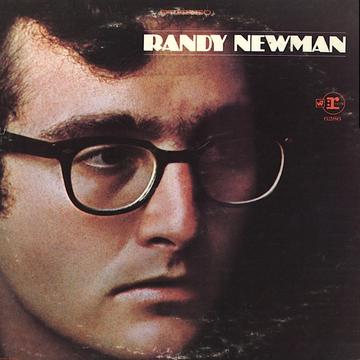
The original cover for the album is pictured to the left. It has been our experience that the copies with the second cover and using different metalwork tend to sound a bit better.

Any given pressing can beat any other given pressing, but if you have a stack of these cleaned up and ready to play, the winner will almost certainly be the later pressing.

This vintage Reprise pressing has the kind of Tubey Magical Midrange that modern records can barely BEGIN to reproduce. Folks, that sound is gone and it sure isn’t showing signs of coming back. If you love hearing INTO a recording, actually being able to “see” the performers, and feeling as if you are sitting in the studio with the band, this is the record for you. It’s what vintage all analog recordings are known for — this sound.

(more…)