3-2023

Lee Hulko Cut All the Best Sounding Cat Stevens Albums, Regardless of Label

Hot Stamper Pressings of the Music of Cat Stevens Available Now

UPDATE 2020

This commentary was written many years ago, circa 2005 I would guess.

Way back then, doing Hot Stamper shootouts was much more difficult than it is now. We didn’t have the right cleaning machine, and we hadn’t discovered the Prelude Record Cleaning System.


Is the Pink Label Island original pressing THE way to go? That’s what Harry Pearson — not to mention most audiophile record dealers — would have you believe.

But it’s just not true. And that’s good news for you, Dear (Record Loving Audiophile) Reader.

Hot Stamper Commentary for John Barleycorn

Since Barleycorn is a Lee Hulko cutting just like Tea here, the same insights, if you can call them that, apply.

Here’s what we wrote:

Lee Hulko, who cut all the Sterling originals, of which this is one, cut this record many times and most of them are wrong in some way. A very similar situation occurred with the early Cat Stevens stuff that he cut, like Tea & Teaser, where most copies don’t sound right but every once in a while you get a magical one.

Lee Hulko cut all the original versions of this album, on the same cutter, from the same tape, at the same time.

(more…)

Dynamic Vocals Like Thelma Houston’s Require Really Big Speakers

houstivego

Hot Stamper Pressings of Direct-to-Disc Recordings Available Now

Unlike most Direct to Disc recordings, this album actually contains real music worth listening to — but only when the pressing lets the energy of the musicians through, accompanied, of course, by fidelity to the sound of their instruments.

Brass without bite is boring.

Drummers who drum too delicately will put you to sleep.

But the focus of this commentary is on dynamic vocals.

To Know You Is to Love You has the potential to come right at you in a shockingly powerful way. This lady can sing as loud as the best of all the greats.

It sounds like there is virtually no compression on Ms Houston’s vocals whatsoever. There has to be a limiter of some kind, but when she starts to really belt it out, you will not believe how powerfully she can sing. Might just give you goosebumps.

Don’t Misunderstand on side two has an equally dynamic vocal. It’s probably my favorite track on the album.

The loudest choruses of Got to Get You into My Life / I’ve Got the Music in Me are a tough test for any system as well.

This could easily be the most dynamic vocal album you have ever heard. It’s right up there at the top for us too.

(more…)

How much better will a Hot Stamper pressing sound on my system?

New to the Blog? Start Here

More Frequently Asked Questions (FAQ) 

That’s a tough question, because it involves two things I can’t know: how good your stereo is, and how critically you listen to it.

Really, the only way to find out how much better sounding a Hot Stamper pressing is would be to try one or two and see if the sound quality justifies the price. Which is why we offer a 100% money back guarantee: the record has to perform to your satisfaction or we give you all your money back.

A fellow wrote me a while back with a long list of his equipment. I replied:

I would like to help you but I know very little about any of the equipment you discuss below other than the EAR 834p, which I do like. I very much like KEF speakers in general — they are neutral as a rule — which means that probably anything you buy that makes them sound better will most likely be a good piece of gear, but what that would be I cannot say, sorry.

The only way to know if your system can resolve the differences between our records and everybody else’s is to try some. You are the ultimate judge of what the value of that difference is and no one else.

All guaranteed of course. Try anything you like and send it back if you don’t feel it’s worth the cost.

And keep in mind that as your stereo gets better, our records get better. This is not true for most audiophile reissues, whose flaws become more obvious the better your system gets.


Just a few days back a fellow asked me why Led Zeppelin III sounds so awful — he’s hated the sound of his copy since he bought it in the ’70s.

I sent him a link to our Hot Stamper pressing, which was priced at many hundreds of dollars, and said that our copy will show you the sound you’ve been missing for 40 years. This is the service we offer.

He hasn’t bought it yet and probably never will, but think about what he’s missing: the enjoyment of that music.

Some have even written to us about just how good that record sounds on the pressings we sell.


And if you’re like the guy that thought that this record sounds good, then you probably will return any Hot Stamper we send you, which he did.

If super smooth is the sound you are going for, lots of audiophile record dealers have what you want — on Remastered Heavy Vinyl — in stock and ready to ship. How anybody falls for that sound is beyond me. (More on the subject here.)

(Actually, two men, a Mr Dunning and a Mr Kruger, came up with a workable explanation. It comports with practically everything I know about this hobby and the people who pursue it, and it matches up especially well with my own experience for the first twenty years I struggled to make sense of high end audio.)

(more…)

Stravinsky / Song Of the Nightingale / Reiner

More of the music of Sergei Prokofiev (1891-1953)

More of the music of Igor Stravinsky (1882-1971)

  • A vintage Shaded Dog pressing of these popular 20th century works featuring superb Double Plus (A++) Living Stereo sound from first note to last
  • The orchestra is wide, tall, and the dynamics and transparency of this copy are first rate
  • Spacious, rich and smooth – only vintage analog seems capable of reproducing all three of these qualities without sacrificing resolution, staging, imaging or presence

(more…)

Letter of the Week – “The sound just LEAPS out of the system.”

More of the Music of Cannonball Adderley

More of the Music of Frank Sinatra

One of our good customers had this to say about some Hot Stampers he purchased recently:

Holy Moly Fellows!

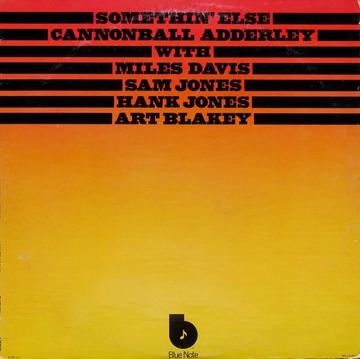
I’m playing through my most recent Better Records Short Stack ™. First up, Somethin’ Else by Cannonball and Bill, followed by Sinatra’s Strangers in the Night.

Man. The sound just LEAPS out of the system. I’m not kidding, it literally JUMPS from the speakers, smooth, clean, big, bold and beautiful. Did someone play with the volume? Did I change the gain? No man! These records just sound FANTASTIC!

Thank you gentlemen. Happy New Year!

Doug

Doug,

Thanks for writing. There is a reason that on every listing we put this boilerplate in the body of the text:

What We’re Listening For on Record X

    • Energy for starters. What could be more important than the life of the music?
    • Then: presence and immediacy. The musicians aren’t “back there” somewhere, lost in the mix. They’re front and center where any recording engineer worth his salt would put them
    • The Big Sound comes next — wall to wall, lots of depth, huge space, three-dimensionality, all that sort of thing.
    • Then transient information — fast, clear, sharp attacks, not the smear and thickness so common to these LPs.
    • Tight punchy bass — which ties in with good transient information, also the issue of frequency extension further down.
    • Next: transparency — the quality that allows you to hear deep into the soundfield, showing you the space and air around all the instruments.
    • Extend the top and bottom and voila, you have The Real Thing — an honest to goodness Hot Stamper.

Exactly right: We want our records to have presence and energy, to be big and bold and jump out of the speakers.

This is the opposite of what everyone whose stuck in the world of Heavy Vinyl is hearing.

Most of those records are veiled, recessed and compressed.

Who on earth wants that sound?  It’s beyond our understanding how it is that so many audiophiles cannot tell the difference between a good record and the mediocre-at-best product being offered today.

Thanks for your letter. Glad you liked our Hot Stamper pressings as much as we did.

TP

(more…)

Frank Sinatra & Duke Ellington – Booth? What Booth?

More of the Music of Frank Sinatra

More of the Music of Duke Ellington

Notice that, at least for most of the material, and perhaps all of it, Sinatra does not seem to be stuck in a vocal booth. He sounds like he is actually standing on the same stage as Ellington’s band.

Whether this is a recording trick — he’s in a booth but the engineer did a great job creating a sound for the booth that matched the ambience and space of the studio — or whether he is standing front and center with the band, the illusion is convincing and adds greatly to the “reality” of the performance..

Recorded one year after the remarkable Sinatra-Jobim record that we treasure here at Better Records, Sinatra takes the opportunity to work with one of the greatest bandleaders in the history of jazz, the Duke himself. We had good luck with the stereo originals on the lovely Blue and Green Reprise labels — they can be as big, rich and warm as Sinatra’s legendary Capitol recordings when you find the right pressing, and that’s really saying something.

Transparency

What typically separates the killer copies from the merely good ones are two qualities that we often look for in the records we play: transparency and lack of smear. Transparency allows you to hear into the recording, reproducing the ambience and subtle musical cues and details that high-resolution analog is known for.

(Note that most Heavy Vinyl pressings being produced these days seem to be quite Transparency Challenged. Lots of important musical information — the kind we hear on even second-rate regular pressings — is simply not to be found. That audiophiles as a whole — including those passing themselves off as the champions of analog in the audio press — fail to notice these failings does not speak well for either their equipment or their critical listening skills.)

Richness and Lack of Smear

Lack of smear is also important, especially on a recording with this many horns, where the reproduction of leading-edge transients is critical to their sound. If the sharply different characters of the various horns (trumpet, trombone, and various saxes) smear together into an amorphous blob, as if the sound were being fed through ’50s vintage tube amps (for those of you who know that sound), half the fun goes right out of the music.

Richness is important — horns need to be full-bodied if they are to sound like the real thing — but so are speed and clarity, two qualities that ensure that all the horns have the proper bite and timbre.

(more…)

If Records Are About Money, You’re Going About It All Wrong

What Exactly Are Hot Stamper Pressings?

We get letters from time to time chiding us for charging what strikes some as rather large amounts of money for records that we happily admit do not have much in the way of Collector Value, the implication being that collectible records are of course worth the high prices they command in the marketplace. Hot Stampers, however, are somehow different. Clearly they cannot be worth the outrageously high prices we’re asking.

It is our opinion that the writers of these letters have made a rather glaringly erroneous assumption: That the records we sell are not subject to the same market forces as other records. This strikes us as just plain silly.

As anyone with a grounding in basic economics will tell you, we cannot force our customers to buy anything from us, especially old vinyl records, the kind of thing that most people have found they can easily do without, thank you very much.

We even take the time in many of our commentaries to advise you about what to listen for in order to help you find your own Hot Stamper copies.

Even better, we implore you to learn how to do it for yourself. No need to spend a penny with us, just look for the Hot Stampers hiding in your own collection.

Here’s how it’s done. It’s really not all that complicated. Tedious and time-consuming, yes. Hard as in finding-the-cure-for-cancer hard? Not even close. Fun? If you like that sort of thing, absolutely.

Bottom line: If you don’t like our prices, you have plenty of alternative sources for the recordings we sell. (Not the specific Hot Stampers we offer, mind you. Every record is unique, which of course means you can only buy the copy we are selling from us.)

Pricing Strategies

We price our records just like anyone prices anything — according to what we think it’s worth, what we think we can get for it, how many customers will want it, how long it will take to sell at any given price, how many we have on hand, how hard it is to find another one of comparable quality, how much better or worse it is than others we’ve played, how much work went into finding this particular one, how much we paid for it, and on and on and on until we just have to quit thinking about it and pick a number.

If we pick a good number, it probably sells right away (often within an hour of it going on the site). If we pick a bad number, it probably doesn’t. If we pick a number too low, we can’t meet the demand. If we pick a number too high there won’t be enough demand.

It ain’t rocket science, it’s just nuts and bolts business planning, the kind carried out every day by millions of sellers looking for buyers for their wares.

Money Is at the Root of the Problem

The impetus for this discussion of records as an investment was my stumbling upon a letter that a fellow named Jason wrote us all the way back in August of 2007 and the colloquy that followed. We called it Letter From a Thrift Store Junkie. Jason wrote me, I replied, and then he wrote back to make a few points, one of which was this:

3. Your records are a poor value in terms of investment. Until you convince the whole LP community that your HOT-STAMPER choices are the pinnacle of sound a buyer will never be able to re-sell B S & T for $300. Even if they swear it is the best sounding copy in the world.

Which Prompted My Reply as Follows:

(more…)

Rose Darling’s Piano Favors Fast Electronics and Tight Bass

Hot Stamper Pressings of the Music of Steely Dan Available Now

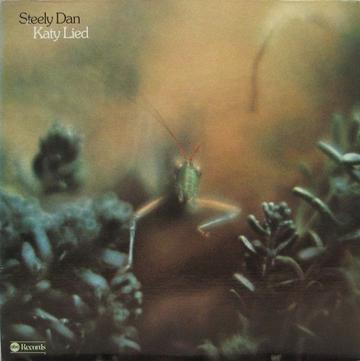
As a huge Steely Dan fan starting with the second album, Countdown to Ecstasy, I rushed down to the local Tower Records to buy Katy Lied as soon I heard it had come out.

Of course I fell in love it with immediately. It has long been a personal favorite, the ultimate expression of the art of Steely Dan on record. I’ve played it many hundreds of times over the last 40+ 50+ years and still listen to it regularly. I cannot imagine ever tiring of it.

Testing with Rose Darling

The piano is tough to get right on this track. If the piano doesn’t sound the way it should, this track will be a mess.

It’s big and bold in the mix and should sound really solid and weighty. Thin or washed out and you are in trouble.

This track punishes equipment that is slow, or has blubbery bass response. Vintage tube equipment is not what the doctor ordered.

If your woofers are too small, or you do not have enough low end definition and weight to reproduce such a large and powerful piano, the part the piano plays in the arrangement will suffer and so will the song. (More on the kind of speakers you need to play this album and hundreds of others here.)

Just wrote this today, please to enjoy:

Throw Back the Little Ones

I’ve been listening to Waka/Jawaka quite a bit lately. On this song, Steely Dan incorporates an homage to Zappa’s unique woodwind and horn arrangements starting at about 1:48. Go to youtube and check it out when you have a minute.

Jimmie Haskell gets the credit for the arrangement but I’m pretty sure I know who inspired him.


Further Reading