12-2023

Sweetnighter Is a Must Own Album of Modern Jazz Fusion

Hot Stamper Pressings of the Music of Weather Report Available Now

We recently compiled a list of records we think every audiophile should get to know better, along the lines of “the 1001 records you need to hear before you die,” with the accent on the joy these amazing audiophile-quality recordings can bring to your life.

The list is purposely wide-ranging. Yes, it includes some well-known albums (Tumbleweed Connection, The Yes Album), but we’ve also gone out of our way to choose excellent titles from famous artists that are less well known (Atlantic Crossing, Kiln House, Dad Loves His Work).

Which simply means that you won’t find Every Picture Tells a Story or Rumours or Sweet Baby James on this list because masterpieces of that caliber should already be in your collection.

Many of these may not be to your taste, but they sure are to ours.

Out of the thousands of records we have auditioned and reviewed, here are a hundred or so that maybe are less well known but have stood the test of time for us. As such, we think they are more than deserving of a serious listen.


Sweetnighter checks off a number of boxes for us here at Better Records

More letters, reviews and commentaries for Sweetnighter.

Brahms / Piano Concerto No. 1 – What to Listen For

Hot Stamper Pressings of of the Music of Brahms Available Now

Our general notes for the recording seen below explain why the typical copy in our shootout fell short.

This is an LP with lots of tube compression, and some added brightness.

Without the added brightness, the piano would probably be mud.

The added brightness and compression results in a piano that always sounds rich and natural in the quieter passages.

The average copy also has some veiling or smearing that make the solo piano parts sound like they are coming fom behind a curtain. On these copies, the big peaks can often get strident and very messy.

It’s difficult to find a copy that has all the top end extension and space required to reproduce both a realistic piano and the massive live sound the orchestra is capable of.


All of which adds up to a difficult shootout in which relatively few copies had the sound we were looking for.

Production and Enginneering

(more…)

Who Deserves the Credit for Knocking this Sticky Fingers Pressing Out of the Park?

Hot Stamper Pressing of the Music of The Rolling Stones Available Now

One of our good customers had this to say about some Hot Stampers he purchased recently:

Hey Tom,   

All time world champ.  A cut above unbelievable!  All the magic sans the shrillness so common in the multitudinous copies I’ve heard.  Breathtaking finesse and musicianship exploding in holographic dynamics that are clean and tonally real and penetrating.  

What a copy.  Pure gold.  Thank you Tom.  You knocked it out of the park.

Phil

Dear Phil,

Fantastic news. We loved it too.

A small correction, if I may:

Some mastering engineer knocked it out of the park. All we did was find the ball, grab it and run with it.

And if you want to find the killer pressing that can sail over the back wall with ease, possibly landing in the bed of a pickup truck never to be seen again, there is only one way we know of to do it: by turning over lots of rocks.

Some of the rocks we turned over for our first big shootout many years ago can be seen in the picture below.

It was taken in the early- to mid-2000s. By that time I had been buying up Sticky Fingers in local record stores for more than twenty years. I didn’t have much to show for my efforts, however, as the records were just too noisy, scratched-up, groove-distorted and just plain bad sounding to qualify for a shootout.

It wasn’t until 2007, with the discovery of the Prelude Enzyme Record Cleaning System and the Odyssey record cleaning machine (similar to Keith Monks’ design from the 70s that I used to use) that we were finally able to get Sticky Fingers to sound good enough and play quietly enough to identify the Hot Stamper pressings lurking in the pile of copies you see below.

(more…)

Beethoven’s Symphony No. 4 – The Classic Pressing Can Have Very Good Sound

More of the music of Ludwig van Beethoven (1770-1827)

Somehow we managed to have a Classic Records pressing on hand to play in our most recent shootout for the Beethoven Symphony No. 4.

We knew all the way back in 1997 that Classic had done a good job with the record — we recommended it as one of the best Classic Records pressings in our catalogs at the time — but we sure didn’t expect it to do as well as it did, earning 2 pluses on one side and close to that on the other.

Years ago we wrote:

Here is the kind of sound that Classic Records could not ignore, even though the original was only ever made available as part of RCA’s budget reissue series, Victrola.

Don’t let its budget status fool you — this pressing puts to shame most of what came out on the full price Living Stereo label. (And handily beats any Classic Records reissue ever made.)

The top and bottom are wrong to varying degrees on both sides of the Classic, as you can see from our notes, which read:

(more…)

Letter of the Week – “I wonder if you’ve ever had another customer who doesn’t own a turntable buy a White Hot stamper from you?”

Hot Stamper Pressings of the Music of Fleetwood Mac Available Now

Aaron has been trying to help his audiophile friends learn the differences between good records and Heavy Vinyl records. This first story concerns Chuck, who sold Aaron the VPI table you see pictured.

Aaron writes:

Chuck’s a real record guy. I played him some hot stampers, alongside the same record in heavy vinyl format.

First up was Rumours – white hot up against the Hoffman 45 mastering. He wanted to hear “you make loving fun,” so we did.

The drums on the Hoffman are more prominent, and they grab you right away. Way out of balance to my taste.

He said, “Hoffman’s done a great job with the drums. But it comes at the expense of Christine’s voice. That’s okay, I never loved her as a singer anyway.”

Next I busted out my holy grail, and played him my Zep 2 WHS. Followed up by the Jimmy Page remastering. The latter is indeed a decent record, Tom, as you say. But the clarity on the drums is superior on the Ludwig. [Clarity is not the word I would have chosen, but that’s another story for another day.]

As Chuck put it, “I never thought of this as a vocal record.” Plant’s voice just has so much more emotion on the hot stamper than on the Page version. He said, “the Page version takes out some of the humanity.” I totally agreed with that. Chuck was amazed that you were able to find and sell me a RL copy with such clean vinyl. I took the record off the table and showed it to him – he was amazed to see how scuffed it looked. It’d grade VG at best visually, but man does it play clean.

So, record after record, Chuck could hear what the hot stampers were doing. And, no doubt, the VPI table is making the hot stampers sound better, and in comparison, the heavy vinyl sounds even duller.

That said, this turntable is so much more revealing than my Clearaudio was, that there is always something delightful to listen to on my heavy vinyl records. They don’t sound worse, they sound better than they used to. It’s just that the gap between them and the hot stampers is only continuing to grow wider.

So, my man Chuck, who sold me his VPI turntable, saw the light. But then he shielded his eyes from it. Even though Chuck’s got a stack of 25 benjamins in his hand right now, I don’t think any of that is headed your way, Tom.

(more…)

Listening in Depth to Ambrosia

AMBROSIA is an album we admit to being obsessed with — just look at the number of commentaries we’ve written about it. It’s also part of our extensive Listening in Depth series. There is no question that this band, their producers and their engineers sweated every detail of this remarkable recording. They went the distance. In the end they brought in Alan Parsons to mix it, and Doug Sax to master it. The result is a masterpiece, an album that stands above all others.

It’s not prog. It’s not pop. It’s not rock. It’s Ambrosia — the food of the gods.

The one album that I would say it most resembles is Dark Side of the Moon. (Note the Parsons connection.) Like DSOTM, Ambrosia is neither Pop nor Prog but a wonderful mix of both and more. 

Perhaps hearing Dark Side was what made you realize how good a record could sound. Looking back on it over the last thirty years, it’s clear to me now that this album, along with a handful of others, is one of the surest reasons I became an audiophile, and managed to stick with it for so long. What could be better than hearing music like this sound so good?

Although I didn’t discover the album until some time later in the 90s, I recognized the challenge it presented to my system, setup and room immediately, a subject I write about here.

The band’s first album is yet another record the deserves a great deal of credit for helping me become a better listener.

Side One

Nice, Nice, Very Nice

Once you know this record well, you can easily tell if you have a good side one within the first minute of this song. Side one has a tendency to be somewhat bright and even aggressive in places. This problem is further exacerbated by the typical copy’s lack of bass. The best copies have incredibly tight, punchy bass at the beginning of this song, and plenty of it. Phenomenal bass. Demo Disc quality bass.

If that’s not what you hear, you know you will soon be in for more problems. The vocals need to start out smooth, because they get brighter later on. Missing bass or added brightness are sure signs of trouble ahead. The lines “I wanted all things to make sense/ so we’d be happy instead of tense” will be aggressive on copies that are not tonally correct. And copies without tons of bass are not tonally correct, because the recording has tons of bass. It’s essential to the music. Any stereo incapable of providing the power in the lower octaves demanded by this recording is going to make a real mess of this one.

(more…)

Two Key Tracks for Testing Sibilance and Transparency on Tea for the Tillerman

Hot Stamper Pressings of the Music of Cat Stevens Available Now

The song Father and Son can be a bit sibilant. On the best copies the sibilance is under control.

The best copies have the least amount and make the spit they do have much less gritty and objectionable.

We’ve known for decades how good a test sibilance is for tables, cartridges and arms. Sibilance is a bitch. The best pressings, with the most extension up top and the least amount of aggressive grit and grain mixed into the music, played using the highest quality, most carefully dialed-in front ends, will keep sibilance to an acceptable minimum.

VTA, tracking weight, azimuth and anti-skate adjustments are critical to reducing the amount and the quality of the spit in your records.

Another track I like to play on side two is Into White. With this song, you hear into the music on the best copies as if you were seeing the live musicians before you. The violinist is also a key element. He’s very far back in the studio. When he’s back where he should be, but the sound of the wood of his violin and the rosin on the strings is still clearly audible, without any brightness or edginess to artificially create those details, you know you are hearing the real thing.

(more…)

Point of Know Return – CBS Half-Speed Reviewed

Hot Stamper Pressings of Proggy Rock Albums Available Now

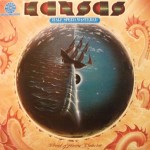
Both this album and Leftoverture are way too bright and thin.

What were the engineers thinking — that brighter equals better?

In the case of these two titles it most definitely does not. It’s the sound that most audiophiles are fooled by to this day.

Brighter and more detailed is rarely better. Most of the time it’s just brighter. Not many half-speed mastered audiophile records are dull. They’re bright because the audiophiles who bought them preferred that sound. I did too, a couple of decades ago [make that four decades ago].

Hopefully we’ve all learned our lessons by now, expensive and embarrassing as such lessons usually turn out to be. 

Waking Up a Dull Stereo

If your system is dull, dull, deadly dull, the way older systems tend to be, this record has the hyped-up sound to bring it to life in no time.

There are scores of commentaries on the site about the huge improvements in audio available to the discerning (and well-healed) audiophile. It’s the reason Hot Stampers can and do sound dramatically better than their Heavy Vinyl or Audiophile counterparts: because your stereo is good enough to show you the difference.

With an old school system you will continue to be fooled by bad records, just as I and all my audio buds were fooled thirty and forty years ago. Audio has improved immensely in that time. If you’re still playing Heavy Vinyl and Audiophile pressings, there’s a world of sound you’re missing. We discussed the issue in this commentary:

My advice is to get better equipment and that will allow you to do a better job of recognizing bad records when you play them.

(more…)

How can I find my own Hot Stamper pressings?

New to the Blog? Start Here

Finding Hot Stampers is all about doing shootouts for as many different pressings of the same title as you can get your hands on.

There are four basic steps you must take, and you have to do right by each of the four if you are going to be successful at discovering and evaluating your own Hot Stampers. 

We discuss every one of them in scores of commentaries and listings on this blog. Although none of it will come as news to anyone who has spent much time reading our stuff, we cobbled together this commentary to help formalize the process and hopefully make it easier to understand and follow.

If you want to make judgments about recordings — not the pressing you have in your collection, but the actual recording it was made from — you have to do some work, and you have to do it much more thoroughly and carefully and above all scientifically than most audiophiles and record collectors we’ve met apparently think is necessary. Don’t be one of those guys. Do it right and get the results that are simply not possible with any other approach.

The Cornerstones of Hot Stampers

There are four aspects to the work required to find these very special pressings:

  1. You must have a sufficient number of copies to play in order to find at least one “hot” one.
  2. You must be able to clean your copies properly in order to get them to sound their best.
  3. You must be able to reproduce your copies faithfully.
  4. You must be able to evaluate them critically.

There is a clear benefit to doing it this way, and it’s something you should consider when tweaking your system too.

Lately we have achieved the best results by going about it like this:

If you have five or ten copies of a record and play them over and over against each other, the process itself teaches you what’s right and what’s wrong with the sound of the album at key moments of your choosing.

Once your ears are completely tuned to what the best pressings do well that others do not do as well, using a specific passage of music — the acoustic guitar John beats the hell out of on Norwegian Wood just to take one example — it will quickly become obvious how well any given pressing reproduces that passage.

The process is simple enough. First you go deep into the sound. There you find something special, something you can’t find on most copies. Now, with the hard-won knowledge of precisely what to listen for, you are perfectly positioned to critique any and all pressings that come your way.

Admittedly, to clean and play enough copies to get to that point may take all day, but you will have gained experience and knowledge that you cannot come by any other way. If you do it right and do it enough it has the power to change everything you will ever achieve in audio.

This hobby is supposed to be fun. If you’ve been in it for any length of time, you know that sometimes it is and sometimes it isn’t. But if you enjoy doing it, and you devote the proper resources to it — time and money — you will no doubt derive a great deal more pleasure from the music you play, especially if you use our approach.

It works for us and there’s no reason it can’t work for you.

(more…)