1-2023

Midnight Blue Is a Masterpiece

Hot Stamper Pressings of the Music of Kenny Burrell

Midnight Blue is our favorite Kenny Burrell album of all time, at least in part because it’s one of the All Time Best Sounding Blue Notes. 

If you already own a copy of Midnight Blue and you don’t consider it one of the best sounding jazz guitar records in your collection, then you surely don’t have a copy that sounds the way our Hot Stamper pressings do. In other words, there is a very good chance you simply don’t know what you’re missing.

Don’t think this is just another 60s jazz guitar album. With Stanley Turrentine on sax and Ray Baretto on congas, this music will move you like practically no other. When Turrentine (a shockingly underrated player) rips into his first big solo, you’ll swear he’s right there in the room with you.

And if you do have one of our better Hot Stampers and it still isn’t the best sounding jazz guitar album in your collection, then you have one helluva jazz collection. Drop us a line and tell us what record you like the sound of better than Midnight Blue. We’re at a loss to think of what it might be.

Midnight Blue checks off a number of important boxes for us here at Better Records.

(more…)

Ridiculously Phony and Compressed Sound – The White Album on MoFi

Sonic Grade: F

An Audiophile Hall of Shame pressing and another MoFi LP reviewed and found seriously wanting. The phony sound here is perfectly suited to the stone age stereos of the past. I should know. I had a stereo like that back in 1982 when this record came out, and I thought it sounded great.

The last time I played a copy of the MoFi, I could not believe how ridiculously bright, phony and compressed it was.

As sibilant as any Beatles record they ever did. Cry Baby Cry spits like crazy!

And to think I used to like their version when it came out back in the 80s.

A good example: on Yer Blues, the MFSL pressing positively wreaks havoc with all the added bass and top end The Beatles put on this track. The MoFi version is already too bright, and has sloppy bass to start with, so the result on this track is way too much BAD bass and way too much BAD spitty 10k-boosted treble. The MoFi is nothing like the good imports, which have way too much GOOD bass and treble.

Yer Blues ROCKS! Listen to the big jam at the end of the song, where John’s vocal mic is turned off but his performance is still caught by a room or overheard mic. They obviously did this on purpose, killing his vocal track so that the “leaked” vocal could be heard. (We have since learned from Ken Scott that it was mistake, but one they liked and left in.)

Those crazy Beatles! It’s more than just a cool “effect.” It actually seems to kick the energy and power of the song up a notch. It’s clearly an accident, but an accident that works. I rather doubt George Martin approved. That kind of “throw the rule book out” approach is what makes Beatles recordings so fascinating, and The White Album the most fascinating of them all.

The EQ for this song is also a good example of something The Beatles were experimenting with, as detailed in their recording sessions and later interviews with the engineers. They were pushing the boundaries of normal EQ, of how much bass and treble a track could have. This track has seriously boosted bass, way too much, but somehow it works.
(more…)

Making Mistakes and Other Advice from Better Records

New to the Blog? Start Here

Record shootouts are the fastest and easiest way to hone your listening skills. We believe that the only way to really learn about records is to gather a big pile of them together, clean them up and listen to them one by one, as critically as you can.

Wise men and women throughout the ages have commented on the value of making mistakes. Here is one of our favorite quotes on the subject.

“Making a different mistake every day is not only acceptable, it is the definition of progress.” Robert Brault

If you have twenty copies of Bridge of Sighs, and most of them are British, you are definitely going to find a Hot Stamper pressing or two, assuming you clean them right and listen to them critically.

Keep in mind that having British pressings in your shootout is absolutely crucial to your success, because those are the only ones that ever win our shootouts, for obvious reasons: they’re made from the master tapes.

The domestic pressings are made from dubs, and yes, I suppose you could shootout twenty of those, but you would only be trying to find the best second-rate pressing of the album out of your twenty, since practically any British pressing will beat even the best domestic pressing.

(more…)

Forget Your Theories, Just Get More Data

More Entries in Our Thinking About Records Series

The idea of Hot Stamper pressings make more sense once you have a better understanding of statistical distributions.

Why statistics you ask?

Simple. We can’t tell what a record is going to sound like until we play it.

For all practical purposes, we are buying them randomly and “measuring” them to see where they fall on a curve.

We may be measuring them using a turntable and registering the data aurally, but it’s still very much measurement and it’s still very much data that we are recording (admittedly with a healthy amount of interpretation of the data involved, but that’s what we get paid to do, right?).

Many of these ideas were addressed in the shootout we did many years ago for BS&T’s second album. We played a large number of copies (the data), we found a few amazing ones (the outliers), and we tried to determine how many copies it really takes to find those records that sound so amazing they defy not only conventional wisdom, but our understanding of the recording itself.

We don’t know what causes some copies to sound so good.

(Here are some recent examples of shockingly good sounding pressings we discovered while doing shootouts.)

We know them when we hear them and that’s pretty much all we can say we really know. Everything else is speculation and guesswork.

We have data. What we don’t have is a theory that explains that data.

And it simply won’t do to ignore the data because we can’t explain it. Hot Stamper deniers are those members of the audiophile community who, when faced with something they don’t want to be true, simply manufacture reasons why it can’t be true or shouldn’t be true. That’s not science. It’s the very opposite of science.

Practicing science means following the data wherever it leads.

The truth can only be found in the record’s grooves and nowhere else. 

If you don’t understand record collecting as a science, you won’t be able to do it well and you certainly won’t achieve the success that’s possible by using a scientific approach.

(more…)

An Exceptionally Natural Piano Recording of Pictures at an Exhibition

More of the music of Modest Mussorgsky (1839-1881)

This original London pressing of the solo piano version of Pictures has uncannily natural piano reproduction, which is why we are awarding this side one our highest sonic grade, A Triple Plus.

The fact that the recording takes place in Kingsway Hall in 1967 no doubt plays a large part in the natural sound. The hall is bigger here than on other copies, the piano even more solidly weighted, yet none of this comes at the expense of the clarity of the playing.

The piano has no smear, allowing both the percussive aspects of the instrument and the extended harmonics of the notes to be heard clearly and appreciated fully.

Pianos are very good for testing your system, room, tweaks, electricity and all the rest, not to mention turntable setup and adjustment. More records that are good for testing and improving your playback can be found here.


Side two has Mehta’s performance of the orchestrated work squeezed onto side two, which is never a good idea if one is looking for high quality orchestral sound. The performance itself is mediocre as well.

We are not, and never have been, big fans of Mehta’s work with the Los Angeles Philharmonic on London Records.

The exceptionally rare copy of Mehta’s Planets can sound good, but 90% of them do not — just don’t make the mistake of telling that to the average audiophile who owns one. Harry told him it was the best, he paid good money for it, and until someone tells him otherwise it had better be “the one Planets to own.” (Why audiophiles need someone to tell them what recordings are the best is a mystery. Can’t they just play them and listen for themselves?)

We see one of our roles here at Better Records as being the guys who actually will “tell you different,” and, more importantly, can back up our opinions with the records that make our case for us.

(more…)

On LSC 2222, How Does the Classic Records Heavy Vinyl Compare?

Hot Stamper Pressings of the Music of Claude Debussy Available Now

In 2005 we played an excellent original pressing of Debussy’s Iberia (LSC 2222) and compared it to the Classic Records reissue. We wrote:


This is a wonderful sounding Shaded Dog pressing. Side two is especially dynamic.

This has long been considered one of the Living Stereo triumphs. The spaciousness and tonal correctness are legendary.  However, this copy does not have the prodigious bass of some that I’ve heard.

The Classic reissue has plenty of deep bass, but it’s shrill and hard and altogether unpleasant, so the better bass comes at a steep price.

For better sounding recordings of Iberia, we know of two and they can be found by clicking here.

(more…)

The Recordings of Milt Jackson – These Two Didn’t Make the Grade

Hot Stamper Pressings of Jazz Recordings Available Now

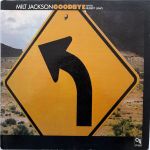
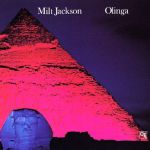
Pictured to the left are a couple of the Milt Jackson albums we’ve auditioned over the years, both on CTI, a label we like very much.

Without going into specifics, we’ll just say these albums suffer from weak music, weak sound, or both. They may have some appeal to fans of the man, but audiophiles looking for top quality sound and music — our stock in trade — are best advised to look elsewhere.

We play mediocre-to-bad sounding pressings so that you don’t have to, a public service from your record-loving friends at Better Records.

You can find these two in our Hall of Shame, along with others that — in our opinion — are best avoided by audiophiles looking for hi-fidelity sound. Some of these records may have passable sonics, but we found the music less than compelling.  These are also records you can safely avoid.

We also have an Audiophile Record Hall of Shame for records that were marketed to audiophiles for their putatively superior sound. If you’ve spent any time on this blog at all, you know that these records are some of the worst sounding pressings we have ever had the misfortune to play.

We routinely put them in our Hot Stamper Shootouts against the vintage records that we offer, and are often surprised at just how bad an “audiophile record” can sound and still be considered an “audiophile record.”

Does the term still have any meaning?

(more…)