Kenneth Wilkinson, Engineer – Reviews and Commentaries

Mozart / Symphonies Nos. 40 & 41 on Speakers Corner

Hot Stamper Pressings of the Music of Mozart Available Now

One of the better Speakers Corner Deccas. When they released this title on Heavy Vinyl in 1998, it became one of the few Speakers Corner classical recordings we carried and recommended. 

We knew it sounded good, but up until recently [recently being 2010 or so], when we started collecting and playing the better vintage Deccas and Londons, we sure didn’t know it could sound as good as the best of those pressings do.

Below are some thoughts from a recent classical listing that we hope will shed light on our longstanding aversion to the sound of these modern remasterings. 

Transparency

What is lost in these newly remastered recordings? Lots of things, but the most obvious and bothersome is TRANSPARENCY.

Modern records are just so damn opaque. We can’t stand that sound. It drives us crazy. Important musical information — the kind we hear on even second-rate regular pressings — is simply nowhere to be found. That audiophiles as a group — including those that pass themselves off as champions of analog in the audio press — do not notice these failings does not speak well for either their equipment or their critical listening skills.

It is our contention that no one alive today is capable of making records that sound as good as the vintage ones we sell.


UPDATE 2025

The guy who cut this pressing sometime this century did a great job — it sounds like a vintage record, and better than any of the vintage pressings of the title we have ever played — but we don’t know who it is because he wasn’t credited on the jacket for his mastering!

Perhaps we should be more clear and say that it is the Big Name mastering engineers who can’t seem to cut a good record these days,


Once you hear our Hot Stamper pressings, those 180 gram records you own may never sound right to you again. They sure don’t sound right to us, but we are in the enviable position of being able to play the best properly-cleaned older pressings (reissues included) side by side with the newer ones.

This allows the faults of the current reissues to become much more recognizable, to the point of actually being quite obvious. When you can hear the different pressings that way, head to head, there really is no comparison. (more…)

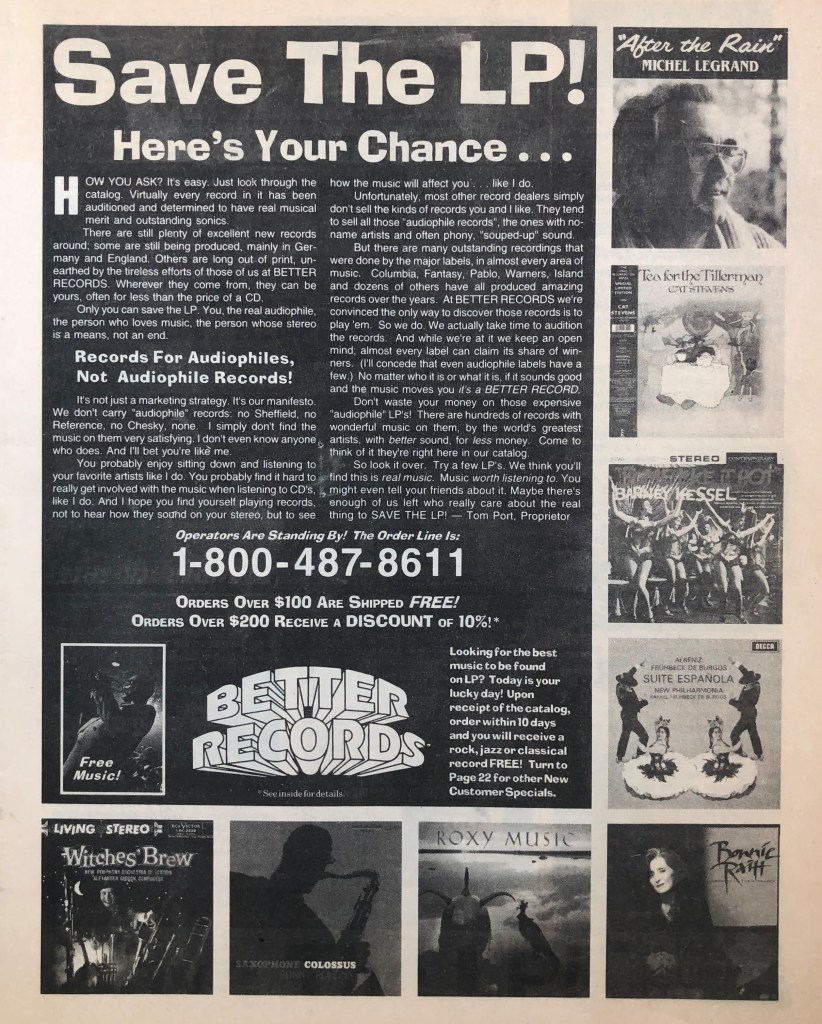
Witches’ Brew on Classic Records and How Crazy Wrong I Was, Part One

Hot Stamper Living Stereo Orchestral Titles Available Now

Well below the reproduction of the front page of our old catalog you will find the review I wrote in 2007 for the Classic Records’ Heavy Vinyl pressing of Witches’ Brew.

Clearly I did not care for it in the least. In fact, I thought it was one of the worst reissues I’d ever heard, so aggressive, boosted and unnatural it all but defied understanding. That anyone could play such a record and not notice how wrong it sounded did not speak well for audiophiles.

Now when I think about the Classic Records reissue of Witches’ Brew and its awful sound, it’s obviously a modern remastering I could not possibly have liked.

However, in preparing to move to Georgia in 2022, I found myself digging through some old catalogs from the early Nineties. Something I read in one of them chilled me to the bone.
There it was in black and white, lower left: my rave review for the Classic Records pressing of Witches’ Brew.

It’s actually on the front page of the catalog, along with at least one other record that I would be mortified to sell today: the OJC pressing of Saxophone Colossus.

(As soon as I find my review in the old catalog for Saxophone Colossus, I will post it. I can hardly believe I wrote it, but I did. I wrote all my catalogs back then. My lack of competence and the guilt associated with my lack of expertise at the time is undeniable. It obviously would be foolish and wrong of me to try to deny any of it, so I don’t.)

(more…)

Brahms / Piano Concerto No. 1 – What to Listen For

Hot Stamper Pressings of of the Music of Brahms Available Now

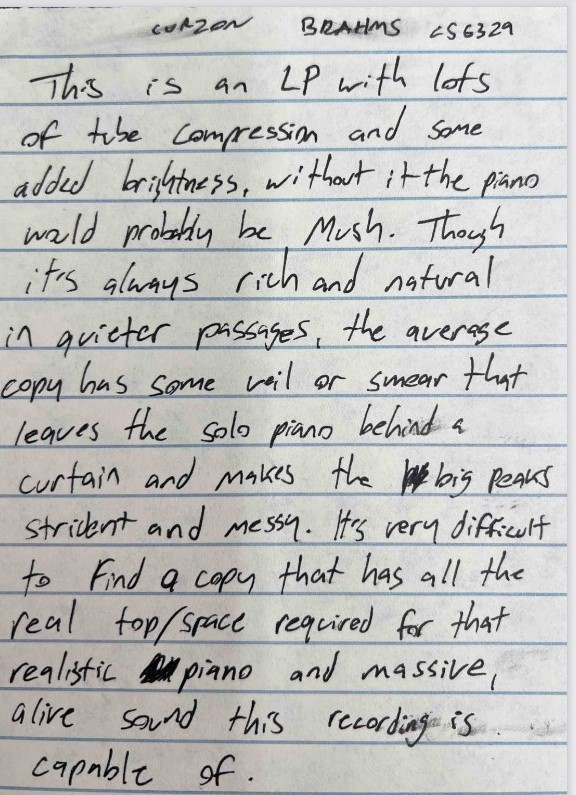
Our general notes for the recording seen below explain why the typical copy in our shootout fell short.

This is an LP with lots of tube compression, and some added brightness.

Without the added brightness, the piano would probably be mud.

The added brightness and compression results in a piano that always sounds rich and natural in the quieter passages.

The average copy also has some veiling or smearing that make the solo piano parts sound like they are coming fom behind a curtain. On these copies, the big peaks can often get strident and very messy.

It’s difficult to find a copy that has all the top end extension and space required to reproduce both a realistic piano and the massive live sound the orchestra is capable of.


All of which adds up to a difficult shootout in which relatively few copies had the sound we were looking for.

Production and Enginneering

(more…)

Skip this Ridiculously Compressed London Pines of Rome

Hot Stamper Pressings of The Pines of Rome

The Prevatelli on London you see pictured was way too compressed to be taken seriously by us.

When the music is supposed to get loud at the end of the Pines, it never does!

The Stereo Treasury you see below was equally bad sounding. It did not last more than a few minutes on our turntable.

If more vintage Londons had sound as bad as the three or four copies we had on hand (it’s a fairly common used record, now I know why), we would happily admit that going the Heavy Vinyl route is a good idea.

(more…)

Kenneth Wilkinson Discusses His Favorite Venues — They’re the Older Ones

Hot Stamper Pressings of Recordings by Kenneth Wilkinson

Reviews and Commentaries for the Recordings of Kenneth Wilkinson

Wilkinson’s method of selecting recording venues was recounted in an article on concert hall orchestral sound written by the conductor Denis Vaughan in 1981:

I have recorded in many halls throughout Europe and America and have found that halls built mainly of brick, wood and soft plaster, which are usually older halls, always produce a good natural warm sound. Halls built with concrete and hard plaster seem to produce a thin hard sound and always a lack of warmth and bass. Consequently when looking for halls to record in I always avoid modern concrete structures.

Wilkinson went on to engineer at hundreds of recording sessions. He was said to have worked with more than 150 conductors. He was the engineer most responsible for Richard Itter’s Lyrita recordings (which Decca produced). Itter always requested Wilkinson as engineer, calling him “a wizard with mikes.”

Wilkinson’s stereo recordings with the conductor Charles Gerhardt (including a series of Reader’s Digest recordings and the RCA Classic Film Scores series) and the producer John Culshaw made his name and reputation known to record reviewers and audiophiles. His legacy was extended by the fact that he trained every Decca engineer from 1937 onwards.

(more…)

Azimuth, VTA, Anti-Skate and Tracking Weight – We Got to Live Together

More Record Playback Advice

With a shout out to my man Sly!

The commentary was written in 2005.

One of the reasons this record is sounding so good today (1/12/05) is that I spent last weekend adjusting my Triplanar tonearm. The sound was bothering me somewhat, so I decided to start experimenting again with the azimuth adjustment.

I changed the azimuth in the smallest increments I could manage, which on this turntable are exceedingly small increments, until at some point the following changes became evident:

  1. The bass started to go deeper,
  2. The dynamics improved, and
  3. The tonal balance became fuller and richer.

In essence the cartridge was becoming perfectly vertical to the record.

I don’t think this can be done any other way than by ear, although I don’t know that for a fact.

Azimuth, VTA, anti-skate and tracking weight all work in combination to create the sound you hear. They are like trying to juggle four balls at the same time. They all interact with each other in mysterious ways.

This is one of the reasons why I think everyone needs to know how to set up their own front end. Nobody you could ever pay is going to put the time and effort into getting it just right. I have at least 30 or 40 and probably closer to 50 hours of set up time in this arm. [It is in the many hundreds by now.]

This is, of course, over a period of two years. But as I have played around and experimented in different ways with the setup, I have managed to tailor the sound to my taste while maintaining what I consider to be the highest levels of accuracy.

Robert Brook has some advice for those who would like to learn more about analog setup, and you can find it here.

(more…)

Witches’ Brew on Classic Records and How Crazy Wrong We Were, Part Two

Hot Stamper Living Stereo Classical and Orchestral Titles Available Now
As I noted in Part One of this commentary, I promised to find my old blurb for the Classic pressing of Witches’ Brew from the catalog I sent out for years in the mid-’90s.

Well, I found it.

The excerpt from the earlier commentary seen below gets to the heart of the problem with my (embarrassing) review.

“With an old school audio system you will continue to be fooled by bad records, just as I and all my audio buds were fooled thirty and forty years ago. Audio has improved immensely in that time. If you’re still playing Heavy Vinyl and Audiophile pressings, there’s a world of sound you’re missing. We would love to help you find it.”

Ouch.

I apparently had one of those systems in the ’90s, because my system sure wasn’t doing a very good job of showing me how awful the Classic pressing of Witches’ Brew was.

Also, my guess that the Classic pressing was 10db more dynamic is risible. That number was clearly plucked out of thin air by someone who didn’t know what he was talking about (10db is a lot).

I will take some solace from my comment that  “90% of the magic of the original is here,” which means that even in 1994 I could hear that Bernie’s cutting system had problems reproducing the Tubey Magical Living Stereo sound that was all the rage at the time, mostly owing to Harry Pearson’s listing so many RCAs on his Super Disc List.

And, although we still like Gibson’s reading of the work, these days our favorite performance of Danse Macabre is this one on EMI, one we only discovered about five years ago. It’s one advantage to being in the record business. You get to play lots and lots of records, and playing large numbers of records is practically the only way to find the ones that are even better than the ones you know.

(more…)

1812 Overture on Speakers Corner

Hot Stamper Pressings of the Music of Tchaikovsky Available Now

Our catalog from the 90s recommended this Heavy Vinyl Decca pressing from Speakers Corner.

We haven’t played a copy of this record in years, but back in the day we liked it, so let’s call it a “B” with the caveat that the older the review, the more likely we are to have changed our minds. Not sure if we would still agree with what we wrote back in the ’90s when this record came out, but here it is anyway.

Excellent, one of the best of the Deccas. Better sound by far than the Classic with Reiner, although of course the original of that record is quite good [actually it is not].

You may get better results if you reverse your polarity when playing this record. It’s been a while since I did it so better to check it yourself and see how you like it each way.

Years ago we wrote the review you see above. Doubtful that we would still find the record as good sounding as we did back then, in the 90s, so take it for what it’s worth. (What I couldn’t hear on my system back in those days may be of interest to some of you.)

If you can pick one up for cheap, it’s probably a good record for the price.

What to Listen For

As a general rule, this Heavy Vinyl pressing will fall short in some or all of the following areas when played head to head against the vintage pressings we offer:

(more…)

Behind the Scenes of One of My Favorite Recordings – Citizen Kane

More of the Music of Bernard Herrmann in Stock

An orchestral dreadnought such as this requires mastering and pressing of the highest quality. The music by its very nature taxes the limits of LP playback itself, with deep bass notes; incredible dynamics from every area of the stage; masses of strings playing at the top of their registers with abandon; huge drums; powerful brass effects — every sound an orchestra can produce is found on this record, and then some.

Kenneth Wilkinson was the engineer for these sessions in glorious Kingsway Hall.

It’s yet another remarkable disc from the Golden Age of Recording, in this case extending all the way into the ’70s.

You will hear plenty of sounds that defy description, that’s for sure. Some of the time I could not even imagine what exotic instrument could possibly be making the sound I was hearing. The remarkable document pictured below will show you some of them.

(more…)

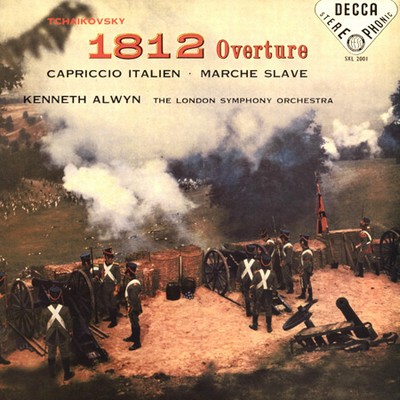
A Must Own Performance of the 1812 Overture by Alwyn on Decca

Hot Stamper Pressings of Orchestral Spectaculars Available Now

Years ago we found a very special copy of this album in a shootout and gave it a grade of A++++. We don’t give out that grade anymore, but we gave it out to this side one back in the day. We describe the sound of that side one below.

A BEYOND White Hot Quadruple Plus side one – hear Tchaikovsky’s 1812 in Demo Disc sound. This is the most exciting and beautifully played 1812 we know of, with the best sound ever to boot on this copy. This is an exceptional Decca remastering of a superb Golden Age recording on very good vinyl.

The WHOMP FACTOR on this side one has to be heard to be believed. If you’ve got the woofers for it this record is going to rock your world!

Side One (1812 Overture)

Off the charts, the best we have ever heard this work sound. Big, rich, clean and clear barely begins to do this side justice. The strings are wonderfully textured and not screechy in the slightest.

The brass is big and clear and weighty, just the way it should be, as that is precisely the sound you hear in the concert hall, especially that part about being clear: live music is more than anything else completely clear. We should all strive for that sound in our reproduction of orchestral music.

Not many recordings capture the brass this well. (Ansermet on London comes to mind of course but many of his performances leave much to be desired. Here Alwyn is on top of his game with performances that are definitive.)

Here’s what you get on this side one:

The most dynamic sound we have ever heard for any side of this album.

The most weight and power we have ever heard for the 1812, and as you can imagine, for this work to have the kind of power this pressing has was nothing less than a THRILL to hear. Who knew? Until we played this copy, not us!

The most depth and space we have ever heard on this album.

To earn our coveted Three Plus (OR BETTER) rating here at Better Records all you have to do is be the best copy we’ve ever played. Just be right in every way (or almost every way; no record can be perfect, but some, such as this one, seem to us to get pretty darn close). (more…)