Doug Sax, Engineer – Reviews and Commentaries

We love his work in the 70s. However, his audiophile records from the 90s leave much to be desired and should be avoided by anyone looking for good sound.

Waiting For Columbus – We Broke Through in 2017

Hot Stamper Pressings of the Music of Little Feat Available Now

Way back in 2009 we had this to say about a Hot Stamper pressing we listed:

This German import pressing of Waiting for Columbus is much better sounding than the typical Mastering Lab-mastered copy.

This German pressing is similar to one that came from my own personal collection, accidentally discovered way back in the early ’80s as I recall. It KILLED my domestic original, and got some things right that even my treasured Mobile Fidelity pressing couldn’t. We have been meaning to do a shootout for this album for at least the last five years, but kept running into the fact that in a head to head shootout the right MoFi pressing — sloppy bass and all — was hard to beat.

This is no longer the case, courtesy of that same old laundry list you have no doubt seen on the site countless times: better equipment, tweaks, record cleaning, room treatments, et cetera, et cetera. Now the shortcomings of the MoFi are clear for all to see, and the strengths of the best non-Half-Speed mastered pressings are too, which simply means that playing the MoFi now is an excruciating experience.

All I can hear is what it does wrong.

I was so much happier with it when I didn’t know better.

That same laundry list of improvements continued to pay big dividends, and right around 2017 or so the best original domestic Mastering Lab copies started to sound much more right to us than the German ones. 

The German pressings can be good, but the TML pressings are the only ones we would expect to win shootouts from now on.

But who knows? We might find something even better down the road. That’s what shootouts are for. (more…)

Who in His Right Mind Thinks The Sheffield Track Record Is a Super Disc?

Subtitled: Rock Instrumental Tracks For Audio Component Testing and Evaluation.

Harry Pearson calls this absolutely the best sounding rock record ever made.

If you don’t know anything about rock music, this is the kind of rock music you like.

Harry seems to have known very little about rock. Just check out the TAS List while he was still in charge and see how many real rock albums could be found there back in the day. He mistook these lame instrumentals for actual music with good sound, yet they have neither good sound, nor are they good music.

We cannot agree with HP as to the recording quality of the album either. The sound is surprisingly compressed, and the music is every bit as lifeless as the sound.

Some of the audiophile records I’ve played since I started Better Records in 1987 pissed me off so badly, what with their crappy sound and sometimes even crappier music, as is the case here, I felt they deserved to have their very own special audiophile sh*t list.

Now that I have a blog with unlimited amounts of space to review and categorize the awful records some audiophiles like, that is exactly where this hopeless release can be found.

(more…)

Lincoln Mayorga Volume 1 and Obvious Pressing Variations

Hot Stamper Pressings of Direct-to-Disc Recordings Available Now

After doing our first shootout many years ago for the record that single-handedly introduced the audiophile community to Direct to Disc recording, Lincoln Mayorga and Distinguished Colleagues, Volume One, I have to confess I was taken aback by the significant pressing variations we heard among the copies we played, 

These LPs are all over the map sonically.

Some Sheffield pressings are aggressive, many of them are dull and lack the spark of live music, some of them have wonky bass or are lacking in the lowest octave — they are prey to every fault that befalls other pressings, direct to disc and otherwise.

Which should not be too surprising. Records are records. Pressing variations exist for every album ever made. If you haven’t noticed that yet, start playing multiple copies of the same album while listening carefully and critically. If your stereo is any good at all, it should not take you long to notice how different one record sounds from another in practically every case.

Biggest problems on S9?

I would have to say smear is Number One.

When the brass loses its bite and the bells don’t have the percussive quality of metal being struck, this is not a good thing. The band also seems to lose energy when the pressing suffers from smear.

Number Two would be a lack of top end extension.

The harmonics of the sax and trumpet are muted on some copies, and the harpsichord really suffers when the top end isn’t all there. This lack of extension is most noticeable on all the lovely bells and percussion instruments that pepper the soundstage, but you can actually hear it on practically every instrument once you recognize the problem. It’s there on guitar harmonics, cymbals and snares, and on down the list.

Linked here are other records that are good for testing these same shortcomings:

(more…)

Side One Is Actually In Phase (Usually) and You Read It Here First (Probably)

Hot Stamper Pressings of Direct-to-Disc Recordings Available Now

This is a well recorded jazz album that should be able to find a home in any audiophile’s jazz collection.

It is also one of the pressings we’ve discovered with reversed polarity

According to the liner notes, this Dave Grusin album has reversed absolute phase. They tell you to switch the positive and negative at the speaker for the best transient response and spatial clarity. But get this: most side ones are NOT in reversed phase.

That out of phase quality is as plain as the nose on your face when you know what to listen for.

There’s an unpleasant hardness and hollowness to the midrange, a lack of depth, and an off-putting opaque quality to the overall sound.

With our EAR 324p phono stage, the click of a button reverses phase, also known as polarity. I can’t tell you how handy it is to have such a tool at your disposal. Checking the phase for Discovered Again couldn’t have been easier.

An Amazing Discovery

But get this: most side ones are NOT reversed phase. (All the side twos we played were however.) How about them apples! We could not have been more shocked. Here is the most famous out of phase audiophile recording in the history of the world, and it turns out most copies are not out of phase at all!

(more…)

Relax, Stare into the Middle Distance and Listen to the Players as a Group

Hot Stamper Direct-to-Discs Available Now

Reviews and Commentaries for More Direct to Disc Recordings

Many years ago we had discussed the polarity issues associated with this record:

According to the liner notes, this album has its polarity reversed. They tell you straight out to reverse the positive and negative at the speaker terminals for the best “transient response and spatial clarity.”

That out of phase quality is as plain as the nose on your face when you know what to listen for. There’s an unpleasant hardness and hollowness to the midrange, a lack of depth, and an off-putting opaque quality to the sound. The top gets dull and the bass gets weird and wonky.

With our EAR 324p phono stage, the click of a button reverses the polarity. I can’t tell you how handy it is to have such a tool at your disposal. Checking the polarity for Discovered Again couldn’t have been easier.

But get this: most side ones are NOT out of polarity. How about them apples! We could not have been more shocked. Here is the most famous reversed polarity audiophile recording in the history of the world — or maybe just the history of our world — and it turns out most copies are not reversed on side one at all.

Findings from a Few Years Back

I did not do the shootout for the album, but I wanted to check on the polarity just to hear it for myself. I must admit I had to go back and forth a number of times, using my favorite song on the album and an old Demo track from back in my earliest days in audio, the mid- to late-70s: Keep Your Eye On The Sparrow.

Harvey Mason’s super-punchy drum playing catches your attention right off the back. A tambourine comes along in the left channel at some point. Lots of bass. Rit’s guitar in the right channel and Grusin’s keyboards in the center fill out the soundstage. The ensemble is on fire.

Evaluating the sonic differences of the individual instruments in and out of polarity had me confused. A typical conundrum: Should the tambourine be smoother with more body, or brighter with more harmonic overtones? Which is right? Who can say definitively?

Experiments Provide Answers

It was only after about fifteen minutes of switching the polarity back and forth that the penny dropped.

Focussed on an individual instrument, I could hear it just fine both ways. But then I noticed that with the polarity reversed the group got vague.

The images seemed blurrier, less defined. If I relaxed and just stared into the middle distance and let the music flow, the band seemed to be more jumbled up and messy.

That was the key. The obvious change when the polarity was wrong was a loss of image specificity. Flipping the record over to side two and using my new “lens” to hear the difference with the polarity changed, it was obvious when the polarity was right or wrong.

I have experimented with polarity on scores of records.

Certain effects on certain records are unmistakable. But these effects seem to vary a great deal from title to title.

Grusin’s brilliant direct to disc recording initially had me at a loss. With a little experimentation, the improvement in the sound with the correct polarity became evident over time, as it always seems to do. Thank god I didn’t have to change speaker leads the way I used to in the old days. (more…)

Thoughts on a Direct to Disc Recording, Its Strengths and Weaknesses

Hot Stamper Pressings of Direct-to-Disc Recordings Available Now

Reviews and Commentaries for Direct to Disc Recordings

In a shootout we conducted more than ten years ago, two White Hot Stamper pressings tied for the best side two we had ever heard.

In the final round it simply came down to the fact that the other copy was a little more clear, this one is a little richer.

They were both so amazing we couldn’t decide which we preferred so we gave them both White Hot Stamper grades.

In our experience this rarely happens.

Most of the time one side of one of the records in the shootout will show itself to be the clear winner, doing everything — or almost everything; there is no such thing as a perfect record — right.

When you play enough copies, eventually you run into the one that shows you how the music wants to be heard, what kind of sound seems to work for it the best. The two side twos we liked were variations, and fairly subtle ones at that, on a theme — a little richer here, a little clearer there, but both so good.

To be honest, most copies of this title were quite good. Few didn’t do most things at least well enough to earn a Hot Stamper grade. This has not been the case with many of the Sheffield pressings we’ve done shootouts for in the past. Often the weaker copies have little going for them. They don’t even sound like Direct Discs.

Some copies lack energy, some lack presence, most suffer from some amount of smear on the transients.

But wait a minute. This is a direct disc. How can it be compressed, or lack transients? Aren’t those tape recorder problems that are supposed to be eliminated by the direct to disc process?

(more…)

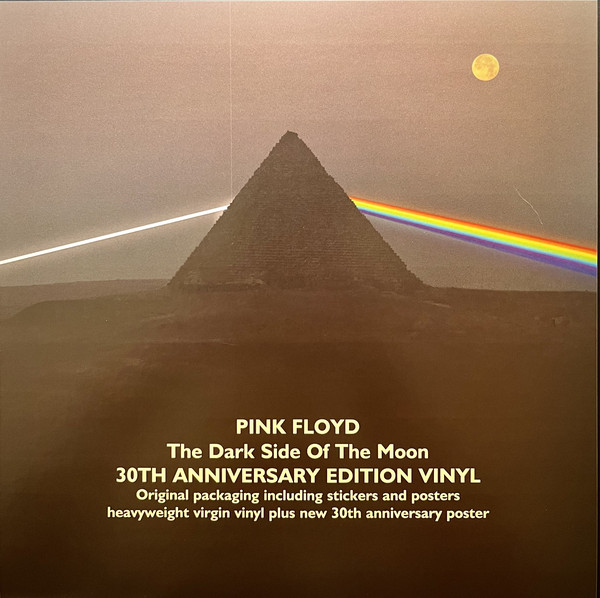
The Dark Side of the Moon – 2003 Heavy Vinyl Reviewed

Pink Floyd Hot Stamper Pressings Available Now

An audiophile hall of shame pressing and a Heavy Vinyl disaster if there ever was one (and oh yes, there are plenty).

The 30th Anniversary Heavy Vinyl pressing is too bright. There is a boost in the top end, probably in the 12K region, that appears to be a poor mastering choice the late Doug Sax made, one that is surely not doing this recording any favors.

In fact, in the case of this new pressing, it’s positively ruinous, assuming you have set your VTA correctly and have the properly functioning tweeters to show you how bright this record is. If you like the phony detail a boosted top end provides, this record should be right up your alley. However, you would do well to recognize that this is a blind alley, and the best way forward is to turn around and start heading in the opposite direction.  

Some audiophiles revere a record like this (last time I checked, the average selling price on Discogs was $149.50) because they need it to wake up their sleepy stereos. My stereo hasn’t been sleepy enough to play this 2003 recut for a very long time, and I hope you can say the same.

As a service to the audiophile community, please click on the link below to find other records that your system should be able to make clear are too damn bright.

(more…)

Seriously, This is Your Idea of Analog?

Audiophile Quality Pressings of Orchestral Music Available Now

Whether made by Klavier or any other label, starting at some point in the mid-90s, many Heavy Vinyl pressings started to have a shortcoming that nowadays we find insufferable: they are just too damn smooth.

Smeary, thickdullopaque, and lacking in ambience, this record has all the hallmarks of the modern Heavy Vinyl reissue.

The sound is smeary, thick and opaque because, among other things, the record was mastered by Doug Sax from a copy tape, and not all that well either.

It is yet another murky audiophile piece of trash from the mastering lathe of the formerly brilliant Doug Sax. He used to cut the best sounding records in the world. Then he started working for Analogue Productions and never cut a good record again as far as I know.

On this record, in Doug’s defense it’s only fair to point out that he had dub tapes to work with, which is neither here nor there as these pressings are not worth the dime’s worth of vinyl used to make them.

Maybe the hearing-challenged Chad Kassem wanted this sound — almost all his remastered titles have the same faults as this Klavier — and simply asked that Doug cut it to sound real good like analog spossed to sound in the mind of this kingpin, which meant smooth, fat, thick and smeary.

Yes, this is exactly what some folks think analog should sound like.

Just ask whoever mastered the Beatles records in 2014. Somebody boosted the bass and smoothed out the upper midrange, and I don’t think they did that by accident. They actually thought it was good idea.

Harry Moss obviously would not have agreed, but he’s not around anymore to do the job right.

(more…)

Listening in Depth to Ambrosia

AMBROSIA is an album we admit to being obsessed with — just look at the number of commentaries we’ve written about it. It’s also part of our extensive Listening in Depth series. There is no question that this band, their producers and their engineers sweated every detail of this remarkable recording. They went the distance. In the end they brought in Alan Parsons to mix it, and Doug Sax to master it. The result is a masterpiece, an album that stands above all others.

It’s not prog. It’s not pop. It’s not rock. It’s Ambrosia — the food of the gods.

The one album that I would say it most resembles is Dark Side of the Moon. (Note the Parsons connection.) Like DSOTM, Ambrosia is neither Pop nor Prog but a wonderful mix of both and more. 

Perhaps hearing Dark Side was what made you realize how good a record could sound. Looking back on it over the last thirty years, it’s clear to me now that this album, along with a handful of others, is one of the surest reasons I became an audiophile, and managed to stick with it for so long. What could be better than hearing music like this sound so good?

Although I didn’t discover the album until some time later in the 90s, I recognized the challenge it presented to my system, setup and room immediately, a subject I write about here.

The band’s first album is yet another record the deserves a great deal of credit for helping me become a better listener.

Side One

Nice, Nice, Very Nice

Once you know this record well, you can easily tell if you have a good side one within the first minute of this song. Side one has a tendency to be somewhat bright and even aggressive in places. This problem is further exacerbated by the typical copy’s lack of bass. The best copies have incredibly tight, punchy bass at the beginning of this song, and plenty of it. Phenomenal bass. Demo Disc quality bass.

If that’s not what you hear, you know you will soon be in for more problems. The vocals need to start out smooth, because they get brighter later on. Missing bass or added brightness are sure signs of trouble ahead. The lines “I wanted all things to make sense/ so we’d be happy instead of tense” will be aggressive on copies that are not tonally correct. And copies without tons of bass are not tonally correct, because the recording has tons of bass. It’s essential to the music. Any stereo incapable of providing the power in the lower octaves demanded by this recording is going to make a real mess of this one.

(more…)

Inner Secrets Is One of the Best Sounding Rock Records We’ve Ever Played

Hot Stamper Pressings of the Music of Santana Available Now

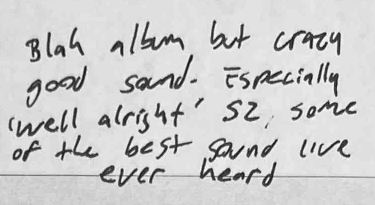
In our most recent shootout (11/2023), the first we’ve done in quite a few years, my main listening guy was blown away by the sound of the Shootout Winning copy. This warmed my heart no end, as I have been raving about the sound of this album for fifteen years or more.

We created a section for phenomenally good sounding records like Inner Secrets, and this link will take you to it.

His notes from the session can be seen below.

And he’s not wrong about much of the album being “blah.” There are really only about four top quality songs out of the nine on the album, but three of those four are killer, and, even at our prices, make the album a Must Own for those of you with big speakers that can play good and loud.

Phase One and Phase Two of a Shootout

Like other Hot Stampers you may have read about, sometimes the instruments and voices just jump out of the speakers. When that happens I usually write “It’s Alive!” on the post-it, and I know exactly what to do with it. I put it right in the Contender pile, to be compared with the other top contender copies at some point.

It’s definitely a crazy-good Hot Stamper; just how hot we still need to find out.

Which is what happens in Phase Two of these affairs. We go back through all the best copies to see in what areas they really shine and in what areas they may fall a bit short of the best.

Of course there’s no way to know what accounts for any of the sound we hear. Not for sure anyway. It’s just interesting to ponder what makes one record sound one way and the next record, with stampers as little as one letter off in the alphabet — sometimes with exactly the same stampers! — sound so different from one another.

Doug Sax Is The Man

All the originals (the only ones with the potential for good sound in our experience) are cut by The Mastering Lab, one of the greatest cutting houses to ever master records.

Doug Sax may or may not have had anything to do with the making of this record, but one thing we can be sure of: he knew how to keep his lathes and amplifiers working at state-of-the-art levels. The sound quality is unsurpassed.

And he did it all with tubes.

(more…)