Doug Sax, Engineer – Reviews and Commentaries

We love his work in the 70s. However, his audiophile records from the 90s leave much to be desired and should be avoided by anyone looking for good sound.

On Discovered Again, Does It Sound Like the Snare Is Wrapped in a Towel on Your Copy?

Hot Stamper Pressings of Direct-to-Disc Recordings Available Now

The bulk of this commentary was written in 2008 and is based on the shootout we had just done, our first for the album. It has been amended a number of times since.

I bought my first copy of Discovered Again in 1976 upon its release. I was a big fan of the label at the time. The Missing Linc had been a revelation to me years before in terms of how good music could sound in the home (or apartment as the case may be). I wrote a bit about it here.

I credit that amazing record as well as Discovered Again as fundamentally important in helping me advance in this devilishly difficult hobby of ours. Back in those dark days of the 70s, although I was completely clueless at the time about pretty much everything having to do with vinyl and equipment, I can take some solace in the fact that everybody else was every bit as clueless as I was too.

This blog is dedicated to sharing some of what I’ve learned — with the unflagging help of my staff of course — about records and audio over the last fifty years.


The sound quality of the typical pressing of Discovered Again leaves much to be desired.

Two areas are especially lacking as a rule: the top end tends to be rolled off, and there is a noticeable lack of presence, which can easily be heard in the drum sound.

The snare sounds like it’s covered with a towel on most copies of this album.

How does that even happen?

Who knows? Even though the mastering is fixed at the live event, there are many other variables which no doubt affect the sound. The album is cut on two different lathes — M (Master) and S (Slave), and pressed in two different countries: Japan and Germany. Many mothers were pulled from the acetates and many, many stampers made from those mothers. (I saw one stamper marked number 15!)

Bottom line? You got to play ’em to know how they sound, just like any other pressing. If no two records sound the same, it follows that no two audiophile records sound the same, a fact that became clear early on in the listening.

Of course not many audiophiles are in a position to shootout six copies of Discovered Again, and I’m not sure most people would have the patience to do it. Here at Better Records we have a whole system set up to do that, so we waited until we had a pile of them, got them all cleaned up, and off to the races we went.

What Else to Listen For

Listen to the harmonics around the cymbals and bells on Git Along Little Dogies — on the best copies you can really hear the transients of the cymbals and percussion, so important to the actual sound of those instruments. (More records that are good for testing percussion can be found here.)

The stand-up acoustic bass is amazingly well recorded on this album; it’s so rich and full-bodied. You will have a hard time finding a string bass that sounds better.

Track after track, the sound is surprisingly open and airy. Dave’s keyboards throughout have wonderful presence; on the best copies they really jump out of the speakers. (A good test for midrange presence.)

(more…)

Judging the Sound of Heavy Vinyl We’ve Never Played

Hot Stamper Pressings of Pablo Recordings Available Now

We freely admit that we have never played the Heavy Vinyl pressing of The Alternate Blues on the Analogue Productions label. It started life in 1996 as APR 3010, part of the Analog Revival Series on 150 gram vinyl (average price on Discogs these days: $99), and now it seems to be in print on 180 gram vinyl, made from the same metalwork by the looks of it.

The mastering of the Analog Revival Series pressing may have been credited to Bruce Leek and Stan Ricker, but the stamper information is TML, The Mastering Lab all the way.

In case you, unlike us, are tempted to try one or both of the AP pressings, or perhaps already own one or both, here is our advice on how to recognize the fairly predictable shortcomings of Chad’s pressing, or any pressing mastered by Doug Sax in the 90s for that matter. Every one we’ve ever played has suffered from the same suite of sins.

The Best Part

And we expect that the AP pressing’s failures in some areas will be so obvious that you really don’t need any other copy of the album to be able to hear them.

Just focus on the two qualities that Analogue Productions’ records have always failed to deliver: transparency and freedom from smear.

In our 2011 shootout notes we drew the reader’s attention to both:

(more…)

Venerable or Execrable? If It’s Athena the Chances Are Good It’s the Latter

Hot Stamper Pressings of the Music of Rachmaninoff Available Now

I spied an interesting quote on the Acoustic Sounds site many years ago:

“…Analogue Productions’ 45rpm remastering improves upon the venerable Athena LP release from the late 80s, with better dynamics and a fuller ‘middle’ to the orchestral sonority.” – Andrew Quint, The Absolute Sound, October 2010

For some reason Andrew uses the word “venerable” when a better, certainly more accurate term would have been “execrable.” Having played the record in question this strikes us as the kind of mistake that would not be easy to make.

Athena was a godawful audiophile label that managed to put out all of five records before going under, only one of which was any good, and it’s definitely not this one.

It was in fact the Debussy piano recording with Moravec, mastered by the venerable Robert Ludwig himself, a man who knows his classical music, having cut scores if not hundreds of records for Nonesuch and other labels in the 60s and 70s.

From the jacket:

Analogue Master Recording™

Unlike other remastering companies, Athena Records always uses the ORIGINAL ANALOG MASTER SESSION TAPES. In this case, The Master Lacquers were cut directly by Doug Sax at The Mastering Lab so you know it will sound superb.

Our Hot Stamper listing for the Vox pressing:

This famously good sounding Vox pressing os Symphonic Dances has been remastered a number of times, but you can be sure that the Hot Stamper we are offering here will beat any of those modern pressings by a wide margin in any area that has to do with sound (surfaces being another matter and one we won’t go into here).

The sound of this recording on the best pressings is dynamic, lively and BIG. The music just jumps out of the speakers, bringing the power and vibrant colors of a symphony orchestra right into your listening room. Guaranteed to put to shame 95% or more of all the classical records you own, even if you own lots of our Hot Stampers. [Can’t say I would agree with that in 2023.]

The bass is phenomenal on this recording, assuming you have a copy that has the bass cut and pressed right. This one sure does! Few Golden Age classical recordings from the 50s will have the kind of bass that’s found on this record.

(more…)

Letter of the Week – “Why can’t all records sound this good…?”

Hot Stamper Pressings of the Music of Ambrosia Available Now

One of our good customers wrote to tell us about a very Hot Stamper pressing he purchased recently:

Hey Tom,   

Question:

Does Tom Port have any clue as to what the hell he’s doing or selling to the public?

That is my question.

Hello Tom,

I’m the idiot who spent $399 on your White Hot Stamper of Ambrosia’s first album a few weeks ago. I did an A/B listening test with an A++/A++ copy I bought from you a few years ago. Your website waxes lyrical about the exceptional qualities of this recording; I always thought it was very, very good but not quite the recording you make it out to be!

To perform my listing test, I listened to my A++/A++ side one first. Then listened to the newly purchased A+++/A+++ next. The results? I almost had to call 911 because my jaw hit the floor! THIS was the recording you had written about in the records descriptive comments. This pressing is so holographic I swear I could have stepped into the recording.

Dare I say this is a better recording than Dark Side of the Moon; and yes, I can make such a claim, I purchased an A++/A+++ – A++/A+++ copy from you guys a few years ago. This is what I refer to as Master Tape sound quality. A Holy Grail for audiophiles.

It’s pressings like this that pose the questions: Why can’t all records sound this good and why can’t all recording engineers be as great as Alan Parsons?

So, back to my original question. Does Tom Port know what the hell he is doing or selling to the public?

Yes Tom, I’d say absolutely, 100% you know what you are doing and I’m the happiest idiot on this Earth. Keep up the great work, Tom, and thank you and your staff for the incredible service you provide.

Todd N.

Dear Todd,

Thanks for your letter. I’m positively blushing!

Seriously, the right vintage pressing — on the right stereo — can take the enjoyment of music to a level far beyond that of anything being experienced by the audiophile of today, at least those who are stuck in a rut due to their misguided devotion to the modern Heavy Vinyl reissue. (more…)

The True Test for Side Two (and How Wrong We Were about Domestic Pressings) of Backless

Hot Stamper Pressings of the Music of Eric Clapton Available Now

During our shootout we discovered that the true test for side two was the second track, the old blues song Early In The Morning.

It’s by far the best sounding track on the album, with huge space, rich bass, a fat snare and Tubey Magic to die for. This is the kind of sound that the likes of Glyn Johns gets down on tape, live in the studio no doubt, and it made it easy to do the shootout for side two.

The bigger, the richer, the tubier, the more transparent the better. It’s THE track to demo with. 

Both sides have rich, smooth, clear sound. Listen for the guitars on the first track on side one; the grungier the better. Punchy bass too.

Turn It Up and Let It Rock

The typical pressing of Backless, much like the typical pressing of Slowhand, is just too thick, dull, compressed and veiled to be much fun.

At the very least you need to turn this album up good and loud to get it to do anything.

The copies that are solid and weighty love getting loud; the copies that are thin and bright only get worse as the level goes up, a sign that they leave a lot to be desired. This is a rock album after all.

We Was Wrong

We used to note the following regarding the country that produced the best sounding pressings:

We had top quality copies on both domestic and British vinyl. Both were cut here in L.A.. It makes sense that either can be good.

This should have been corrected a long time ago, as far back as 2017, perhaps earlier. The domestic copies, thought cut at The Mastering Lab, are not competitive with the British LPs also cut there and then sent to England for pressing.

Live and learn is our motto, and progress in audio is a feature, not a bug, of record collecting at the most advanced levels.

We may have liked the domestic pressings a long time ago, but with changes to the system and many shootouts under our belts, the sonic superiority of the Brits cannot be denied.

(more…)

What the Hell Happened to Bernie Grundman and Doug Sax?

Hot Stamper Pressings of Contemporary Jazz Albums Available Now
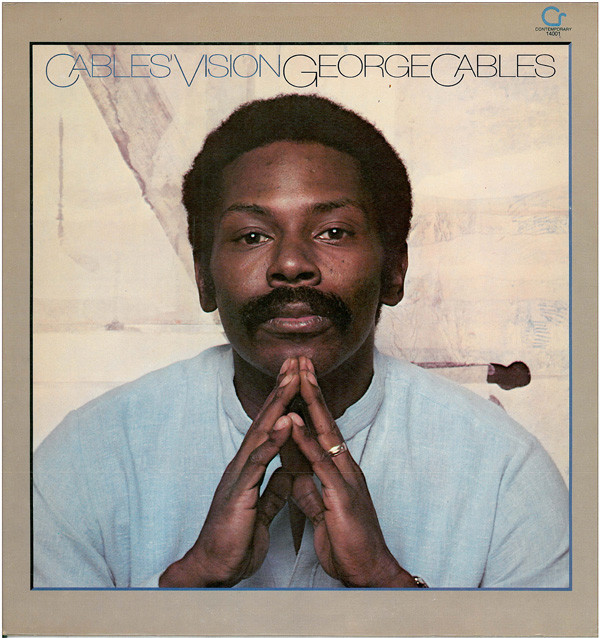
The best Contemporary pressings of George Cables’s 1980 release, Cables’ Vision, have truly wonderful sound. (Our complete review can be found here.)

This should not be too surprising as it was recorded by one of our favorite engineers, Allen Sides, working out of his Oceanway studios. (Supposedly he is a big fan of vintage mics and the like, with many superb and valuable examples.)

In addition, the album was mastered by Bernie Grundman, who was at the time still cutting very good sounding records, this being 1980. Since then he has gone precipitously downhill, as we have noted on the site to the dismay of his many supporters.

Bernie is the man who cut some of the best sounding records I have ever played, including many of the best Contemporary recordings, but his work in recent decades has left much to be desired.

And he sure has fooled a lot of audiophile record reviewers.

Not us, of course. We never jumped on the Classic Records bandwagon, and to this day we cannot understand how any critical listener could be fooled by the countless Heavy Vinyl mediocrities and failures that awful label put out.

You can say the same thing for Doug Sax, a man whose work took a turn for the worse long ago. The sad reality is that the dull, thick, lifeless, recessed, veiled, ambience-free records he cut for Acoustic Sounds and Klavier in the 90s were no worse than the dreck being made today.

The more things change…

(more…)

Lincoln Mayorga and Distinguished Colleagues Implore You to Turn Up Your Volume

Hot Stamper Pressings of Direct-to-Disc Recordings Available Now

S9 is hands down one of the best examples of a recording that only really comes to life when you have your volume up good and loud.

One obvious reason that our turn up your volume test makes a good test is that the louder the problem, the harder it is to ignore.

There’s not much ambience to be found in their somewhat dead sounding studio, and very little high frequency boost to any instrument in the mix, which means at moderate levels this record sounds flat and lifeless.

(You could say it has that in common with most Heavy Vinyl pressings these days, assuming you wanted to take a cheap shot at those records, which, to be honest, I don’t mind doing. They suck; why pretend otherwise?)

But turn it up and man, the sound really starts jumpin’ out of the speakers, without becoming phony or hyped-up. In fact, it actually sounds more NATURAL and REAL at louder levels.  

A Quick and Easy Test

Play the record at normal levels and pick out any instrument — snare, toms, sax, bass — anything you like.

Now turn it up a notch and see if the timbre of that instrument isn’t more correct.

Add another click of volume and listen again.

I think you will see that with each increase in volume, the tonality of each instrument you hear becomes more accurate. The insturments are sounding more real than they did at lower levels.

This record would sound right at something very close to, if not actual, LIVE levels, assuming you have the system and the room that can manage it. (more…)

Sonny Rollins Helped Us See the Light Many Years Ago

The following commentary was taken from our mid-90s catalogs, the ones that came out back in the days when it was still possible to find great jazz records like Alternate Takes for cheap, often still sealed.

The Analogue Productions Heavy Vinyl recuts done by Doug Sax had come out a few years earlier, starting in 1992. Those remastered records were in print at the time I wrote this, and I was pretty pissed off at the way they sounded.

Here is our listing with some minor changes from long ago:

Acoustic Sounds had just remastered and ruined a big batch of famous jazz records, and shortly thereafter a certain writer in The Absolute Sound had said nice things about them.

Said writer and I got into a war of words over these records, long, long ago. You’ll notice that no one ever mentions these awful records anymore, and for good reason: they suck. If you own any of them, do yourself a favor and get either the CD or a good LP for comparison purposes. I expect you will hear what I’m talking about.

In my essay on reviewers I attack him for giving a big “Thumbs Up” in TAS to the botched remastering of Sonny’s Way Out West. The OJC reissue, though superior, is still only a pale shadow of the original.

The Real Deal

Now we have the real thing! This LP has three alternate takes from that session, all mastered by George Horn, and surprise, surprise, surprise, they sound just like my original, much better than (but not so different from) the OJC, and worlds away from the muted flab of the Analogue Productions LP!

(more…)

Letter of the Week – “So dynamic and real it’s scary.”

Hot Stamper Pressings of Direct-to-Disc Recordings Available Now

Tom

So dynamic and real it’s scary. An extraordinary recording. This copy is a bit long in the tooth and worn, but the sound is overwhelming. 

Phil

Phil,

That copy won a shootout, that’s why it was so good. They don’t all sound like that.

In fact, only that one sounded like that in our last shootout, if memory serves.

Here is more on Sheffield’s first direct to disc.

Doug Sax Is The Man

The Mastering Lab was one of the greatest cutting houses to ever master records.

Doug Sax knew how to keep his lathes and amplifiers working at state-of-the-art levels. The sound quality is unsurpassed.

And he did it all with tubes.

He was very proud of his custom-made tube-driven cutting amps, designed by none other than his brother, Sherwood. His amps cut many of my favorite records of all time, including this one, an album that I have been using to test and improve the playback quality of my system for more than forty years.

To this day we get taken to task by some regrettably misguided individuals for criticizing his work on the awful audiophile records he made in the 90s, many of them for Analogue Productions. We stand firmly behind the criticism we made of those albums decades ago. Their sound has not improved with age, nor is it likely to.

Those records from the 90s sound nothing like the records Doug and his crew were making in the 70s.

According to the logic of our critics, if you made great records in the 70s, then you must have been making great records in the 90s, whether your name is Doug Sax, Bernie Grundman, George Marino, Robert Ludwig or any other.

This is a very crude way of understanding the work of these exceptionally talented men.

The fact that this kind of sophistry is taken seriously by supposedly grownup adults in the audiophile community is embarrassing. To those of us who have been in the hobby for decades, it comes as no surprise.

Audiophiles have always embraced bad ideas (Half-Speed mastering!) and bad records (like those found here.) Our hobby attracts large numbers of True Believers, and many of them — too many of them — latch onto conventional ideas about records and audio which are attractively convenient and comforting.

Self-evident, convenient and comforting ideas — so beautiful and beguiling — rarely get put to the test. They are a ball some audiophiles have unknowingly chained to themselves.

These superficially attractive ideas do not hold up well to scrutiny. They are mostly assumptions, and we take issue with assumptions when it comes to finding better sounding records.

For those who would like a more thorough explanation of our approach and the heterodox views it produces, we wrote about it here.

Uniquely among audiophile reviewers, empirical evidence, using large pools of data, all of it acquired scientifically, is at the heart of everything we think we know. And, as we freely admit, we sometimes still get it wrong.

(more…)

Letter of the Week – “I will spare you the time to comment on my 1992 Analogue Productions Reissue…”

Hot Stamper Pressings of Sonny Rollins’s Albums Available Now

One of our good customers had this to say about some Hot Stampers he purchased recently:

Dear Tom and Fred

After having had the opportunity to listen to the next batch of 7 more records, here are my observations on the now 40 records I bought from you.

First to my listening experience. After receiving the CSNY 4 Way Street and looking for my own record, I thought was a German press easy to beat I realized it was a white label promo first press and thought, oh, did I make a mistake to buy this for this kind of money from you guys, this may be a tough one to crack?

Not so, your SH Stamper clearly beat the WL promo, check!

Next up was the Miles Davis Sketches of Spain White Hot Stamper, one of my very top Miles favorites.

I did not recall that I had the six eye first press, and on side 2, with identical stampers (when your 3/3 WH show up, you do not have the time to check this but hurry :-since your WH 3/3s sell like hot cakes!).

So even more difficult to beat?? Promising start: your WH was clearly better on side 1, now to the identical stampers side 2: not as clearly but still just more transparent, better drums, less shrill on track 2, check!

But it certainly cannot get better than this 3/3 WH stamper, can it?

Next up is Sonny Rollins 3/3 WH Stamper [of Way Out West]. Hard to believe, but yes, even better than the great Miles 3/3 WHS, and I will spare you the time to comment on my 1992 Analogue Productions reissue which I always thought was quite decent.

And so it goes on…

Christian

Christian,

In less than a year you have acquired a large number of simply amazing sounding records. Congratulations.

As you point out about the stampers, you may have a pressing with the right stampers, but our copy will still beat it. How it was pressed and how it was cleaned are critical to the sound, and that is not something the stamper numbers can tell you. It’s a subject we discuss all over this blog. Here is a good place to start.

As for your 1992 Analogue Productions Heavy Vinyl remaster, I honestly don’t know how anyone can listen to a record with sound like that and consider it acceptable, or, in your words, “quite decent.” I went into the long story of the album in this commentary.

(more…)