Top 100 Rock/Pop – rev/com

Letter of the Week – “…now I’m compelled to listen, it’s just so damned good.”

Hot Stamper Pressings of Personal Favorites Available Now

One of our good customers had this to say about some Hot Stamper pressings he purchased recently (emphasis added):

Hey Tom,

You bring up several experiences that can happen with listening to Hot Stampers, and I’ve had them all (which has caused me to pay more attention to you than I might have, since you clearly learn as you age, which makes you a rarity.)

I often come up with my own – they don’t count unless there are multiple instances. Here’s one — I’ve been meaning to write you with a list of many, but it’s always in the middle of listening, so it never gets done.

Records that have been forever more or less my least liked of a particular band suddenly become my favorite.

This is really weird, but it happens often enough to notice.

Pretzel Logic is the most obvious.

Never really like it much, but the sound quality of yours is so amazingly better than any other I’ve heard, I just fell into the music, even though I’d heard it for decades. I totally love this record now, and the most it would get from me in the past was a grudging acknowledgement of its existence.

I suppose I should at least mention two, but I’ll have to modify the category, lol. Records where I love the music, but can’t stand to listen, but now with a HS, I can’t get enough.

It’s not just that now I can listen, but that now I’m compelled to listen, it’s just so damned good.

Really, this one is one of my absolute favorites for pure sound quality, and the music is so up my alley I can’t believe I get both on the same record. Okay, Every Picture Tells a Story. Wow, what a record, er, stamper.

There was a time not long ago, a few years, that I thought I could help myself by ignoring the Heavy Vinyl but buying the SACD or whatever from the same companies. Maybe there’re some good ones, but Rod’s Masterpiece certainly wasn’t one of them.

Take Care,

Erich H.

Erich,

Thanks so much for your letter. As you point out, I know exactly what you mean.

However, I fell in love with both of those albums after the first play, so how they failed to impress you the first time around is probably mostly attributable to a fact of record collecting that few audiophiles seem to appreciate: luck.

The first time I played Pretzel Logic I was amazed at the sound quality of the copy I had just bought from Tower Records. That would have been 1974, and the way I would have found out that the album had been released is by going in the store every week and checking out all the newest arrivals.

Obviously they sold me an original — nothing else existed at the time — and although it may not technically have been a Hot Stamper — they didn’t exist either — it was most assuredly a very good sounding copy.

I was already a big Steely Dan fan after playing Countdown to Ecstasy for months on end. This album put them right up there with all of my favorite bands of the day, bands that were dedicated to making their record albums as emotionally powerful a listening experience as possible, and ensuring the quality — sonically and musically — was as high as possible from the first note to the last. (Here are two others that tell that same story.)

The copy I had in 1971 of Every Picture Tells a Story would have been the domestic original as well. The right stampers on that title are amazing sounding — as you now know firsthand, since that’s what we sent you — but of course that is something I would have had no understanding of at the time and wouldn’t come to appreciate for another twenty years or more.

(more…)

Letter of the Week – “Any new audiophile pressing I have sounds flat when comparing it to a pressing you’ve sold”

Hot Stamper Pressings of the Music of The Beatles Available Now

One of our good customers had this to say about a Hot Stamper pressing of Sgt. Peppers he purchased from us a while ago:

Hey Tom,   

Wish I found your blog earlier. I do not have a huge collection but any new audiophile pressing I have sounds flat when comparing it to a pressing you’ve sold – i.e., Sgt Pepper.

Even my wife, who enjoys music but is not into it for the best sound, picked the 80s Pepper pressing I played her over the recent stereo remix and the mono from the box set everyone seems to love. Not close.

Dear Ryan,

It is indeed disheartening when collectors and audiophiles rave about mediocre records such as the two you mention. More proof, as if any were needed, that the audiophile record collecting world has lost its mind.

As for the copy you got from us having been pressed in the 80s, yes, we do sell some of those later pressings as Hot Stampers. The best of them can sometimes earn Super Hot (2+) stamper grades on one or both sides.

We always put a number of them in our shootouts to keep our grading honest by making sure that our best copies are a big step up over anything pressed in that decade. For The Beatles, a good rule of thumb is that the 60s can be rough and the 80s can be rough, but the 70s are where you will find the sweet spot for many of their titles.

For a big shootout we did in 2024, we actually had an early label pressing (stampers: -1/-2) that earned grades of 1.5+/2+ — not bad by any means, but a long ways from the best.

This early pressing would be the one that would set the standard for most audiophiles.

However, without a proper cleaning — good typically for a half-plus improvement or more — practically any of the Hot Stamper pressings we would sell would be better in almost every way, and a whole lot quieter to boot, at a fraction of the price a collector would be likely to pay for a clean first label pressing in stereo.

Glad to hear your wife had no trouble hearing the difference, they usually do.

Thanks for writing,

Best, TP

(more…)

Listening in Depth to Emerson, Lake & Palmer

Hot Stamper Pressings of the Music of Emerson, Lake and Palmer Available Now

If you’ve got the system to play this one loud enough, with the low end weight and energy it requires, you are in for a treat with Emerson, Lake and Palmer’s debut.

The organ that opens side two will rattle the foundation of your house if you’re not careful. This music really needs that kind of megawatt reproduction to make sense. This is bombastic prog that wants desperately to rock your world. At moderate levels it just sounds overblown and silly. At loud levels, it actually will rock your world.

To play this record right, you should have, at a minimum:

  • Big dynamic speakers, and they should be pulled out well into the room to create a three-dimensional presentation, in this case of a live rock concert. If the speakers are too big for the room, or stuck in the corners, you haven’t got a chance with a recording as powerful as this one.
  • A large room. (Our new studio has a 12 foot ceiling, a big help with a blockbuster recording such as this one.)
  • Strong walls with no windows, and, if possible, a concrete floor to keep the bass from leaving the room.
  • Seating for a single listener far from any boundary, especially the back wall (a common problem with small-ish rooms).
  • Extensive room treatments to deal with the loud levels this music requires.
  • Enough amplifier power driving speakers with big enough woofers to move all the air in the listening room with authority.
  • And, finally, high quality electricity, a heavily tweaked front end and all the rest of the audio stuff we discuss endlessly on this blog.

Without all of these things, it’s hard for us to imagine anyone could hear this record sound the way the artists and engineers wanted it to. Playing a record like this in a small room at moderate levels practically guarantees that the listener will not be able to hear what makes the best copies of this album so special.

(more…)

Fittingly, Teaser and the Firecat Was the First Hot Stamper We Ever Officially Offered for Sale

Hot Stamper Pressings of the Music of Cat Stevens Available Now

UPDATE: 2015

The listing you see below describes the first Hot Stamper pressing we ever offered to our customers. It was written in 2004, the year we officially made any Hot Stamper pressing available through our website.

It’s a fairly accurate reflection of our understanding of the album at the time. In the ensuing years we would learn a great deal more about Teaser and the Firecat and overturn some of our mistaken beliefs from 2004.

Although the fundamentals of the playback system we use are much the same, it too has undergone a great many changes since those days, described in detail here.

Record cleaning has changed even more dramatically.

As you will see, we felt the need to address a controversial issue: the very high price of the record. (More on pricing here.)


Our 2004 Listing

Before we start discussing this record, let’s talk about the price for a moment.

I have never put a vintage used non-audiophile rock record on the site at a price this high.

I’ve sold other records directly to my best customers for this kind of money, but this is the first $500 rock record of its kind to go on this website. This is the result of three factors.

First, it’s the best sounding copy of this record I have ever heard (on side two anyway).

Second, this is Teaser and the Firecat, one of the most important recordings in the history of popular music.

Third, it’s amazingly quiet. The confluence of these three factors makes this copy practically unique.

For years I have been telling people that one day I would put up on the website some Hot Stamper copies of Cat Stevens greatest albums. Today is that day.

Before I get further into the sound of this record, let me preface my remarks by saying this is a work of GENIUS. Cat Stevens made two records which belong in the Pantheon of greatest popular recordings of all time. In the world of folky pop, Teaser and the Firecat and Tea for the Tillerman have few peers. There may be other recordings that are as good but there are no other recordings that are better.

The above comments were written for the last Hot Stamper which went up early in 2005, and of course, my sentiments have not changed. Not only do I think this record can’t be bettered, I have now found copies that are superior to even the best pressing I had heard back then.

Of course, I own a much better stereo than I did in 2005. I’m now using the Dynavector 17D3 cartridge, which is more correct than the 20X I had before. Also, I’ve improved phono stages quite a bit, incorporating the EAR 834P (and a very special vintage tube complement which makes ALL the difference in the world) into the system, balancing tubey magic with the speed and dynamics of the best transistor systems.

I’ve been acquiring and evaluating copies of this album for a couple of years now, waiting for just the right time and the right stereo to shoot them out with.

The changes I mention above gave me the confidence to tackle this project.

I can tell you in all honesty that I have NEVER heard better sound than I heard last night while doing these comparisons. It is my contention that there is no audiophile pressing on the face of the Earth that can compete with the best sounding original Teaser and the Firecats. Of ANY music. This is a sound I simply don’t experience when playing modern mastered records. There is a magic in these grooves that seems to be impossible to recapture. Perhaps one day I’ll be proven wrong, but that day is not upon us yet. Until then, this is the king.

Last night I listened to at least fifteen of the best pressings of this album that I had available to me — we’re talking some heavy hitters here, all top quality British and American original pressings — and this pressing took top honors. In my opinion, it’s one of a handful of the best records we have EVER put up on the site. It is without a doubt the best sounding record I have ever played. (more…)

How Do the The Mastering Lab Pressings of Sticky Fingers Sound?

Hot Stamper Pressing of the Music of The Rolling Stones Available Now

A listing for an early domestic Hot Stamper pressing for Sticky Fingers will typically be introduced like this:

If you have never heard one of our Hot Stamper pressings of the album, you (probably) cannot begin to appreciate just how amazing the sound is.

A landmark Glyn Johns / Andy Johns recording, our favorite by the Stones, a Top 100 Title (of course) and 5 stars on Allmusic (ditto).

After hearing so much buzz about it, we finally broke down and ordered a German TML pressing about a year ago. Having played scores of phenomenally good sounding copies of the album over the past fifteen or so years, we were very skeptical that anyone could cut the record better than the mastering engineers who inscribed Rolling Stones Records into the dead wax on the early pressings. (I could find no mastering engineers credited.)

Well, the results were not good. As we suspected would be the case, we were not impressed in the least with what The Mastering Lab — one of the greatest independent cutting houses of all time, mind you — had wrought.

Their version is not really even good enough to charge money for. It might have earned a grade of One Plus, just under the threshold for a Hot Stamper that we would put on the site these days. Decent, but not much more than that.

Wait, There’s More

We subsequently learned that it is the British TML pressings that are supposed to be the best.

So we got one of those in, an A3/B4 copy.

Better, but good enough? Barely.

Here are the notes for the copy we played. For those who have trouble reading our writing, I have transcribed the notes as follows:

Side One

Track one:

Weighty, a bit veiled or smeary. Backing vox kinda lost.

Track three:

Very full, rockin’ but not the sparkle/space.

Kinda compressed.

Not as huge.

Side Two

Track two:

Not as rich, clear.

A bit pushy/dry vox.

No real space.

Thick drums

Track one:

This works better.

A bit hard, but full and lively.

This Sound?

Is this the sound audiophiles are raving about?

(more…)

Your Shootout Questions Answered – Part One

Hot Stamper Pressing of the Music of The Rolling Stones Available Now

Robert Brook wrote to me recently with some questions.

Hi Tom,

I read your recent post about Sticky Fingers and the European TML reissues you included in shootouts.

It raised a question for me that I’ve been wanting to ask you for a while now.

The fact that the UK TML earned an A+ to A++ grade and that, with just a one copy sample, you wouldn’t consider that pressing to have shootout winning potential, suggests to me that the US pressings you favor will grade at A++ or higher.

In other words, if you put a shootout together of [redacted stamper] pressings and whatever else you like, does every copy in the shootout grade at least A++ / A++? Are the right stampers that reliable?

I guess I’ve always assumed that even if you put together a shootout with this or any other title, and even if you only include pressings that have won or placed high in the past, at least a couple of them would end up graded no higher than A+ or A+ to A++.

And if that is correct, wouldn’t it be worth buying more UK TML’s to see if any emerge that could win a shootout?

With Revolver, for instance, why not just do shootouts with [redacted numbers] if those are the ones that win the shootouts? Why even bother with [later pressings]?

Robert,

All good questions! I could go on for days with this kind of inside baseball stuff. I’ve been living it full time for more than twenty years, and it obviously interests you because you are actually trying to hone your shootout skills and figure out how many of what pressings you need to get one going, etc., etc.

Not many others are doing what you are doing in a serious way, so how helpful anyone will find this information is hard to know. Under the circumstances, I should have kept my answers shorter rather than longer but I could not resist going into more detail than might have been advisable. Feel free to skim if you like.

Why not put more TML pressings into shootouts?

If they had pressed plenty of them and they’d ended up sitting in record bins all over town for twenty bucks a pop, we could get a bunch in and see if we could figure which stampers, if any, are able to reach the Super Hot stamper level.

(more…)

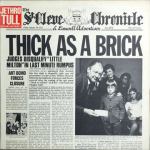
Thick as a Brick Is a Top Test Disc for System Accuracy

Hot Stamper Pressings of the Music of Jethro Tull Available Now
From 2009 to 2010 this was our single go-to record for testing and tweaking our system.

Although we now use an amazing copy of Bob and Ray (the big band version of The Song of the Volga Boatmen located therein has to be one of the toughest tests we know of), we could easily go back to using TAAB.

Artificiality is the single greatest problem that every serious audiophile must guard against with every change and tweak to his stereo. cleaning system, room, electricity and everything else.

Since TAAB is absolutely ruthless at exposing the slightest hint of artificiality in the sound of the system, it is clearly one of the best recordings one can use to test and tune with. Here are just some of the reasons this was one of our favorite test records back in the day:

Dynamics

The better copies are shockingly dynamic. At about the three minute mark the band joins in the fun and really starts rocking. Set your volume for as loud as your system can play that section. The rest of the music, including the very quietest parts, will then play correctly for all of side one. For side two the same volume setting should be fine.

Bass

The recording can have exceptionally solid, deep punchy bass (just check out Barrie “Barriemore” Barlow’s drumming, especially his kick and floor toms. The guy is on fire).

Midrange

The midrange is usually transparent and the top end sweet and extended on the better pressings.

Tubey Magic

The recording was made in 1972, so there’s still plenty of Tubey Magic to be heard on the acoustic guitars and flutes.

(more…)

Just Say No to The Yes Album on Rhino

Hot Stamper Pressings of the Music of Yes Available Now

You can find this one in our audiophile record hall of shame, along with almost 300 others that, in our opinion, make a mockery of the term “audiophile record.”

Is it the worst version ever?

Hard to imagine it would have much competition. The CD I own is dramatically better sounding, and it can probably be had for ten bucks or less. (Make sure Joe Gastwirt had nothing to do with whatever version you buy. His stuff is usually no-noised garbage.)

That notorious hack Ron McMaster strikes again.

Rhino Records bills their releases as pressed on “180 gram High Performance Vinyl.” However, if they are using performance to refer to sound quality, we have found the performance of their vinyl to be quite low, lower than the average copy one might stumble upon in the used record bins.

The CD versions of most of the LP titles they released early on are far better sounding than the lifeless, flat, pinched, so-called audiophile pressings they produced starting around 2000.

The mastering engineer for this junk title actually has the nerve to feature his name in the ads for the records. He should be run out of town, not promoted as a keeper of the faith and defender of the virtues of “vinyl.” If this is what vinyl sounds like I’d would have switched to CD years ago.

And the amazing thing is, as bad as these records are, there are people who like them. I’ve read postings on the internet from people who say the sound on these records is just fine. It’s sad.

Their Grateful Dead titles sound as bad as the cheapest Super Saver reissue copies I have ever heard. And those are terrible!

(more…)

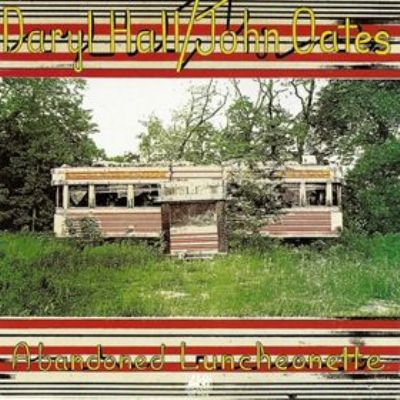
Abandoned Luncheonette – Remembering the Glorious Sound of Tubes

Hot Stamper Pressings of the Music of Hall and Oates Available Now

This record has the sound of TUBES. I’m sure it was recorded with transistors, judging by the fact that it was made after most recording studios had abandoned that “antiquated” technology, but there may be a reason why they were able to achieve such success with the new transistor equipment when, in the decades to come, they would produce nothing but one failure after another.

In other words, I have a theory.

They remember what things sounded like when they had tubes. Modern engineers appear to have forgotten that sound. They seem to have no reference for Tubey Magic. If they use tubes in their mastering chains, they sure don’t sound the way vintage tube-mastered records tend to sound.

Transistor Audio Equipment with Plenty of Tubey Magic

A similar syndrome was then operating with the home audio equipment manufacturers as well. Early transistor gear by the likes of Marantz, McIntosh and Sherwood, just to name three I happen to be familiar with, still retained much of the smooth, rich, natural, sweet, grain-free sound of the better tube equipment of the day.

I once owned a wonderful Sherwood receiver that you would swear had tubes in it. In fact it was simply an unusually well-designed transistor unit. Anyone listening to it would never know that it was solid state. It has none of the “sound” we associate with solid state, thank goodness.

Very low power, 15 watts a channel. No wonder it sounded so good.

Stick with the 4 Digit Originals (SD 7269)

If you’re looking for a big production pop record that jumps out of your speakers, is full of TUBEY MAGIC, and has consistently good music, look no further. Until I picked up one of these nice originals, I had no idea how good this record could sound. For an early ’70s multi-track pop recording, this is about as good as it gets (AGAIG as we like to say). It’s rich, sweet, open, natural, smooth most of the time — in short, it’s got all the stuff we audiophiles LOVE.   

(more…)

The Turn Up Your Volume Test – Blood Sweat and Tears

Hot Stamper Pressings of the Music of Blood, Sweat and Tears Available Now

UPDATE 2025

This commentary was written about twenty years ago, back in the days when I could find clean 360 Label pressings of this album actually sitting in the bins of used record stores. The picture at the bottom says it all — I think we had more than forty copies to work through for our first shootout, pressings of the album that I had been buying (many from Robert Pincus, he was the B,S&T expert back then) since the late-80s. Blood, Sweat and Tears and I go way back.

You may notice that we rarely write about the album these days, and that’s simply because we are not able to find clean, early label pressings to play anymore. (The Red Label pressings can be good but they don’t come close to winning shootouts. Without at least some potential Shootout Winning copies, it makes no sense to do the shootout. The winners are the ones that pay for the losers, naturally, with some profit left over if things go as planned.)

Speaking of which: Our last shootout was quite a few years ago. If we somehow managed to luck into a few copies locally, it’s possible we could do the shootout tomorrow, but buying this title on Discogs and Ebay has been a nightmare, with upwards of 90% of the copies we buy ending up marked return to sender.

The cost in labor (and frustration) we incurred to pursue the album long ago forced us to move on, after plenty of swearing and licking of wounds of course. How is it that record sellers can be so oblivious to the scratches and wear on their consistently noisy vinyl offerings is beyond me.

For those of you who can’t devote the resources to finding a good copy on the Columbia 360 Label, the Gold CD put out long ago by Mobile Fidelity is excellent and well worth whatever you have to pay for it. And I mean that sincerely.


Our Old Commentary

In my opinion this is the BEST SOUNDING rock record ever made. I may be biased because I like the music so much, but played on a Big Speaker System a Hot Stamper pressing is nothing less than ASTOUNDING, the ultimate Demo Disc. It has the power of LIVE MUSIC.

You don’t find that on a record too often, practically never in fact. I put this record at the top of The Best Sounding Rock Records of All Time link (seen on the left) and said it was in a class of its own for good reason — IT IS IN A CLASS OF ITS OWN.

As I’ve noted before, this record is a milestone in the history of popular music. Not only is it The Most Successful Fusion of Rock and Jazz Ever. It’s also One of the Finest Recordings of Popular Music Ever.

The sound is nothing short of amazing. Just the drums alone are enough to win awards: the kick drum has real kick, the snare may actually be the best rock snare ever recorded, the cymbals shimmer like real cymbals; almost everything is right with this record. Especially the music.

Good Demo Disc, Good Test Disc Too

This is the kind of record that doesn’t fall into the good Demo Disc, bad test disc trap. It’s both a good Demo Disc and a good test disc; not too many records can make that claim. (Especially the kinds of records audiophiles tend to like.)

The good copies of this album sound good on almost any system. But the better systems reveal qualities to this recording that you are very unlikely to have ever heard on another record. That’s the Demo side.

On the test side, no matter what level your system is at, any change you make will be instantly obvious on this recording, for good or bad. Nothing can fool it. It’s too tough a test, the toughest I know of bar none. For this record to sound right, truly right, every aspect of its reproduction has to be at the highest level. Any shortcoming will be glaringly obvious. The record may still sound good, but it won’t really sound right. (Knowing what “right” means in this context makes all the difference in the world of course.)

One reason the turn up your volume test is such a great test — the louder the problem, the harder it is to ignore.

(more…)