*Playback Advice

Better Front Ends Actually Reduce Surface Noise

Hot Stamper Pressings of the Music of Tchaikovsky Available Now

This record has no marks that play appreciably, but that RCA vinyl is up to its old tricks again.

Mint Minus Minus with constant light surface noise underneath the music in the quieter sections is the rule. The first half inch of side two is where you will notice it the most.

We are of the opinion that good sound and good music allow you to pretty much ignore surfaces such as these (scratches being another thing entirely of course). 

Better Front Ends

I would make the further point that the better your front end is, the less likely you are to have a problem with vinyl like this, which is the opposite of what many audiophiles perceive to be the case. In other words, some of the cheaper tables and carts seem to make the surface noise more objectionable, not less. (They also tend to collapse completely under the weight of a mighty recordings.)
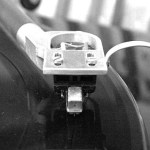
On the other hand, some pricey cartridges — the Benz line comes to mind — are consistently noisier than those by Dynavector, Lyra and others, in our experience anyway.

Vintage Vinyl

As long as vintage vinyl is the only vinyl with sound worth pursuing, as is surely the case these days and will be the case for the forseeable future — we have ample evidence to support this statement for this who are interested in that lamentable reality — a quiet cartridge and a very high quality arm are essential to your being able to recognize good records and reproduce them properly.

Our Dynavector 17Dx gets down deep into the groove, where vintage used records have the least number of problems created by their previous owners.

And we run it nude for even better sound. I discovered this possibility more than a decade ago — so long ago that I cannot remember where I came by the information — but the sound was immediately so much better that all questions were answered moments after dropping the needle.

Not a lot of things are obvious, but that sure was.

(more…)

For a Better Approach to Finding Higher Quality Pressings, Sweat the Details

Please Consider Taking Some of Our Audio Advice

When it comes to doing shootouts, half the battle is just being able to play the record right.

Our approach is simple enough. We precisely adjust the arm and cartridge for every title by ear, then compare the various pressings — properly cleaned of course — under carefully controlled, blinded conditions, with as much scientific rigor as we can bring to the proceedings.

In some ways it may in fact be analogous to rocket science, which we would define as the process of discovering all the details that need to be sweated and then sweating the hell out of them.

It’s the opposite of theoretical physics. One doesn’t need to be a novel thinker or have big ideas to do audio well.

Obsessively working through the basics of table setup, tweaks, room treatments and electrical quality will take your system to levels beyond those you have ever imagined.

And, you sure don’t need a bloody microscope to check your stylus rake angle, unlike some audiophile reviewers who insist that such devices are essential.

Your ears, if they are any good at all, will do the job just fine, and probably much better.

(more…)

First Question: “How loud do you play your records?”

More Records that Can Only Sound Their Best Turned Up Good and Loud

Our good customer, Conrad, wrote us about his experience with a Stevie Ray Vaughan album a while back.

You can find the bulk of his letter here.

I wanted to make a point about one of his observations. (Emphasis added.)

“There seems to be a threshold level for this record at which it sounds congested below, but which it comes alive above (and how).”

Conrad,

You hit the nail on the head with your newfound appreciation of the sound of the two sides at louder levels.

We don’t know what our records sound like at moderate levels.

This is true for the electric blues albums of Stevie Ray Vaughan, but just as true for rock, jazz and even classical.

We don’t play them at moderate levels, and we don’t want to hear them at moderate levels.

There are at least two very good reasons for our position:

The first one is the most obvious — we don’t think music played at unrealistically low levels is very enjoyable.

And two, lower levels interefere with our ability to properly judge the sound of the pressings we play in our shootouts.

Playing records quietly too often obscures their faults.

It also reduces their energy, as well as whatever dynamic contrasts they might have, their ability to play clean in the loudest climaxes or choruses, and on and on down the list.

(more…)

Discovering Reversed Polarity on Music for Bang, Baaroom and Harp Was a Breakthrough

schorymusic

Percussion Recordings with Hot Stampers Available Now

Music for Bang Baaroom and Harp is yet another one of the pressings we’ve discovered with reversed polarity on some copies. This happened many years ago, and as you can see from the commentary we wrote back then, it came as quite a shock to us at the time.

Are audiophile reviewers or audiophiles in general listening critically to records like this?

I wonder; I could not find word one about any polarity issues with this title, and yet we’ve played four or five copies with reversed polarity on side two. How come nobody is hearing it, apart from us?

We leave you, dear reader, to answer that question for yourself.

This listing has the latest information on the stamper numbers to avoid.

More stamper and pressing information can be found here.

(more…)

Every Picture Tells a Story Is a Big Speaker Recording Par Excellence

Hot Stamper Pressings of the Music of Rod Stewart Available Now

I Know I’m Losing You rocks as hard as any song from the period, with Demo Disc sound.

If you have a system with big dynamic speakers and can drive them to seriously loud listening levels, you will be blown away by the power of this recording.

You know what album this one has the most in common with? Nirvana’s Nevermind.

Every Pictures Tells a Story is the Nevermind of its day, twenty years earlier.

It has that kind of power in the bass and drums. Off the charts energy too.

But it also has beautifully realized acoustic guitars and mandolins, something that virtually no recording for the last twenty years can claim. In that sense it towers over Nevermind, an album I hold in very high esteem. 

If you’re a fan of big drums in a big room, with jump out of the speakerslive-in-the-studio sound, this is the album for you.

The opening track on side one has drums that put to shame 99% of the rock drums ever recorded. The same is true of I Know I’m Losing You on side two. It just doesn’t get any better for rock drumming, musically or sonically.

Some of the best rock bass ever recorded can be found here too — punchy, note-like and solid as a rock. Got big dynamic speakers? A concrete foundation under your listening room? You are going to have a great time playing this one for your audiophile friends who have screens or little box speakers. Once they hear what big well-recorded drums can sound like on speakers designed to move air, they may want to rethink their choices.

(more…)

We Was Wrong about Presence

Hot Stamper Pressings of Led Zeppelin’s Albums Available Now

My history with Led Zeppelin’s seventh album is a classic case of me mistakenly blaming the recording.

In our listings for Presence from about fifteen years ago (a lifetime in audio, at least for us) we noted:

“By the way, Royal Orleans (at the end of side one) never sounds good; it’s always grainy. Same story with the intro to Nobody’s Fault But Mine. It sounds like groove damage, but since it’s on every last one of our domestic copies (the only ones that have the potential to sound amazing in our experience) we know it has to be a pressing problem and not a problem with the individual copies. It’s a shame, but the rest of the songs here all sound amazing.”

This is no longer true, or at least the part about Nobody’s Fault But Mine being grainy or distorted isn’t, since I didn’t test Royal Orleans this time around.

I had just put in a fresh Dynavector 17d3 two days before and spent almost three hours getting the setup dialed in. In fact, it was so right when I was done that I spent the next three or four hours experimenting with room treatments.

When I was done the changes seemed to have opened up the sound and increased the transparency even further. (I went a little too far and had to dial it back a bit, but that’s not at all unusual in my experience.)

Wait a Minute

So now I’m reading about the problems we used to encounter with Nobody’s Fault and thinking to myself, “Wait a minute. I didn’t hear any grain or distortion. Not on the good copies anyway.”

Of course the reason I hadn’t heard those problems is that over the last year or so we’d fixed them.

How I don’t really know.

Maybe the main improvements happened just last week with the cartridge being dialed in better.

Or maybe it was that in combination with a few new room tweaks.

Or maybe those changes built upon other changes that had happened earlier; there’s really no way to know.

(more…)

The Planets – Proper VTA Adjustment Is Critical

More of the music of Gustav Holst

Accurate VTA adjustment for classical records is critical to their reproduction. If you do not have an arm that allows you to easily adjust its VTA, then you will just have to do it the hard way (which normally means loosening a set screw and moving the arm up and down until you get lucky with the right height).

Yes, it may be time consuming, it may even be a major pain in the ass, but there is no question in my mind that you will hear a dramatic improvement in the sound of your classical records once you have learned to precisely adjust the VTA for each and every one of them. We heard the improvement on this record, and do pretty much on all the classical LPs we play. All records really.

VTA is not a corner you should be cutting.

Its careful adjustment is critical. Of course, so are anti-skate, azimuth and tracking weight. The links below have a fair amount of advice on turntable setup which might be worth checking out.

By The Way

If you want a good sounding pressing of The Planets, our favorite by far is Previn’s reading on EMI from 1974.

(more…)

Let’s Face It – Some Truly Great Records Are Almost Always Noisy

Hot Stamper Pressings of the Music of Paul McCartney Available Now

Some records are consistently too noisy to keep in stock no matter how good they sound. McCartney’s first album is one of them.

Copies of McCartney’s first can rarely be found on the site, but if there are any copies available, they are most likely in our section for records with condition issues, which contains about 30% of all the Hot Stamper pressings active on the site at any one time.

Hot Stampers are almost exclusively vintage vinyl pressings — “old records” you might say — and old records, even after a good cleaning, are rarely quiet. (We lay out the particulars of our grading system here.)

One of our customers noted that the Hot Stamper we sent him of McCartney’s first album was a bit noisier than he would have liked. We replied:

As for surface issues, we wish we could find them quiet, but that is simply not an option, especially considering how dynamic the recording is. In the listing we noted:

(more…)

Sergio Mendes + Psych + Your Mind Will Be Blown

mendestill_depth_1102533608More of the Music of Sergio Mendes and Brasil ’66

This commentary was written sometime around 2010.

If you are looking for DEMO DISC QUALITY SOUND with music every bit as wonderful, look no further — this is the record for you.

If I had one song to play to show what my stereo can really do, For What It’s Worth on a Hot Stamper copy would probably be my choice. I can’t think of any material that sounds better. It’s amazingly spacious and open, yet punchy and full-bodied the way only vintage analog recordings ever are.

This one being from 1970 fits the bill nicely.

Side two of this album can be one of THE MOST MAGICAL sides of ANY record — when you’ve got a killer copy. I don’t know of any other record like it. It seems to be in a class of its own. It’s an excellent test disc as well. All tweaks and equipment changes and room treatments must pass the Stillness test.

To fail to make this record sound better is to fail completely. The production is so dense, and so difficult to reproduce properly, that only recently have I begun to hear just how good this record can sound. There is still plenty to discover locked in these grooves, and I enthusiastically accept the challenge to find all the sounds that Sergio created in the studio, locked away in the 40 year old vinyl.

(more…)

Where Cheap Turntables Fall Flat – The Music of Franz Liszt

Hot Stamper Pressings of Classical Music Available Now

Classical music is unquestionably the ultimate test for proper turntable/arm/cartridge setup.

The Liszt Piano Concerto record you see pictured is a superb choice for making small adjustments to your setup in order to improve the playback of these very difficult to reproduce orchestral recordings.

Here are some other reviews and commentaries touching on these areas of turntable setup.

One of the reasons $10,000+ front ends exist is to play large scale, complex, difficult-to-reproduce music such as Liszt’s two piano concertos. You don’t need to spend that kind of money to play this record, but if you choose to, it would surely be the kind of record that could help you recognize the sound quality your tens of thousands of dollars has paid for.

It has been my experience that cheap tables more often than not collapse completely under the weight of a mighty record such as this.

(more…)