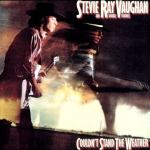
vaughcould

First Question: “How loud do you play your records?”

More Records that Can Only Sound Their Best Turned Up Good and Loud

Our good customer, Conrad, wrote us about his experience with a Stevie Ray Vaughan album a while back.

You can find the bulk of his letter here.

I wanted to make a point about one of his observations. (Emphasis added.)

“There seems to be a threshold level for this record at which it sounds congested below, but which it comes alive above (and how).”

Conrad,

You hit the nail on the head with your newfound appreciation of the sound of the two sides at louder levels.

We don’t know what our records sound like at moderate levels.

This is true for the electric blues albums of Stevie Ray Vaughan, but just as true for rock, jazz and even classical.

We don’t play them at moderate levels, and we don’t want to hear them at moderate levels.

There are at least two very good reasons for our position:

The first one is the most obvious — we don’t think music played at unrealistically low levels is very enjoyable.

And two, lower levels interefere with our ability to properly judge the sound of the pressings we play in our shootouts.

Playing records quietly too often obscures their faults.

It also reduces their energy, as well as whatever dynamic contrasts they might have, their ability to play clean in the loudest climaxes or choruses, and on and on down the list.

(more…)

Hot Stampers and Good Sounding Records Are Not the Same Thing

Hot Stamper Pressings of the Music of Stevie Ray Vaughan Available Now

They are barely even related. Here’s why.

A good customer wrote to us recently to say that he was not happy with the Stevie Ray Vaughan White Hot Stamper pressings we had sent him.

Tom,

I also have a couple more returns for you: SRV Couldn’t Stand the Weather and SRV Soul to Soul. While these are good, they’re just not quite up to White Hot Stamper quality like some of the other records clearly are.

I took the opportunity to reply at length.

Dear Sir,

You appear to be conflating two concepts, Hot Stampers and good recordings. They are not the same thing. They are barely even related.

Hot Stampers are especially good sounding pressings of specific albums that we found through shootouts.

The recordings of these albums may be better or worse than others you are familiar with. That has nothing to do with how hot the stampers are of the pressings we sell.

It works this way: if you had a hundred copies of The Dark Side of the Moon, the median pressing– the one that would have ranked number 50 out of 100 — would sound substantially better than either of those two SRV albums.

Pink Floyd: amazing recording. 

SRV: good, not great recording.

We would never sell an average pressing of DSOTM. We only sell the best sounding versions of it.

We would never sell the average version of any SRV album. We only sell the best sounding versions of them.

But no SRV album is ever going to sound like a good Dark Side of the Moon! (more…)

Letter of the Week – “I took another listen to SRV, this time at VOLUME. Oh boy…”

Hot Stamper Pressings of the Music of Stevie Ray Vaughan Available Now

A customer wrote us about his experience with Stevie Ray a while back:

There seems to be a threshold level for this record at which it sounds congested below, but which it comes alive above (and how).

I also noticed that my previous observations about the ratings of sides A and B were reversed at this volume level; there is more bass on side A, which was resulting in it sounding more congested at lower levels, but which is delicious when played loud; side B sounds a bit thin at louder volumes comparatively.

I guess this is more in line with what you heard when reviewing.

C

Conrad,

You hit the nail on the head with your newfound appreciation of the sound of the two sides at louder levels.

We don’t know what our records sound like at moderate levels.

This is true for the electric blues albums of Stevie Ray Vaughan, but just as true for rock, jazz and even classical.

We don’t play them at moderate levels, and we don’t want to hear them at moderate levels.

There are at least two very good reasons for our position:

The first one is the most obvious — we don’t think music played at unrealistically low levels is very enjoyable.

And two, lower levels interefere with our ability to properly judge the sound of the pressings we play in our shootouts.

Playing records quietly too often obscures their faults.

It also reduces their energy, as well as whatever dynamic contrasts they might have, their ability to play clean in the loudest climaxes or choruses, and on and on down the list.


Further Reading

Couldn’t Stand The Weather – The Good and the Bad

More Stevie Ray Vaughan

More Electric Blues

Side one has present vocals and guitars, keeping in mind that the vocals are usually well back in the mix compared to the guitars, which for a guitarist of SRV’s skill is probably a good thing.

The bass is big, the overall presentation is huge, and the energy is jumpin’. A bit more top would have put it right up there with the best we played. As it is, A++ is the grade, a big step up over the average copy to hit our table.

Side two earned a grade of A+ to A++. It’s very transparent, with good presence and energy. The upper mids get to be a bit much at times, which makes the snare drum and cymbals a bit hi-fi-ish, and there is some smear on the transients (two problem areas that we ran into repeatedly in our shootout).

Observations

This SUPER HOT STAMPER side one gets Stevie’s bluesy guitar to sound about as rich and powerful as any recording of it can. Just picture yourself in a blues club. Now imagine the volume being about ten times as loud. This is the kind of music you would hear and it would tend to sound pretty much like this, a bit messy but also real. If you’re one of those audiophiles who likes pinpoint imaging, forget it. They were going for the “live in the studio” sound with this one, which means it’s a bit of a jumble image-wise. But that’s the way you would hear it in a blues club, so where’s the harm?