Pressings with Weak Sound or Music

These vintage records didn’t sound very good to us. Additionally, some made the list because the music or performances were not to our liking.

As to their sound quality, some of them are bad recordings, but some are no doubt just bad pressings of good recordings. Either way, audiophiles should avoid them.

Bad sounding Heavy Vinyl and Half-Speed mastered pressings can be found in their own sections.

These Two Return to Forever Albums Didn’t Make the Grade

Hot Stamper Pressings of Jazz Rock Fusion Albums Available Now

Pictured are two Return to Forever albums we auditioned at some point in the past and found unimpressive.

Without going into specifics — our notes are long gone at this point — we’ll just say these two albums suffer from weak music, weak sound, or both, and therefore do not deserve a place in most audiophile collections — unless that audiophile happens to be a huge fan of the band.

My guess is that if these two records are sitting in an audiophile’s collection, they have not been played in many years, if ever. If you own either of these two albums, pull them out and play them.

You may find that making more room on your shelves for records you can actually enjoy is easier than you think.

Our Pledge of Service to You, the Discriminating Audiophile 

We play mediocre-to-bad sounding pressings so that you don’t have to, a free service from your record-loving friends at Better Records.

Having the wherewithal to audition so many records puts us in a unique position to help audiophiles looking for higher quality sound. (Or, more accurately, that small subset of audiophiles looking for the highest quality pressings who also have a great deal of disposable income to devote to them.)

Yes, we have the obvious resources that would be needed: the staff and the budget.

More important than either of those, we came up with a new (sort of) and much more successful (definitely) approach.

We’ve learned through years of experimentation that there is no reliable way to predict which pressings will have the best sound for any given album.

The impossibility of predicting the sound of pressings is something that we’ve learned to accept as axiomatic. As a scientifically-oriented person and a born skeptic, this was a concept I was quick to embrace.

The more time I spend in this hobby, the more I realize it is beyond dispute. Like it or not — and, based on what I read on forums and such, there are apparently a goodly number of audiophiles who don’t like it — it is the undeniable reality underlying the nature of vinyl pressings.

With that in mind, finding better sounding pressings of any given recording can be achieved by following these seven steps:

(more…)

Don’t Waste Your Money on this Schubert Recording with Munch from 1962

Hot Stamper Pressings of Living Stereo Recordings Available Now

Some audiophiles buy albums based on their labels. For example, this Shaded Dog pressing from the Golden Age of RCA Living Stereo might appeal to a certain kind of audiophile who treasures original LSC pressings.

More than that, he might limit himself to the most sought-after 1S Indianapolis pressings. Hooray! What could be better?

However, many records from this era simply do not sound good, and this is one of them. We have never heard a good sounding copy of LSC 2522, and we’ve played plenty of them over the decades that we’ve been selling Golden Age Classical records.

Are You a Fan?

If you’re a fan of Living Stereo pressings, have you noticed that many of them – this one for example – don’t sound very good?

If you’re an audiophile with good equipment, you should have. But did you? Or did you buy into the hype surrounding these rare LSC pressings and just ignore the problems with the sound?

When vintage RCA Living Stereo records don’t sound good to us, we put them on this list and they go into our hall of shame. We don’t make excuses for them. We call a spade a spade. The same goes for records being made today.

Some audiophiles buy albums based on their labels. For example, this Shaded Dog pressing from the Golden Age of RCA Living Stereo might appeal to a certain kind of audiophile who treasures LSCs on the original label.

More than that, he might limit himself to the most sought-after 1S Indianapolis pressings. Hooray! What could be better?

However, many records from this era simply do not sound good, and this is one of them. We have never heard a good sounding copy of LSC 2522, and we’ve played plenty of them over the decades that we’ve been auditioning Golden Age classical records for sale.

This Shaded Dog might be passable on an old school system, but it was too unpleasant to be played on the high quality modern equipment we use.

There are quite a number of other records that we’ve run into over the years with similar shortcomings. Here are some of them, a very small fraction of what we’ve played, broken down by label.

  • London/Decca records with weak sound or performances
  • Mercury records with weak sound or performances
  • RCA records with weak sound or performances, including many on the coveted Shaded Dog label

(more…)

These Kelly Blue Reissues from the 70s Are a Real Mess

Hot Stamper Pressings of the Music of Wynton Kelly Available Now

Sometimes the 70s reissues of vintage jazz recordings that were made in the fifties, sometimes released with different covers similar to the one you see pictured, have excellent sound.

We know that for a fact because we’ve played some very good ones.

In the case of Kelly Blue, we felt we were obligated to play a few to make sure we were hearing as wide a range of different pressings as possible. We wanted to be sure we were hearing the best sounding pressings regardless of what era they were pressed in. (We’re very open minded that way.)

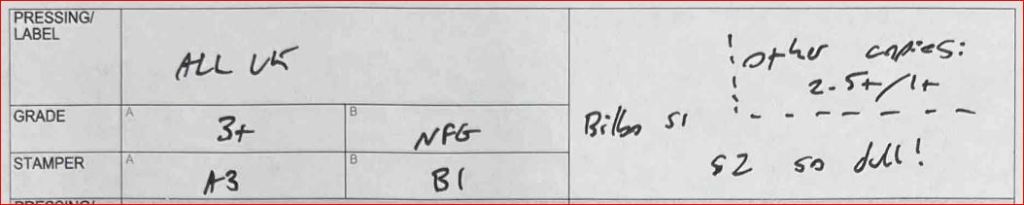
Here are our notes for the Black Label Riverside Stereo pressing with “1971” stampers:

  • Thin,
  • Dry,
  • Honky,
  • Veiled.
  • Severe stereo spread. (Hard left and right, unmusical this way, players are disconnected.)
  • Grade: 1+ on both sides

The other copy we had was even worse:

  • NFG on side one, side two never played.

The Riverside originals we’ve played in the past, like a lot of other Riverside originals from the 50s, such as those by Thelonious Monk, were uniformly terrible.

And trying to find one in audiophile playing condition is as easy as it sounds.


We’ve auditioned countless pressings like this one in the 38 years we’ve been in business — buying, cleaning and playing them by the thousands. This is how we find the best sounding vinyl pressings ever made.

Not the ones that should sound the best. The ones that actually do sound the best.

If you’re an audiophile looking for top quality sound on vintage vinyl, we’d be happy to send you the Hot Stamper pressing guaranteed to beat anything and everything you’ve heard, especially if you have any pressing marketed as suitable for an audiophile. Those, with very few exceptions, are rarely better than mediocre, and some of them are just awful, with many of the newest releases being the most awful of them all!

(more…)

Monk’s Music on Riverside 9242 Didn’t Make the Grade

Hot Stamper Pressings of the Music of Thelonious Monk Available Now

The Riverside 9242 pressing of Monk’s Music we played recently was very much not to our liking.

In fact, every copy of this record we have ever played sounded terrible. The early pressings sounded bad and the OJC sounded bad.

We give up. We’re cutting our losses. We love Monk, but why on earth would we keep throwing money down this rathole? Our notes for this copy read:

  • Dry (more records with dry sound can be found here), and
  • Bright (more records with bright sound can be found here),
  • Overall grade: No Good

Some reviewers of the audiophile persuasion prefer to review only records that sound good to them and ignore the rest. We think this does the audiophile community a disservice.

Like Consumer Reports, we like to test things. They test toasters, we test records. We put them through their paces and let the chips fall where they may.

They want to find out if the things they are testing offer the consumer good quality and value.

We want to find out if the records we are testing offer the audiophile good sound and music.

It takes a dedicated group of people and a healthy budget to carry out these kinds of tests in large numbers.

No other record dealers, record reviewers or record collectors could possibly have auditioned more than a small fraction of the records that we’ve played. We’ve been looking for the best sounding pressings of the recordings that have stood the test of time for decades. Now, with a staff of ten or more, we can buy, clean and play records at a scale that would be unimaginable for any single person to attempt.

That puts us in a unique position to help audiophiles looking for the highest quality pressings.

Yes, we have the resources, the staff and the budget. More importantly, we came up with a much scientifically reliable approach.

(more…)

VICS 1069 – In 2004 We Mistaked Finlandia on VICS for a Demo Disc

Hot Stamper Pressings of the Music of Sibelius Available Now

UPDATE 2024

We played a 4S/1S copy of this record, VICS 1069, and thought it sounded terrible.

It was flat and bright with splashy cymbals and crude brass.

Even if we assume the copy we played many years ago could have been much better than this latest pressing — which is doubtful but certainly possible — there is no reason to pursue this version of the album when there are known top quality pressings of this very same performance on Decca.


Our Old Review

DEMO QUALITY SOUND and quiet surfaces too.

I don’t know when I’ve heard this album with better sound. This one may be better than the best Shaded Dog for all I know — it’s that good.

You’ll notice that there is a copy of this very same record on the website for $1.99. That one sounds dull. I don’t think you’ll be able to find a better sounding copy of this record than the pressing we are selling here, because it really is an exceptionally good sounding record. If it weren’t, it would be more like $1.99.

(more…)

Capriccio Italien on Classic Records and How Badly I Missed the Boat

More of the Music of Peter Ilyich Tchaikovsky

More of the Music of Nikolai Rimsky-Korsakov

Years ago, around 2005 if memory serves, I played a copy of the Classic Records pressing of LSC 2323 and thought it was pretty good.

I thought it was better than the Shaded Dog copies I had compared it to, which, based on hundreds of other Classic Records titles I had auditioned, was unexpected to say the least.

Little did I know that the Shaded Dog pressings on this title are not remotely competitive with the early reissues.

The best of the Shaded Dog pressings we could find, which just happened to have a 1s side one, came in tied for last with the one 70s Red Seal pressing we thought sounded good enough to make the shootout.

(Some inside baseball: most of the Shaded Dogs and Red Seals were needle-dropped, and all but two were eliminated before the shootout. It takes time and wastes money to clean and play pressings that sound hopeless, so a quick elimination round often precedes the cleaning process.)

Back then it was tough to wrap my head around the idea that a Classic Record classical title could actually be better sounding than a Shaded Dog — it had never happened, so I knew there had to be more to the story.

Finding the time to do the serious investigation of LSC 2323 that would be necessary to get to the bottom of it was not in the cards, so I shelved the project for close to the next twenty years.

The title would have to wait until 2024 to go through a proper shooout, and when it did, naturally the Classic was part of the mix, which is the way we do things here at Better Records. Every record gets the chance to show us what it can do, to be evaluated fairly without the listener having any way to know which pressing is playing.

It turns out that side one of the Classic was passable, but side two — the side I had probably never played — was every bit as bad as most of their other classical offerings.

Side One, Second Movement (Tchaikovsky)

  • Big, but bright and compressed
  • Gets loud but opaque and hot
  • Good weight

Side One, First Movement

  • Bright and blurry bells
  • Sort of tubey but a mess
  • Grade: 1+ (passable, but no Hot Stamper)

Side Two (Rimsky-Korsakov)

  • Big but boomy and smeary
  • Brass is edgy and opaque
  • No top end or space
  • Peaks are hot and congested
  • Grade: NFG

To recap: In 2005 I was impressed with Classic’s pressing of LSC 2323. That was only twenty years ago, yet I could not have been more wrong. I thought my stereo was great — I’d owned top quality equipment since 1975 by then — thirty sodding years — so my audiophile credentials would surely dwarf those of the vast majority of forum posters who write about audiophile pressings today. How reliable should we expect their reviews to be?

(more…)

Don’t Skip the OJC, Put It in a Shootout

Of the three early OJC pressings of West Coast Sound we played recently, only one met our standards. At 2+/1.5+, the sound was good, not great.

One copy earned grades of 1+/1+, which means the sound was passable. The last copy had an NFG side two, which means it was just awful.

(Many of the Heavy Vinyl disasters we’ve been cataloging lately have earned that notorious grade. The unacceptably lo- to mid-fi sound even the better ones offer doesn’t seem to bother the audiophiles who rave about them, however.)

So does side two of the OJC pressing have fairly good sound, merely passable sound, or is the sound hopelessly bad?

In the case of this Shelly Manne album, all three, and the only way we were able to discover that is by cleaning up three of them and playing them head to head with real Contemporary pressings in a blinded experiment.

Obviously we were hoping for better results from our OJCs — only one of the copies we played will turn out to be saleable.

Why did we bother? That old bugaboo the profit motive was all that was needed to make us give the OJC pressings a try. We thought we could make money on them but it turns out that the opposite will happen. Oh well, nothing ventured, noting gained.

More importantly, we are not the least bit shy about coming clean and sharing the results with our readers and customers, especially the part about three identical looking copies with the same stamper numbers all sounding very diffferent from each other.

An added bonus is that side two was worse than side one most of the time. That happens often enough, but nobody but us ever seems to want to talk about it.

If we had had ten OJC pressings to play, we probably would have be able to find at least one or two with a grade of 2+/2+, meaning that George Horn probably did a creditable job mastering the album back in 1984 when he cut it for Fantasy, to sell for the very affordable price of $5.98. It’s most likely the pressing plant that let listeners down.

Needs Tubes

The problem here is that this title needs tubes, or, at the very least, the sound of tubes, and George apparently did not have them, or enough of them, in his mastering chain.

Our specific notes can be seen on the left. We mention that the first track has the best sound (1956 dates), the rest falling short for being darker and more crude (“old school,” some dating from 1953).

The West Coast horn players are the reason to buy this title, with horns that are “sweet and tubey,” but of course to hear that kind of sound you will need a real Contemporary pressing, not an OJC — or anything made in the modern era for that matter.

(more…)

Don’t Waste Your Money on this Living Stereo from 1962

Hot Stamper Pressings of Living Stereo Recordings Available Now

The sound of the copies we’ve played of LSC 2605, Highlights from Rubinstein at Carnegie Hall, released by RCA in 1962, have never impressed us sonically.

We didn’t listen to the music critically because our primary purpose here at Better Records is to evaluate recordings for their sound quality first (hence the name of our business), and if the sound isn’t good enough, we have to move on to titles with better sound that our customers might find more to their liking.

1962 was surely one of the truly glorious years for analog recordings, but the sound of the most recent copy of the album we played may have been rich, but unfortunately is was also opaque.

We would consider the sound no better than passable, and therefore it’s not a title we would consider offering to our customers.

Unless…

Unless you somehow managed to come across a copy noticeably better than the ones we’ve played over the last twenty or more years — a possibility that, although unlikely, cannot be ruled out — we would advise those interested in a top quality piano recital recording to look elsewhere.

Leave this RCA to the people who love collecting records. It’s perfect for record collectors — it’s from the right company, made in the right era, and it has the right original label — but it’s really not suitable for those of us who love playing good sounding records. It will of course sit happily on a shelf, to be pulled out and shown to other like-minded souls, but it is unlikely to spend much time spinning on a turntable platter with a needle tracing its grooves.

Some audiophiles are of the opinion that vintage Living Stereo recordings on the original Shaded Dog label can do no wrong, but we have never subscribed to that view. We’ve played too many that did plenty wrong. Maybe one out of three are good enough for the audiophile who wants to experience music reproduced at a highest levels of sound quality.

There are quite a number of records that we’ve run into over the years with more shortcomings than this one. Here are some of them, a very small fraction of the titles we’ve played, broken down by label.

  • London/Decca records with weak sound or performances
  • Mercury records with weak sound or performances
  • RCA records with weak sound or performances

(more…)

Don’t Waste Your Money on this Living Stereo from 1964

Hot Stamper Pressings of Living Stereo Recordings Available Now

The copies of LSC 2606 we’ve played to date have never impressed us with the quality of their sound.

They are tonally natural, sure, but the acoustic tends to be too dry for our taste.

We are officially giving up on it since it’s very unlikely to sound good enough on the high quality modern equipment we, as well as our customers, use.

It’s much better suited to the old school audio systems of the 60s and 70s, but we would be surprised if anyone reading this blog still has one of those in this day and age.

Audio has come a long way since then.

Higher quality playback has revealed that some vintage records are dramatically better sounding than anything that has come after them over the course of the last fifty years.

Others have been left behind, and rightly so. Based on our experience of playing and critically listening to thousands and thousands of vintage pressings, it is our belief that the latter group must now include LSC 2606.

If you see a copy sitting in the bins of your local record store, by all means pick it up (for cheap) if you’re interested in the repertoire. Audiophiles looking for higher quality sound are advised to look elsewhere.

On that note, readers might want to consider trying something from our Hot Stamper Classical section. It typically has close to a hundred titles and they are all guaranteed to demonstrate dramatically better sound than any other pressing of the same album you can find, especially when compared to any record pressed on Heavy Vinyl.

(more…)

Now, There Was A Song! Sounds Bad to Us Now

Hot Stamper Pressings of the Music of Johnny Cash Available Now

UPDATE 2024

We got a couple of nice copies of this record in recently and they sounded terrible.

We suspect we were being too generous with our previous review. Buy this one for the music of you like, but don’t expect it to have audiophile quality sound.


This very nice looking original Columbia Stereo 360 Label LP has that authentic early Johnny Cash sound. We put this through our cleaning process and took a listen. The EQ on his vocals is a little bit brighter than we like but overall the album has LOTS OF TUBEY MAGIC!

“This is an outstanding album of covers of old country songs, from the familiar (Ernest Tubb, Hank Williams, George Jones) to lesser-known gems. ” AMG

(more…)