Labels With Shortcomings – Analogue Productions

Chad Has Served Poor Jethro Tull Most Barbarously

Hot Stamper Pressings of the Music of Jethro Tull Available Now

With a nod to our old friend, John Barleycorn.

We were finally able to get our hands on Analogue Productions’ newly remastered Stand Up, an album we know well, having played the British copies from every era by the score. Our notes for the sound can be seen below.

If ever a record deserved a “no” grade, as in “not acceptable,” this new 45 RPM pressing mastered by Kevin Gray deserves such a grade, because it’s just awful. (This link will take you to a great many more records best avoided by audiophiles in search of better sound. Although we’ve only linked to about 75 pressings here on the blog, it should be noted that the world is full of bad sounding records.)

But let’s put that grade in context. The last time a good sounding version of Stand Up was released, as far as we can tell, was 1989, and that version was the Mobile Fidelity Gold CD. I bought mine soon after it came out. I wasn’t even planning on buying a CD player when the Compact Disc was first invented, but then Mobile Fidelity played a dirty trick on me. Instead of releasing Loggins and Messina’s first album on vinyl, they put it out exclusively on CD as part of their Silver MFCD series.

As a die-hard MoFi fan, that sealed the deal: now I had to buy a CD player. I picked up a cheap Magnavox player, the 1040. I think it ran me less than $100, and played my new Sittin’ In CD, which, as I recall, sounded pretty good. (One of my other early CD purchases was Tumbleweed Connection, the regular label release, and it was dreadful.)

I still own Stand Up on Gold CD, and I still find it superb in every way. (Many of the MFSL Gold CDs from this era are excellent and worth seeking out.)

It sounds nothing like this new vinyl release, and that’s a good thing.

On vinyl, Stand Up has rarely been given the care it deserved. The last version of Stand Up to have sound we would want to listen to was pressed in the UK in the early ’70s. That was close to fifty years ago.

We sold some domestic pressings of the album back in the early 2000s, describing them at the time as made from dub tapes with all the shortcomings that entails, but mastered very well from dub tapes. The best domestic pressings are rich, smooth, tonally correct and natural sounding. They’re too dubby to sell as Hot Stampers, but they are not bad records. Some later Chrysalis pressings are big and open, but often they are too thin and bass-shy for the music to work. We’ve never taken them seriously.

It wasn’t long before we’d eliminated everything but the early UK pressings for our shootouts, and we quickly discovered that the earliest of the UK pressings on the older Island label were not good at all. We wrote about the problem with some originals more than ten years ago.

What was surprising about the shootouts we had done in past years was how disappointing most of the early British pressings we played were. They were flat, lacked energy and just didn’t rock the way they should have.

We learned the hard way that most British Pink label pressings aren’t especially rich, that some are small and recessed, and some are just so smeary, thick and opaque that they frustrate the hell out of you as you’re trying to hear what any of the musicians other than Ian Anderson is doing.

So when a reviewer comes along and says something positive about the new pressing compared to some unidentified original, we appreciate the problem that is at the root of his mistaken judgments:

Here’s the deal: if the goal was to duplicate the original pink label Island sound, this reissue misses that, which is good because this new double 45 reissue is far superior to the original in every possible way.

The tape was in great shape, that’s for sure. Clarity, transparency, high frequency extension and especially transient precision are all far superior to the original. Bass is honest, not hyped up and the mastering delivers full dynamics that are somewhat (but only slightly), compressed on the original. Ian Anderson’s vocals are naturally present as if you are on the other side of the microphone. Most importantly, the overall timbral balance sounds honest and correct. But especially great is the transient clarity on top and bottom.

If you’re fortunate to have an original pink label Island, at first you might think the sound is somewhat “laid back”, but that’s only because the mids and upper mids are not hyped up as they are on the original. That adds some excitement, but it clouds the picture and greatly obscures detail.

If you scroll down to our notes, you will see what we thought of the “laid back” sound this reviewer talks about. (Keep in mind that we first read the above review mere moments ago.)

We think “smaller, thick and stuck in the speakers” may be someone’s idea of “laid back,” but, just so there is no misunderstanding, it’s our idea of “awful.”

None of these are good things. Our Hot Stamper pressings are never small, thick or stuck in the speakers. They’re the records with the opposite of that sound. Our records are big, transparent and open. That’s why we can charge so much money for them and have people scooping them up from our Wednesday mailer the moment they become available.

They deliver the big, bold sound that the brilliant engineer for the album, Andy Johns, was known for. Laid back was not in his vocabulary.

Here is more of what we heard on side one.

Jeffrey Goes to Leicester Square

“Transients are sharp but body is dull. Kinda phony.”

Phony sound is the key here. Messing with the EQ in the mastering benefits some aspects of the sound at the expense of others.

Nothing new there. Audiophile pressings with wacky EQ are the norm. I would be surprised if any common Reprise pressing from back in the day wouldn’t sound more “right,” more tonally correct, more seamless. I’ve played quite a few and I don’t recall ever hearing one sound “phony.”

On side two we played the first two tracks.

(more…)

Sonny Rollins Plus 4 – Defending the Indefensible

Hot Stamper Pressings of the Music of Sonny Rollins Available Now

We reviewed this album in 2014 or thereabouts.


I cannot recall hearing a more ridiculously thick, opaque and unnatural sounding pair of audiophile records than this 45 RPM Analogue Productions Heavy Vinyl release, and I’ve heard a ton of them. 

Surely someone must have noticed how awful these records sound.

So, being an enterprising sort, with a few idle moments to spare, I did a google search. To my surprise it came up pretty much empty. Sure, dealers are selling it, every last one of the bigger mail-order types.

But how is it that no reviewer has taken it to task for its oh-so-obvious shortcomings?

And no one on any forum seems to have anything bad to say about it either. How could that be?

We don’t feel it’s incumbent upon us to defend the sound of these pressings. We think that for the most part they are awful and want nothing to do with them.

But don’t those who DO think these remastered pressings sound good — the audiophile reviewers and the forum posters specifically — have at least some obligation to point out to the rest of the audiophile community that at least one of them is spectacularly bad, as is surely the case here.

Is it herd mentality? Is it that they don’t want to rock the boat? They can’t say something bad about even one of these Heavy Vinyl pressings because that might reflect badly on all of them?

I’m starting to feel like Mr. Jones: Something’s going on, but I don’t know what it is. Dear reader, this is the audiophile world we live in today. If you expect anyone to tell you the truth about the current crop of remastered vinyl, you are in for some real disappointment.

We don’t have the time to critique what’s out there, and it seems that the reviewers and forum posters lack the — what? desire, courage, or maybe just the basic critical listening skills — to do it properly.

Which means that in the world of Heavy Vinyl, it’s every man for himself.

And a very different world from the world of vintage vinyl, the kind we offer. In our world we are behind you all the way. We guarantee your satisfaction or your money back.

Now which world would you rather live in?


UPDATE 2025

Still not a single review on Discogs for this pressing.

(more…)

A Kinder, Gentler Approach to Record Reviewing

Record Collecting for Audiophiles from A to Z

Allow me to respond to a comment left by a fellow named Ian Malone.

It was left in the comments section for the interview Steve Westman did with me.

He wrote:

Quite happy for you to promote your business Tom, but surely you are a better person than doing it in this way. I know that other people in the industry have said unkind things about you but you can rise above these insults.

My response:

I never say that the people making these modern records, as well as those reviewing them, are malicious or evil. I say they make or review bad sounding records and are simply misguided and, more than anything else, incompetent.

Am I being unkind? If Michael Bay makes one bad movie after another, are we unkind to point that out? I don’t know whether or not he is a bad person, but I do know that he is a bad filmmaker, and gets called out regularly for putting out a bad product.

Everyone understands that this is a matter of taste. If you always wished The Beatles albums had more bass, more compression and a smoother tonal balance overall, you can buy the new Heavy Vinyl pressings and get the sound you prefer on every title The Beatles ever released.

However, I hope you know that the sound I have just described does not exist on the master tapes.

I have no way of actually knowing that for a fact, but since no mastering engineer before 2014 had ever put that sound on an actual record, I think we can safely say that the evidence supports the idea that a completely “new sound” was specifically created for The Beatles when their catalog was remastered early in this century. [1]

A New Sound

Call it The New Beatles Sound. I am on record as not liking engineers who create a new sound for records that had perfectly good sound already. Those of us who do not like our Beatles album to have those qualities should not be buying these newly remastered versions.

We offer the consumer an alternative sound, and, since our Beatles Hot Stampers are far and away our best sellers, it seems our customers agree with us that they actually do sound better. Some come back, sure, but not many, and I don’t think anyone has ever said they liked the new pressings better, although I cannot rule out that possibility in the future, audiophiles being who they are.

In some ways we operate like Consumer Reports. Blender X is terrible at making margaritas and blender Y is good at making those delicious drinks. The company that makes bad blenders should be called to account. If there is a name attached to that company, then I guess we can say that the person who runs that company should learn how to make better blenders or find something else to do with his time.

(more…)

“Tour de Force” – Analogue Productions Reviewed

Hot Stamper Pressings of Bossa Nova Recordings Available Now

Sonic Grade: F

Acoustic Sounds had Stan Ricker remaster this record a number of years ago, and of course they (he) ruined it. A twinkly top end and flabby bass were just two of the major shortcomings of their version. Nothing surprising there, as Stan Ricker is famous for his “smile” curve, boosting both ends of the audio spectrum, whether they need boosting or not. (They rarely do).

When you add too much top end to a guitar album and ruin the sound of the guitar, what exactly are you left with?

Please note that not a single title from the Analog Revival series is any good, to the best of my knowledge, and every last one of them should be avoided if high quality sound is important to you.

The same is true for all the 180 gram jazz titles on Analogue Productions that were mastered by Doug Sax, as you may have read elsewhere on the site. Those records received rave reviews in the audiophile press when they came out, but you won’t find too many audiophile reviewers sticking up for them now, as they are, without exception, murky, compressed disasters of the worst kind.

I guess these reviewers eventually acquired equipment accurate enough to notice how bad those pressings are, which goes to show there is hope for practically anyone.

(more…)

Letter of the Week – “After returning to the 45 RPM there was no enjoyment, so I dropped the needle on the stamper one more time, and then I heard it…”

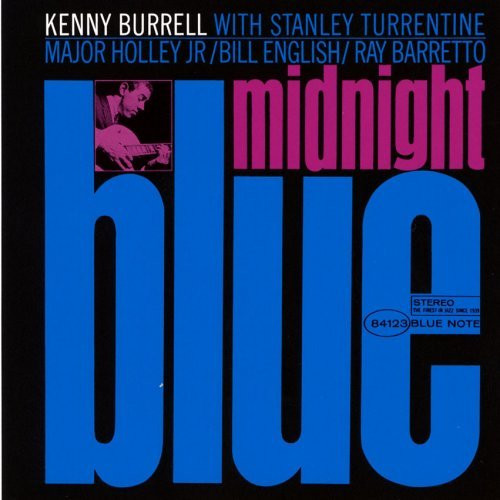
More of the Music of Kenny Burrell

Reviews and Commentaries for the Music of Kenny Burrell

A good customer had this to say about a recent shootout:

By the way, side 2 of Midnight Blue bested every other copy I played including the 45 RPM Blue Note AP reissue. The 45 RPM is very good. You know that technically it is right, but at the same time it’s missing something.

When I listened to the [Hot] stamper copy you dug up for me I found it a little noisy at first and wasn’t sure if I could live with it. However after returning to the 45 RPM there was no enjoyment, so I dropped the needle on the stamper one more time, and then I heard it…

I know what you mean about these modern reissues “missing something.” No matter how well mastered they may be, they’re almost always missing whatever it is that makes the analog record such a special listening experience. I hear that “analog” sound practically nowhere else outside of the live event (and, of course, the vintage LP). 

Thanks for your letter. 
TP

Our Classic Records Review

Pretty flat and lifeless. You would never understand why audiophiles rave about this recording by listening to the Classic Records pressing.

We played it up against our best, and as expected it was nothing to write home about. Since Rudy has remastered and ruined practically all the Blue Note CDs by now, you will have your work cut out for you if you want to find a good sounding version of Midnight Blue. This sure ain’t one.

Of course we would be more than happy to get you an amazing sounding copy — it’s what we do — but the price will be five to ten times (or more) what the Classic costs. In our opinion it’s money well spent.

Since the Classic conveys very little of what the musicians were up to whilst recording the album, our advice is to cross it off your list of records of interest. It’s thirty bucks down the drain.

(more…)

Letter of the Week – “It sounds like you’re listening to some kind of cultural artifact in a black box…”

One of our good customers had this to say about some Hot Stampers he purchased recently. (I’ve edited it a bit.)

Hey Tom, 

Curious your thoughts on Analog Productions reissues? From the few I’ve heard, they seem to be among the better ‘new records’ out there, at least when they’re not involving digital in the process. 

Conrad,

How is it that you missed all my posts about their records? This link will take you to them: Analogue Productions.

I feel like I attack them too much, but apparently not!

Simply put, they may be the worst record label of all time.

Certainly no label is worse, some may be as bad, the Electric Recording guy in England is probably tied for most awful, Mobile Fidelity is up there too, but there are so many contenders for Worst Audiophile Record Label of All Time, how could you possibly know where to begin?

Not one record of AP I have ever heard was not awful, and if there are others that are not awful that I have yet to audition, those are very likely to be worse than a plain old copy easily found in a record store or on the web.

Curious to know what record of theirs you like. I find the very idea almost unimaginable.

TP

Haha, enjoyed reading some of that.

I’m in the odd position that I can both entirely see what your criticisms are, and to a good extent share them, and yet, at least with the jazz records I’ve heard from them, I’m also hearing things I like.

They have absolutely no ambience… I have no idea why they’d do this, as it seems deliberate, like they thought this would improve things to a more ‘modern’ sound..?

And yes, this can have the effect of robbing the music of energy, life, interest etc. It sounds like you’re listening to some kind of cultural artifact in a black box, rather than a living piece of music.

On the other hand, the 45s esp. and even the 33s have a lot of presence and dynamic range, don’t sound too veiled (other than due to this bizarre remastering to remove ambience), and have a certain energy of their own – a kind of intensity. Maybe it’s the almost (or sometimes literal, since not all are all-analogue) digital effect; they’re going for that cleanness.

Or perhaps it’s the intensity of being slightly uptight and unnatural… but it’s interesting to hear. I know that sounds nuts, but it’s hard to describe; you have to accept you’re listening to a ‘re-presentation’, not the actual recorded sound.

On the other hand, several MoFi I’ve heard have this very fake ‘audiophile’ sound, with exaggerated mixing, overly thick, etc., and these AP I’ve heard at least sound more natural than this (at least on my system), for all their shortcomings.

I guess we can’t really compare experiences without knowing exactly the records we’ve each heard, and the AP pressings never hold a candle to any of the hot stampers I have received from you. It’s not close; my system and ears clearly know the difference. However, I don’t expect them to, and part of my relatively positive feeling about them is biased by knowing they’re dirt cheap at around $30 a pop.

It could be that your system is revealing their shortcomings more than mine, although I can readily hear the absolute difference between APs and hot stampers; or perhaps my system is tuned somehow to present them in a more favorable light… or perhaps this is just a matter of personal judgement about what we can listen to; I take them for what they are: cheap attempts to modernize the sound of master tapes. They’re nothing on hot stampers, but I’ve heard FAR worse.

Hope I don’t lose all credibility with you for writing this; different systems, different records, different pressings, different ears/moods/etc… just know that the above doesn’t mean I can’t hear and profoundly appreciate the quality of hot stampers! Wouldn’t have dropped what must be approaching $15k by now if I couldn’t, and I cherish every record I’ve bought from you. Keep up the good fight!

C

I can’t agree with much of what you’ve written, other than our Hot Stampers being amazing in every way.

I believe you are trying to find reasons to justify the purchases of these modern remastered records, despite the shortcomings of their sound. My stereo is not forgiving enough of their faults to play them for enjoyment, and my ears are not forgiving enough of their sonic irregularities to find even the best of them much more than passable.

I took off my rose-colored glasses a long time ago, and I certainly have no intention of putting them back on.

Our stereo is designed to reveal the strengths and weaknesses of every record we play. Bad records sound awful on it, and mediocre records are a waste of time. There are some heavy vinyl pressings that are neither awful nor mediocre, and you can find our reviews for them here

Years ago, we started to notice that most of the new Heavy Vinyl pressings were sounding worse and worse, and by 2007, when Blue came out, that was the straw that broke the camel’s back. We decided to take a stand and we have never questioned for a moment the decision we made.

This is what progress in audio in all about. As your stereo improves, some records should get better, some should get worse. It’s the nature of the beast for those of us who constantly make improvements to our playback and critically listen to records all day.

In those days, it was obvious to us that vintage pressings were getting better sounding, or at least some of them did. (We call the good ones Hot Stampers.)

The Heavy Vinyl pressings kept getting worse. They became less and less competitive, and eventually none of them sounded as good as the records we could offer our audiophile customers.

(more…)

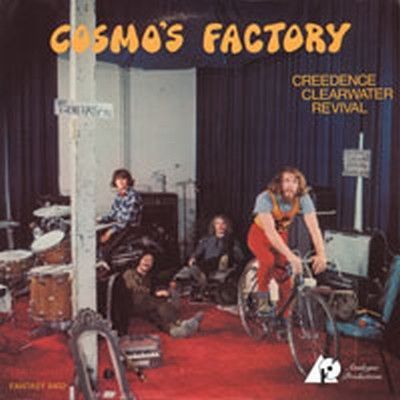
Why Would Anyone Want to Take All the Fun Out of CCR’s Music? Part One

More of the Music of Creedence Clearwater Revival

The last time I played the MoFi pressing mentioned below I found the sound so weirdly colored as to defy understanding. Ten years ago when I wrote this commentary I apparently found it more tolerable.  More recently I clearly did not.

When an audiophile record sounds worse than it used to, there is a very good chance that you are making progress in audio.

Of course this is not something to be assumed. (Speaking of assumptions, you can find more on the subject here).

Rather it is something to be tested. (You can read more about some of the rigorous and extensive record testing we have conducted over the last twenty years here.)

Even if 99 times out of a hundred it turns out to be the case that the modern remastered record can now be seen for the fake it always was, there is still a one out of a hundred chance that the record may in fact be better than you remember.

These audiophile records are easily called out for their illusory superiority for the simple reason that the better your stereo gets, the more obvious their colorations and shortcomings become. This was my experience, and I pass this information on in the hopes that you will make progress with your stereo system and find them every bit as wrong as I do.

We’ve created a section for the worst of them, and even with 274 entries we could easily double that number if we were inclined to carry out more auditions and catalog their manifold shortcomings.

With the number of Heavy Vinyl records being pressed today, triple or quadruple that number I suspect would be possible.

Without sounding even more arrogant than some believe me to be, I have better things to do with my time. Thank god we are in the business of selling good records and not in the business of reviewing bad ones.


Further Reading

Records are getting awfully expensive these days, and it’s not just our Hot Stampers that seem priced for perfection.

If you are still buying these modern remastered pressings, making the same mistakes that I was making before I knew better, take the advice of some of our customers and stop throwing your money away on Heavy Vinyl and Half-Speed mastered LPs.

At the very least let us send you a Hot Stamper pressing — of any album you choose — that can show you what is wrong with your copy. of the album.

And if for some reason you disagree with us that our record sounds better than yours, we will happily give you all your money back and wish you the best.

Today’s Heavy Vinyl Mediocrity Is… Fragile

Hot Stamper Pressings of the Music of Yes Available Now

The Analogue Productions 180g reissue shown here is mastered by Steve Hoffman and Kevin Gray, two guys with reputations for doing good work, but the results of their collaboration [can you believe this record came out in 2006!?] leave much to be desired.

The overall sound is too lean.

This is especially noticeable on the too-thin-sounding guitars and vocals.

Believe me, it’s no fun to play a Yes album with thin guitars and vocals.

Also, there’s a noticeable lack of ambience throughout the record. What comes to mind when I hear a record that sounds like this is the dreaded D word: dubby.

I find it hard to believe they had the actual two-track original master tape to work with. The sound is just too anemic to have come from the real tape. If they did have the real tape, then they really botched the job.
(more…)

Letter of the Week – Wow, It Beat the Analogue Productions Fantasy 45!

More Contemporary Label Jazz

Many years ago, our good customer Victor sent us this note to tell us how much better his real Contemporary jazz album sounded compared to the Fantasy 45 180g pressing he owns.

We should point out that we sold him a sealed ’70s reissue, something (selling sealed records) we stopped doing a decade or so ago, and that we really have no way of knowing what the record actually sounded like. Given our experience with anything released on the consistently dreadful Analogue Productions label, what were the chances that they could actually beat the real thing? As a practical matter, the answer should be obvious: none, of course.

None? Too harsh you say? Here are two of their worst crimes against jazz-loving audiophiles, crimes they committed using 2 Heavy Vinyl discs mastered at 45 RPM for all the world to hear:

  1. Jazz Impressions Of Black Orpheus by the Vince Guaraldi Trio
  2. Sonny Rollins Plus 4

Yes, they had the temerity to charge money for their crappy, pointless reissues. The key takeaway here is that any label that would release records that sound as bad as these cannot be trusted to do anything right.

Having played many of their remastered releases, we are still waiting for the record on the AP lable that is not either a disaster or, at the very least, not clearly worse sounding than other pressings which are widely available.

And I will never tire of pointing out how bad the two albums linked below are, so bad that I wrote many hundreds of words about their astonishing awfulness.

  1. Steppenwolf – Gold: Their Great Hits
  2. Cat Stevens – Tea for the Tillerman

After playing the above four, what would possess us to ever play another?

Now to the letter.

Hi Tom,

Wanted to let you know I did a comparison between the yellow label Contemporary label Curtis Counce, Counceltation Vol. 2 (which I bought sealed from you) and a Fantasy 45 rpm from Analogue productions: Curtis Counce – You Get More Bounce With Curtis Counce – which is in fact the same album but with a different title and cover. 

Well I was very anxious to try this comparison, but was not expecting the results. The yellow label was so transparent and tonal weight to the Fantasy 45 rpm there was no contest. The 45 rpm sounded like someone turned on a high bypass filter. The yellow label was balanced throughout. Clean.

I am a subscriber of the Fantasy 45s and own all of them. Don’t get me wrong, there are some nice sounding ones in the series, but this is a prime example that not all records are as well mastered.

Regards,

Victor

Victor,

I had every confidence that the real Contemporary pressing would trounce that 180 gram reissue, 45 RPM 2 LP pressing or no 45 RPM 2 LP pressing. The more I play these Heavy Vinyl reissues the less I like them. As we say, the real thing just can’t be beat.

Thanks for doing the shootout for us. You can be sure that our Hot Stamper Contemporary jazz pressings will make mincemeat of anything on that Fantasy 45 Series. In fact, we guarantee it.

Classic Records Stops Making Bad Records But Acoustic Sounds Picks Up Where They Left Off

classicclaritybox

More Heavy Vinyl Commentaries 

Dateline 8/29/2010

Classic Records has officially gone under. They will not be missed, not by us anyway, except for this reason: to borrow a line from Richard Nixon, I guess we won’t have Classic Records to kick around anymore. We’ve been beating that dead horse since the day they started back in 1994. There are scores of commentaries on the site about their awful records for those who care to read about such things.

The last review we wrote for them, for their remastered Scheherazade, is one in which we awarded the Classic a sonic grade of F.

TAS Superdisc List to this day? Of course it is!

With every improvement we’ve made to our system over the years, their records have somehow managed to sound progressively worse. (This is pretty much true for all Heavy Vinyl pressings, another good reason for our decision to stop carrying them in 2011.) That ought to tell you something.

Better audio stops hiding and starts revealing the shortcomings of bad records.

At the same time, and much more importantly, better audio reveals more and more of the strengths and beauty of good records.

Which of course begs the question of what actually is a good record — what it is that makes one record good and another bad — but luckily for you dear reader, you are actually on a site that has much to say about those very issues.

Every Hot Stamper commentary is fundamentally about the specific attributes that make one copy of a given album better than another, and how much of them you’re getting for your money with the unique pressing on offer.

There are scores of commentaries on the site about the huge improvements in audio available to the discerning (and well-healed) audiophile as you’ve no doubt read by now. It’s the reason Hot Stampers can and do sound dramatically better than their Heavy Vinyl or Audiophile counterparts: because your stereo is good enough to show you the difference.

With an old school system you will continue to be fooled by bad records, just as I and all my audio buds were fooled all those years ago.

Audio has improved immensely in that time. If you’re still playing Heavy Vinyl and Audiophile pressings, there’s a world of sound you’re missing. We would love to help you find it.

One Hot Stamper just might be all it takes to get the ball rolling.

classic_records_acoustic

Oh no, someone is going to keep pressing Classic’s shitty records! And selling them!

And wouldn’t you know it’s the same guys who’ve been making bad records since before Classic got into the game.

I advised them to dump them in a landfill, but they apparently had other ideas.

So now it’s one stop shopping for all the bad sounding Heavy Vinyl you might be foolish enough to buy. Or perhaps you were misguided by the ridiculous comments and reviews pedaled on audiophile websites extolling the virtues of these pressings.

Don’t believe a word of it. You can count the good sounding records put out by these guys on one hand.  I honestly cannot think of one I would have in my house, to tell you the truth.

(more…)