Half-Speed Masters

Half-speed mastered recordings.

Does Year of the Cat on Mobile Fidelity Have Audiophile Sound?

Hot Stamper Pressings of the Music of Al Stewart Available Now

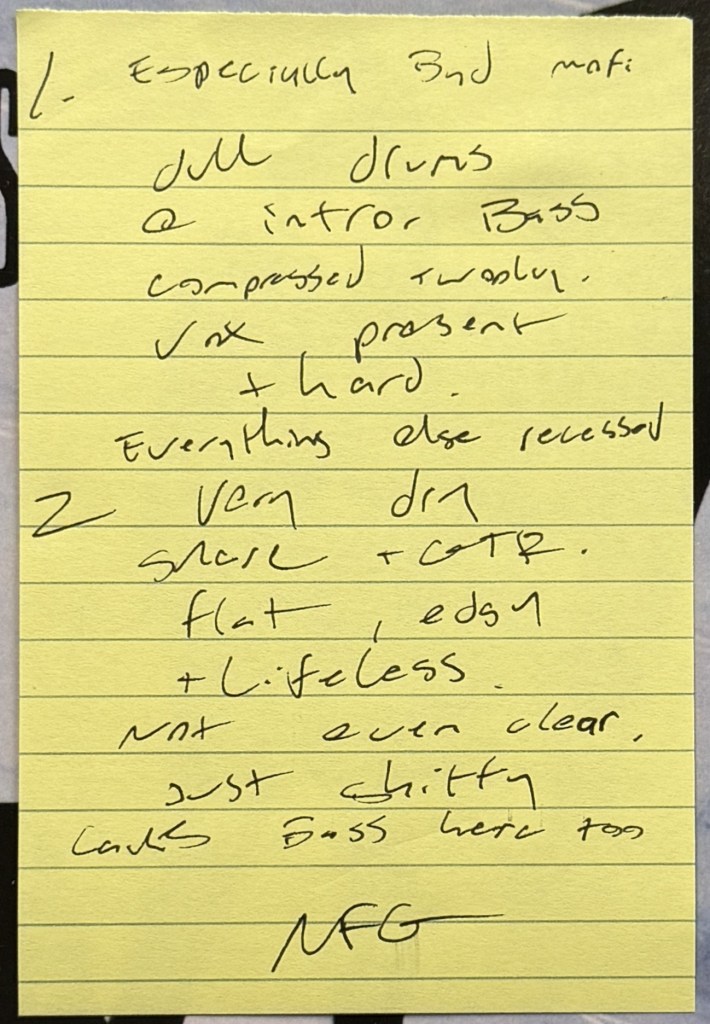
Our answer, judging by the copy we played not long ago, would be solidly in the negative. The final grade we awarded both sides was No, our way of saying the record is Not Good.

Below is a description for what a top copy of the album sounds like, based on our most recent shootout:

Incredible sound throughout this vintage Janus pressing of Stewart’s 1976 Masterpiece. With engineering by Alan Parsons, the top pressings are every bit the audiophile Demo Discs you remember. The best sides have sweet vocals, huge amounts of space, breathtaking transparency, and so much more.

Tubey Magical acoustic guitar reproduction is superb on the better copies of this recording. Simply phenomenal amounts of Tubey Magic can be heard on every strum, along with richness, body and harmonic coherency that have all but disappeared from modern recordings (and especially from modern remasterings).

But if you own the wrong Mobile Fidelity pressing — this one was reissued in 1981, the original came out in 1978, so there may be some other pressings that sound better than this one — you would never know how good sounding the album can be. We put a copy we had laying around in a shootout recently and the results were, not to put too fine a point on it, pretty painful.

As the notes make clear, the Mobile Fidelity pressing, with the stampers you see on the sheet above, is:

(more…)

Diamonds and Rust – Another TAS Listed Anadisq Disaster

Hot Stamper Pressings of the Music of Joan Baez Available Now

Mobile Fidelity released their version of Diamonds and Rust on Anadisq in 1995, and if you want to hear a pressing that’s not murky, compressed and opaque, you would be wise to avoid their Heavy Vinyl Half-Speed.

Somehow it ended up on the TAS Super Disc List, but we could find nothing “super” about it. We felt it more properly belonged on our list of records that have no business being called Super Discs.

It was a real muckfest, as was to be expected from a record mastered by this awful label during the Anadisq era, the darkest chapter in the disgraceful history of Mobile Fidelity, which, considering the consistently dismal quality of their output, is really saying something.

Ken Lee Strikes Again

Many of the worst of them were mastered by a Mr. Ken Lee. If you happen to come across a record in a store with his name in the credits, or his initials in the deadwax, you are best advised to drop it back in the bin and keep moving. Anything else is just asking for trouble.

To be fair, MoFi made some reasonably good sounding records too. For those of you whose budget is on the limited side, if you find an affordable copy of any of these MoFis, you are probably not wasting your money.

Although I had a long way to go in this hobby in the early days of my audiophile record business, even then I could tell how bad the Anadisq series that Mobile Fidelity released in the 90s was. They produced one awful sounding record after another, with not a single winner that I knew of. I sold them — my bad, an ethical lapse for which I must apologize — but I sure never recommended them or had anything good to say about them.

(more…)

Boston Hot Stamper Testimonial – Shooting Out the Big Three

Hot Stamper Pressings of the Music of Boston Available Now

This letter probably came in around 2010 or so, early days in the world of Hot Stampers, which explains the price for the top copy being $250.


This week’s letter comes from our good customer Roger, who did a little shootout of his own among three very different sounding pressings: two Half-Speeds, one by MoFi and one by CBS, probably the two most popular pressings among audiophiles, and our very own Hot Stamper LP.

Here are his findings. Keep in mind that Roger bought a copy priced at $125, half the price of the best copy in our shootout.

Hi Tom,

I got your Boston hot stamper today and enjoyed comparing it to MFSL and CBS half-speed versions in a shootout. I had long since given up on listening to this record since it became part of a communist ploy to brainwash us by playing Boston repeatedly on the radio until we would give up any information they desired. “Deep Purple Lite” was what my college buddies and I used to derisively call it. Now I only wish we had this type of music still around. So I had fun reliving my college days and listening to this LP.

For a pop recording, it is a pretty good recording soundwise, and all 3 pressings were indeed good, if not interesting. I tried the CBS half-speed first, and it was tonally lean with good speed and detail, and bass was extended and quick. However, its Achilles heel was that it had too much energy on top and excessive brightness, something that couldn’t hide from my speakers’ ion tweeters.

Roger, you seem to be using the phrase “tonally lean” unpejoratively (if I can make up such a word), whereas for us here at Better Records, that is the kiss of death for Half-Speeds, and in fact Audiophile Records of All Kinds. Lack of weight down below, lack of Whomp Factor, is the main reason half-speed mastered records are so consistently and ridiculously bad. If not bad, certainly wrong. You can be very sure that Boston would not want, nor would they put up with, that kind of anemic sound for a minute.

The CBS is cut clean from a good tape, so it easily beats the bad domestic pressings, of which there are many. But it can’t rock. What good is a Boston record that doesn’t rock? It’s a contradiction in terms; the band, as well as their debut album, have no other reason to exist.

So the MFSL was somewhat of a relief in that regard, being more sweet and rolled-off on top. However, it sounded bland, blah, slow and murky by comparison. It was still OK sonically with a fuller midband, but didn’t have the midrange energy or dynamics of the CBS and it just seemed slow and plodding, no other way to put it. Bass on the MFSL copy was weightier but more midbass than the quick and extended bass on the CBS.

(more…)

With The Beatles on Mobile Fidelity

Sonic Grade: C+

The MoFi pressing of With the Beatles has so many problems it would take an hour to describe them all. Suffice it to say, it’s thinner and brighter, with voices that are grittier and grainier. The overall effect is the sinking feeling that you are listening to a cheap reissue and not the real thing. Don’t the Beatles sound better than this? To be fair, some tracks are okay, others a disaster.

If you own the MoFi, play it. Listen to it carefully. Make notes of which songs sound better than others and why. That’s how we spend our days, evaluating the relative merits of various pressings, and it’s that and that alone that has given us the critical listening skills necessary to recognize and appreciate the differences among the records we play.

One of the biggest problems with the average Parlophone copy is just the reverse of the MOFI. They tend to have rolled off highs, which emphasizes the harshness in the upper midrange and causes a loss of transparency. (The best Hot Stamper copies are of course as smooth, sweet, and transparent as they come.) Even with those shortcomings though, I would still rather listen to a typical Parlophone pressing. I wouldn’t be frustrated by the sound of somebody fooling with the EQ and screwing it up.  (more…)

Imagine on Mobile Fidelity from 1984

Hot Stamper Pressings of the Music of John Lennon Available Now

This Jack Hunt-mastered Half Speed has the midrange suckout that Mobile Fidelity was notorious for.

Lennon and his piano on the first track sound like they are coming from another room.

And yet somehow there are still “audiophiles” in this day and age that defend the records put out by this ridiculous label.

Oy vey. What is wrong with these people?

I Have a Theory

Actually, I have a good idea why so many so-called audiophile records have a sucked-out midrange.

A midrange suckout creates depth in a system that has difficulty reproducing depth.

Imagine that instead of having your speakers pulled well out from the back wall as they should be, instead you have placed your speakers right up against the wall.

This arrangement, though preferable aesthetically and dramatically more family- and wife-friendly, has the unfortunate effect of seriously limiting your speakers’ ability to reproduce whatever three-dimensional space exists on your recordings.

I hinted back in 2022 that I was going to discuss this idea down the road, and like most things that I was supposed to write about down the road, we’re still waiting to see it.

The album I was going to write more about was Kind of Blue.

(more…)

I Was Wrong about a Half-Speed Mastered Record – Not for the First Time, But I Hope for the Last

dixiedregsdd

Hot Stamper Pressings of Jazz Rock Fusion Albums Available Now

A classic case of live and learn.

I’d always preferred the famously rare Half-Speed to the domestic copies I had auditioned back in the day, the day being the 80s and 90s. That’s all changed now of course.

Now, with changes to the stereo and better cleaning techniques and all the rest, that Half-Speed’s weaknesses are hard to ignore.

Where is the rock ’em, sock ’em bottom end that the best originals have?

Gone without a trace.

Yes, the smeary, veiled quality of the typical original pressing is gone too, which is why I used to like the DD Labs version better. It’s simply another case of a reasonably good Half-Speed beating a bad domestic pressing, and in turn being beaten (soundly) by The Real Thing, the kind of record we like to call a Hot Stamper.

(more…)

The Nautilus Half-Speed of Harvest Is Not Bad!

Hot Stamper Pressings of the Music of Neil Young Available Now

Sonic Grade: B

We haven’t played a copy of this record in more than a decade [make that two], but back in the day we liked it, so let’s call it a “B” with the caveat that the older the review, the more likely we are to see things differently now. 

In the early 2000s we wrote the following (please excuse the all-caps, I could barely type back then):

This is a SURPRISINGLY good sounding Nautilus Half-Speed mastered LP with AMAZING transparency.

The sound here is DRAMATICALLY more natural than your average audiophile pressing. Just listen to the phony top end found on most MoFis to see what we mean.

On this record you’ll hear none of the hyped-up highs that are MoFi’s claim to fame.

This Nautilus is sure to destroy the typical domestic pressing, which (before cleaning) will tend to sound opaque, thick and dull.

This Half-Speed wouldn’t really match up to our Hottest Stampers, but you could sure do a lot worse.

Although it’s a tad fat at the bottom, it still retains much of the warmth and richness found on the best copies.

(more…)

Classic Records Had an Epiphany in 2007 – UHQRs Actually DO Sound Good

More Records Perfectly Suited to the Stone Age Stereos of the Past

Don’t believe your ears!

Listen to Mike Hobson. After all, he’s the expert, right?

This commentary was written in 2007 and we admit it may be a bit long in the tooth for the brave new world of Heavy Vinyl we currently find ourselves in. Classic Records has been gone for a while now and when that blessed day came we were finally able to say good riddance to their bad records.


Mike Hobson thinks he knows why his pressings often don’t sound good and/or are noisy. We’ll let him explain it. If you want the whole story (which goes on for days) you can find it on the Classic Records website, assuming it’s still active. While you’re there, remember the sound.

One day, while out for a run, I had an epiphany and rushed home to dig out a JVC pressing from the 1980’s pressed for Herb Belkin’s Mobile Fidelity. The Mobile Fidelity UHQR pressings were always revered as sounding better than the standard weight pressings from JVC [citation needed, big time] – but why I thought? To find out, I cut a UHQR pressing in half and guess what I found? First, it weighed 195 grams and IT WAS A FLAT PROFILE! I cut a 120g JVC pressing in half and found that it had the conventional profile that, with small variations, seems to be a record industry standard and is convex in it’s [sic] profile – NOT FLAT.

So, that is why the UHQR JVC pressings sounded better than their standard profile pressings and further confirmation of why our Flat Profile pressings sound better than 180g conversional pressings! [italics added]

This is a classic (no pun intended) case of begging the question, asserting the very thing that Mr. Hobson is trying to prove.

There was no need to saw up a record. Mofi actually explained in the booklet for every UHQR how its shape differed from a conventional disc.

(more…)

Gaucho According to MCA Masterphile

Hot Stamper Pressings of the Music of Steely Dan Available Now

The Masterphile Half-Speed is a pathetic shadow of the real thing, the real thing being an early Masterdisk pressing cut by Robert Ludwig.

We’ve played at least a hundred of the original pressings, and I would be surprised if every one of them did not sound better than this compressed, desiccated audiophile piece of trash.

With sound like that, the MCA Masterphile gets our vote for the worst version of the album ever made.

Of all the great albums Steely Dan released, and that means their seven original albums and nothing that came after, there are only three in our opinion that actually support their reputation as studio wizards and recording geniuses. Chronologically they are Pretzel Logic, Aja, and Gaucho.

Every sound captured on these albums is so carefully crafted and considered that it practically brings one to tears to contemplate what the defective DBX noise reduction system did to the work of genius that is Katy Lied, their best album and the worst sounding. (Those cymbal crashes can really mess with your mind if you let them. To get a better picture of the DBX sound just bang two trash can lids together as close to your head as possible.)

The first two albums can sound very good, as can Royal Scam, but none of those can compete with The Big Three mentioned above for sonics. A Hot Stamper copy of any of them would be a serious DEMO DISC on anyone’s system system.

Mistakes Were Made

If you are still buying these modern remastered pressings, making the same mistakes that I was making before I knew better, take the advice of some of our customers and stop throwing your money away on Heavy Vinyl and Half-Speed Mastered LPs.

(more…)

Please Please Me on MoFi – Another Disgracefully Spitty Half-Speed

Hot Stamper Pressings of the Music of The Beatles Available Now

Sonic Grade: C

If you own the Mobile Fidelity LP, do yourself a favor and buy one of our Hot Stamper pressings. (Actually any good British import pressing will do.)

What’s the first thing you will notice other than correct tonality, better bass and a lot more “life” overall?

No spit!

As we’ve commented elsewhere, because of the wacky cutting system they used, Mobile Fidelity pressings are full of sibilance. 

As I was playing a British pressing of this record many years ago, maybe by about the fifth or sixth song it occurred to me that I hadn’t been hearing the spit that I was used to from my MoFi LP. You don’t notice it when it’s not there.

But your MoFi sure has a bad case of spitty vocals. If you never noticed them before, you will now.

We discuss the sibilance problems of MoFi records all the time. Have you ever read Word One about this problem elsewhere? Of course not.

Audiophiles and audiophile reviewers just seem to put up with these problems, or ignore them, or — even worse — fail to recognize them at all.

Play around with your table setup for a few hours and you will no doubt be able to reduce the severity of the sibilance on your favorite test and demo discs. All your other records will thank you for it too.

Especially your Beatles records. Many Beatles pressings are spitty, and the MoFi Beatles pressings are REALLY spitty. Of course MoFi fans never seem to notice this fact. Critical listening skills and a collection of MoFi pressings are rarely if ever found together. For reasons that should be obvious to anyone spending time on this site, you either have one or the other.

(more…)