Half-Speed Masters

Half-speed mastered recordings.

Teaser and the Firecat and the Mobile Fidelity Hall of Shame

Hot Stamper Pressings of the Music of Cat Stevens Available Now

Our Mobile Fidelity hall of shame listings totaled more than 40 back in 2010, and we noted at the time that the real number would be at least double that and probably more like triple that figure if we took the time to make listings for all the bad records this label has released, It stands at 50 or so as of 2022.


UPDATE 2026

As of 2026 the number is 58, and we have a couple of real dogs waiting in the wings to list.

Since I’ve retired, the crew has been playing many of the newer Heavy Vinyl releases from many different labels (including Mobile Fidelity of course) and finding the sound is every bit as bad or worse these days since this commentary was written.


In case you don’t already know, one of the worst sounding, if not THE worst sounding pressing of all time, of our beloved Teaser and the Firecat is the Mobile Fidelity Anadisq pressing that came out in the ’90s.

If you own that record, you really owe it to yourself to pull it out and play it. It’s just a mess and it should sound like a mess, whether you have anything to compare it to or not.

If I were in charge of the TAS Super Disc List, I would strike this record from it in a heartbeat.

Here are some others that we do not think qualify as Super Discs.

We offer a number of Hot Stamper pressings of TAS List titles that actually have audiophile sound quality, guaranteed. And if for some reason you disagree with us about how good they sound, we will be happy to give you your money back.

American Beauty – An Honest-to-Goodness Killer MoFi LP

Hot Stamper Pressings of the Music of The Grateful Dead Available Now

Sonic Grade: B+

This is a Mobile Fidelity LP with SURPRISINGLY GOOD SOUND. The transparency and presence in the midrange is outstanding for a MoFi. This copy does not have the usual midrange suckout that ruins so many of their records.

The bass actually sounds mostly in control on this copy — there’s much less of the typically bloated bass caused by Half-Speed mastering to be found here.

This is the best sounding Mobile Fidelity American Beauty we have ever heard. It’s not perfect by any means, but it’s hugely better than we expected.

Any original Green Label domestic pressing is sure to be better, but sure to be noisier too, so if you must have quiet vinyl, you can do a lot worse than this MoFi.

Which means it belongs on our list of the best sounding Mobile Fidelity records we’ve ever played.

Byrd at the Gate – Another Hyped-Up MoFi

An Audiophile Hall of Shame pressing and another MoFi LP reviewed [decades ago] and found seriously wanting.

This is a title Mobile Fidelity ruined (what else is new?), and having just played an early Riverside LP I can see how their mastering approach was — as is so often the case — misguided to say the least.

First off, the guitar and the drums on the original are tonally right on the money. They sound like bass and drums should. They sound, in a word, correct.

Mobile Fidelity felt it necessary to brighten up both and the results are a phony sounding guitar and phony sounding drums, with tizzy cymbals thrown in for good measure.

(The Wes Montgomery MoFi title has many of the same faults, but it’s not quite as bad as this one. We’ve had Hot Stamper copies of the originals so we know they can sound superb, some of RVG’s best work.)

The old Mobile Fidelity — the pre-Heavy Vinyl Mobile Fidelity — rarely met a master tape they didn’t think needed a healthy dose of top end boost. They also never understood what an acoustic guitar sounds like. They blew it on every last one of the Cat Stevens albums, brightening up the guitars, which, as we all know from playing with the treble controls on our receivers way back when, emphasizes the “picking” of the strings at the expense of the resonating guitar body as well as the vibrating string harmonics.

What makes Byrd At The Gate a good record is the natural acoustic guitar tone. Once you screw that up, what’s left?

An audiophile record, for audiophiles who like phony sounding guitars. (Chesky anyone?)

Another reason the Mobile Fidelity is such a joke is that this recording inherently has a lot of ill-defined bass. Since Half-Speed mastering causes a loss of bass definition, their pressing is even WORSE in this respect. Bad guitars, bad drums and bad bass — that pretty much covers everybody in the trio. Resulting score: 0 for 3. (more…)

The Doors’ Debut – MoFi Reviewed

More of the Music of The Doors

Sonic Grade: D 

If anyone still thinks that this pressing is anything but a bad joke played on the audiophile public — so sucked out in the midrange, bass shy and compressed to death — that person still has a way to go in this hobby.

A very long way.

You can hear that something is off with this pressing from another room. The sound is bad enough to have earned a place in our Mobile Fidelity Hall of Shame.

But wait just a gosh darn minute.

I liked the MoFi just fine when it came out. I guess I had a way to go in this hobby too.

That was back in the early ’80s. I like to think I’ve learned a thing or two in the last forty years.

Some reviewers and a great many audiophiles may be stuck in the 80s, but I sure as hell don’t think I am one of them.

(more…)

Should We Tell This Guy the MoFi of Kind of Blue Is a Joke?

Hot Stamper Pressing of Miles’s Albums Available Now

The MoFi of KOB may be a joke, but don’t bother telling this guy, who appears to be rather new to this whole “reviewing” thing.

He has a record store in Phoenix and a youtube channel called The “In” Groove, wherein he proffers advice to audiophiles about records. Unsurprisingly, he tends to favor audiophile pressings. No doubt he sells lots of them in his store.

To quote the man himself, “I do a review of the best sounding copy’s [sic] of Miles Davis – Kind Of Blue. What are the copy’s [sic] you should own?”

Obviously, literacy is not his strong suit, so writing about records is out, replaced by endless talking about records on another one of these insufferable content-light videos.

Everything of interest this gentleman has to say could be written on the back of a napkin and read in the span of the average TV commercial, but that would require stringing together lots of words and arranging them so that they make some kind of sense. It’s so much easier to chat about vinyl while seated in front of some very expensive and no doubt awful sounding (judging by the results of this “shootout”) McIntosh electronics. (I am on record as being opposed to this approach to audio, and have been proselytizing for the benefits of low power amps for more than twenty years.)

Regardless of what he thinks he is doing, in no way does this fellow actually review the best sounding copies, because he’s too inexperienced and ill-informed to even bother with the ’70s Red Label reissue pressings, some versions of which happen to be among the best pressings we’ve heard, a subject we discuss here.

Our Kind of Blue Obsession

KOB is an album we have been obsessed with for a very long time, along with a great many others.

(more…)

The Nightfly on MoFi – More of the Same Old Same Old

Hot Stamper Pressings of the Music of Donald Fagen Available Now

More MoFi phony EQ on the top right around 10k and sloppy bass.

You should be able to do a whole lot better and you sure won’t have to work very hard to do it.

Robert Ludwig is the man who knows how to cut this album, not Stan Ricker.

The properly pressed, properly cleaned Robert Ludwig-mastered copies are right in a way that the typical Half-Speed mastered or Heavy Vinyl pressing rarely is. The more critically one listens, the more obvious this distinction becomes.

The real thing just can’t be beat, and you can be pretty sure that the real thing is an old record.

If you are buying these audiophile pressings, take the advice of some of our customers and stop throwing your money away on Heavy Vinyl and Half-Speed mastered LPs.

(more…)

Facing Some Hard Truths in Phoenix

Advice on Making Audio Progress

Or kicking them while they’re down. Pick whichever one you like best, they both work for me.

For those of you who have not been following this story, here is the best place to start.

Although it’s behind a paywall, you can get a free test drive easily enough. (In September there will be a long-form video of me going about a Hot Stamper shootout and discussing the world of audiophile records, which you do not want to miss!)

Now that you are up to date on the overall contours of this mess, here is another one of the many thoughts I have had concerning the revelation that Mobile Fidelity has been secretly sourcing at least some of their masters digitally since 2015.

Before we start talking about where the blame lies in this mess — with Esposito, Fremer, Jim Davis, or the so-called “engineers” who work for Mobile Fidelity — I would like bring up a couple of ideas that you have no doubt seen before, mostly because they are discussed endlessly on this blog.

We Make Mistakes

The first is that anyone who has been on an audio journey for very long has made a lot of mistakes along the way.

Uniquely among reviewers and record dealers, we go out of way to admit when we were wrong. You might say we are even proud of the fact that we used to get so many things wrong about records and audio.

Our experimental, evidence-based approach, requiring that we not only make mistakes but that we embrace them, is surely key to the progress we have made in understanding recordings and home audio. One of our favorite quotes on the subject is attributed to Alexander Pope.

“A man should never be ashamed to own he has been in the wrong, which is but saying… that he is wiser today than he was yesterday.”

To say that few audiophiles have followed our approach is not to admit defeat. Rather it is simply to say that the approach we use to find better sounding pressings involves a great deal of tedious, sometimes expensive, always time-consuming work, work that few audiophiles seem interested in doing.

Instead, the approach that most audiophiles these days take is to buy ready-made audiophile pressings. They convince themselves — how, I cannot begin to imagine — that these pressings are superior to all others because of the exceptional skills and superior methods of those tasked with mastering and pressing them. Also I think I remember reading that their hearts were in the right place or something to that effect.

(more…)

“Tour de Force” – Analogue Productions Reviewed

Hot Stamper Pressings of Bossa Nova Recordings Available Now

Sonic Grade: F

Acoustic Sounds had Stan Ricker remaster this record a number of years ago, and of course they (he) ruined it. A twinkly top end and flabby bass were just two of the major shortcomings of their version. Nothing surprising there, as Stan Ricker is famous for his “smile” curve, boosting both ends of the audio spectrum, whether they need boosting or not. (They rarely do).

When you add too much top end to a guitar album and ruin the sound of the guitar, what exactly are you left with?

Please note that not a single title from the Analog Revival series is any good, to the best of my knowledge, and every last one of them should be avoided if high quality sound is important to you.

The same is true for all the 180 gram jazz titles on Analogue Productions that were mastered by Doug Sax, as you may have read elsewhere on the site. Those records received rave reviews in the audiophile press when they came out, but you won’t find too many audiophile reviewers sticking up for them now, as they are, without exception, murky, compressed disasters of the worst kind.

I guess these reviewers eventually acquired equipment accurate enough to notice how bad those pressings are, which goes to show there is hope for practically anyone.

(more…)

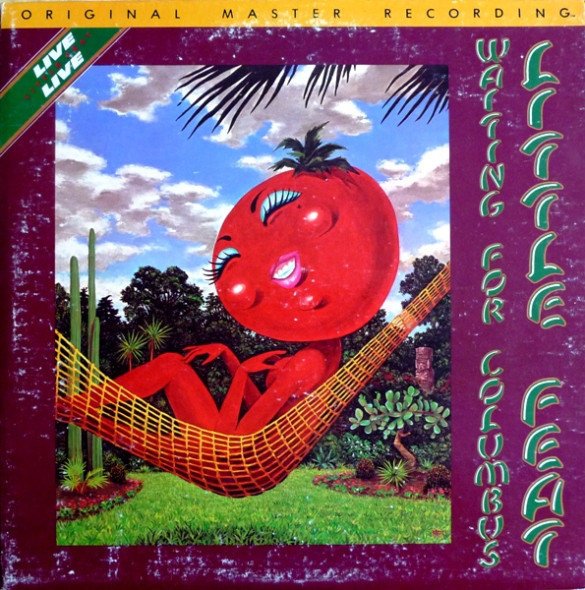
Waiting for Columbus – A MoFi Pseudo-Hot Stamper

Hot Stamper Pressings of the Music of Little Feat Available Now

Sonic Grade: C

Ten or fifteen years ago we did a listing for this Mobile Fidelity pressing as a Pseudo-Hot Stamper. Here is what we had to say about it at the time:

This is actually a pretty good sounding record, all things considered. We put this one through our cleaning process and gave it a listen. Although our Hot Stamper copies do sound better, they’re also quite a bit more expensive. This copy had the best sound we heard out of the three or four we played, which makes it a Hot Stamper I suppose, but we are instead just calling it a Very Good Sounding Copy.

Waiting for Columbus is one of the greatest live rock and roll albums ever made, containing performances by one of the greatest rock and roll bands to ever play. If you only buy one Little Feat album in your lifetime, make it this one.

We spent years trying to get shootouts together for this album, but kept running into the fact that in a head to head shootout the right MoFi pressing — sloppy bass and all — was hard to beat.

This is no longer the case, courtesy of that same old laundry list you have no doubt seen on the site countless times: better equipment, tweaks, record cleaning, room treatments, et cetera, et cetera. Now the shortcomings of the MoFi are clear for all to see, and the strengths of the best non-half-speed mastered pressings are too, which simply means that playing the MoFi now would be an excruciating experience. All I can hear is what it does wrong. I was so much happier with it when I didn’t know better.

(more…)

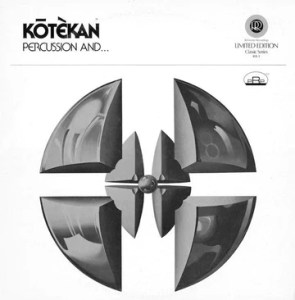
Kōtèkan – Percussion And…

More Percussion Recordings of Interest

  • You’ll find STUNNING Shootout Winning Triple Plus (A+++) grades or close to them on both sides of this original Reference LP
  • So transparent, dynamic and REAL, this copy raises the bar for the sound of percussive music on vinyl
  • Includes an extraordinary interpretation of Ravel’s La Flute Enchantee that must be heard to be believed
  • “… heady, explosive, weird, bizarre and brilliant playing…” – S.F. Chronicle

This Reference LP, mastered by Stan Ricker, might just be the best sounding record this sorry excuse for an audiophile label ever made.

Any label that would release Audiophile BS records such as this one and this one has a lot of explaining to do.

I hadn’t played this Kōtèkan title in probably twenty years, but I remembered it sure sounded good to me back in the day, so we decided to get some in and do a shootout for them. This copy was an impressive reminder of just how good the recording can be.

(more…)