_Composers – Schubert

Shostakovich / Cello Sonata / Shafran

Hot Stamper Pressings of the Music of Shostakovich Available Now

UPDATE 2026

In 2004, before we started doing shootouts for records like this Living Stereo, LSC 2553, we had this to say about a copy we played.


Fabulous! A beautiful record!

These sell for a fortune now, so there is almost no chance we will be able to do a shootout for this album. If you see one at a good price, pick it up!

Performed by Daniel Shafran, Cellist, and Lydia Pecherskaya, Pianist. This performance also includes Schubert’s Arpeggione Sonata.


Discogs Pricing Statistics

  • Lowest: $50.00
  • Median: $399.99
  • Highest: $1,000.00

1961 just happens to be one of the truly great years for top quality analog recordings, as can be seen from this amazing group of albums, all recorded or released that year.

(more…)

A Lively Hall Creates the Right Sound for Dances of Old Vienna

Hot Stamper Pressings on Two of Our Favorite Labels, Decca & London

Wow, what a find! Dances of Old Vienna is a WONDERFUL sounding record with vintage Decca / London sound. Even as late as 1968 Decca was still able to produce recordings that are tonally correct from top to bottom and full of Tubey Magic.

There is not a trace of hyped-up sound to be found on this record. It’s unbelievably spacious and three-dimensional, with depth to rival any recording you may own.

The sound is especially spacious partly because the recording is of a fairly small ensemble, playing in a lively hall, exactly the kind of venue in which this music was meant to be heard.

(more…)

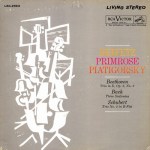
Beethoven, Bach, Schubert / Heifetz, Primrose, Piatigorsky

More of the Music of Beethoven

  • An original Shaded Dog pressing of this wonderful recording of string trios and sinfonias, here with two solid Double Plus (A++) or BETTER sides
  • It’s also fairly quiet at the high end of Mint Minus Minus, a grade that even our most well-cared-for vintage classical titles have trouble playing at
  • Beethoven’s Trio in D, Op 9, No. 2 takes up all of this Nearly Triple Plus (A++ to A+++) side one, and is practically as good as we have ever heard, right up there with our Shootout Winner
  • Remarkably spacious, rich and smooth – only vintage analog seems capable of reproducing all three of these qualities without sacrificing resolution, staging, imaging or presence
  • This copy showed us the balance of clarity and sweetness we were looking for in the violin, viola and cello – not many recordings from this era can do that as well as this one does
  • Heifetz is a fiery player – he is front and center, with every movement of his bow clearly audible without being hyped-up in the least

(more…)

Schubert – The Trout Quintet / Curzon / Vienna Octet

More of the Music of Franz Schubert

  • Boasting two seriously good Double Plus (A++) sides, this vintage Ace of Diamonds pressing is doing just about everything right
  • It’s simply bigger, more transparent, less distorted, more three-dimensional and more REAL than most of what we played – this is music you cannot help but be drawn into
  • The 1958 master tape has been transferred brilliantly using “modern” cutting equipment (from 1968, not the low-rez junk they’re forced to make do with these days), giving you, the listener, sound and surfaces that are hard to fault
  • When you hear how good this record sounds, you may have a hard time believing that it’s a budget reissue from 1968, but that’s precisely what it is.
  • Some budget reissues are so good, they can actually win shootouts

The cello does not have that “fat” sound some audiophiles seem to like – Decca knew more about recording chamber music in 1958 than practically all the audiophile labels that would come along later, the ones that managed to make a mess of the very idea of audiophile quality sound (you know who I mean)

The piano and the strings have that Golden Age Tubey Magical sound we love. It’s been years since I’ve had the opportunity to play this record; most copies are just too beat up to bother with, so I was glad to find a number in minty condition.

Now what I hear in this recording is sound that is absolutely free from any top end boost, much the way live music is. There’s plenty of tape hiss and air; the highs aren’t rolled off, they’re just not boosted the way they often are in a recording.

A few years back I had a chance to see a piano trio perform locally; they even played a piece by Schubert. The one thing I noticed immediately during their live performance was how smooth and natural the top end was. I was no more than ten feet from the performers in a fairly reverberant room, and yet the sound I heard was the opposite of what passes in some circles for Hi-Fidelity.

This is the opposite of those echo-drenched recordings that some audiophiles seem to like, with microphones placed twenty feet away from the performers so that they are awash in “ambience.” If you know anything about us, you know that this is not our sound.

I have never heard live music sound like that and that should settle the question. It does in my mind anyway. The Chesky label (just to choose one awful audiophile label to pick on) is a joke and always will be. How anyone buys into that phony sound is beyond me, but any audio show will prove to you that there is no shortage of audiophiles who love the Chesky “sound,” and probably never will be.

(more…)

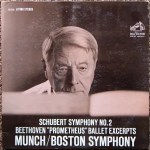
Don’t Waste Your Money on this Schubert Recording with Munch from 1962

Hot Stamper Pressings of Living Stereo Recordings Available Now

Some audiophiles buy albums based on their labels. For example, this Shaded Dog pressing from the Golden Age of RCA Living Stereo might appeal to a certain kind of audiophile who treasures original LSC pressings.

More than that, he might limit himself to the most sought-after 1S Indianapolis pressings. Hooray! What could be better?

However, many records from this era simply do not sound good, and this is one of them. We have never heard a good sounding copy of LSC 2522, and we’ve played plenty of them over the decades that we’ve been selling Golden Age Classical records.

Are You a Fan?

If you’re a fan of Living Stereo pressings, have you noticed that many of them – this one for example – don’t sound very good?

If you’re an audiophile with good equipment, you should have. But did you? Or did you buy into the hype surrounding these rare LSC pressings and just ignore the problems with the sound?

When vintage RCA Living Stereo records don’t sound good to us, we put them on this list and they go into our hall of shame. We don’t make excuses for them. We call a spade a spade. The same goes for records being made today.

Some audiophiles buy albums based on their labels. For example, this Shaded Dog pressing from the Golden Age of RCA Living Stereo might appeal to a certain kind of audiophile who treasures LSCs on the original label.

More than that, he might limit himself to the most sought-after 1S Indianapolis pressings. Hooray! What could be better?

However, many records from this era simply do not sound good, and this is one of them. We have never heard a good sounding copy of LSC 2522, and we’ve played plenty of them over the decades that we’ve been auditioning Golden Age classical records for sale.

This Shaded Dog might be passable on an old school system, but it was too unpleasant to be played on the high quality modern equipment we use.

There are quite a number of other records that we’ve run into over the years with similar shortcomings. Here are some of them, a very small fraction of what we’ve played, broken down by label.

  • London/Decca records with weak sound or performances
  • Mercury records with weak sound or performances
  • RCA records with weak sound or performances, including many on the coveted Shaded Dog label

(more…)

The Early London Pressings Of Schubert’s 9th Are Awful

Hot Stamper Classical and Orchestral Imports on Decca & London

There are plenty of Deccas and Londons that we’ve cleaned and played over the years that were disappointing, and some of them can be found here.

What was most striking about this shootout was how poorly the original London Bluebacks (CS 6061) fared when going head to head with the best vintage reissues. In fact, they were so obviously inferior I doubt we would have even needed another pressing to know that they could not possibly be considered Hot Stampers.

The two we had were crude, flat, full of harmonic distortion, and both had clearly restricted frequency extremes.

In other words, it just sounded like an old record, and not a very good one at that. The world is full of them.

But I remember liking the Blueback pressings I played ten or twenty years ago.

Did I have better copies, or was my system not capable of showing me the shortcomings I so clearly heard this time around? Since this is a question that cannot be answered with any certainty, we’ll have to leave it there.

Our favorite performance of the work is this one with Krips and the LSO, but on a much later reissue pressing produced by Decca in the 70s. Imagine that!

(more…)

Schubert / Death and the Maiden / Julliard String Quartet

More of the Music of Franz Schubert

  • This rare and highly sought after Shaded Dog pressing finally returns to the site, here with solid Double Plus (A++) Living Stereo sound or BETTER from start to finish
  • It’s also fairly quiet at Mint Minus Minus, a grade that even our most well-cared-for vintage classical titles have trouble playing at
  • Side two was sonically very close to our Shootout Winner – you will be amazed at how big and rich and tubey the sound is
  • Our shootout winner in this case, like many of the rare Living Stereo titles we do offer, looked fine but played with too much surface noise to be enjoyable on highly resolving equipment
  • Both of these sides are remarkably transparent, with real “rosin on the bow” resolution and naturalness that is lacking on many of the RCA chamber recordings we’ve played in the past
  • Lewis Layton engineered this TAS-approved recording and he nailed it, perfectly capturing the rich, textured sheen on the strings, the hallmark of Living Stereo sound in the 50s and 60s
  • 1960 was a great year for classical recordings – other Must Own orchestral releases can be found here

(more…)

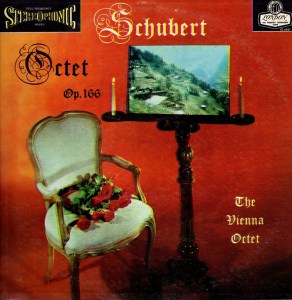
Schubert / Octet / Vienna Octet

More of the music of Franz Schubert (1797-1828)

More Classical Recordings Featuring the Violin

  • Amazing sound throughout this original London pressing of the Vienna Octet’s performance of Schubert’s sublime chamber work, with both sides earning INCREDIBLE Shootout Winning Triple Plus (A+++) grades
  • It’s also fairly quiet at Mint Minus Minus, a grade that even our most well-cared-for vintage classical titles have trouble playing at
  • The rich, textured sheen of the strings was far more natural and more real than on all other copies we played, with a clarity and sweetness we were looking for in the violin and cello
  • Both of these sides are super spacious and positively dripping with ambience — talk about Tubey Magic, the liquidity of the sound here is positively uncanny

(more…)

Side One of Ritual Fire Dance Had Tubey Colorations Missing from Side Two

Hot Stamper Pressings of Vintage Columbia Albums Available Now

An undiscovered gem from 1967 on the 360 Columbia label.

Side two of this record blew our minds with its White Hot Stamper sound.

Musically and sonically this record is nothing short of wonderful.

Who knew? You could play fifty vintage piano recordings and not find one as good as this.

Tchaikovsky, Liszt, Beethoven, Debussy, Mozart — these shorter pieces and excerpts were composed by those with the greatest gift for melody, men who’ve produced works that have stood the test of time, enchanting audiences over the centuries with works of such beauty and charm.

Here at Better Records we have never been fans of Columbia classical LPs. Years ago we noted that:

Columbia classical recordings have a tendency to be shrill, upper-midrangy, glary and hard sounding. The upper mids are often nasally and pinched; the strings and brass will screech and blare at you in the worst way. If Columbia’s goal was to drive the audiophile classical music lover screaming from the room (or, more realistically, induce a strong desire to call it a day record-playing wise), most of the time one would have to grant they’ve succeeded brilliantly. Occasionally they fail. When they do we call those pressings Hot Stampers.

To be clear, the fault more often than not has to be in the mastering, not the recording. We’ve raved about so many great copies of titles in the past, only to find that the next three or four LPs we pick up of the very same titles sound just godawful. There are some amazing Bernstein recordings out there, but the the amount of work it takes to find the one that sounds good is overwhelming — how can such great recordings be regularly mastered so poorly?

Side One

A++, with a huge, rich, sweet, natural sounding piano. The more you listen, the more apparent it becomes that, as natural as it may seem at first blush, there are still some old school tubey colorations that make the sound not quite as lifelike and real as one might wish.

And the confirmation of that finding comes as soon as you flip the record over.

(more…)

Our Old Prediction for LSC 2563 Came True

Hot Stamper Pressings that Feature the Violin

Many years ago we wrote:

This is a very old review and it’s doubtful we would not prefer the right Shaded Dog pressing these days.

That turned out to be the case, as we had two late-label 70s Red Seal pressings in the shootout we just did and only one of them was even passable.

A few things about the new pressings and the old commentary caught my eye.

First off, 3s is a fairly low number. The Shaded Dogs that win the shootout must be lower, which means they are either 1s or 2s. Not much to choose from there!

Secondly, the commentary you see below goes into great detail regarding what each piece found on the pressing was doing right and wrong.

It makes us sound like we knew what we were talking about when it came to this specific Red Seal pressing of the album we had played.

I assure you that we did not.

On the web I come across lots of reviews for audiophile pressings in which the writers go on for page after page about how much better the new Heavy Vinyl pressing is compared to the old record the reviewer owns.

This is no longer hard for me to understand. They are simply as lost as I used to be.

(more…)