wide-and-tall-rock-pop

Cheap Trick – Heaven Tonight

More of the Music of Cheap Trick

  • This vintage pressing of Cheap Trick’s third studio LP boasts solid Double Plus (A++) grades from top to bottom
  • Huge rock sound – the guitars and drums are positively jumping out of the speakers with dynamic energy, presented on a stage that’s remarkably wide and tall – which means the monster hit “Surrender” rocks like crazy, with more bottom and top end extension than on most other copies we played
  • 5 stars: “Heaven Tonight, like In Color, was produced by Tom Werman, but the difference between the two records is substantial. Where In Color often sounded emasculated, Heaven Tonight regains the powerful, arena-ready punch of Cheap Trick, but crosses it with a clever radio-friendly production that relies both on synthesizers and studio effects.

Heaven Tonight is the culmination of the group’s dizzying early career, summing up the strengths of their first two albums, their live show, and their talent for inverting pop conventions.”

(more…)

Enoch Light and the Light Brigade – Provocative Percussion, Vol. 2

More Exotica Recordings

More Amazing Sounding Percussion Records

  • Provocative Percussion, Vol. 2 debuts on the site with solid Double Plus (A++) sound on both sides of this original Stereo Command pressing – fairly quiet vinyl too
  • Simply remarkable space, ambience and depth – if you have never heard one of these kinds of records, you are really in for a treat with this one
  • Provocative Percussion, Vol. 2 is yet another record we’ve discovered with potentially excellent sound
  • 1959 was a phenomenal year for audiophile quality recordings – we’ve auditioned and reviewed more than a hundred and thirty to date, and there are undoubtedly a great many more that we’ve yet to discover

(more…)

Outliers & Out-of-This-World Sound

More Outlier Pressings We’ve Discovered

This commentary was written about ten twenty years ago and has been updated more than a few times since.

A while back we did a monster-sized shootout for Blood, Sweat and Tears’ second release, an album we consider THE Best Sounding Rock Record of All Time.

In the midst of the discussion of a particular pressing that completely blew our minds — a copy we gave a Hot Stamper grade of A with Four Pluses, the highest honor we can bestow upon it — various issues arose, issues such as: How did this copy get to be so good? and What does it take to find such a copy? and, to paraphrase David Byrne, How did it get here?


  • We no longer give Four Pluses out as a matter of policy, but that doesn’t mean we don’t come across records that deserve them from time to time.
  • Nowadays we usually place them under the general heading of breakthrough pressings. These are records that, out of the blue, reveal to us sound that fundamentally changes what we thought we knew about these familiar recordings.
  • When this pressing (or pressings) landed on our turntable, we found ourselves asking “Who knew?
  • Perhaps an even better question would have been “How high is up?”

Which brings us to this commentary, which centers around the concept of outliers.

Wikipedia defines an outlier this way:

In statistics, an outlier is an observation that is numerically distant from the rest of the data.

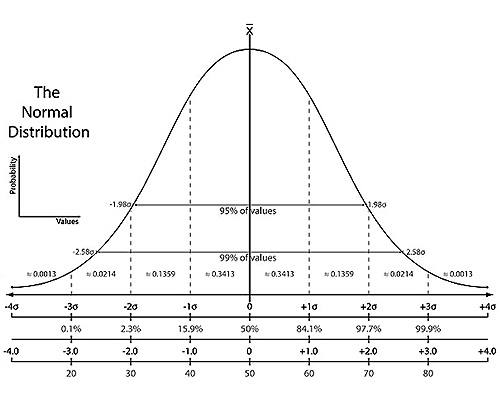
In other words, it’s something that is very far from normal. In the standard bell curve distribution pictured below, the outliers are at the far left and far right, far from the vast majority of the data which is in the middle.

In the world of records, most copies of any title you care to name would be average sounding. The vertical line in the center of the graph shows probability; the highest probability is that any single copy of a record will be at the top of the curve near the middle, which means it will simply be average. The closer to the vertical line it is, the more average it will be. As you move away from the vertical line, the data point — the record — becomes less and less average. As you move away from the center, to the left or the right, the record is either better sounding or worse sounding than average.

Hot Stampers are simply those copies that, for whatever reason, are far to the right of center, far “better” than the average. And as the curve above demonstrates, there are a lot fewer of them than there are copies in the middle. 


Measuring the Record

Malcolm Gladwell has a bestselling and highly entertaining book about outliers which I recommend to all. Last year I read The Black Swan (or as much of it as I could stand given how poorly written it is) which talks about some of these same issues. Hot Stampers can be understood to a large degree by understanding statistical distributions. Why statistics you ask? Simple. We can’t tell what a record is going to sound like until we play it. For all practical purposes we are buying them randomly and “measuring” them to see where they fall on the curve. We may be measuring them using a turntable and registering the data aurally, but it’s still very much measurement and it’s still very much data that we are recording.

No Theory, Just Data

Many of these ideas were addressed in the recent shootout we did for BS&T’s second album. We played a large number of copies (the data), we found a few amazing ones (the outliers), and we tried to determine how many copies it really takes to find those records that sound so amazing they defy not only conventional wisdom, but our understanding of records per se.

We don’t know what causes these records to sound so good. We know ’em when we hear ’em and that’s pretty much all we can say we really know. Everything else is speculation and guesswork.

We have data. What we don’t have is a theory that explains that data.

And it simply won’t do to ignore the data because we can’t explain it. Hot Stamper Deniers are those members of the audiophile community who, when faced with something they don’t want to be true, simply manufacture reasons why it can’t or shouldn’t be true.

That’s not science. Practicing science means following the data wherever it leads. The truth is found in the record’s grooves and nowhere else. If you don’t think record collecting is a science, you’re not doing it right.

Ignoring Outliers

Wikipedia has a good line about ignoring outliers. Under the heading of Caution they write: “… it is ill-advised to ignore the presence of outliers. Outliers that cannot be readily explained demand special attention.” Hear hear.

Now let’s see where the grooves for Blood, Sweat and Tears’ second album led us. They demanded special attention and by god we gave it to them.

The Grooves

We noted some new qualities to the sound that we would like to discuss; they’re what separated the men from the boys this time around. What we learned can be summed up in a few short words: it’s all about the brass. Let me give you just one example of how big a role the brass plays in our understanding of this recording. The best copies present a huge wall of sound that seems to extend beyond the outside edges of the speakers, as well as above them, by quite a significant amount. If you closed your eyes and drew a rectangle in the air marking the boundary of the soundscape, it would easily be 20 or 25% larger than the boundary of sound for the typically good sounding original pressing, the kind that might earn an A or A Plus rating.

Size Matters

The effect of this size differential is ENORMOUS. The power of the music ramps up beyond all understanding — how could this recording possibly be this BIG and POWERFUL? How did it achieve this kind of scale? You may need 50 copies to find one like this, which prompts the question: why don’t the other 49 sound the way this one does?

The sound we heard on the Four Plus copy has to be on the master tape in some sense, doesn’t it? Mastering clearly contributes to the sound, but can it really be a factor of this magnitude?

Intuition says no. More likely it’s the mastering of the other copies that is one of the many factors holding them back, along with worn stampers, bad stampers, bad metal mothers, bad plating, bad vinyl, bad needles and all the rest — all of the above and more contributing to the fact that the average copy of this album is just plain bad news.

Conventional Wisdom

Any reason you like for why a record doesn’t sound good is as valid as any other, so you might as well pick one you are comfortable with; they’re all equally meaningless. Of course the reverse of this is just as true: why a record sounds good is anyone’s guess, and a guess is all it can ever be.

People like having answers, and audiophiles are no different from other people in this respect. Since there are no answers to any of these questions, answers in this case being defined as demonstrable conclusions based on evidence gained through the use of the scientific method, most people, audiophiles included, are happy — if not better off — making up the answers with which they are most comfortable.

This is precisely why the term “conventional wisdom” was coined, to describe the easy answers people readily adopt in order to avoid doing the hard work of actually finding out the truth.

(more…)

Richard & Linda Thompson – Shoot Out The Lights

More Richard Thompson

  • An outstanding copy of The Thompsons’ final album with big, bold, energetic Double Plus (A++) sound or BETTER on both sides – exceptionally quiet vinyl too
  • Without a doubt this is the best record Richard and Linda Thompson ever made
  • Dynamic, huge, lively, powerful and musical – a real Demo Disc
  • Top 100 album, and clearly Thompson’s Masterpiece of Grungy Guitar Rock
  • 5 stars: “Shoot Out The Lights found them rallying their strengths to the bitter end; it’s often been cited as Richard Thompson’s greatest work, and it’s difficult for anyone who has heard his body of work to argue the point.”

Without a doubt, this is the best record Richard and Linda Thompson ever made together, possibly the best record Thompson was ever involved with, but it also holds one other important distinction, one of great interest to us audiophiles: it’s the BEST SOUNDING record he (they) ever made as well.

Turn it up good and loud and you will be amazed at how dynamic the guitar solos are.

(more…)

Billy Squier – Don’t Say No

More Rock Classics

  • With a nearly Triple Plus (A++ to A+++) side two and a seriously good Double Plus (A++) side one, this copy will be very hard to beat – exceptionally quiet vinyl too
  • HUGE Rock Sound — the guitars and drums are positively jumping out of the speakers with dynamic energy, presented on a stage that’s exceptionally wide and tall — which means the two monster hits In The Dark and The Stroke both rock like crazy, with more bottom and top end extension than practically any of the other copies we played
  • 4 1/2 stars: “Billy Squier truly arrived with 1981’s Don’t Say No… The album is a near-perfect example of early-’80s melodic hard rock… as far as studio albums are concerned, Don’t Say No is undoubtedly his best.”

There’s a reason this album sounds big and lively. It was produced by Reinhold Mack (“& Billy” according to the liner notes), Mack being the man who produced a truly amazing sounding Queen album, The Game. If you’ve ever heard a serious Hot Stamper of that album, you know what we’re talking about when we say it delivers the Big Rock Sound we love here at Better Records. Turn it up and rock out! (more…)

Bonnie Raitt / The Glow – Our Shootout Winner from 2012

More of the Music of Bonnie Raitt

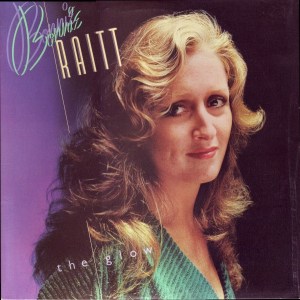
After a nearly two year hiatus, finally, a Top Copy makes it to the site. Side one here is nearly White Hot (A++ to A+++), which means it finished just a half step behind our shootout winner. It’s got that big, rich, solid ANALOG Val Garay (James Taylor, Linda Ronstadt) sound that we go crazy for here at Better Records (where the records are still made from analog tapes, even if it’s only because there aren’t any other kind to make them from!).

And side two is nearly as good, earning Two big Pluses for itself for Bonnie’s-in-the-room-with-you presence and huge Disappearing-Speaker-Effect presentation. It may not have all the space within the soundstage as the best we played. but it’s as wide and as tall as any. Either way, it certainly is impressive. On big speakers, you are there.

The Glow’s best material can be found in the deeper cuts — I would point potential listeners in the direction of Your Good Thing (Is About to End) on side one — with an amazing sax solo (he holds the patent in perpetuity) courtesy of David Sanborn, and (Goin’) Wild for You Baby at the end of side two. Once you get past the more radio-friendly lead-off tracks on both sides, the quality of the writing and performing improve markedly. (more…)