*Hey, What’s the Big Idea?

Thoughts on The Big Picture from someone who has been playing records for almost 60 years. I bought a copy of She Loves You on Swan in 1964 and still own it. The disc may be cracked but the picture sleeve is in pretty good shape, just in case you were wondering.

Can Every Audiophile System Do Its Job Well?

More on the Subject of Speaker Advice

That depends on exactly what job you think you’re giving it to do.

If its job is to allow you to enjoy music in the comfort of your home, then the little box speakers you see pictured to the left can do that job just fine, with the caveat that you must be able to enjoy the kind of sound that comes out of little boxes.

If the job you give your stereo to do is to reproduce the full range of music with high fidelity, then the little boxes you see pictured are going to fail miserably. Until the laws of physics are repealed, however that might happen, they will never be able to reproduce music in a lifelike way.

I like big dynamic speakers because they do a better job of reproducing music in a lifelike way compared to every other speaker I have ever heard, horns included, which can be very lifelike indeed, but have other shortcomings that I cannot abide.

This is not just another post bashing small speakers. I say these things to introduce the comment sent to me that you see below.

I received this anonymous letter recently in reply to a commentary I had written entitled Tone Poets and one-legged Tarzans.

Another poster defended rl1856’s claims for the abilities of his system to judge different pressings, noting that his criticisms of these remastered records — both on Tone Poets and Classic Records — generally align with mine.

I find this ending hilarious: “Never Played One – To be clear, we have never played a Tone Poets record. We’ve played many titles mastered by Kevin Gray, and we know that he is credited with mastering some records for the label. Without exception we find that his remastered records leave a lot to be desired. You can find many of them in our Hall of Shame. Anyone defending his work to me has some heavy lifting to do.”

You condemn rl1856 for expressing an opinion regarding something YOU ADMIT YOU NEVER HEARD because you believe his equipment is not resolving enough ? The irony is that his opinion largely mirrors yours regarding the sonic virtues of original RVG recordings ! How is it that he, listening through his “inferior” system can hear the virtues you ascribe to RVG pressings, and also hear when those virtues are not present?

My reply, after a week of thinking about the points this gentleman makes, can be seen below.

Hi,
Thanks for writing.

Little box speakers do produce sound of some quality. It would be foolish for me to say that one can’t actually hear something through them. The question is how much?

I believe the answer is not much, and that nobody reviewing records, or comparing one pressing to another, should be fooling himself into thinking he can do either one with a speaker of such little fidelity to the sound of live music.

Good stereos playing good records can sound like live music. With the volume up high and a shootout winning pressing on the table, in our studio the best of RVG’s recordings sound very much like live music

Does anyone think that, brought into this gentleman’s listening room wearing a blindfold and seated in the listening chair, he could be fooled into thinking he was hearing live music instead something coming out of some boxes?

Nothing I’ve played that Kevin Gray mastered, when played on the system we use — the one we developed specifically to evaluate the sound quality of records — was ever noticeably better than mediocre.

We’ve played his records by the score. They all suffer from the same suite of shortcomings to one degree or another, the specifics of which we have described in detail in post after post throughout this blog. (Here is a good example of some of his recent work.)

(more…)

Advances in Playback Technology Are More Than Blind Faith

More of the Music of Eric Clapton

In a 2007 commentary for a Hot Stamper pressing of Blind Faith we noted that:

When it finally all comes together for such a famously compromised recording, it’s nothing less than a THRILL. More than anything else, the sound is RIGHT. Like Layla or Surrealistic Pillow, this is no Demo Disc by any stretch of the imagination, but that should hardly keep us from enjoying the music. And now we have the record that lets us do it.

The Playback Technology Umbrella

Why did it take so long? Why does it sound good now, after decades of problems? For the same reason that so many great records are only now revealing their true potential: advances in playback technology.

Audio has finally reached the point where the magic in Blind Faith’s grooves is ready to be set free.

What exactly are we referring to? Why, all the stuff we talk about endlessly around here. These are the things that really do make a difference. They change the fundamentals. They break down the barriers.

You know the drill. Things like better cleaning techniques, top quality front end equipment, Aurios, better electricity, Hallographs and other room treatments, amazing phono stages like the EAR 324p, power cables; the list goes on and on.

If you want records like Blind Faith to sound good, we don’t think it can be done without bringing to bear all of these advanced technologies to the problem at hand, the problem at hand being a recording with its full share of problems and then some.

Without these improvements, why wouldn’t Blind Faith sound as dull and distorted as it always has? The best pressings were made more than thirty years ago [thirty? make that fifty] — they’re no different.

(more…)

Are Our Heavy Vinyl Reviews Based on Faulty Reasoning?

Welcome to the Skeptical Audiophile

The short answer is that our reviews aren’t based on reasoning at all.

The full story follows. The comments you see below were left on our listing for the Rhino pressing of The Cars’ first album.

The grievances the writer lists are long and mostly unserious, but I think they have some value, just not the value the writer intended, so of course I am happy to reproduce them here and take a crack at explaining the mistaken audiophile thinking they represent.

If you’ve ever stumbled upon the Wikipedia page for logical fallacies, you will have no trouble recognizing all the shortcomings this writer has called us out for in our review of The Cars on Rhino, as well as, we assume, the hundreds of other Heavy Vinyl disasters we take to task on this blog.

Rather that attempt to rebut the individual charges, which seem to be grounded in issues of logic, semantic hair-splitting, a deep misunderstanding of the unwritten rules of criticism, what does and does not constitute an ad hominem attack, my use of injudicious language, and who knows what else, I have an answer that I believe gets to the heart of why none of this matters, which you will find below in my reply to his comments. [Bolding added by me,]

Ad Hominem Attack: The author attacks Kevin Gray personally, suggesting that his work is consistently poor without addressing the specific issues with the remastering process.

Appeal to Authority: The author mentions Steve Hoffman and his successful remastering of The Cars’ first album on Gold CD, implying that because Hoffman did it well, Kevin Gray should have done the same. This disregards the possibility of differences in approach and technique between the two engineers.

Appeal to Popularity: Popularity does not equate to quality.

False Dichotomy: The author presents a binary choice between their preferred pressing and the Rhino pressing, suggesting that the Rhino pressing is objectively bad without considering the possibility of subjective preferences or different listening experiences.

Appeal to Emotion: The author uses emotive language (“just awful,” “godawful”) to elicit a strong negative reaction from the reader, rather than providing objective evidence to support their claims. This would be very difficult considering that taste and preference is subjective.

Hasty Generalization: The author assumes that anyone who disagrees with their assessment of the Rhino pressing must have inferior audio equipment or lack understanding of audio quality. This overlooks the possibility of legitimate differences in opinion or subjective preferences.

Appeal to Ignorance: The author suggests that because they personally find the Rhino pressing to be of poor quality, it must be objectively bad. However, personal experience or opinion does not necessarily reflect objective truth.

I would hope that no one reading this blog could possibly find these sophistic arguments persuasive, for the simple reason that none of them have very much to do with the sound of the records, by The Cars or anybody else, that we discuss in our 5000+ listings and commentaries.

Everything we say about records is backed up by the evidence we have discovered by actually playing them.

Failures of logic and generally fallacious thinking have nothing to do with whatever “truths” we believe we have discovered about records, because we didn’t use either one — logic nor reasoning — to learn what we know about them.

I also don’t think we would be comfortable characterizing our claims about the sound of records to be objectively true. Our claims may be objectively true for us; the same stampers of scores of records win our shootouts over and over again, even though no one playing or reviewing the pressings in question knows which stampers are which until the grades are in.

But that objectivity extends only to the records we play on our stereo, and the kind of sound we like our records to have. (May I point out here that the other two guys who took over the job of doing our shootouts more than five years ago heard things the same way I did, and we never quarreled even once about which pressings were the best. They didn’t need teaching, they just needed good records to play on a good system. If your stereo is good enough, the right answers come naturally and effortlessly.)

Fortunately for us, thousands of customers have found that their stereos play our records just fine, and these same customers seem to like the kind of sound we like. That didn’t have to be the case, but we’re glad it is. Otherwise I would have had to find some other way to make a living. I sure wasn’t going to keep selling Heavy Vinyl once it was clear to me how consistently inferior the sound was more than likely going to continue to be.

Logic and Evidence

To understand the records we offer, and the reviews we write, logic is of no use whatsoever.

The only thing that has any real value is experimental evidence.

Without experimental evidence, you simply have no evidence, because logic is not evidence.

(more…)

Building a Good Sounding Record Collection – Hot Stampers Versus Collector Pressings

Record Collecting for Audiophiles – A Guide to the Fundamentals

I defy anyone who has not made a lifelong study of pressing variations to tell me which of the hundreds of records pictured below is likely to have audiophile quality sound.

There is not a chance in the world the owner knows either, and I suspect he does not care one way of the other. If this fellow describes himself as an audiophile, he is either mistaken or setting a very low bar for hinself.

An audiophile is defined as someone who “loves sound.” The owner of this collection may love sound on some level — he plays records, and they have sound, and if he loves the sound he hears on his records, that would make him an audiophile according to the dictionary.

For those of you who spend much time on this blog, to us an audiophile is a “lover of good sound,” not just any sound.

This fellow is not really an audiophile as we would define the term, certainly not much of one.

He is a record collector, plain and simple.

And that’s not a hard thing to be. Most anyone can amass a collection of records — one this big, ten times its size or one-tenth its size, the process of going about it is the same. You just buy whatever kinds of records you happen to like and organize them in whatever way you find most pleasing.

There is no limit to the kinds of records a person might collect: originals, imports, audiophile pressings, picture discs, the TAS List – you name it, you are free to collect it to your heart’s desire.

There are literally millions of records for sale around the world on any given day. They’re not hard to find, and being so common, collecting them could not be easier. A single collection for sale as of this writing contains more than 3 million records. That works out to a thousand records each for three thousand collectors. Do you really have time to play more than a thousand records? That’s a different record every day for almost three years!

Why Collect?

Some people see records as an investment.

We do not. We think audiophile-oriented music lovers should pursue good sounding records for the purpose of playing them and enjoying them, understanding that the better their records sound, the more enjoyable they will be.

Collecting records primarily to build a record collection that can be sold at a profit in the future should be the last thing on anyone’s mind.

Most of the following was written in response to a customer who wanted to know how original our Hot Stamper pressings were since he preferred to collect first pressings — which were also worth more money should he decide to sell them at a later date. We asked:

Why would you want a first pressing if it doesn’t sound as good? Or, if a later pressing sounded better, why would that make any difference in your desire to buy it? Isn’t the idea to get good sound?

If you buy records principally to collect original pressings, you will end up with one mediocre sounding collection of records, that I can tell you without fear of contradiction. The formula goes like this: Average pressing, original or otherwise = average sound.

On the other hand, if you want the best sounding pressings, we are the only record sellers on the planet who can consistently offer them to you. This is precisely the service we offer, unique in the world as far as we know. Hence the name Better Records.

Anyone can sell originals. Only we can offer the discriminating audiophile records with the best sound.

Others could of course, but none of them have ever bothered to try, so the practical effect is the same.

Finding the best sound is far more difficult and far more rewarding for both the seller and the buyer, as any of our customers will be happy to tell you.

(more…)

What’s the Average Record Worth?

More Letters from Customers and Critics Alike

What follows is an excerpt from a very old letter (circa 2005) in which the writer attempted to make the case that spending lots of money on records is foolish when a dollar buys a perfectly good record at a thrift store and provides the listener with exactly the same music and decent enough sound.

We think this is silly and, with a few rough calculations, along with a heavy dose of self-promotion and not a little bullying, we set out to prove that the average record is practically worthless. Prepare to confront our exercise in sophistry.

(Yes, we are well aware that our reasoning is specious, but it’s no more specious than anybody else’s reasoning about records if I may say so.)

Jason, our letter writer, points out this fact:

Your records are a poor value in terms of investment. Until you convince the whole LP community that your HOT-STAMPER choices are the pinnacle of sound a buyer will never be able to re-sell B S & T for $300. Even if they swear it is the best sounding copy in the world.

We replied as follows:

If records are about money, then buying them at a thrift store for a buck apiece and getting something halfway decent makes perfect sense. As the Brits say, “that’s value for money.” If we sell you a Hot Stamper for, say, $500, can it really be five hundred times better?

The Math

I would argue that here the math is actually on our side. The average pressing is so close to worthless sonically that I would say that it isn’t even worth the one dollar Jason might pay for it in a thrift store. I might value it somewhere in the vicinity of a penny or two. Really? Yes indeed.

Assuming it’s a record I know well, I probably know just how wonderful the record can really sound, and what that wonderful sound does to communicate the most important thing of all: the musical value.

A copy that doesn’t do that — allow the music to come alive — has almost no value. It’s not zero, but it’s close to zero. Let’s assign it a nominal value. We’ll call it a penny.

What Have You Got to Lose?

You see, when I play a mediocre copy, I know what I’ve lost.

Jason can’t know that. All he knows is what he hears coming from his mediocre equipment as his mediocre LP is playing. To him it sounds fine. To me it sounds like hell. (Hell is in fact the place where they make you listen to bad sounding records all day.)

(more…)

Can Chris Bellman Cut Records As Well As Artisan Used to?

Robert Brook has a blog which he calls

A GUIDE FOR THE DEDICATED ANALOG AUDIOPHILE

Robert’s story begins:

Recently a friend and a frequent reader of my website suggested I review the 50th Anniversary Edition of David Crosby’s debut. He’d read my article from a while back in which I made comparisons between two different Hot Stamper copies of the record, and he knew I was a fan the album.

I’m sure he also knew, as any of my regular readers would, that I’m extremely skeptical of modern reissues. You can find many examples on this site of reissues I’ve written about that have failed miserably to impress me. But this friend was pretty insistent that this one, remastered by long time engineer Chris Bellman, was different. He also told me it was on par with original Monarch pressing of …My Name he also owned.

Bellman was responsible for cutting one of the few heavy vinyl reissues that my friend Tom Port has liked and recommended – a European pressing from 2020 of the Dire Straits record Brothers In Arms. Tom likes precious few “audiophile” reissues. He’s mentioned maybe 4 or 5 over the years as being worthy of any consideration. Given that, and the fact that my friend was so insistent, I figured why not give Bellman’s recut of . . .My Name a shot?

Click on the link to read the whole thing. I left some comments at the end you may enjoy reading. I hope to be able to address some of the other issues Robert brings up at a later date.

IF ONLY I COULD REMEMBER MY NAME: 50th Anniversary Edition

If you are interested in picking up an amazing Hot Stamper pressing of the album, we currently (as of 2/24) have some in stock. Click on this link to see what is available: If I Could Only Remember My Name.

On the website, we talk about just how much we love this album:

(more…)

This Is Why We Love Records from the 50s

Hot Stamper Pressings of Mercury Classical Recordings Available Now

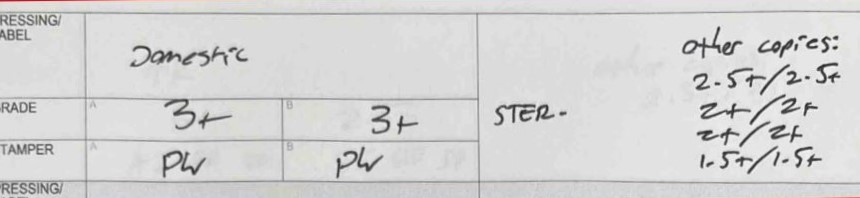
From time to time a record comes our way that sounds absolutely amazing, “I can’t believe it’s a record” amazing.

If it’s the kind of record that sounds like the best copy of Fiesta in Hi-fi from our most recent shootout, we might even let our enthusiasm for its superb fidelity get the better of us. That’s the effect a record as good as the copy we played can have. You just can’t stop yourself from saying one great thing after another about it.

Our over-the-top notes, like those you see below, attempt to convey what it’s like to experience the absolutely breathtaking sound we were hearing.

But where is the harm in that? These are notes that no one outside of the staff are ever expected to see. They are helpful to us in writing our commentary and pricing the specific copy we auditioned, but they are practically never quoted in the listings.

Fiesta in Hi-Fi is an example of one of those recordings that doubles as a thrill ride. They come along from time to time in order to show us the kind of sound that we’d almost forgotten was possible on a record.

Oh yes, with the rare properly-cleaned, properly-mastered, properly-pressed vintage vinyl LP, played back on top quality equipment in a heavily treated, dedicated soundroom, we can assure you it is very possible indeed. Allow us to make the case with the Shootout Winning original pressing you see below.

The notes read: 

So rich and big / Great space and detail / Everything sweet + clear + breathy / 3D too / Great dynamics / A touch hot but so fun / Deep bass.

You know what’s unusual about these notes?

(more…)

Focus Is the Hidden Driver of Excellence

More on Developing Your Critical Listening Skills

Every day Delanceyplace sends me email book excerpts, and the one that came today struck me as particularly relevant to the devilishly difficult audio hobby many of us have been engaged in for most of our adult lives. Some of their excerpts are seen below. (Italics added by me.)

I myself wrote a commentary back in 2006 about the 10,000 hour rule, which I have linked below delanceyplace’s piece, along with other commentaries I think you might enjoy.


Focus: The Hidden Driver of Excellence by Daniel Goleman.

“The ‘10,000-hour rule’ — that this level of practice holds the secret to great success in any field — has become sacrosanct gospel, echoed on websites and recited as litany in high-performance workshops. The problem: it’s only half true.

“If you are a duffer at golf, say, and make the same mistakes every time you try a certain swing or putt, 10,000 hours of practicing that error will not improve your game. You’ll still be a duffer, albeit an older one.

“No less an expert than Anders Ericsson, the Florida State University psychologist whose research on expertise spawned the 10,000-hour rule of thumb, told me, “You don’t get benefits from mechanical repetition, but by adjusting your execution over and over to get closer to your goal” .

“Apart from sports like basketball or football that favor physical traits such as height and body size, says Ericsson, almost anyone can achieve the highest levels of performance with smart practice. …

“Ericsson argues that the secret of winning is ‘deliberate practice,’ where an expert coach takes you through well-designed training over months or years, and you give it your full concentration.

“Hours and hours of practice are necessary for great performance, but not sufficient.

How experts in any domain pay attention while practicing makes a crucial difference.

For instance, in his much-cited study of violinists — the one that showed the top tier had practiced more than 10,000 hours — Ericsson found the experts did so with full concentration on improving a particular aspect of their performance that a master teacher identified.

Smart practice always includes a feedback loop that lets you recognize errors and correct them — which is why dancers use mirrors. Ideally that feedback comes from someone with an expert eye and so every world-class sports champion has a coach. If you practice without such feedback, you don’t get to the top ranks.

“The feedback matters and the concentration does, too — not just the hours. …

(more…)

It Ain’t Easy Being a One-Man Band

How to Go About Improving Your Critical Listening Skills

I should know. I was a one-man band working 60 to 80 hours a week with very little help until about 2000. I had someone cleaning records and packing and shipping, but everything else was on me. It was a lot.

In order to evaluate the qualities of the titles I was selling back then, whether on Heavy Vinyl or thin, imported or domestic, original or reissue, the process was the same.

I would play the record, and I would listen for the qualities that were important to me, qualities you might say were of a “make it or break it” nature.

What I mostly wanted to know about the record was whether it was:

  • Tonally correct.
  • Big enough.
  • Clear enough.
  • Balanced from top to bottom.
  • Energetic.
  • Present in the midrange.
  • Not bass shy.
  • Not rolled off in the high frequencies.
  • Not compressed.
  • And, finally, whether it would appeal to a wide enough audience to make carrying it worthwhile.

If I had other pressings of the same title to audition, which, to be honest, sometimes I did not, I would play those to see how they compared.

For some records this was not easy. To give just one example, for many of the Speakers Corners Decca classical pressings, I rarely had especially good pressings to judge them by.

I might have had some Londons and some Stereo Treasurys I could throw on, but good sounding, brand new Heavy Vinyl pressings on quiet German vinyl for $35 each did not warrant a big shootout back in those days. I was too busy doing other, more profitable things to keep the business alive.

If the Heavy Vinyl reissue sounded right to me, I said as much and sold it, figuring for $35 the customer who bought it was getting a good record at a fair price. (In constant dollars, those records would be more than $60 today.)

And of course the stereo I had back then (all tube and very powerful, but richer, darker and dramatically less revealing) set a low bar, one that was a great deal easier to get over than the ruthlessly revealing stereo we use now. (More on that subject here.)

I had someone cleaning records for me, sure, but to take the time to clean and play a pile of classical pressings was simply not the best use of my time. I would approve of the sound of whatever pressing I had just auditioned, something along the lines of “good” to “great,” and then write a short review to go in the next catalog.

Many of the records that passed these tests don’t sound all that good to me now. I clearly had a lot to learn.

And I had no other option but to understand records and audio at a higher level because the success of the business depended on it.

There was just too much money on the line at the prices we needed to charge. We, as a company, were forced to deliver a clearly superior product or the discipline of the market would come crashing down on our heads and put an end to our crazy experiment in “Hot Stampers.”

Lack of Resources

When you operate as a one-man band, you simply do not have the resources to clean and play enough copies of a given album to make accurate judgments about their sound.

Everybody makes mistakes, but small sample sizes increase the frequency of mistakes by orders of magnitude, especially a sample size as small as one. More on that here.

Here is another example of a sample size of one, because the three other pressings have very little chance of offering top quality sound. They’re what an audiophile who’s been asleep for the last twenty years might find on his record shelf. We find it hard to take seriously anything such an audiophile would say.

No Resources Needed

The current crop of audiophile reviewers appears to be writing for those who are generally satisfied with the Heavy Vinyl pressings being made today.

The reviews they do are easily carried out by those with an obvious aversion to the serious, disciplined, intense work it would take to do them properly.

They get one of these new records in, they give it a spin and they tell everybody how great it is. The advertisers like it, their readers like it, the labels like it, and everybody is happy as a clam.

When troublemakers like us come along, we upset that one-hand-washes-the-other arrangement, and before long everybody gets real upset real fast. Nobody wants that. They want to keep selling Heavy Vinyl because that is what can be produced, in volume, at a reasonable cost, then advertised and distributed easily and, most importantly, priced affordably.

Win win win win win. So much winning!

If you want something better sounding, from us, it will most likely cost you a pretty penny. It will be every bit as good as we say it is, but it will not be cheap and it will rarely be have any collector value.

Collecting for the Sake of Collecting

It appears as though the vast majority of record loving audiophiles really like collecting records. If I had to guess, I would venture it’s at least 95% and perhaps more. The five per cent that do not fall into that category are unlikely to want to spend their life savings on our pricey, not-especially-collectible pressings.

Our records have virtually no resale value. All their value is tied up in their sound.

That leaves our potential pool of customers at less than one per cent of all the record-loving audiophiles who want better sound and can afford it. Subtract the number of them who don’t like me personally — judging by what I read on Hoffman’s forum it seems like a lot — and you have a fairly small cohort of customers from which to draw.

Thankfully, it is big enough to keep our business going and food on the table for the ten dedicated. music-loving men and women who supply the world with Hot Stamper pressings. Nobody is getting rich, even at these prices, but we’re making a living and providing a service which people really appreciate, or at least that’s what they tell us.

(more…)

Gilbert and Sullivan Overtures – How Did They Do It?

Hot Stamper Pressings of Living Stereo Titles Available Now

The hall is HUGE: spacious and open as any you will hear, but not at the expense of richness or fullness. The orchestra is solid and full-bodied, yet the woodwinds and flutes soar above the other sections, so breathy and clear.

How did the Decca (recording) and RCA (mastering) engineers succeed so brilliantly where so many others have failed, failed and failed again, right up to this very day?

Who knows? It’s still a mystery that has yet to be explained, to my satisfaction anyway.

Essential Music – And No Singing

The music of Gilbert and Sullivan belongs in any serious classical collection. This is without a doubt the best way to get the most Gilbert and Sullivan music with the best sound. And no singing.

If for some reason you don’t have a good recording of Gilbert and Sullivan’s Overtures, you are really missing out. This is some of the most wonderful music ever composed. It’s the kind of music that will immediately put you in a good mood. Here the Overtures are played to perfection. For music and sound, this one is hard to fault.

As the liner notes say, “…immense charm, good-natured energy and the ‘rightness’ that announces the influence of a superb musical command”.

(more…)