Month: August 2024

Audiophiles Should Give Reiner’s Rossini Overtures a Miss

More of the music of Gioachino Rossini (1792-1868)

None of the pressings we played of this RCA were remotely competitive with Maag and the PCO on London.

The sound of this RCA was consistently boxy and congested, a case of the “old record” sound we find on countless vintage pressings. The world is full of bad records. We’ve suffered through them by the thousands.

Only an old school audio system can hide the faults of a pressing such as this. The world is full of those too, even though they might comprise all the latest and most expensive components.

There are quite a number of Golden Age pressings that we’ve run into over the years with obvious shortcomings.

Here are some of them, a very small fraction of what we’ve auditioned, broken down into the three major labels that account for most of the best classical and orchestral titles we’ve had the pleasure to play.

  • London/Decca records with weak sound or performances
  • Mercury records with weak sound or performances
  • RCA records with weak sound or performances

We’ve auditioned countless pressings in the 37 years we’ve been in business — buying, cleaning and playing them by the thousands.

This is how we find the best sounding vinyl pressings ever made, through trial and error. It may be expensive and time consuming, but there is simply no other method for finding better records that works. If you know of one, please write me!

We are not the least bit interested in records that are “known” to sound the best.

Known by whom? Which audiophiles — hobbyists or professionals, take your pick — can be trusted to know what they are talking about when it comes to the sound of records?

I have never met one, outside of those of us who work for Better Records. I remain skeptical of the existence of such a creature. The audiophile experts and reviewers I’ve encountered on the web seem hopelessly lost to me.


UPDATE: 2024

Woops, I take that back. I have met one, a certain Mr. Robert Brook. He has been conducting his own shootouts for a few years now and has made his findings available on his blog, The Broken Record. This is information you can trust.


(more…)

Obsessed with Bread’s Best

This is one of the rare Greatest Hits compilations (and this band had a LOT of hits) that is sonically competitive with the original albums.

You’ll find most of the best Bread ballads here, including Make It With You, Everything I Own, Baby I’m A Want You, and If.

Listening to these acoustic guitars brings back memories of my first encounter with a British original of Tea for the Tillerman. Rich, sweet, full-bodied, effortlessly dynamic — that sound knocked me out thirty plus years ago, and here it is again.

I guess I’ve just always been a sucker for this kind of well-crafted pop. I was buying Bread album in the early Seventies while still in high school.

If you’re a sucker too, then this killer copy of The Best of Bread will no doubt become a treasured disc in your home as well.

When you hear sound this good, it makes you appreciate the music even more than the sound. Over the years I’ve even come to enjoy the rockers on side two. I used to consider side two the weak part of the album. To hear the vocal harmonies that these guys produced is to be reminded of singers of the caliber of the Everly Brothers or The Beatles. It’s Pure Pop for Now People, to borrow a good line from Nick Lowe.

Of course, by Now People, I’m referring to people who appreciate the music that came out more than thirty years ago. Whenever I hear a pop record with sound like this, I have to ask myself, “What went wrong with popular recordings over the last two or three decades? Why do none of them ever sound like this?”

Not to worry.

Audiophiles with good turntables have literally an endless supply of good recordings to discover and enjoy. No matter how many records you have, you can’t have even scratched the surface of the recorded legacy of the last 60+ years. That’s the positive thought for the day. It’s not the end of the world. It’s just another step on your journey through the world of music.

One further note.

Records like this only get better over time. There are no shortcomings in this recording to be revealed by better equipment, in painfully stark contrast to the vast majority of audiophile pressings and remasterings that reveal their phony, lifeless and often just plain weird sound as your stereo and critical listening skills improve. In other words, if you make a change to your stereo and this record starts to sound better, you did the right thing. (more…)

Workin’ And Steamin’ – We Were Dead Wrong about the Originals

davismiles

Hot Stamper Pressings of the Music of Miles Davis Available Now

This review is for a pressing we put up around 2010.

Up to that time we had never played a clean, early pressing, and when we finally were able to put some in our shootout, one of them had sound that was out of this world.

In the commentary below we discuss what we think the early pressings probably sound like. Now, having heard how good the best of them can sound, we admit we clearly needed to do more research and development.

The record pictured above can have superb sound, much better than any modern Heavy Vinyl reissue you care to name.

However, the right properly-cleaned early pressings have the potential to take the sound of this music to the next level, a level we had no idea could exist until that right record came our way.

(more…)

The Byrds / Younger Than Yesterday Sure Sounds Better than It Used To

More Sixties Pop Recordings

  • An original Stereo 360 pressing (the first copy to hit the site in years) with an INCREDIBLE Shootout Winning Triple Plus (A+++) side one mated to a solid Double Plus (A++) side two
  • Here are just a few of of the things we had to say about this amazing Triple Plus side one in our notes: “big and tubey vox & bass”…”great size and energy”…”jumping out [of the speakers]”…”crazy good”
  • The sound is Tubey Magical, lively and dynamic, with exceptional transparency and immediacy
  • We’re always blown away at just how much further the better copies are able to take the music – what a difference the right pressing makes
  • Until we hear something better — a possibility we would never rule out — this is The Byrds’ best sounding album
  • In our experience, no red label reissue is even worth the trouble of cleaning and playing it. Some Byrds records have the potential to sound good on the red label, but this is not one of them
  • 5 stars: “Younger Than Yesterday was somewhat overlooked at the time of its release during an intensely competitive era that found the Byrds on a commercial downslide. However, time has shown it to be the most durable of the Byrds’ albums… David Crosby, Roger McGuinn, and especially Chris Hillman come into their own as songwriters on an eclectic but focused set blending folk-rock, psychedelia, and early country-rock.”

Back in 2019 we had this to say about the best sounding copy from the shootout we had just done:

Most Byrds’ records are far from audiophile demo discs. However, what the best originals give you is relatively good sound.

This album will never sound as good as Abbey Road. Keeping that rather obvious point in mind, as I listened to this copy the thought that went through my mind is that this tape had been mastered about as well as it could be.

It’s tonally correct from top to bottom; the frequency extremes are there; and the vocals have a silky, sweet quality to them (when they haven’t been bounced down too many times of course).

Do you know how you can tell when you’re listening to a properly mastered record? It’s very simple. You find yourself getting into the music. Liking songs you never used to like. When music sounds right, it bypasses the intellect and goes straight to the emotional center.

You can analyze these recordings until you’re blue in the face but ultimately it all comes down to this: Do you want to hear the whole album? Do you want to turn it up? If the answer to those two questions is yes, you have a great record. This pressing gets two yeses.

As you can see from the rave at the top of this listing, now the best copy from the shootout we just did in 2024 sounds great! (Yes, it only took us five years to find enough clean 360 label pressings to get another shootout going.)

How did that happen?

Who knows. We just keep working on improving the system using blind faith as our guide.

(more…)

The Million Dollar Stereo (Updated)

Ken Fritz turned his home into an audiophile’s dream — “the world’s greatest hi-fi”.

What would it mean in the end?

Geoff Edgers has written a highly entertaining story about an extremely misguided audiophile who went “searching for perfect sound” in ways that practically guaranteed he would never find it.
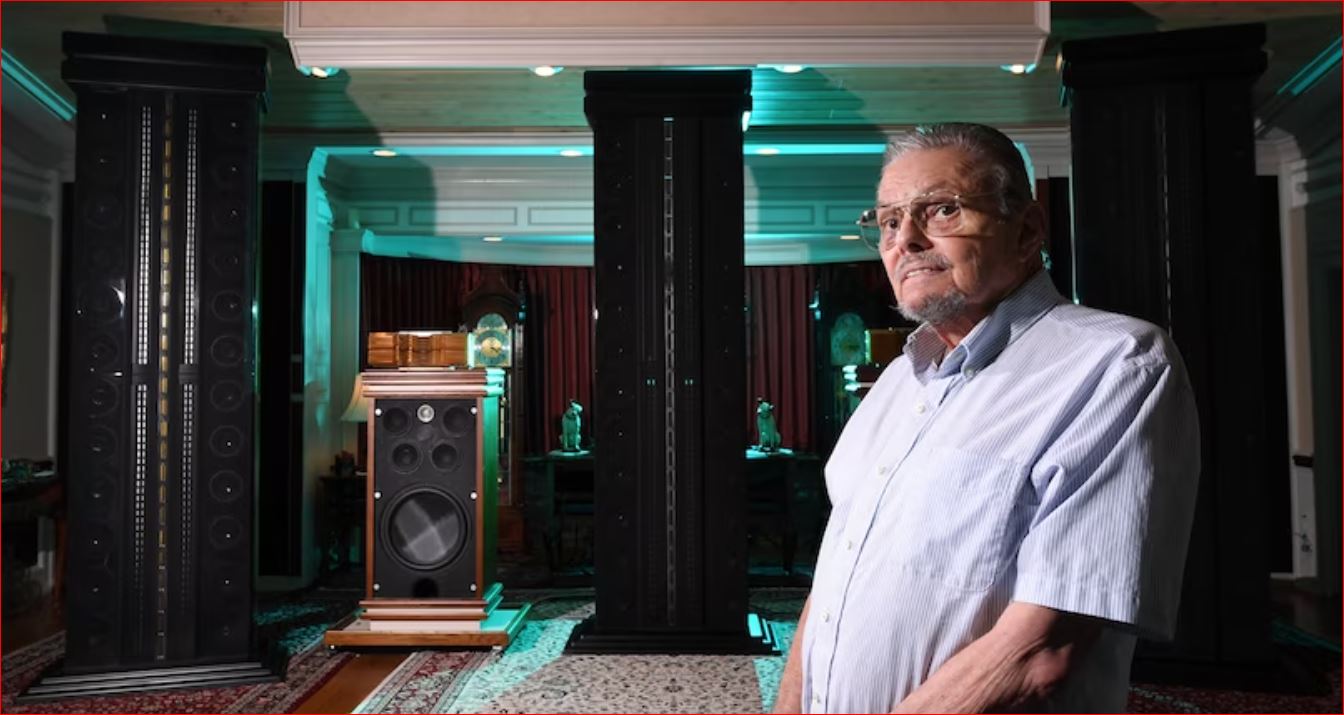
There are a number of lessons to be learned from this fellow’s mistakes.

Just to take one obvious example, this picture of some of the records in his collection speaks volumes, at least it does to me.
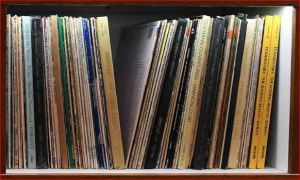
He built a million dollar stereo to play records like these?

No amount of money spent on equipment can make most of these titles sound good, and failure to appreciate that fact is just one of the many fatal errors the late Mr. Fritz made in his approach to both records and audio.

He mistakenly thought he was at the “I know everything” stage, but that is just the prelude to the stages of knowledge where real understanding and progress begin, not end.

My own stereo history may be of some value in helping to shed light on these issues. Like everyone else, I started at the bottom. Thank god I didn’t have a million dollars to waste back then because I clearly didn’t understand audio any better than the late Mr. Fritz did.

Like him and practically every audiophile I’ve ever come in contact with, I sure thought I did. Having suffered myself from a serious case of pretentious-knowledge syndrome, it’s easy for me to spot the signs in others. (My understanding is that you can’t sign up on the Hoffman Forum without first proving your know-it-all bona fides.)

Why So Uncomfortable?

In a recent letter I received about the Dynavector 17dx cartridge we use, this question was posed:

Why is it that audiophiles are so uncomfortable with the idea that they might be wrong? I mean, you can’t improve if you think you are already right.

I answered as follows:

I was no different back when I started. For about my first ten years in high-end audio, roughly 1975-85, I bought the most expensive equipment that I could afford, as long as it sounded good to me and was well-liked by those whose ears I trusted.

Is the audiophile of today doing anything different?

What would you be doing if you hadn’t stumbled on a guy with some credibility — he sold you some records that sounded amazing, so he must know something — who turned you on to some audio stuff that sounds great and, better yet, didn’t cost that much?

And how did this guy — me — come to find out about all this stuff in the first place? Well, I’ll tell you.

He had a good audio friend who turned him on to Dynavector cartridges twenty years ago (but oddly enough not the really good one they sell. I had to make that leap for myself).

And this audio friend had learned through extensive trial and error that there were certain receivers one could pick up for cheap at thrift stores that offered excellent, audiophile-quality sound. (Trial and error were his forte. This is the same guy that clued me into the concept of Hot Stampers, a life-changing concept if ever there was one.)

As it turned out, even my friend did not know how good the sound of the receiver he sold me could be when fed by a top quality outboard phono stage, something he did not have access to. (The receiver’s phono stage is decent but hopelessly outclassed by the EAR 324p we use.)

I ended up buying four or five different models with mediocre-at-best sound before I realized the one I owned must be a fluke. Then I bought three more of the model I liked and they all sounded different too, although they ranged in sound at most from excellent to crazy good. So I put the best sounding one in my system and kept the other three for backup. Like I said, they were cheap.

When I met my friend George Louis in San Diego back in the 80s, he had a much better system than I did. He was using non-audiophile-approved equipment that drove custom speakers. He showed me that my audiophile electronics and my Fulton so-called state-of-the-art speakers were not nearly as good as I thought they were. What did I know back then? Not as much as I thought I did, that’s for damn sure.

When I moved to Los Angeles in 1987, I met a fellow audiophile named Robert Pincus and we quickly became friends. I was selling vintage classical records to audiophiles (along with lots of other records) and he was supplying me with whatever Shaded Dogs, Mercs, Londons, EMIs and such that he could dig up with top quality sound and surfaces.

He showed me that no two records sound the same, and even that often two sides of the same record don’t sound the same. Once I had a chance to listen to some of the “Hot Stamper” pressings he brought me, I was sold.

(more…)
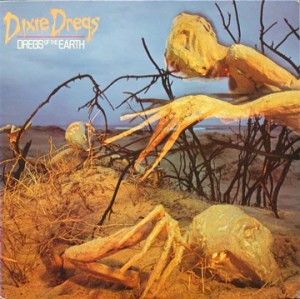
Dixie Dregs – Dregs of the Earth

More Rock and Pop

More Jazz Rock Fusion

  • This wild amalgamation of rock, jazz, country, prog and classical music delivers the sound we always dreamed it could with KILLER Shootout Winning Triple Plus (A+++) grades or close to them from start to finish
  • Here are just a few of the things we had to say about this amazing copy in our notes: “big and lively and spacious”…”transparent and relaxed and jumping out [of the speakers]”…”huge and rich and weighty”…”very relaxed and 3D”…”so tubey, HTF [hard to fault]” (side two)
  • Both sides are rich and smooth like good analog should be, with plenty of energy and rock and roll drive
  • This is the kind of music you may have trouble describing, but one thing’s for sure – it’s really good
  • We’re apparently not the only one who noticed how good the album is: it received a 1980 Grammy nomination for Best Rock Instrumental Performance.
  • “If you were a Dixie Dregs fan in 1980, by this time you knew just what to expect from a new album of theirs. Beautiful, majestic ballads, southern flavored rockers, a blazing bluegrass romp, at least one smokin’ prog tune, and maybe a little classical thrown in. This one does not disappoint.” – ProgArchives.com

If you want to hear what happens when five virtuoso instrumentalists manage to combine their talent for Jazz, Rock, Classical and Country (thank god there aren’t any vocals) into a potent mix that defies classification and breaks all the rules, this is the one. It reminds me of Ellington’s famous line that there are only two kinds of music: good music and bad music. This is the kind of music you may have trouble describing, but one thing’s for sure — it’s good. In fact it’s really good.

It’s rich and smooth like good analog should be. It’s also got plenty of energy and rock and roll drive, which is precisely where the famous Half-Speed falls apart, a story we are all too familiar with.

Few audiophiles know this music, and that’s a shame. This record is just a delight from beginning to end.

(more…)

1A, or Is 1B Better on Parsley, Sage, Rosemary and Thyme? Your Guess Is As Good As Mine

Hot Stamper Pressings of the Music of Simon and Garfunkel Available Now

UPDATE 2024

Speaking of 1A and 1B, the evidence is in. We have now confirmed that one of these sets of stampers (one for each side) can win shootouts. Which of the two it is we will leave to you to discover, as we make it a point never to give out the shootout winning stampers except under the rarest of circumstances. We give out plenty of stamper information, just not the stampers of the winners.


We now return to our commentary from many years ago:

Before we go any further, I have one question:

Why are we guessing?

I received an email recently from a customer who had gone to great pains to do his own shootout for a record; in the end he came up short, with not a lot to show for his time and effort. It had this bit tucked in toward the end:

Some of [Better Records’] Hot Stampers are very dear in price and most often due to the fact that there are so few copies in near mint condition. I hate to think of all the great Hot Stampers that have ended up in piles on the floor night after night with beer, Coke, and seeds being ground into them.

Can you imagine all the 1A 1B or even 2A 2B masters that ended up this way or were just played to death with a stylus that would be better used as a nail than to play a record!

To be clear, it’s extremely unlikely than any Hot Stampers have ever ended up in piles on the floor. Hot Stampers are not just originals or good sounding records.

They are pressings that have been cleaned, gone through the shootout process and found to be superior to their competition. Until they prove themselves, records like the ones whose unfortunate fate this reviewer fantasizes about are just old records that had the potential to sound good but never got the chance to demonstrate they had better sound than other pressings.

As it so happens, shortly thereafter I found myself on Michael Fremer’s old website of all places, where I saw something eerily similar in his review for the (no doubt awful) Sundazed vinyl. I quote below the relevant paragraphs.

(more…)

On Black and Blue Listen to Billy Preston’s Piano

Hot Stamper Pressing of the Music of The Rolling Stones Available Now

Billy Preston is all over Black and Blue on piano and organ and his contribution is crucial to the musical vibe on practically every song. Listen for Billy’s full, solid, clear piano sound. When the piano is thin, the mix is thin and that’s not the sound you want on a Stones album.

If the piano gets lost, your copy either has a smear problem or a transparency problem. Those are certainly easier to live with — all the 70s systems I owned were smeary and opaque compared to my system today and I enjoyed the hell out of all of them — but far from ideal.

Lately we have been writing quite a bit about how pianos are good for testing your system, room, tweaks, electricity and all the rest, not to mention turntable setup and adjustment.

  • We like our pianos to sound natural (however one chooses to define the term).
  • We like them to be solidly weighted.
  • We like them to be free of smear, a quality that is rarely mentioned in the audiophile record reviews we read.

Other records that we have found to be good for testing in order to improve your playback, as well as your critical listening skills, can be found here.

(more…)

Is It Possible to Find Out Who Mastered the Japanese Thrillers?

Hot Stamper Pressings of the Music of Michael Jackson Available Now

A letter we received not long ago made the point that the Japanese pressing of Thriller the owner had been listening to for years, even decades, fell well short of the mark set by the sound of the White Hot Stamper pressing he now owned.

To think, I spent all those years playing and re-playing a record that was bright and edgy, none the wiser to matrix numbers and pressing variations.

I agreed, saying that I myself learned the hard way, having wasted some of my own money on them. that Japanese pressings were almost always a crock, writing:

Most Japanese pressings cater to what a mid-fi system would need to sound good and a hi-fi system would find ruinous. They are almost always made from dubbed tapes, which are then brightened up in the mastering phase since that is the sound that appeals to the Japanese market for some reason unknown to me. Old school audio equipment — horn speakers and vintage tube electronics — would be my guess.

A fellow who saw an opening to set me straight and take me down a peg, all without having to learn how to use that pesky shift key on his computer, left the following comment in that post:

the japanese pressings were mastered by BG. the only difference being the quality of the material. nice try though, snakeoil salesman.

I immediately went to battle stations. I doubted whether Bernie Grundman has mastered any pressings for the Japanese market, but I couldn’t say for sure. It’s a question that had never come up. We ourselves had discovered a very good sounding pressing of Tusk that was mastered by Ken Perry and pressed in Japan, so I knew it was possible that the original mastering engineer could have sent metalwork to Japan for the Japanese to produce properly-mastered records for their market.

Fortunately, Discogs makes checking such things fairly easy. I went right up to the listing for Thriller and clicked on all the Japanese original pressings to see if there was any evidence to show that he had mastered them.

Bernie Grundman’s name was credited on the back cover as the mastering engineer, but I didn’t put much stock in that. I assumed that he did not master the album for their market, since that is hugely impractical. I surmised that removing his credit would have badly defaced the jacket, something I doubted the Japanese would have found acceptable. They seem to be very particular about these things.

Sure enough, here is what the stampers look like for the typical Japanese pressing that supposedly would have been mastered by BG:

There are about half a dozen original Japanese pressings for the album on Discogs and all the stamper listings look like the one above.

If you know anything about records, you know that these markings could not have been created by Bernie Grundman’s mastering operation here in the states.

(more…)

When You’re Just Getting Started in Audio, It All Looks So Easy

Presenting another entry in a series of big picture observations about records and audio.

John Salvatier has written a very interesting essay. It’s not short but I think it is well worth the time it will take you to read it.

The parallels to records will be clear to anyone who has spent much time in this hobby, or on this blog for that matter.

Those of us who have run record experiments by the thousands have learned to accept results which regularly defy logic.

All the way back in 2007 we learned an important lesson regarding the vagaries of record pressings: that identical looking LPs can have dramatically different sound quality.

Even two sides of the same record can have quite different sound quality. We know, we’ve played them by the hundreds.

(more…)