Month: August 2024

Steely Dan / Katy Lied – Our Favorite Dan Album of Them All

More Steely Dan

Reviews and Commentaries for Katy Lied

  • A Katy Lied like you’ve never heard, with excellent Double Plus (A++) sound or close to it from start to finish
  • Our pick for the best Dan album of them all, a masterpiece of Jazzy Swing Pop that is sure to reward hundreds of plays in the decades to come
  • Take it from The Dan: “The sound created by musicians and singers is reproduced as faithfully as possible, and special care is taken to preserve the band-width and transient response of each performance.”
  • Special care may have been taken, but the DBX system put an end to any hope that the “transient response” would be preserved
  • For that, you will have to wait for next Steely Dan album to come out, The Royal Scam – it’s got transient response up the ying-yang
  • 5 stars: “Each song is given a glossy sheen, one that accentuates not only the stronger pop hooks, but also the precise technical skill of the professional musicians drafted to play the solos.”
  • This is a Must Own title from 1975, which, incidentally, turned out to be a great year for rock and pop music

The covers for these original Katy Lied pressings on ABC always have at least some edge, seam or ringwear. We will of course do our best to find you a cover with the fewest problems, but none of them will be perfect, or even all that close to it. It is by far the hardest Steely Dan album to find good covers for.

This copy has the all-important rock energy we look for, although rocking is not quite what Steely Dan are up to here. Cameron Crowe calls it “…absolutely impeccable swing-pop”, a four word description that gets to the heart of the music far better than any combination of adjectives and nouns containing the word “rock.” (more…)
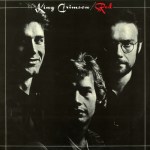
On King Crimson’s Red Album, How Good Are the Polydor Pressings?

Hot Stamper Pressings of the Music of King Crimson Available Now

Harsh and congested.

Not remotely competitive with the British originals.

Clean copies on the UK Island label may be hard to find, but they are the only game in town if you are serious about sound.

Want to find your own killer copy?

Consider taking the following moderately helpful advice.

As of 2024, shootouts for this album should be carried out:

How else can you expect to hear the record sound its best?

Based on our experience, Red sounds better:

That’s about it. They are neither easy nor cheap to find, but they are definitely the best sounding.

There’s more collecting help where that came from. Click on the top link below to learn about the pressings that win shootouts.

(more…)

Cognitive Dissonance Defined

More Basic Concepts and Realities Explained 

Wikipedia’s entry for cognitive dissonance:

Cognitive dissonance is a psychological term describing the uncomfortable tension that may result from having two conflicting thoughts (cognition) at the same time or engaging in behavior that conflicts with one’s beliefs. In simple terms, it can be the filtering of information that conflicts with what one already believes, in an effort to ignore that information and reinforce one’s beliefs. In detailed terms, it is the perception of incompatibility between two cognitions, where “cognition” is defined as any element of knowledge, including attitude, emotion, belief, or behavior.

The theory of cognitive dissonance states that contradicting cognitions serve as a driving force that compels the mind to acquire or invent new thoughts or beliefs, or to modify existing beliefs, so as to reduce the amount of dissonance (conflict) between cognitions. Experiments have attempted to quantify this hypothetical drive. Some of these have examined how beliefs often change to match behavior when beliefs and behavior are in conflict.

In popular usage, it can be associated with the tendency for people to resist information that they don’t want to think about, because if they did it would create cognitive dissonance, and perhaps require them to act in ways that depart from their comfortable habits. They usually have at least partial awareness of the information, without having moved to full acceptance of it, and are thus in a state of denial about it.

This guy was comfortable with his penchant for Mobile Fidelity pressings, a sad story if ever I’ve heard one, but one we can all learn from. (And I have to admit I was every bit as clueless myself back in the my nascent audiophile days.)

Empiricism

Some approaches to this audio hobby tend to produce better results than others. When your thinking about audio and records does not comport with reality, you are much less likely to achieve the improvements you seek.

Without a good stereo, it is hard to find better records. Without better records, it is hard to improve your stereo.

You need both, and thinking about them the right way, using the results of carefully run experiments — not feelings, opinions, theories, received wisdom or dogma — is surely the best way to acquire better sound.

An empirically-based approach to audio will surely result in notable improvements to the quality of your playback.

This will in turn make the job of recognizing high quality pressings — the ones you find for yourself, or the ones we find for you — much, much easier.

(more…)

“Big, warm, mushy and limp”

Hot Stamper Pressing of the Music of Joni Mitchell Available Now

One of our good customers had this to say about some records he played recently:

Hey Tom, 

I just had to drop you a brief note, to say THANK YOU, for your writings regarding DCC pressings many years back.

I was just going back through them on your site, after I unearthed my DCC pressings this afternoon and gave a couple of them (i.e., Elton’s Madman; Joni’s Court and Spark) a spin – as I recall y’all being the first to speak truth in the face of overwhelming adoration regarding these (when they first were released).

OMG. They are COMPLETELY lifeless, with ZERO energy!

Big, warm, mushy and limp, yes.

Probably sound comforting (at some level) on a low-budget lean solid state system. [High-budget ones too I would venture to guess.]

But on a system with any level of transparency and truth-to-pressing, YIKES. It just made me sad.

THEN, I went online, and checked the current PRICES for these pressings (of which I own several sealed), and I got SUPER HAPPY! People are paying some serious coin for these turkeys – so I can be well rid of them, and take that cash and buy some more of YOUR awesome pressings! Win-win! 👍😊

Warmest regards,

Steve

Steve,

I should say right off the bat that I think the DCC of Court and Spark is not a bad sounding record, at least the copy I had wasn’t bad sounding last time I played it. Your mileage apparently varied.

Madman I hope to write about before too long. I found my DCC copy to be lean in the lower midrange, and missing much of the Tubey Magic that makes that recording so special (along with many others by Elton from that era).

A few more thoughts:

The sound I think you are hearing that you refer to as lifeless and lacking in energy is really the result of Kevin Gray’s lousy cutting chain. The sound you hear on your DCC albums is precisely the sound I had heard on this DCC album many years ago.

Played back-to-back with the properly-mastered, properly-pressed originals, the DCC was shockingly lacking in many of the most important qualities a record should have. Eventually Paul and Judy were the couple that showed me what a fool I had been.

Low resolution cutters like the ones used to cut the DCC discs sound dead and boring, even when the mastering choices are good ones and no obvious compression is being used.

Kevin Gray famously does not have a way to put compressors into his chain, as my friend Robert Pincus at Cisco found out when he cut 52nd Street and could not get some aspects of it to sound right, due to the fact that he was unable to add compression in the mastering the way Sterling had.

That’s what it needed and that’s what it didn’t get. Kevin don’t play dat.

I have been beating this long-dead horse for about fifteen twenty years now. Any time I actually do play one of the DCC records these days, it usually sounds worse than I remember it.

(more…)

Bob Dylan – Down in the Groove

More Bob Dylan

More Rock and Pop

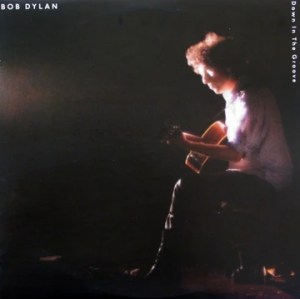
  • Down in the Groove appears on the site for only the second time ever, here with KILLER Shootout Winning Triple Plus (A+++) sound or close to it throughout this original Columbia pressing – fairly quiet vinyl too
  • These are just a few of the things we had to say about this amazing copy in our notes: “big and weighty”…”jumping out [of the speakers]”…”fat kick and snare”…”vox breathy and present”
  • Both of these sides are big and rich, with remarkable clarity and three-dimensional space, the kind of sound that most other pressings only hint a
  • “It begins and ends with strong covers, opening with Wilbert Harrison’s ‘Let’s Stick Together’ (a good, raucous rocker with stuttering tremolo guitars and an aggressive Dylan vocal) and closing with the Stanley Brothers’ apocalyptic country hymn ‘Rank Strangers to Me’ (a simple, heartfelt guitar-vocal performance with fusionesque glissando bass). [And t]here is no mistaking the emotional vocal investment in his country-gospel treatment of the traditional folk song ‘Shenandoah’ or the eerie morbidity of his delivery in ‘Ninety Miles an Hour (Down a Dead End Street)'” – Rolling Stone

(more…)

Are You an Audiophile Soldier or an Audiophile Scout?

More Entries from Tom’s Audiophile Notebook

The guy you see pictured to the left has spent much of the last forty years wandering around used record stores looking for better records. Before that he wandered around stores selling new records because he didn’t know how much better used records could be.

Here are some of the things he’s learned since he started collecting at the age of ten a mere sixty years ago. (First purchase: She Loves You on 45, still in the collection, although it cracked long ago and is no longer playable.) 

Click on the picture to make it easier to read.

As you may have read on the site elsewhere, the three most important words in the world of audio are compared to what?

No matter how good a particular copy of a record may sound to you, when you clean and play enough of them you will almost always find one that’s better, and often surprisingly better.

You must keep testing all the reissues you can find, and you must keep testing all the originals you can find.

Shootouts are the only way to find these kinds of very special records. That’s why you must do them.

Nothing else works. If you’re not doing shootouts (or buying the winners of shootouts from us), you simply don’t have top quality copies in your collection, except in the rare instances in which you just got lucky.

In the world of records luck can only take you so far. The rest of the journey requires effort.

(more…)

Neil Young – Everybody Knows This Is Nowhere

More Neil Young

One of Our Favorite Titles from 1969


  • Stunning sound throughout this vintage pressing of Neil’s second studio album, with both sides earning Nearly Triple Plus (A++ to A+++) grades – just shy of our Shootout Winner
  • When we say “just shy of our Shootout Winner,” we want to make clear than practically no one playing this Hot Stamper pressing would ever think it could possibly get any better than this very record — it’s simply a phenomenally well-recorded album
  • The best tracks have that live-in-the-studio quality Neil is famous for (of which Zuma is the best example), with minimal processing and maximum energy
  • Includes some of Neil Young’s most beloved classics: “Cinnamon Girl,” “Cowgirl in the Sand,” and “Down by the River” just to name three
  • 5 stars: “Everybody Knows This Is Nowhere was breathtakingly different when it appeared in May 1969, both for Young and for rock in general, and it reversed his commercial fortunes….”

Although not quite in the league with the best of the best — the likes of Gold Rush, Harvest, or Zuma, all titles we have a devil of a time keeping in stock — the best sounding tracks here are a rough guide for to what was to come as Neil and his producer, David Briggs, got better and better until they were As Good As It Gets by the time they got around to After the Gold Rush in 1970 (for which they seem to get no credit, outside of Better Records’ raves for the album of course).

We absolutely love the Live-in-the-Studio quality that only the best pressings of this album can give, with minimal processing and maximum energy. Man, with a good copy played back on a big pair of speakers this album can ROCK like nobody’s business. Nine minutes of “Down by the River”? A ten minute long version of “Cowgirl in the Sand”? “Cinnamon Girl”? We are so there!

This kind of musical, natural sound is not easy to come by. If you own any copy of the album you know what we mean. (more…)

Way Back in 2007 We Discovered the Hottest Meddle Stampers of Them All

Hot Stamper Pressings of the Music of Pink Floyd Available Now

UPDATE 2020

This review from 2007 describes our experience of having stumbled upon the right stampers for Meddle. To this day, only these stampers and no others have won the many shootouts we’ve done for the album in the ensuing years, perhaps as many as a dozen shootouts or more.

These stampers are also very hard to find, which is why you may not have seen a copy of Meddle hit the site in a while. If we could find them, believe me, we would have them up all the time, as this is one amazing sounding album.

Want to find your own shootout winner?

Scroll to the bottom to see our advice on doing just that.


This Harvest Green Label British Import pressing has a side one that goes FAR beyond anything we’ve ever heard for this album. We had no choice but to award this side one the very rare A with FOUR pluses. We’ve never given any side of any other Pink Floyd record such a high grade, so you can be sure that you’ve never heard them sound this amazing.

  • Our lengthy commentary entitled outliers and out-of-this-world sound talks about how rare these kinds of pressings are and how to go about finding them.
  • We no longer give Four Pluses out as a matter of policy, but that doesn’t mean we don’t come across records that deserve them from time to time.
  • Nowadays we often place them under the general heading of breakthrough pressings. These are records that, out of the blue, reveal to us sound that fundamentally changes what we thought we knew about these often familiar recordings.
  • When this pressing (or pressings) landed on our turntable, we found ourselves asking “Who knew?
  • Perhaps an even better question would have been “how high is up?”

(more…)

Miles Davis – Porgy and Bess on the Six Eye Label

More Miles Davis

More Gil Evans

  • Here is an original 6-Eye Stereo pressing with outstanding Double Plus (A++) grades or BETTER from start to finish
  • Side one was sonically very close to our Shootout Winner – you will be amazed at how big and rich and tubey the sound is
  • Both sides are full of that vintage Columbia jazz Tubey Magic – the brass is full-bodied with lots of air, the bass is surprisingly well-defined, the top end is extended and sweet, and the soundfield is HUGE and three-dimensional
  • 5 stars: “It was Evans’ intimate knowledge of the composition as well as the performer that allowed him to so definitively capture the essence of both… No observation or collection of American jazz can be deemed complete without this recording.”
  • Teo Macero was the producer and Ray Moore the engineer — it’s yet another remarkable disc from the Golden Age of Vacuum Tube Recording.
  • If you’re a fan of the marvelous collaborations of Miles Davis and Gil Evans circa 1959, and what audiophile wouldn’t be?, this album belongs in your collection
  • The complete list of titles from 1959 that we’ve reviewed to date can be found here.

(more…)

We Were Way Off the Mark with this Rodrigo Recording in 2010

More of the music of Joaquín Rodrigo (1901-1999)

In 2010 we did a shootout for this title and thought we had found a good one. We wrote:

A good side one backed with a lovely side two! We shot out a stack of these recently and side two of this copy was one of the few sides that really impressed us. The sound is transparent and full of energy. Side one is pretty good but a bit crude in the louder passages.

This is a wonderful record. The performance here by the first family of guitar is legendary. More importantly, the music is delightful and belongs in any serious classical collection.

RFR-1 stampers. What the best originals like this one give you is immediacy. The attack of the guitar is more real.

Comparing this with the Golden Import shows you that some of the transients are smoothed over on that pressing.

If you’ve got the front end that can deal with the Mercury upper midrange and transient attack, the strings will sound textured and clear, not harsh or shrill. (A badly mastered version of this record would make your ears bleed.)

More importantly, this copy captures the sounds of the guitars perfectly. I doubt if anybody could do it as well as Mercury.

Recently we did the shootout again and came up with very different findings:

Now those same stampers are tubey and weighty, but the strings are too hot (bright and shrill) and flat (lacking richness).

We can sum up the sound of these stampers — on a different copy of course, something to keep in mind — in one word:

Ouch.

Please allow us to help you avoid making the same mistakes we did:

  • More records with bright sound can be found here
  • More records with flat sound can be found here

What’s So Golden About These Imports Anyway?

And by the way, we would never even bother to reserve the studio time to play a Golden Import pressing these days. I can count on one hand the titles that actually sound good to me and it’s just not worth the labor to find the one out of fifty that has hi-fidelity sound as we currently define it.

This commentary gets at our disappointed feelings about the label.

(more…)