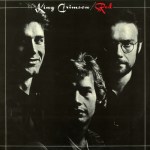
 Hot Stamper Pressings of the Music of King Crimson Available Now
Harsh and congested.
Not remotely competitive with the British originals.
Clean copies on the UK Island label may be hard to find, but they are the only game in town if you are serious about sound.

Want to find your own killer copy?
Consider taking the following moderately helpful advice.
As of 2024, shootouts for this album should be carried out:
How else can you expect to hear the record sound its best?
Based on our experience, Red sounds better:
That’s about it. They are neither easy nor cheap to find, but they are definitely the best sounding.
There’s more collecting help where that came from. Click on the top link below to learn about the pressings that win shootouts.
What are the criteria by which a record like this should be judged? Pretty much the ones we discuss in most of our Hot Stamper listings: energy, vocal presence, frequency extension (on both ends), transparency, harmonic textures (freedom from smear is key), rhythmic drive, tonal correctness, fullness, richness, and so on down through the list.
When we can get all, or most all, of the qualities above to come together on any given side we provisionally award it a grade of “contender.” Once we’ve been through all our copies on one side we then play the best of the best against each other and arrive at a winner for that side. Repeat the process for the other side and the shootout is officially over. All that’s left is to see how the sides matched up.
Record shootouts may not be rocket science, but they’re a science of a kind, one with strict protocols developed over the course of many years to ensure that the sonic grades we assign to our Hot Stampers are as accurate as we can make them.
The result of all our work speaks for itself, on this very record in fact. We guarantee you have never heard this music sound better than it does on our Hot Stamper pressing — or your money back.
Side One
Red
Fallen Angel
One More Red Nightmare
Side Two
Providence
Starless
AMG 4 1/2 Star Review
King Crimson fell apart once more, seemingly for the last time, as David Cross walked away during the making of this album. It became Robert Fripp’s last thoughts on this version of the band, a bit noiser overall but with some surprising sounds featured, mostly out of the group’s past — Mel Collins’ and Ian McDonald’s saxes, Marc Charig’s cornet, and Robin Miller’s oboe, thus providing a glimpse of what the 1972-era King Crimson might’ve sounded like handling the later group’s repertory (which nearly happened).
Indeed, Charig’s cornet gets just about the best showcase it ever had on a King Crimson album, and the truth is that few intact groups could have gotten an album as good as Red together. The fact that it was put together by a band in its death throes makes it all the more impressive an achievement. Indeed, Red does improve in some respects on certain aspects of the previous album — including “Starless,” a cousin to the prior album’s title track — and only the lower quality of the vocal compositions keeps this from being as strongly recommended as its two predecessors.
Further Reading